
Corporate gifting programmes need three things from a bag supplier: a product tier that matches the recipient's standing, branding that reads as considered rather than applied, and absolute consistency across a fixed delivery date. Gifting companies work to an event calendar that does not move, which makes schedule reliability the first criterion and product quality the second. A premium piece arriving late has failed, regardless of how well it was made.
The commercial structure also differs from a retail programme. The buyer is not the user, the quantity is fixed by a recipient list rather than by demand, and the branding requirement is usually specified by someone who did not design the product. That combination means the specification has to accommodate a brand guideline it did not originate, and the programme has to deliver a result that satisfies both the commissioning company and the end recipient.
This article sets out how gifting programmes are structured: product tiers, branding methods at volume, personalisation, packaging, budgeting and calendar planning. It reflects how the programme team works with gifting companies from our SGS-verified production floor in Quanzhou, Fujian.
Programme parameters at a glance
| Parameter | Commitment |
|---|---|
| Minimum order quantity | 500 pieces per style / colourway |
| Sampling lead time | 6–10 working days (12–15 days for complex constructions) |
| Bulk production lead time | 35–50 days after sample approval |
| Inspection standard | AQL 2.5 (ISO 2859-1), single sampling, general level II |
| Incoterms | FOB Xiamen — EXW, CIF and DDP available on request |
| Payment terms | T/T 30% deposit / 70% before shipment; L/C at sight for container loads |
| Verified production floor space | 4,950 m² (SGS-verified) |
| Team | 137 staff across 7 production lines |
| Equipment | 149 machines including computerised saddle-stitch and edge-painting units |
| Monthly capacity | 200,000 pieces |
| Entity | Founded 2014; principal has worked in bag development since 2004 |
What Gifting Companies Need That Retail Brands Do Not
Gifting programmes are deadline-driven, quantity-fixed and brand-constrained. Those three characteristics produce requirements that a retail programme rarely encounters, and they shape everything from product selection to the inspection plan.
| Characteristic | Consequence | Requirement |
|---|---|---|
| Fixed delivery date | No schedule flexibility | Production slot booked at specification, not at approval |
| Fixed quantity | No reorder to correct mistakes | Higher inspection discipline and a buffer allowance |
| External brand guidelines | Logo size, position and colour are prescribed | Proofing step before production |
| Recipient is not the buyer | Presentation matters disproportionately | Packaging specified alongside the product |
| Mixed recipient seniority | One product rarely fits all | Two or three tiers within one programme |
| Year-on-year repeat | Consistency expected between cycles | Retained patterns and held material standards |
The buffer allowance is worth explaining because it is frequently disputed. Since a gifting quantity is fixed by a recipient list, there is no second chance to replace defective units. Ordering a small percentage above the list, typically two to five per cent depending on the construction, costs little and removes the risk of a short delivery that cannot be topped up in time.
Choosing Product Tiers for a Gifting Programme
Most gifting programmes work better with tiers than with a single product, because recipient lists are rarely homogeneous. A two or three tier structure lets the commissioning company match the gift to the relationship without commissioning three separate programmes, and it keeps the range visually coherent because the tiers share materials and hardware.
Tier differentiation should come from size and construction rather than from material quality. A programme in which the lower tier uses visibly inferior leather tells the recipient they were ranked, which is the opposite of what a gift is for. Keeping the material family constant and varying the object achieves the same commercial purpose without the message.
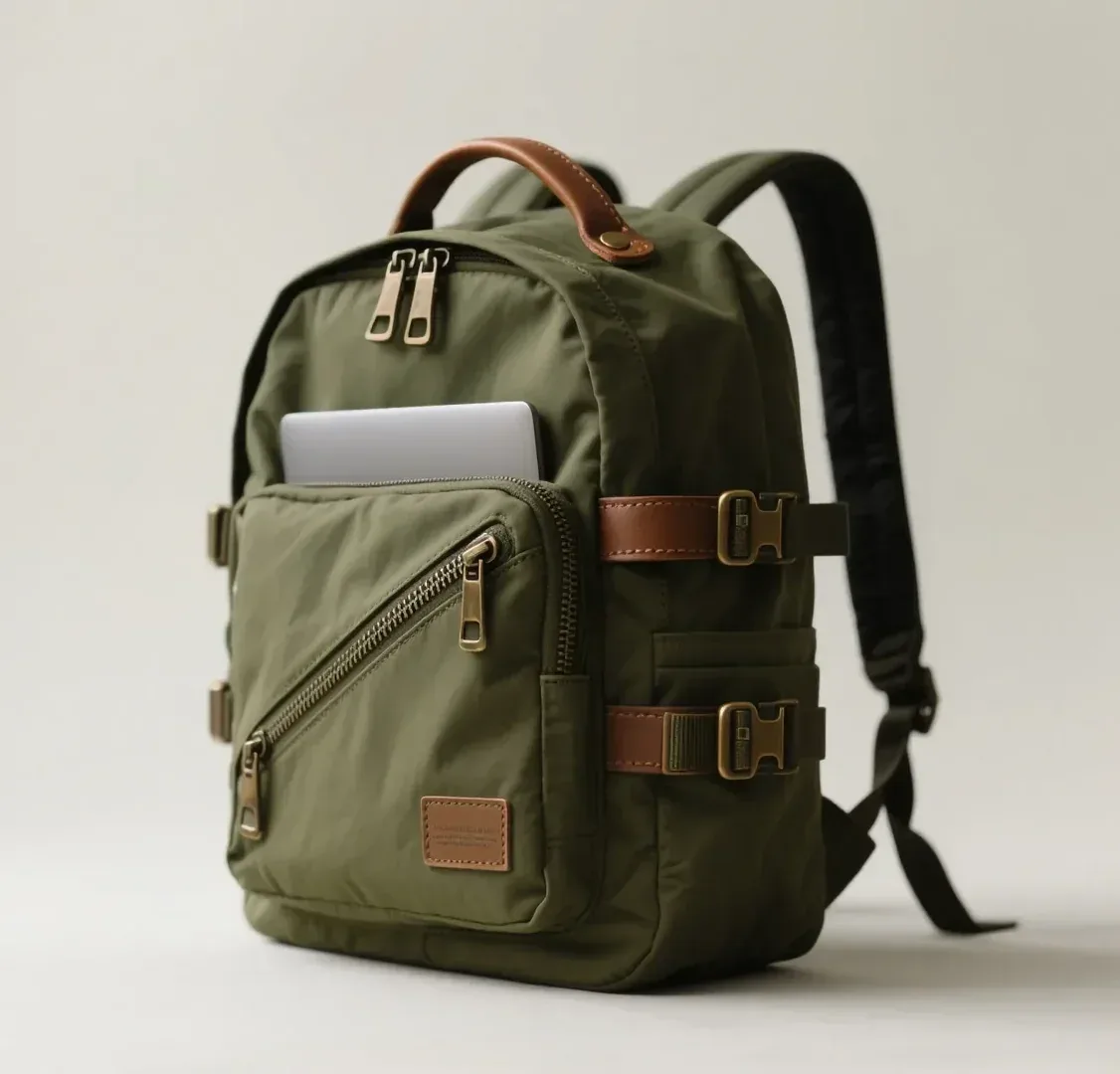
Branding Methods at Gifting Volumes
Branding is where gifting programmes are most often judged, and the choice of method is a balance between durability, subtlety and cost. Corporate brand guidelines usually prescribe a minimum size and a clear space, which narrows the options; the remaining decision is how the mark is applied.
| Method | Appearance | Durability | Cost position | Best for |
|---|---|---|---|---|
| Blind deboss | Understated, tactile | Permanent | Low tooling, low unit | Premium and executive gifts |
| Hot foil | Visible, formal | Very good | Low tooling, low unit | Formal corporate branding |
| Metal logo plate | Substantial | Very good | Higher unit cost | Principal tier gifts |
| Embroidery | Textile-led | Excellent | Moderate | Canvas and soft constructions |
| Woven label | Discreet | Good | Lowest | Linings and secondary placement |
| Screen or transfer print | Full colour | Moderate | Low | Event and promotional gifting |
Subtlety is usually the right default. A gift is more likely to be kept and used when the branding is discreet, and a bag that is used delivers the branding purpose far better than a conspicuous one left in a cupboard. Where the commissioning company insists on a large mark, placing it on a less visible face and keeping a discreet mark on the primary face often satisfies both parties.
Colour matching deserves a formal step. Corporate guidelines usually specify an exact colour, and application methods reproduce colour differently. Agreeing an acceptable match against a physical proof, approved by the brand owner before production, prevents a rejection at delivery over a shade difference that no one had defined.
Personalisation at Scale
Personalisation lifts a gift from branded to individual, and it is the element that most often goes wrong operationally. Each unit becomes distinguishable, which means an error is specific to a person rather than to a batch, and a misspelled name cannot be absorbed into a general replacement.
- Confirm the recipient list early and freeze it, since changes during production are expensive.
- Choose a method that suits the material: deboss or foil for leather, embroidery for textile.
- Fix the placement precisely and mark it on the approved sample, not on a drawing.
- Produce a digital or physical proof per name where the list is small enough to allow it.
- Build a buffer of blank units to cover list additions and correction of errors.
- Inspect personalised units individually rather than by sampling, because errors are individual.
The last point is the one most often skipped. A standard AQL sampling plan assumes defects are distributed across a batch, which is exactly what personalisation errors are not. Individual inspection of personalised units takes time and should be scheduled, but it is the only reliable control when each item is unique.
Packaging and Presentation
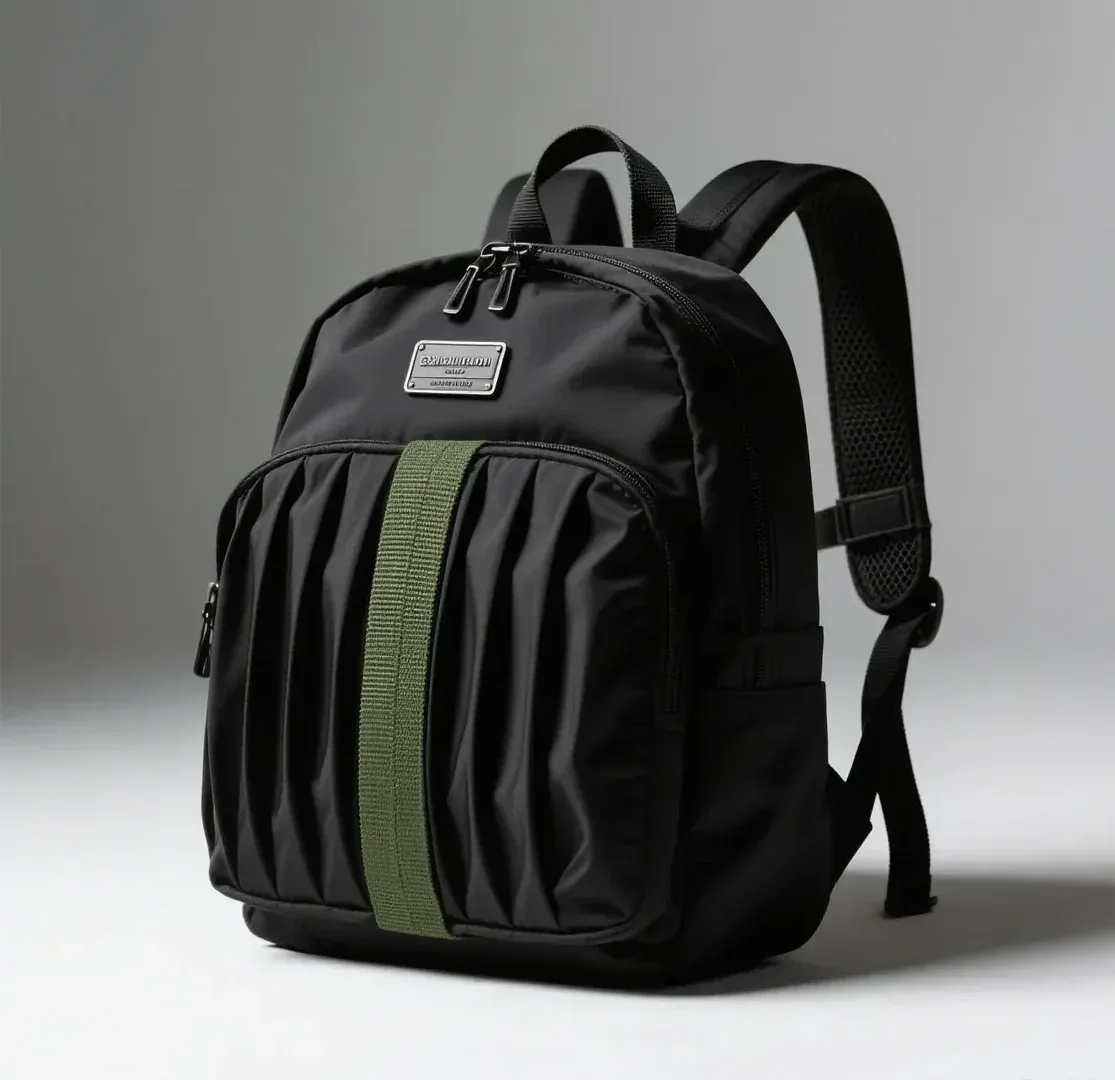
In gifting, packaging is part of the product. The recipient experiences the box, the dust bag and the card before the bag itself, and the first ten seconds set the tone for everything after. Packaging also carries practical value: it protects the piece in transit and provides a surface for the commissioning company's own message.
- Rigid box or structured gift box proportioned to the product, not a generic size.
- Dust bag in a material consistent with the product's positioning.
- Printed card carrying the commissioning company's message, inserted rather than attached.
- Protective internal fill that prevents movement without excessive material.
- Outer carton specification adequate for the distribution method, since gifts are often posted individually.
- Sustainability position stated and evidenced, as recipients increasingly notice packaging waste.
Packaging has its own minimum quantities and lead times, and it must be ordered during bulk production rather than after. This is the most common scheduling failure in gifting programmes: the product is ready and the boxes are not, and the delivery date moves for a reason entirely unrelated to the bag.
Budget Tiers and Cost Planning
Gifting budgets are usually set per recipient before the product is chosen, which reverses the normal costing order. The useful approach is to work backwards from the per-unit budget, allocate the shares between product, branding, personalisation and packaging, and then select a product that fits the product share rather than choosing first and discovering the overrun.
| Budget tier | Typical product | Branding | Packaging |
|---|---|---|---|
| Entry | Small leather good, pouch or card holder | Deboss or woven label | Printed box or sleeve |
| Mid | Wash bag, document case or compact briefcase | Deboss or foil | Rigid box with dust bag |
| Upper | Structured business bag or holdall | Foil or metal plate | Rigid box, dust bag, printed card |
| Principal | Full bespoke piece with personalisation | Metal plate plus deboss | Presentation box with layered insert |
Two costs are routinely omitted from gifting budgets: freight and duty. Gifting programmes are often shipped directly to recipients or to an event venue rather than to a warehouse, which changes the freight profile entirely and can be a substantial share of the per-unit cost. Establishing the delivery pattern before quoting avoids a late and unwelcome adjustment.
Recipient culture is the variable most often overlooked when a gifting programme crosses borders. A gift that reads as generous in one market can read as excessive or inappropriate in another, and some organisations operate policies that cap the value of gifts their staff may accept. Checking the recipient organisation's policy before finalising the tier is inexpensive and prevents the awkward outcome of a gift that has to be declined or returned.
Payment follows the standard structure of thirty per cent deposit and seventy per cent before shipment, quoted FOB Xiamen with EXW, CIF and DDP available. For gifting companies distributing to multiple countries, DDP frequently simplifies the operation considerably, since duty and delivery are handled at the point of entry rather than by the recipient.
Timing Around the Gifting Calendar
The gifting calendar is immovable in a way that retail calendars are not. A conference gift that arrives after the conference has no purpose, and a year-end gift arriving in January is worse than no gift. The programme therefore has to be planned backwards from the event date with realistic allowances for every stage.
| Stage | Working time before event | Note |
|---|---|---|
| Product selection and brief | 16–20 weeks | Earlier for bespoke development |
| Specification and branding proof | 14–16 weeks | Brand owner approval needed |
| Sampling | 12–14 weeks | Six to ten working days per round |
| Recipient list frozen | 10 weeks | Personalisation cannot start before this |
| Bulk production | 6–10 weeks | Thirty-five to fifty days |
| Personalisation and packing | 3–5 weeks | Depends on list size and method |
| Freight and distribution | 2–6 weeks | Sea, air or courier depending on destination |
The recipient list is the critical path item that gifting companies most often underestimate. Personalisation cannot begin until the list is frozen, and a list that changes during production is the single most common cause of a missed event date. Setting an internal deadline for the list, earlier than feels necessary, protects the whole programme.
Freight mode deserves an early decision because it affects the schedule more than any production variable. Air freight compresses the calendar at a cost that rises sharply with weight and volume, which is a particular consideration for structured boxed gifts. Deciding the mode at specification stage, rather than when the goods are ready, allows the packaging to be designed to the freight profile.
Storage between production and distribution is the last practical gap in a gifting programme. Gifts produced months ahead of an event must be held somewhere that will not damage them: dry, out of direct sunlight and not compressed under other stock. Leather kept in a damp space for several weeks will show it, and the defect appears at exactly the moment the programme is intended to impress. Confirming storage conditions before booking production is a small check with a disproportionate effect.
One further planning point deserves a note because it recurs across most multi-year programmes. Where a gifting company intends to repeat the programme annually, the specification should be written with that repetition in mind from the first cycle: retained patterns, held material standards and a documented branding setup. The second year then becomes a reorder rather than a new development, which shortens the calendar, holds the cost down and removes most of the risk that made the first cycle demanding.
Measuring Whether a Gifting Programme Worked
Gifting is often evaluated on sentiment, which is unsatisfying for a company spending a defined budget. A small set of practical measures makes the exercise assessable and improves the following cycle.
| Measure | How to capture | What it tells you |
|---|---|---|
| Delivery on time, in full | Against the event date | Whether the supplier model is reliable |
| Units used rather than stored | Recipient survey or informal feedback | Whether the product choice was right |
| Brand recall | Follow-up enquiry with recipients | Whether branding placement worked |
| Damage or defect rate | Recipient reports | Whether packaging and inspection were adequate |
| Cost per recipient all-in | Product, branding, packaging, freight, duty | Whether the budget model was accurate |
| Repeat commission | The following year's order | The clearest signal available |
Of these, the repeat commission is the most honest. A gifting company that reorders the following year is telling the supplier something no survey will, and a programme that does not repeat usually has a reason that is worth asking about directly rather than inferring.
Build a gifting programme with the programme team
Send your per-recipient budget, event date and brand guidelines, and we will return product options by tier, a branding recommendation and a schedule with critical dates. Development is coordinated from our production floor in Quanzhou, Fujian. Write to service@junyuanbags.com or message WhatsApp +86 177 5002 0688.
Frequently Asked Questions
What do corporate gifting companies need from a bag programme?
A product tier matched to recipient standing, branding that reads as considered rather than applied, and absolute consistency against a fixed event date. Gifting programmes are deadline-driven, quantity-fixed and constrained by external brand guidelines, which produces requirements a retail programme rarely encounters.
Should a gifting programme use one product or several tiers?
Two or three tiers usually works better than one, because recipient lists are rarely homogeneous. Tiers should differentiate by size and construction rather than by material quality, since a visibly inferior lower tier tells the recipient they were ranked, which defeats the purpose of a gift.
Which branding method suits a corporate gift?
Blind deboss for understated premium pieces, hot foil for formal corporate marks, a metal plate for principal-tier gifts, and embroidery for textile constructions. Subtlety is generally the right default, because a discreetly branded bag is more likely to be kept and used.
How is corporate colour matching handled?
Through a physical proof approved by the brand owner before production. Corporate guidelines usually specify an exact colour, and application methods reproduce colour differently, so agreeing an acceptable match in advance prevents a rejection at delivery over an undefined shade difference.
Can gifts be personalised with recipient names?
Yes, and it lifts a gift considerably, but it creates operational risk. Each unit becomes unique, so a spelling error is specific to a person and cannot be absorbed into a batch replacement. A frozen list, per-name proofing and individual inspection are the controls.
Why does personalised gifting need individual inspection?
Because standard AQL sampling assumes defects are distributed across a batch, which personalisation errors are not. An error affects one named recipient, and sampling will not find it. Individual inspection takes time and should be scheduled, but it is the only reliable control.
How should a gifting budget be structured?
Work backwards from the per-recipient figure. Allocate shares to product, branding, personalisation and packaging, then select a product that fits the product share. Freight and duty are routinely omitted and can be substantial, particularly where gifts are shipped directly to recipients rather than to a warehouse.
What packaging should a corporate gift use?
A rigid or structured box proportioned to the product, a dust bag consistent with the positioning, a printed card carrying the commissioning company's message, internal fill that prevents movement, and an outer carton adequate for the distribution method. Packaging must be ordered during bulk production.
How far ahead should a gifting programme be commissioned?
Roughly sixteen to twenty weeks before the event date for adapted products, and earlier for bespoke development. That allows time for branding proofing, sampling, a frozen recipient list, thirty-five to fifty days of production, personalisation and freight. The list, not production, is usually the critical path.
What is the minimum order for a gifting programme?
Five hundred pieces per style and colourway is the standard starting point. Gifting quantities are often determined by the recipient list, and small-batch pilots are available for companies testing a product before a full programme. Buffers should be added above the list quantity.
Why should a gifting order include a buffer?
Because the quantity is fixed by a recipient list and there is no second chance to replace defective units. Ordering two to five per cent above the list, depending on construction, costs little and removes the risk of a short delivery that cannot be topped up before the event.
Which delivery terms suit gifting programmes?
FOB Xiamen is the standard quotation basis, with EXW, CIF and DDP available on request. DDP frequently simplifies gifting distribution to multiple countries, since duty and final delivery are handled at the point of entry rather than by the recipient, which matters for direct-to-recipient shipping.
How is freight mode decided for a gifting programme?
At specification stage rather than when the goods are ready, because it affects packaging design and schedule more than any production variable. Air freight compresses the calendar at a cost that rises sharply with weight and volume, which is significant for structured boxed gifts.
What inspection standard applies to gifting orders?
Release is made against AQL 2.5 under ISO 2859-1, single sampling at general level II. For gifting, a buffer allowance above the list quantity is advisable alongside inspection, and personalised units should additionally be inspected individually because errors are unique to each item.
How can a gifting company measure whether a programme worked?
Track on-time delivery in full, whether recipients actually use the piece, brand recall, reported damage, all-in cost per recipient, and whether the commission repeats the following year. The repeat commission is the most honest measure available, since it reflects sentiment without needing a survey.
What causes gifting programmes to miss their event date?
Most commonly a recipient list that was not frozen in time, packaging ordered after rather than during production, and a freight mode decided too late. All three are scheduling decisions rather than production failures, and all three are preventable with a plan built backwards from the event date.