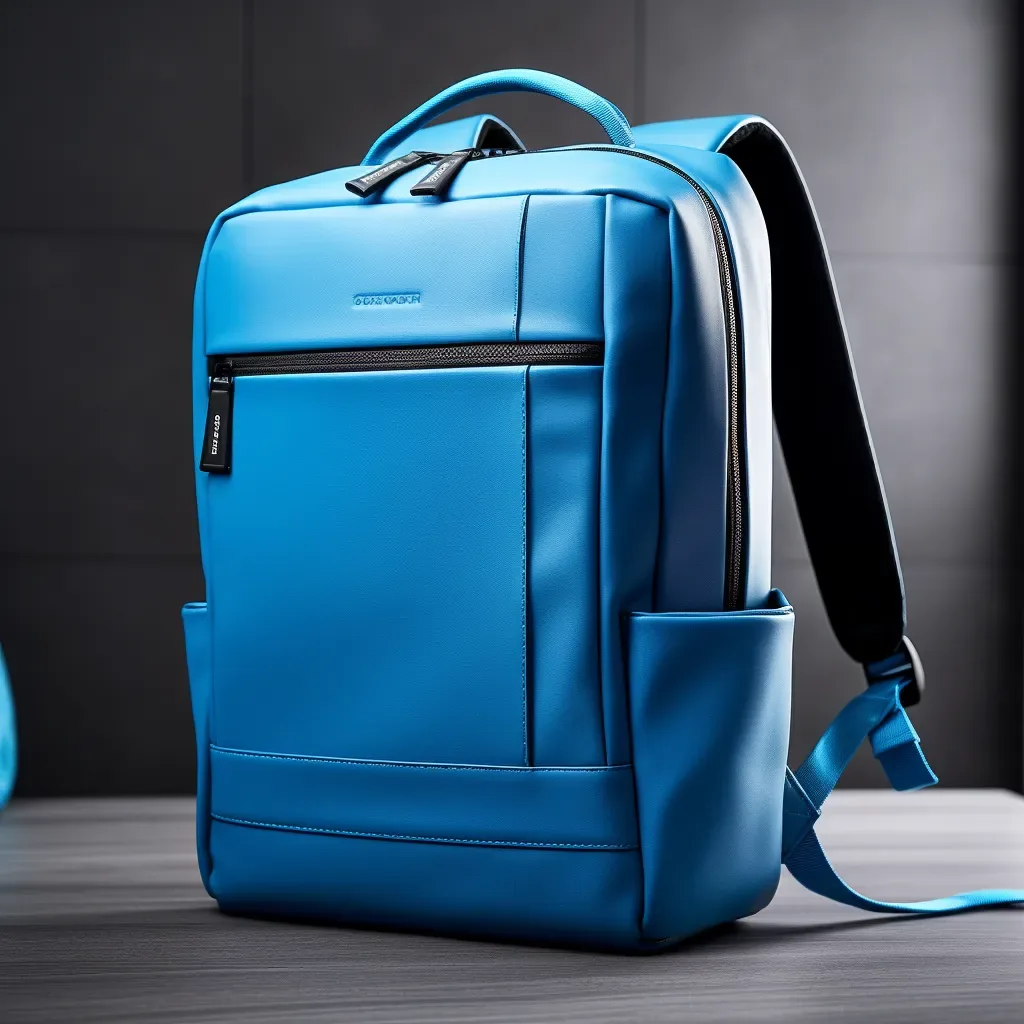
Bespoke Backpacks
Volume, harness geometry and rated load are set on the tech pack first; styling follows the engineering, not the other way round.
A bespoke backpack is a load-carrying bag specified to your own brief — volume, back panel, strap geometry, device bay and trim — rather than adapted from a stock block. Programmes begin at 500 pieces per style and colourway; sampling takes 6–10 working days, or 12–15 where custom hardware is tooled; bulk runs 35–50 days after sample approval. Every lot is sampled to AQL 2.5 under ISO 2859-1 and shipped FOB Xiamen.
Programme parameters at a glance
| Parameter | Commitment |
|---|---|
| Minimum order quantity | 500 pieces per style / colourway |
| Sampling lead time | 6–10 working days (12–15 days for complex constructions) |
| Bulk production lead time | 35–50 days after sample approval |
| Inspection standard | AQL 2.5 (ISO 2859-1), single sampling, general level II |
| Incoterms | FOB Xiamen — EXW, CIF and DDP available on request |
| Payment terms | T/T 30% deposit / 70% before shipment; L/C at sight for container loads |
| Verified production floor space | 4,950 m² (SGS-verified) |
| Team | 137 staff across 7 production lines |
| Equipment | 149 machines including computerised saddle-stitch and edge-painting units |
| Monthly capacity | 200,000 pieces |
| Entity | Founded 2014; principal has worked in bag development since 2004 |
Load Paths: How a Backpack Carries Weight
A pack is the only bag in the range that transfers weight through the body, so it is costed as a structure rather than as a shape. The load path runs from the top attachment of each strap, down through the webbing, across the back panel and into the base seam. Every junction on that path becomes a candidate failure point once the bag is filled, and each one has to be reinforced on the pattern rather than patched in bulk.
Strap geometry and the shoulder line
Strap width, foam thickness and the angle at which the strap leaves the panel are specified together, because changing one moves the others. A 55 mm strap with 8 mm foam suits a 5 kg daypack; a 10 kg travel build wants 75 mm, 12 mm foam and a sternum strap set 150–200 mm below the collar. Load lifters, trimmed at 15–25 degrees from vertical, pull the top of the pack toward the shoulders and stop it swinging away from the back.
| Band | Volume (L) | Body H × W × D (cm) | Rated load (kg) | Harness specification |
|---|---|---|---|---|
| Daypack | 14–18 | 38 × 27 × 13 | 5 | 55 mm webbing, 8 mm foam, no sternum strap |
| Commuter | 20–26 | 44 × 30 × 15 | 7 | 65 mm S-curved straps, 10 mm foam, sternum strap |
| Laptop carry | 24–30 | 46 × 31 × 17 | 8 | 70 mm straps, moulded panel, load lifters |
| Travel | 32–40 | 50 × 32 × 19 | 10 | 75 mm straps, removable waist belt, ventilated panel |
| Technical | 44–55 | 54 × 34 × 22 | 14 | 80 mm straps, framed panel, hip fins |
Rated load is not a marketing figure. It sets webbing break strength, stitch density at the attachment and the foam density used in the panel, and it is the number the test house works from when the sample is pulled, dropped and cycle-tested.
Shell Materials and Abrasion Budget
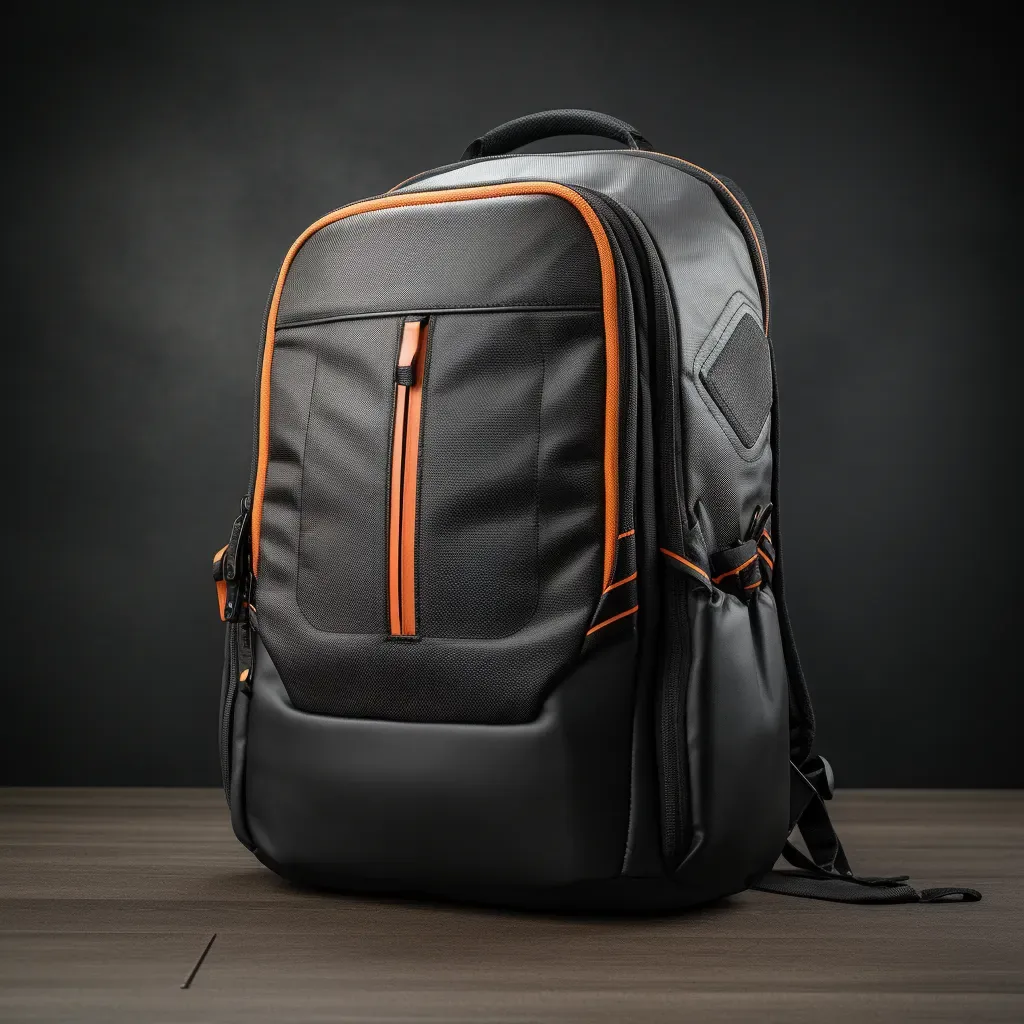
Fabric choice on a backpack is an abrasion decision before it is an aesthetic one. The base, the lower side panels and the strap roots take the wear; the front panel mostly takes sunlight and scuffing. Specifying two weights across one body — a heavier grade below the belt line, a lighter one above — buys durability where it matters without adding grams everywhere.
- Two-weight shells — a 1680D or leather base panel married to a 600D body, joined on a seam that falls above the wear line.
- Coating and finish — PU or TPU backing for water shedding, plus a durable water-repellent top finish renewed after laundering.
- Colour fastness — rubbing and light fastness specified to a grey-scale grade, so a dark shell does not mark light clothing.
- Recycled content — GRS-documented rPET where the brand reports recycled input, with the claim stated on the specification.
- Leather grading — hides graded before cutting, with the panel layout set so the strap faces and base come from the firmest area.
- Trim consistency — webbing, binding, cord and thread matched in one lab-dip pass against sealed approval dips.
Zips, Buckles and Trim Specification
Zip gauge is mapped to each opening rather than chosen once for the whole bag: #5 for internal pockets, #8 for the main compartment, #10 for a roll-top or a heavily loaded travel body. Metal Excella or Metaluxe chains are specified on leather-led builds; reverse-coil chains with a storm flap on weather-led ones. Sliders are cycle-tested, and pullers are tooled when the brand wants hardware that reads as its own.
Buckles, D-rings and ladderlocks are the second trim decision. Stock acetal hardware keeps cost down and performs well down to freezing temperatures; cast zinc alloy or aluminium hardware carries a plated finish and a higher tooling charge, and it is what survives a premium range's first winter.
Failure Modes Designed Against
Most warranty claims on backpacks trace back to six repeatable failures, and all six are preventable at the pattern stage. This table is the checklist the programme team works through before a first sample is cut.
| Failure | Begins at | Design response | Test that exposes it |
|---|---|---|---|
| Strap root tear-out | First 20 mm of stitch at the top attachment | 120 × 80 mm reinforcement panel, double-needle seam, bartack at the shoulder | 350 N pull, 60 second hold |
| Zip burst under load | Where the chain turns the top corner | Corner radius of 40 mm or more, taped reinforcement, zip garage | Loaded burst, 8 kg, 20 open-close cycles |
| Seam grin on the gusset | Gusset join after repeated flexing | 6 stitches per inch, 20 mm binding, tape-bonded seam allowance | Flex test, 500 cycles, visual assessment |
| Foam compression set | Back panel after long carries | Closed-cell EVA with density stated on the tech pack | Compression set, 22 hours at 70 °C |
| Water ingress | Needle holes along the top seam | 20 mm seam tape, DWR finish, 30 mm rain-flap coverage | Shower test, 5 minutes, 300 mm head |
| Corner abrasion | Base corners dragged on rough ground | 1680D panel or 1.2 mm leather wrap, 15 mm corner radius | Martindale abrasion, 40,000 cycles |
Two of those six — strap root tear-out and zip burst — account for the majority of returns in the category, and both are fixed by geometry rather than by a more expensive material.
From Brief to Sealed Sample
- Send a sketch, a reference pack or a full tech pack, stating volume and rated load alongside the dimensions.
- A costed specification with indicative FOB Xiamen pricing comes back within 2–3 working days.
- The pattern and harness are digitised and the proto is cut in the nearest stock material.
- The first build arrives in 6–10 working days and is reviewed loaded, on a wearer, not on a table.
- One revision round applies harness and geometry corrections, typically 4–6 working days.
- A pre-production sample is built in bulk materials and finish — 6–10 days, 12–15 with custom hardware.
- That sample is sealed as the reference; bulk production then runs 35–50 days after approval.
Material intake is the least compressible block in that sequence. Stocked shell fabric arrives within days; a dyed-to-match canvas or a specified leather finish with a lab-dip loop adds up to three weeks, and no amount of schedule pressure shortens a dye house.
Acceptance Criteria and Test Regime
Finished lots are sampled to AQL 2.5 under ISO 2859-1, single sampling, general inspection level II, with findings logged as critical, major or minor. Because both sides work from the same sampling arithmetic, a disagreement about a lot is resolved by counting rather than by arguing about impressions.
- Physical testing — strap pull, seam strength, zip cycling, abrasion and colour fastness run against ASTM methods; leather builds can be tested for grain-crack resistance under ASTM D2210 where requested.
- Loaded assessment — packs are assessed filled to their rated load, since an empty bag hides almost every structural defect.
- Chemical compliance — REACH and CPSIA declarations issued with the programme; OEKO-TEX Standard 100 fabrics and linings, and LWG-sourced hides, available where the brief requires them.
- Production base — an SGS-verified 4,950 m² floor in Quanzhou, Fujian, with documented quality and environmental procedures aligned with ISO 9001 / ISO 14001 principles, with 137 staff across 7 lines and 149 machines.
- Records — sealed samples, approved lab dips, component lists and inspection reports held against the style so a repeat order matches the original.
Where a programme sells into a market with its own product-safety rules, the declaration set is agreed at costing rather than at shipment. Adding a test after the lot is packed is the most expensive way to discover a requirement.
Access and organisation decide how the volume is used
Two packs of identical litre capacity behave completely differently depending on how that volume is reached. A single top-loading opening is efficient to build and awkward to live with. A full clamshell opens flat but needs a structured base to stand up when empty. A front panel opening suits a device and a notebook but adds a seam in the wear zone. The access plan is chosen before the panel layout, because it determines where seams fall and where the structure has to work.
| Access type | Suits | Build note | Trade-off |
|---|---|---|---|
| Top loader with lid | Travel and technical volumes above 30 L | Fewest seams, easiest to seal against weather | Contents buried beneath later items |
| Clamshell main opening | Laptop carry and business travel | Needs a structured base panel to stand | More zip length and higher unit cost |
| Front panel zip | Commuter packs with a device bay | Panel seam taped on the inside | An extra seam inside the wear zone |
| Side access sleeve | Photography and device-first use | Reinforced opening with a storm flap | Narrows the usable main volume |
| Roll-top closure | Variable loads and weather-led ranges | Extended gusset with side buckles | Slower access with one hand |
| Separate base compartment | Footwear, laundry or wet kit | Divided floor with a taped seam | Reduces main-compartment height |
Organisation follows the same logic. A commuter pack earns its pockets, a travel pack earns a flat-opening main body plus a small valuables pocket, and a technical pack earns attachment points and compression. Adding every feature to every pack produces a heavy bag that no single user finds convenient.
Fit across a size range rather than on one wearer
A pack that fits the wearer standing in the showroom fails the customers at both ends of the range. Fit is governed by torso length, usable strap adjustment and sternum strap position, and all three are specification numbers rather than impressions formed over a photograph.
The cost of skipping this is a return rate rather than a sample revision. A pack that presses into the neck of a shorter wearer, or swings off the shoulders of a taller one, is rarely reported as a fit problem; it is reported as a strap problem, and the correction is then attempted in the wrong place.
Keep the empty weight honest
Empty weight is where a backpack specification quietly drifts. Every added feature is defended individually and they accumulate: a moulded panel, a frame sheet, hip fins, a rain cover, a second compartment and heavier trim together can add half a kilogram to a pack that was costed as a daypack.
- Set an empty weight target per volume band at costing and treat it as a controlled figure rather than a result.
- Weigh the first prototype empty; even a proto cut in the nearest stock material gives a reliable weight signal.
- Look for grams in the frame sheet and the moulded panel before touching the shell fabric.
- Compression straps, hip fins and a rain cover each add weight; specify them only where the use case earns them.
- Hardware is the fastest place to save, since stamped and acetal fittings weigh a fraction of cast equivalents.
- Record the sealed sample weight on the approval sheet so bulk can be compared against a number.
There is a floor below which saving weight costs durability. A pack lightened at the base seam or the strap root trades a few hundred grams for the failure mode that dominates returns, which is why the weight target is written alongside the rated load rather than instead of it.
Branding, labelling and care information on a technical product
A pack offers more branding positions than most bags, and more constraints. The front panel is the obvious location and the one most likely to abrade; the shoulder strap is visible whenever the product is worn; the interior label is where fibre content, care and origin information normally has to live. Each position has a method that suits it.
| Placement | Method | Constraint | Approval record |
|---|---|---|---|
| Front panel | Woven label, rubber patch or embroidery | Must survive abrasion testing on the shell | Abrasion result against the sealed sample |
| Shoulder strap | Woven label or print | Sits in the wear zone and lifts at the edges | Wash and rub check |
| Zip puller | Tooled logo or laser detail | Tooling charge and a component minimum | Approved physical sample |
| Interior label | Printed satin or woven label | Fibre content, care and country of origin | Printed proof approved |
| Hangtag and barcode | Printed card and label | Retailer placement rules | Proof approved with the packaging |
| Rain cover or base | Print or heat transfer | Flexes and folds in service | Flex check on the approval sample |
Standard terms are T/T with a 30% deposit and 70% before shipment, quoted FOB Xiamen, and lots are inspected at AQL 2.5 under ISO 2859-1, single sampling, general level II. Bulk after sample approval runs 35–50 days; sampling takes 6–10 working days, or 12–15 with custom hardware. The programme minimum is 500 pieces per style and colourway, and small-batch pilots suit a first size run. Send the brief to service@junyuanbags.com or WhatsApp 0086 17750020688, or develop a full range through custom design.
Brief a backpack programme
Send volume, rated load and a sketch or reference pack. The programme team returns a costed harness specification and a sampling schedule.
Frequently Asked Questions
How is a backpack's rated load decided before sampling?
Rated load is stated on the brief and drives every downstream choice: webbing break strength, foam density, stitch density at the attachment and the reinforcement panel size. A 5 kg daypack and a 14 kg technical pack use different harnesses even at the same volume. Stating the figure early prevents the most common revision round, which is a harness rebuilt after the first sample.
Can the back panel be specified in a different foam or mesh?
Yes. Closed-cell EVA from 8 mm to 12 mm, at densities between 55 and 70 kg/m³, is the starting point, faced with 4 mm spacer mesh for ventilation or brushed tricot for a cleaner look. Moulded panels suit laptop carry; framed panels with hip fins suit loads above 12 kg.
What strap width should a leather daypack use compared with a technical pack?
Leather daypacks usually run 55–65 mm straps with a leather facing over 8 mm foam, because a wider strap fights the stiffness of the hide. Technical packs at 10 kg and above run 75–80 mm with a sternum strap and load lifters. Width is specified with foam thickness, never separately.
How do you stop water entering through the needle holes?
Seam tape bonded over the needle line is the reliable fix, at 20 mm width along the top seam and across the shoulder yoke. A durable water-repellent finish and a rain flap with at least 30 mm of coverage over the main zip complete it. Shower testing runs for five minutes at a 300 mm head.
Can we set our own abrasion target for the shell fabric?
Yes. Targets are written as Martindale cycles on the tech pack — commonly 20,000 for 600D recycled polyester, 30,000 for 900D and 40,000 for 1680D ballistic nylon. Report results are arranged before bulk release, and the figure is re-checked on incoming fabric lots during production.
Which zip gauges do you map to each opening?
Number 5 for internal pockets and organiser panels, number 8 for the main compartment, and number 10 for roll-tops or travel bodies that carry 10 kg or more. Leather-led builds take metal Excella or Metaluxe chains; weather-led builds take reverse-coil chain behind a storm flap, cycled 5,000 times.
Is a rain flap worth specifying on a zip-top pack?
Yes, on any pack sold into a wet climate or specified for cycle commuting. A flap with 30 mm of coverage costs a few grams and one extra seam, and it removes the most common wet-weather complaint. It also hides the zip line, which is why many fashion ranges specify it for appearance alone.
How many sample rounds are typical for a first backpack?
Most programmes settle after one proto and one pre-production sample, with a single revision round between them. Harness geometry is the usual reason for a second revision, so reviewing the first build on a wearer rather than on a bench shortens the cycle more reliably than any schedule pressure.
Can hardware finishes be matched to an existing product line?
Finishes are matched against a physical reference sample you send, then confirmed on a plated lab sample before tooling. Gunmetal, light gold, brushed nickel and palladium are the usual requests. Matching across webbing, thread and plated metal is done in one approval pass, because metal and textile read differently under retail lighting.
What happens if a bulk lot fails at AQL 2.5?
The lot is not released. Findings are classified critical, major or minor; a major-driven failure triggers rework or a re-run against the sealed sample, and the cost sits with whoever the specification assigns it to. Third-party inspection before shipment is welcome, and the same AQL arithmetic applies.
How is fit checked across a range of wearer sizes?
The sealed sample is fitted, loaded to its rated load, on the shortest and tallest wearer in the intended range. Torso coverage, usable strap adjustment of 350–450 mm and an adjustable sternum track of 150–200 mm are the three numbers that decide whether one body covers the range.
Which access type suits a commuter backpack best?
A front panel or clamshell opening, because a commuter reaches for a laptop and a notebook several times a day rather than unpacking from the top. The panel seam is taped inside and the base is structured so the pack stands when set down.
How is the empty weight of a backpack controlled?
An empty weight target is set per volume band at costing, the first prototype is weighed, and the sealed sample weight is written onto the approval sheet. Savings are found in the frame sheet, the moulded panel and hardware before the shell fabric is considered.