Bespoke Bag Services
One accountable team from first sketch to final inspection — programme-managed, AQL 2.5 (ISO 2859-1) audited, delivered FOB Xiamen.
The seven service lines below are not separate departments. They are stages of one programme, and the reason they are documented separately is that buyers enter at different points: some arrive with a finished tech pack, some with a mood board, some with a competitor's bag and a target price. Knowing where you enter is what makes the first quotation accurate instead of optimistic.
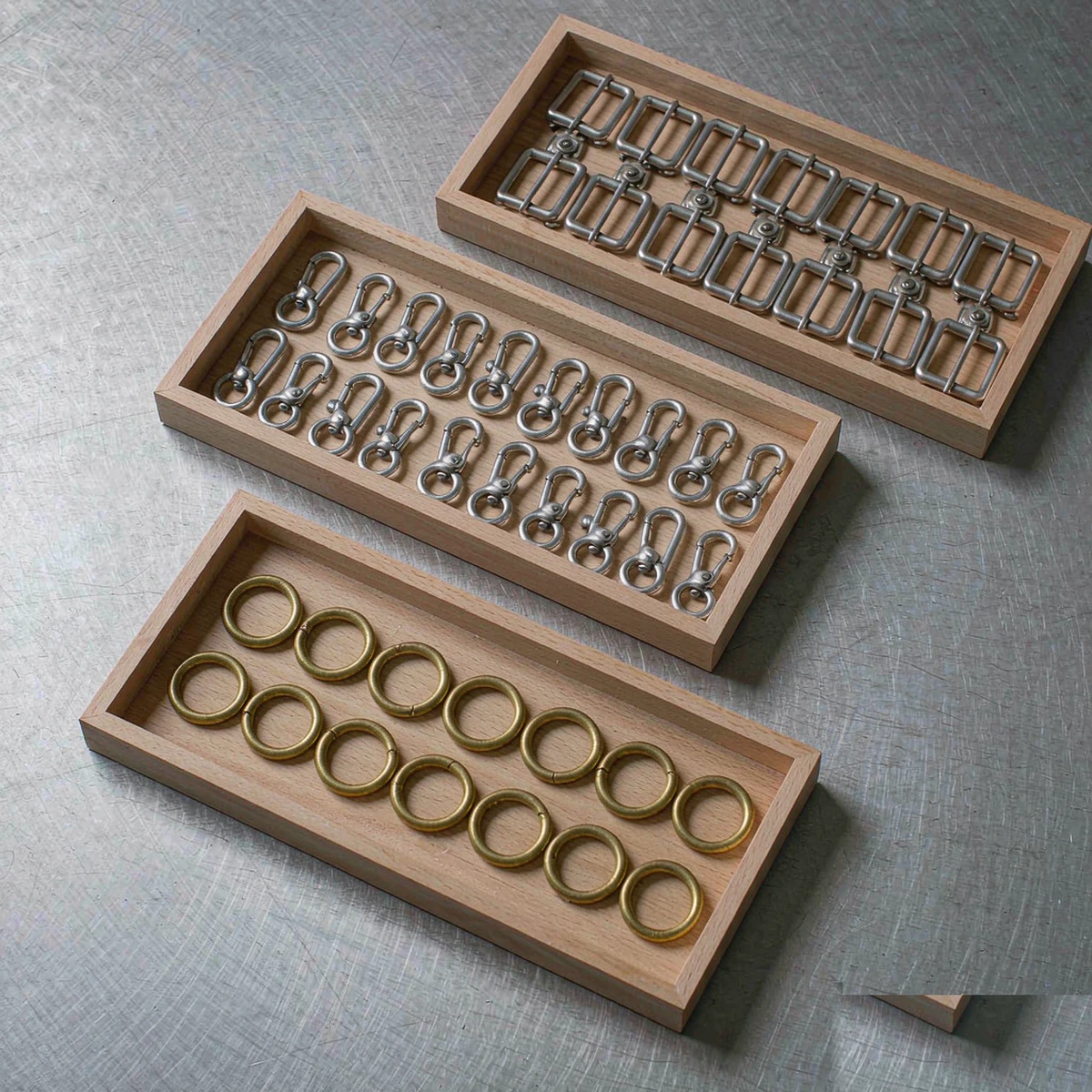
Custom Design Service
Custom design service for leather bags: concept sketches, technical drawings, pattern development and sealed
OEM & ODM Service
OEM and ODM service for leather bags: build to your tech pack or adapt a proven base construction. MOQ 500
Private Label Service
Private label service for leather bags: your branding on proven constructions, with custom logos, linings
Small Batch Production
Small batch production for leather bags: low-volume pilot runs below the 500-piece standard, tested, inspected
Quality Control and Inspection
Quality control and inspection to AQL 2.5 (ISO 2859-1), single sampling, general level II, with staged checks
Logistics and Shipping
Logistics and shipping for bespoke bag programmes: FOB Xiamen as standard, EXW, CIF and DDP on request, with
Wholesale Programmes
Wholesale programmes for leather bags: volume tiers from 500 pieces, repeat scheduling, full branding, AQL 2.5
Programme parameters at a glance
| Parameter | Commitment |
|---|---|
| Minimum order quantity | 500 pieces per style / colourway |
| Sampling lead time | 6–10 working days (12–15 days for complex constructions) |
| Bulk production lead time | 35–50 days after sample approval |
| Inspection standard | AQL 2.5 (ISO 2859-1), single sampling, general level II |
| Incoterms | FOB Xiamen — EXW, CIF and DDP available on request |
| Payment terms | T/T 30% deposit / 70% before shipment; L/C at sight for container loads |
| Verified production floor space | 4,950 m² (SGS-verified) |
| Team | 137 staff across 7 production lines |
| Equipment | 149 machines including computerised saddle-stitch and edge-painting units |
| Monthly capacity | 200,000 pieces |
| Entity | Founded 2014; principal has worked in bag development since 2004 |
The Seven Service Lines
Custom Design
Sketch, reference or mood board in; a dimensioned pattern set, material card and costed sample out.
Design development runs in three passes. The first converts your reference into a construction proposal — panels, gusset depth, handle attachment, closure type. The second turns that into a technical drawing with measurements and tolerances. The third is the sample itself, photographed at review stage before it ships. You approve the drawing before anything is cut, which is why most programmes need one revision round rather than three.
Read the full Custom Design page
OEM & ODM
Build exactly to your tech pack, or start from a proven developing style and make it yours.
OEM means the specification is yours and we build to it, including your pattern if you have one. ODM means the construction already exists in the development library and you change material, colour, hardware, lining, logo method and dimensions to fit your brand. ODM is faster and cheaper on the first order because the pattern set is proven; OEM gives total control and needs a complete tech pack before quoting.
Private Label
Your branding on a proven construction, launch-ready in one production cycle.
Private label suits brands whose first priority is speed to market with a finished-looking product. The construction stays fixed; your logo goes on through deboss, foil, woven label, metal plate or print, and the packaging set — dust bag, hang tag, care card, carton mark — is built around it. Because nothing structural changes, sampling is shorter and the first order carries less risk than a from-scratch development.
Read the full Private Label page
Small Batch
Low-volume runs that let a brand test a hypothesis before committing to a full production slot.
Small batch exists for the gap between a sample and a container. It is a real production run — same materials, same line, same inspection standard — at a volume below the standard minimum, priced accordingly. Brands use it to test one silhouette in one market, to fulfil a pre-order campaign, or to bridge a season while the main range is still in development.
Read the full Small Batch page
Quality Control
AQL 2.5 (ISO 2859-1) inspection embedded at four points, not bolted on at the end.
Inspection happens at incoming material, in-line, pre-final and final. Incoming material checks leather shade and thickness against the approved card, because a dye-lot drift caught here costs a conversation and caught after cutting costs a run. In-line checks catch construction drift while the line can still correct it. Final inspection uses AQL 2.5 (ISO 2859-1), single sampling, general level II, with a written report and photographs issued before shipment.
Read the full Quality Control page
Logistics
FOB Xiamen as standard; CIF and DDP arranged on request, with documents issued before the vessel sails.
FOB Xiamen is the default because it keeps control of freight and insurance with the buyer's forwarder. CIF and DDP are arranged when a brand wants one landed number and no forwarding relationship. Export documentation — commercial invoice, packing list, bill of lading, certificate of origin, and any test report a market requires — is prepared alongside production rather than after it, so a booking date is not held up by paperwork.
Wholesale
Volume pricing and repeat-order stability for retailers and distributors.
Wholesale programmes are priced on the same cost basis as custom work but planned across a season rather than a single order: colourways are locked together, material is reserved in one lot to keep shade consistent across the run, and repeat orders are scheduled into the capacity plan in advance. That is what stops the second delivery from arriving in a slightly different brown.
Where Each Service Fits a Programme
Most programmes use three of the seven, not all of them. The pattern below is the common shape for a first collection; a repeat order collapses to two.
| Stage | Service | Output |
|---|---|---|
| Concept | Custom design or ODM selection | Construction proposal and technical drawing |
| Validation | Sampling, then Small batch if needed | Approved sample and a specification sheet |
| Production | OEM, ODM or Private label | Bulk run at 35–50 days after approval |
| Release | Quality control and logistics | AQL 2.5 report, photographs, shipping documents |
| Repeat | Wholesale planning | Reserved material lot and a scheduled capacity slot |
What We Do Not Do
Stating the boundary is more useful than another list of capabilities, because a programme that should not be here wastes the buyer's first month.
| Not offered | Why, and what to do instead |
|---|---|
| Single-unit or gift-size runs | Below roughly 100 pieces the material lot, line setup and inspection cost more than the goods. Use a retail leather-goods supplier for one-off pieces. |
| Retail fulfilment and dropshipping | Programmes ship FOB, CIF or DDP in cartons. Pick-and-pack, marketplace labelling and last-mile delivery are handled by a third-party logistics provider. |
| Retail-branded copies of protected designs | Patterns and trade dress belonging to another brand are not reproduced. A design that is inspired by a silhouette but built on your own pattern is a normal brief. |
| Certification held in our name for your label | Third-party quality-system and social-compliance audits can be arranged for a programme; the certificate then names the audited entity, and a brand cannot present it as its own. |
Frequently Asked Questions
Which service should a first-time brand start with?
Private label if speed matters most, custom design if the shape is the point. Private label uses a proven construction and changes only branding, so sampling is shorter and the first order carries less risk. Custom design costs more in development but produces something no one else sells.
Can services be combined in one order?
Yes, and most orders do: a programme typically runs custom design or ODM selection, then sampling, then bulk production with quality control and logistics attached. The 500-piece minimum applies per style and colourway, so combining services does not multiply the threshold.
What is the difference between OEM and ODM in practice?
OEM means the specification is yours and the programme builds to it, including your pattern if you have one. ODM means the construction already exists and you change material, colour, hardware, lining, logo method and dimensions. ODM is faster and cheaper on the first order; OEM gives total control and needs a complete tech pack before quoting.
How is quality control different from a final inspection?
Final inspection is one of four checkpoints. Incoming material is checked against the approved leather card, in-line checks catch construction drift while the line can still correct it, pre-final checks assembly and hardware, and final inspection applies AQL 2.5 (ISO 2859-1) with a written report and photographs issued before shipment.
Do you handle freight and customs clearance?
FOB Xiamen is standard, which leaves freight and insurance with the buyer's forwarder. CIF and DDP are arranged on request when a brand wants one landed number. Export documents — invoice, packing list, bill of lading, certificate of origin and any required test report — are prepared alongside production.
Tell us what you are building
Share your brief and receive a structured programme proposal — sampling plan, MOQ options and a delivery schedule.