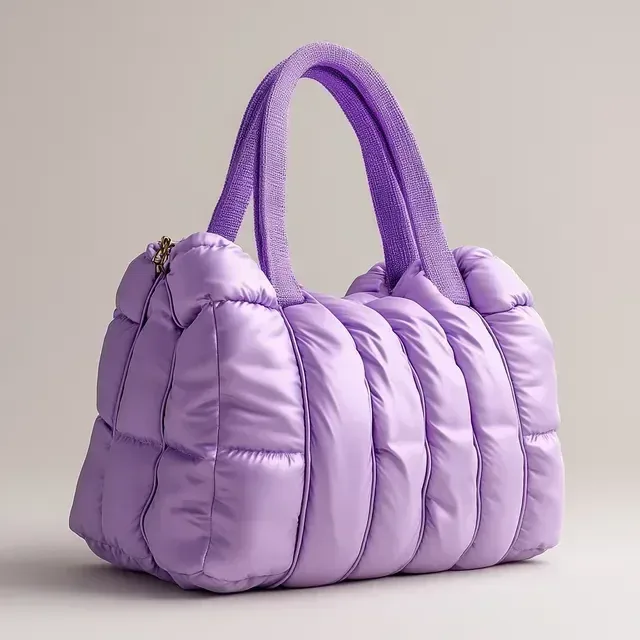
A bespoke wash bag is a small, purpose-built toiletry case, typically 2–6 litres, designed to contain liquids, gels and grooming tools without allowing leakage to reach other luggage. Commercially it is the highest-leverage accessory in a travel range: inexpensive to develop, frequently purchased as a gift or add-on, and often the first piece a customer buys before committing to a larger travel bag. Sampling runs 6–10 working days and bulk production 35–50 days after approval.
Its small size is deceptive. A wash bag concentrates more failure modes per square centimetre than any other piece in the category: leakage, staining, odour, mould, hardware corrosion and zip seizure induced by dried product. Every one of those is addressed at specification stage, and almost none can be corrected afterwards.
This guide sets out how we approach the format on our production floor in Quanzhou, Fujian, from capacity and lining choices through to the hardware that has to survive repeated contact with water.
Programme parameters at a glance
| Parameter | Commitment |
|---|---|
| Minimum order quantity | 500 pieces per style / colourway |
| Sampling lead time | 6–10 working days (12–15 days for complex constructions) |
| Bulk production lead time | 35–50 days after sample approval |
| Inspection standard | AQL 2.5 (ISO 2859-1), single sampling, general level II |
| Incoterms | FOB Xiamen — EXW, CIF and DDP available on request |
| Payment terms | T/T 30% deposit / 70% before shipment; L/C at sight for container loads |
| Verified production floor space | 4,950 m² (SGS-verified) |
| Team | 137 staff across 7 production lines |
| Equipment | 149 machines including computerised saddle-stitch and edge-painting units |
| Monthly capacity | 200,000 pieces |
| Entity | Founded 2014; principal has worked in bag development since 2004 |
What a Wash Bag Has to Survive
The design brief for a wash bag starts with a list of hostile conditions rather than a list of features. Liquids leak, shampoos stain, razors scratch linings, wet contents promote mould, and zips fill with dried residue. A specification that acknowledges those five conditions will outperform one that simply looks premium in photographs.
| Hazard | Effect if unaddressed | Specification response |
|---|---|---|
| Liquid leakage | Staining of other luggage and garments | Seam-sealed or welded liner; leak-tested sample |
| Spilled grooming products | Permanent staining and odour | Dark or solution-dyed lining; wipe-clean interior |
| Sharp tools and bottles | Lining perforation, then leakage | Abrasion-resistant liner; internal retention loops |
| Residual moisture | Mould, mildew and persistent smell | Ventilation, removable liner or perforated internal pocket |
| Corrosive contact | Hardware tarnish and zip seizure | Corrosion-resistant finish; avoid untreated ferrous components |
| Rough handling in transit | Distorted shape, damaged zip | Semi-rigid base; stiffened opening |
The most common specification error in this category is treating the outer shell as the primary decision. The shell determines how the piece looks on a shelf; the lining and the seam treatment determine whether it works. Buyers should be prepared to spend specification attention in roughly reverse proportion to the size of the components.
Capacity and Format: Dopp Kit, Hanging Roll, Tray
Four formats cover the commercial range, and each suits a different user. Choosing between them is a question of how the traveller packs and where they will unpack, not of price.
| Format | Capacity | Best for | Specification note |
|---|---|---|---|
| Classic dopp kit | 2–4 litres | Most travellers; gift programmes | Simple box or wedge; the lowest development cost |
| Hanging roll | 3–5 litres | Small or shared bathrooms | Needs a load-rated hook and a stable rolled geometry |
| Hanging wash bag with shelves | 4–6 litres | Longer trips, hotel stays | Internal shelves must not collapse when loaded |
| Tray or zip-flat format | 2–4 litres | Airport security, quick access | Opens flat to lie on a counter; consider a detachable pouch |
| Pouch set | 1–3 litres per piece | Gifting and travel sets | Small pieces share materials with larger bags in the range |
The hanging formats deserve a caution. A hanging wash bag with internal shelves is genuinely useful, but shelves that are not reinforced will sag once loaded with full-size bottles, and the whole assembly then pulls on the hook. Where the brief includes a hanging format, specify a hook rated well above the expected loaded weight and a shelf structure that is supported from the back panel rather than suspended between side seams.
Water Management: Lining, Seams and Ventilation
Water management is the technical core of a wash bag, and it operates at three levels: the surface of the lining, the seams that join the lining, and the ventilation that allows residual moisture to escape when the bag is closed.
A leak test is essential before bulk release. Fill the sample with water to a defined level, close it, and leave it supported on absorbent paper overnight. Any dampness on the outer shell or at a seam identifies a specification fault while it is still cheap to correct. This test is quick, unambiguous and eliminates the single most damaging complaint in the category.
Opening Systems and Access
Wash bag openings must do three things: allow the contents to be seen and reached without unpacking, close securely enough to contain a leak, and survive repeated contact with wet, sticky hands. A single long zip across the top satisfies all three when specified properly and fails all three when specified casually.
| Opening type | Access | Leak containment | Consideration |
|---|---|---|---|
| Single top zip | Good | Good with a sealed liner | Simplest and most robust; the default choice |
| Full-length curved zip | Excellent; opens flat | Good | Requires aperture stability to avoid zip binding |
| Zip with storm flap | Moderate | Very good | Slows access; suits wet or humid deployment |
| Zip plus detachable inner pouch | Excellent | Good | Adds flexibility; pouch can be carried separately |
| Magnetic or press-stud flap | Fast | Poor without an inner liner | Suitable only for dry contents |
Slider behaviour matters more here than on any other bag type, because product residue collects in the teeth and slider channel. A large, smooth slider with a generous pull is easier to operate with wet hands and less prone to seizure than a small decorative one. Where the piece is intended for daily use, specify a slider that can be cleared easily, and note in the care instructions that the zip should be rinsed periodically.
Materials That Tolerate Bathrooms
The outer material of a wash bag lives in a hostile environment: steam, splashes, cosmetics and repeated handling with damp hands. Appearance matters, because this is a gift-facing product, but the material's response to moisture matters more.
| Material | Moisture response | Verdict |
|---|---|---|
| Pebble-grain finished leather | Wipes clean; resists staining | Strong choice; conceals wear well |
| Full-grain leather | Absorbs splashes; patinates unevenly if abused | Good for gifting; advise care to the end user |
| Saffiano or pigmented finish | Excellent; highly resistant to staining | Best for business and hospitality programmes |
| Waxed cotton canvas | Water-resistant, re-waxable | Good for casual and outdoor positioning |
| Coated canvas or TPU-backed textile | Excellent; fully wipeable | Best value for utility and hotel programmes |
| Vegetable-tanned leather | Marks badly on contact with water | Avoid for wash bags unless treated |
Compliance and certification follow the same pattern as the rest of a leather goods programme. EU-bound shipments require REACH conformity on chrome VI and azo dyes; US-bound shipments require correct country-of-origin labelling and, where the item falls within scope, CPSIA paperwork. OEKO-TEX-certified linings are particularly relevant here, since the lining is in direct contact with personal care products.
Hanging and Placement Hardware
Where a wash bag hangs, the hook carries the full loaded weight and is subject to the most demanding force in the piece: a sudden pull when the bag is grabbed. Hardware selection here should be argued from rated load rather than from appearance.
- Hook type: a swivel hook with a positive gate closure resists accidental release; simple open hooks fall off rails under load.
- Hook attachment: anchor it into a reinforced tab or panel, never into a single layer of shell or into the lining alone.
- Load rating: specify a figure well above the expected loaded weight, allowing for the shock load of a sudden pull.
- Finish: corrosion-resistant plating or a non-ferrous material; untreated ferrous components will rust in a bathroom environment.
- Alternative placement: a flat base and a stable standing geometry allow the bag to be used without hanging, which many travellers prefer.
- Corner protection: reinforced corners reduce the scuffing that comes from constant counter and shelf contact.
A practical test at sampling is a shock-load trial: hang the loaded sample and apply a sharp downward pull, repeated, checking the attachment tab and anchor stitching each time. It is a five-minute test that predicts hook failure more reliably than any visual assessment.
Branding and Personalisation at Programme Scale
Wash bags are among the most frequently personalised pieces in a travel range, both because they are common gifts and because they suit small, discreet marking. The technical constraint is that small panels and curved surfaces limit the branding methods available.
| Method | Suits | Durability | Volume consideration |
|---|---|---|---|
| Blind deboss | Leather panels and trim | Excellent; deepens with use | Die cost, then low unit cost |
| Foil hot stamp | Flat finished leather and coated textiles | Good on low-flex areas | Die plus foil; efficient at scale |
| Metal logo plate | Front panels and zip pulls | Very good; may scratch | Component cost per piece |
| Woven label | Linings and internal pockets | Good in low-abrasion positions | Lowest cost; minimum label quantities apply |
| Monogram or initials | Individual gifting | Excellent when debossed or stamped | Requires per-unit variation; confirm capability before promising |
Where a programme includes individual monogramming, confirm the capability and the workflow before it is promised to end customers. Per-unit variation adds a handling step, and the practical effect on lead time should be understood at sampling rather than discovered during a gifting season.
Specifying and Ordering Wash Bags
Wash bags settle quickly because the number of variables is small. Buyers who define contents, format, lining and hanging behaviour usually approve in one round, and the piece becomes the low-risk entry point for a wider travel programme.
- List the contents, including the tallest bottle and the largest container.
- Choose format and capacity from that list.
- Specify the liner: material, colour, seam treatment and base well.
- Decide whether the piece hangs and, if so, select a load-rated hook.
- Select the outer material on moisture response rather than appearance alone.
- Rank branding options and confirm whether individual personalisation is required.
- Approve a leak-tested physical sample before releasing bulk.
Bulk runs are released after inspection at AQL 2.5 under ISO 2859-1, single sampling, general level II, with added functional checks on zip travel and seam integrity. Our SGS-verified production floor in Quanzhou covers 4,950 m² across seven lines with 137 staff and 149 machines, reaching up to 200,000 pieces per month. Standard shipping is FOB Xiamen, with EXW, CIF and DDP on request, and payment is a 30% deposit with the balance before shipment.
Order bespoke wash bags for your programme
Send the contents list, format preference and branding requirements to service@junyuanbags.com, or contact the programme team on WhatsApp at +86 177 5002 0688. We will return a material and lining schedule with sampling dates.
Frequently Asked Questions
What is the best size for a wash bag?
Most travellers are best served by 3–4 litres, which accommodates full-size bottles, a razor, a toothbrush and grooming tools without wasted volume. Sizes below 2 litres suit minimal or overnight kits; sizes above 5 litres become impractical to pack alongside clothing. The dependable method is to measure the tallest bottle and the largest container you intend to carry, then specify the bag around those two dimensions.
What lining should a bespoke wash bag have?
A wipe-clean, non-absorbent liner such as coated polyester, TPU-backed fabric or seam-sealed microfibre. The seam treatment matters as much as the surface: welded or heat-sealed seams are the only reliable barrier, and stitched seams need sealing tape. Mid to dark lining colours conceal product staining better than very light linings, and a slight base well contains spills away from the contents.
Do wash bags need to be waterproof?
A wash bag needs to contain leaks rather than be fully waterproof, since it is carried inside other luggage. The practical requirement is a sealed liner with welded or taped seams and a base well that holds a modest spill. Full waterproofing is neither necessary nor desirable, because a completely sealed bag traps moisture and encourages mould. A leak test on the sample is the reliable way to confirm performance.
What is the difference between a dopp kit and a wash bag?
Dopp kit is an American term for the same category, usually describing a simple box or wedge-shaped case opening on a single zip. Wash bag or toiletry bag is the broader term covering dopp kits, hanging rolls, tray formats and multi-piece pouch sets. The distinction is commercial rather than technical, though the dopp kit's simple construction gives it the lowest development cost and the fastest sampling.
Should a wash bag have a hanging hook?
A hook is valuable wherever bathroom counter space is limited, which is common in hotels and shared accommodation. The engineering requirement is a load-rated swivel hook with a positive gate closure, anchored into a reinforced tab rather than a single layer of shell. Shelved hanging formats need shelf structure supported from the back panel, since shelves suspended between side seams will sag once loaded with full-size bottles.
How do I stop a wash bag zip from seizing up?
Specify a large, smooth slider with a generous pull that is easy to operate with wet hands, and choose a geometry that keeps product residue out of the slider channel. Where a storm flap is fitted, it should not trap product in the teeth. Care instructions should advise rinsing the zip periodically. A seized slider is one of the most common complaints in this category and one of the easiest to prevent at specification stage.
Which leather is best for a wash bag?
Saffiano and other pigmented finishes perform best because they are highly resistant to staining and wipe clean easily. Pebble-grain finished leather is a strong alternative that conceals wear well. Full-grain leather gives a richer appearance and is a good gifting choice, but it absorbs splashes and should be accompanied by clear care guidance. Vegetable-tanned leather marks badly on water contact and is best avoided in this category.
How long does bespoke wash bag production take?
Sampling takes 6–10 working days from confirmation of materials and hardware, extending slightly where a leak-tested liner needs refinement or where individual monogramming is involved. Bulk requires a further 35–50 days from written approval, and freight is quoted separately. Because wash bags are often the tightest schedule in a gifting programme, their lead time should be set from the delivery date backwards rather than assumed.
What is the minimum order for bespoke wash bags?
Programme minimums are set at 500 pieces per style or colourway. Where a wash bag is part of a travel set, confirm whether the minimum applies per piece or across the set, because that changes the programme economics materially. Small-batch pilots are available for brands validating a new format, and where the design is unchanged the pilot shares tooling with the subsequent full production run.
Can wash bags be personalised with individual names?
Yes, and individual monogramming is common in gifting programmes, but the workflow should be confirmed before it is promised to end customers. Per-unit variation adds a handling step and affects lead time, so the practical impact needs to be understood at sampling rather than discovered during a peak gifting season. Blind deboss and foil stamp are the most durable methods for individual marking.
How can a wash bag be kept hygienic on long trips?
Choose a removable, washable liner or a perforated internal pocket that allows moisture to escape, and never store a damp wash bag sealed. On return, empty it, wipe the liner, leave it open to dry fully before closing, and store it unzipped. Where a piece is used daily, a spare liner allows one to be washed while the other is in use, which is the simplest hygiene solution available.
Are bespoke wash bags a good corporate gift?
They are among the strongest categories in corporate gifting: modest unit cost, high perceived value, universal usefulness and a natural fit for discreet monogramming. The practical requirements are restrained branding, a presentable box or dust bag, and a lead time that accounts for both sampling and bulk production ahead of the gifting season. Freight is efficient because the pieces are small and light.
What causes mould in a wash bag?
Mould results from residual moisture trapped in a sealed environment rather than from poor materials. Airtight liners, damp contents and immediate zipping after use combine to create the condition. The remedies are ventilation through a perforated pocket or mesh panel, a removable liner that can be dried separately, and clear care instructions telling users to air the bag open before closing it for storage.
How should a wash bag be inspected before shipment?
Follow AQL 2.5 under ISO 2859-1, single sampling, general level II, with defect classes agreed in advance and the approved sample available as reference. For wash bags specifically, add a leak test with water at a defined level left overnight, plus functional checks on zip travel, seam integrity, hook load and lining seam sealing. These are quick tests that eliminate the most damaging complaint in the category.
Can a wash bag be part of a matched travel set?
Yes, and it is usually the most efficient piece to develop first because its small panel area makes material trials inexpensive. A wash bag shares leather, thread, lining and hardware finish with a holdall or weekend bag, so a custom material or finish is validated at low cost before being committed to larger patterns. Where the pieces are designed together, the set reads as a collection rather than an assortment.
How should a leather wash bag be cleaned?
Wipe the exterior with a damp cloth and dry it immediately rather than leaving moisture on the surface, then condition lightly a few times a year depending on climate. Clean the liner with a mild soap solution and dry it thoroughly before closing. Avoid alcohol-based cleaners and abrasive pads, which strip finishes and mark pigmented leather. Never machine-wash a leather outer, even if the liner is removable.