
Leather Bag Amazon FBA Guide — From Factory to Fulfillment Center
January 20, 2025
• Bespoke Bags Editorial Team • 15 min read

The intersection of premium leather craftsmanship and Amazon's massive e-commerce ecosystem represents one of the most lucrative opportunities in the online retail landscape today. The global leather goods market continues to expand, and Amazon's platform processes billions of dollars in accessories sales annually. For entrepreneurs and established brands alike, selling leather bags through Amazon FBA (Fulfillment by Amazon) offers access to over 300 million active customer accounts, Prime eligibility, and the trust factor that comes with Amazon-fulfilled orders.
However, the path from factory production to Amazon's fulfillment center involves numerous critical decisions — material selection, compliance requirements, packaging specifications, pricing strategy, logistics coordination, and inventory management. One misstep in any of these areas can erode margins, trigger listing suspensions, or damage your brand reputation. This comprehensive guide draws on our experience as a bespoke bag specialist working to the trade since 2004 to walk you through every stage of the process.
Whether you're launching your first leather bag on Amazon or optimizing an existing FBA operation, this guide provides actionable insights to maximize your success.
Understanding the Amazon FBA Model for Leather Goods
Before diving into specifics, it's essential to understand how Amazon FBA works and why leather bags present both unique opportunities and challenges within this framework.
How FBA Works for Leather Bag Sellers
Amazon FBA (Fulfillment by Amazon) is a service where sellers send their products to Amazon's fulfillment centers, and Amazon handles storage, picking, packing, shipping to customers, and customer service. For leather bag sellers, this model offers several advantages:
- Prime Eligibility: FBA products automatically qualify for Amazon Prime, giving your leather bags access to over 200 million Prime members who expect fast, free shipping
- Buy Box Advantage: FBA sellers have a significant advantage in winning the Buy Box — the default purchase option that drives over 80% of Amazon sales
- Customer Trust: Amazon's A-to-z Guarantee and return policy reduce purchase anxiety, particularly important for higher-priced leather goods
- Multi-Channel Fulfillment: You can use Amazon's fulfillment network for orders from your own website or other sales channels
- Scalability: Amazon's infrastructure handles volume spikes during Prime Day, Black Friday, and holiday seasons without requiring you to scale operations
Why Leather Bags Are Particularly Well-Suited for FBA
Leather bags occupy a strategic sweet spot in the FBA ecosystem. They combine high perceived value with manageable fulfillment characteristics:
- Favorable Fee Structure: Most leather bags fall into standard-size tiers, keeping FBA fulfillment fees manageable relative to the product's selling price
- Low Return Rates: Quality leather bags typically see return rates of 3-5%, well below the Amazon average of 10-15% for fashion accessories
- High Average Order Value: Genuine leather bags typically retail for $50-300+, generating healthy absolute profit margins even after Amazon fees
- Durability in Transit: Leather's inherent resilience means products arrive at customers in excellent condition, reducing damage-related returns
- Brand Building Potential: Premium leather products foster repeat purchases, positive reviews, and brand loyalty that compound over time
Product Compliance and Regulatory Requirements
Compliance is the foundation upon which a sustainable Amazon FBA business is built. Leather products face specific regulatory requirements that, if overlooked, can result in listing removal, account suspension, or legal liability.
Essential Compliance Standards
Critical Warning: Amazon has intensified its compliance enforcement since 2023. Leather bag sellers may be required to submit test reports, certificates of compliance, or other documentation before listing activation. Failure to provide required documentation within Amazon's deadline results in immediate listing deactivation. Always work with your manufacturer to obtain proper test reports before inventory shipment.
Working with Your Manufacturer on Compliance
A reliable OEM manufacturer should be your first line of defense against compliance issues. At Bespoke Bags, our quality control system includes compliance verification at multiple production stages. We maintain relationships with accredited testing laboratories (SGS, Bureau Veritas, Intertek) and can arrange testing for all required standards as part of our OEM/ODM services.
Key compliance documentation to request from your manufacturer:
- Material test reports for heavy metals, phthalates, and restricted substances
- Proposition 65 compliance certificates or test results
- Material safety data sheets (MSDS) for leather treatments and finishes
- Country of origin documentation
- Product compliance certificates (General Certificate of Conformity for non-children's products)

Proper FBA packaging and labeling is essential for smooth fulfillment center receiving and inventory management
FBA Packaging and Labeling Requirements
Amazon has strict packaging and labeling requirements that must be followed precisely. Non-compliant shipments may be refused at the fulfillment center door, incur expensive prep fees, or trigger inventory holds that delay your launch timeline.
Individual Unit Packaging
Every leather bag must be individually prepared before shipment to Amazon FBA:
- Poly Bag Requirement: Each bag must be sealed in a clear poly bag with a minimum thickness of 1.5 mil (1.5 thousandths of an inch). The poly bag must have a suffocation warning printed on it or attached as a label.
- Suffocation Warning Text: Must read: "WARNING: To avoid danger of suffocation, keep this plastic bag away from babies and children. Do not use this bag in cribs, beds, carriages, or play pens. This bag is not a toy."
- FNSKU Label: Each unit must bear a scannable FNSKU (Fulfillment Network Stock Keeping Unit) barcode label. This is generated in your Amazon Seller Central account and must be placed on the outside of the poly bag in a position that is easily scannable.
- Interior Protection: Leather bags should be stuffed with acid-free tissue paper or inflatable air pillows to maintain shape during handling and transit. Avoid using newspaper or non-acid-free materials that could transfer ink or cause odor absorption.
- Dust Bags: For premium leather bags, consider including a branded cotton dust bag inside the poly bag. This enhances unboxing experience and reduces the likelihood of customer complaints about product presentation.
Master Carton Requirements
Labeling Best Practices for Leather Bags
Beyond Amazon's mandatory requirements, smart labeling practices protect your brand and enhance the customer experience:
- Brand Hang Tags: Include branded hang tags with product information, care instructions, and your brand story. Place inside the poly bag but outside the dust bag.
- Care Cards: Include leather care instruction cards — this reduces negative reviews from customers unfamiliar with leather maintenance and positions your brand as knowledgeable and caring.
- Authenticity Markers: For premium products, consider including authenticity cards, serial numbers, or QR codes linking to product stories.
- Review Insert Cards: While Amazon prohibits incentivized reviews, you may include cards requesting honest feedback. Follow Amazon's Terms of Service precisely to avoid policy violations.
Pricing Strategy: Maximizing Profit on Amazon FBA
Pricing leather bags on Amazon requires a nuanced understanding of your complete cost structure, competitive landscape, and the fee architecture that Amazon imposes. Getting this right is the difference between a profitable brand and one that sells volume while losing money.
Complete Cost Breakdown: From Factory to Customer
Pricing Strategy Framework
Successful Amazon leather bag sellers typically follow one of three pricing strategies:
1. Value-Entry Strategy ($39 – $79)
Targeting the accessible luxury segment with PU leather or split leather products. This approach relies on volume sales and requires aggressive PPC spending during launch. The challenge is maintaining perceived quality at this price point while achieving meaningful margins. Best suited for sellers with strong manufacturing cost advantages or those building brand recognition before moving upmarket.
2. Mid-Premium Strategy ($89 – $179)
The sweet spot for genuine leather bags. This range offers sufficient margin to absorb Amazon fees, PPC costs, and returns while remaining accessible to the broad Amazon customer base. Products in this range benefit from the "quality sweet spot" psychology — expensive enough to signal quality, accessible enough to avoid extensive comparison shopping. Our wholesale programs are structured to support sellers operating in this range.
3. Premium/Luxury Strategy ($199 – $499+)
Full-grain leather, top-tier hardware, and premium packaging targeting discerning buyers. Lower volume but significantly higher per-unit margins. Success at this level requires exceptional product photography, A+ Content, and brand building through Amazon Brand Registry. The lower competition at premium price points can be advantageous, but customer acquisition costs are typically higher due to the consideration purchase nature of the category.
Key Insight: Our data across hundreds of leather bag SKUs shows that the $89-$149 price range generates the optimal balance of volume, margin, and review velocity for most sellers. At this range, you can invest in full-grain leather quality while maintaining 25-35% net margins after all Amazon fees and advertising costs.
Competitive Analysis: Positioning Your Leather Bags for Success
The Amazon leather bag marketplace is competitive but far from saturated with quality products. Many listings suffer from poor photography, inadequate descriptions, inconsistent quality, and weak branding. These weaknesses represent your opportunity.
Analyzing the Competitive Landscape
Before launching, conduct thorough competitive analysis across these dimensions:
- Top 20 Best Sellers: Study the top 20 listings in your target category. Note their price points, review counts, review quality, listing optimization, and product features. Tools like Helium 10, Jungle Scout, or Viral Launch provide data-driven insights into sales velocity and revenue estimates.
- Review Mining: Analyze 1-3 star reviews on competing products. These reveal customer pain points and unmet needs — your roadmap to product differentiation. Common complaints in leather bag listings include: "smells like chemicals," "stitching came undone," "color different from photos," "zipper broke," "too heavy," and "not real leather as described."
- Price Gap Analysis: Identify underserved price points where quality products are scarce. Many categories have a cluster of low-quality products at $25-40 and premium products at $200+, with a gap in the $70-120 range.
- Visual Differentiation: Most leather bag listings use similar white-background photography. Investing in lifestyle photography, video content, and A+ Content with comparison charts immediately elevates your brand above competitors.
Product Differentiation Strategies
Standing out on Amazon requires deliberate differentiation. The most effective strategies for leather bags include:
- Material Story: Communicate the specific leather type, tanning process, and sourcing. Customers respond to narratives about full-grain vegetable-tanned leather from specific tanneries.
- Functional Innovation: Padded laptop compartments, RFID-blocking pockets, convertible strap systems, or organizational features that competitors lack.
- Size Optimization: Many bestsellers receive complaints about size. Offering multiple size options or optimizing dimensions based on review analysis of competitors creates a measurable advantage.
- Warranty and Support: Offering a clear warranty (1-year, 2-year, or lifetime) differentiates from competitors and builds buyer confidence, reducing the purchase hesitation that causes cart abandonment.
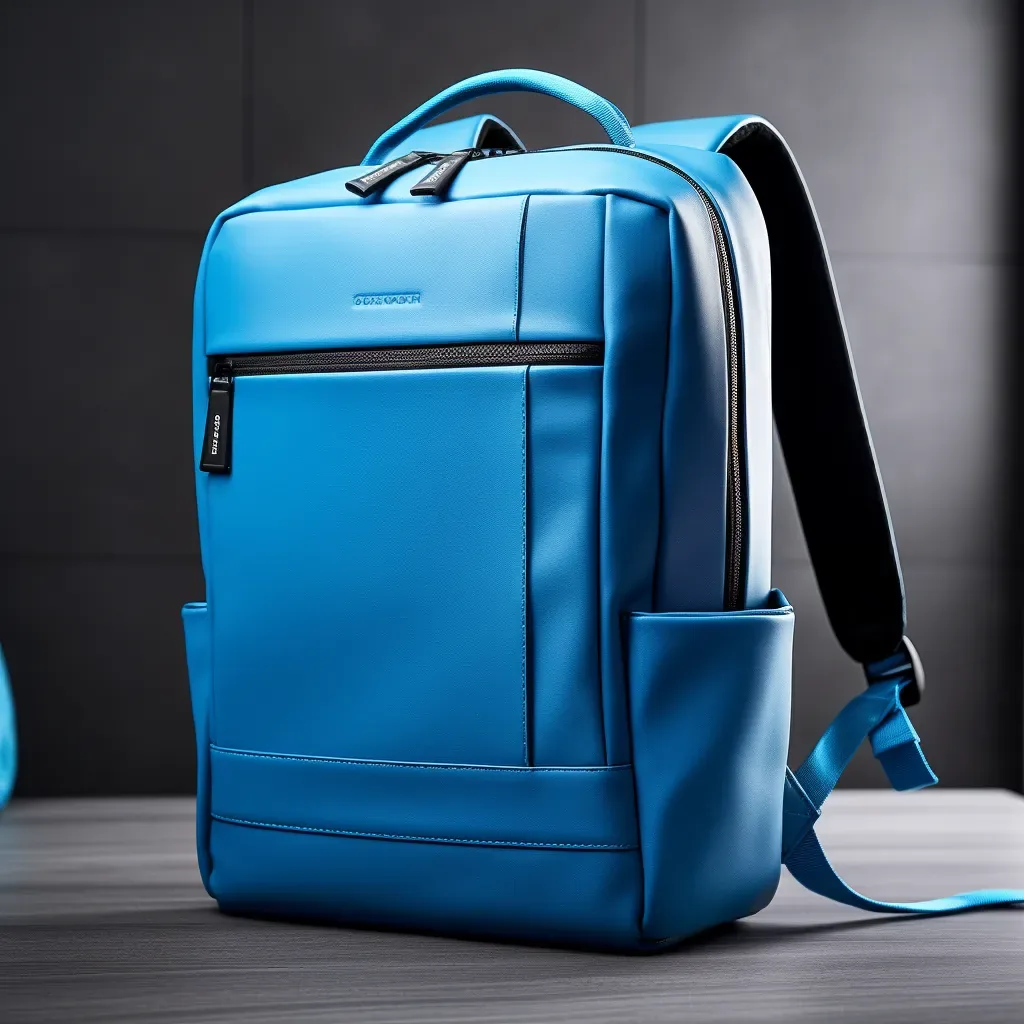
Premium leather bags that combine quality craftsmanship with smart design differentiate successfully in the Amazon marketplace
The Complete Timeline: Factory to Fulfillment Center
Understanding the full timeline from initial order to Amazon inventory availability is critical for launch planning and inventory management. Here's the realistic timeline for a leather bag product going from our production floor to an Amazon FBA warehouse:
Week 1-2: Design Confirmation and Sampling
Finalize product specifications, materials, colors, and branding details. Create initial sample for your review and approval.
Week 3-4: Sample Approval and Revision
Receive and evaluate sample. Request modifications if needed. Approve pre-production sample (PPS) to authorize bulk production.
Week 5-9: Bulk Production (25-35 days)
Material sourcing, cutting, assembly, stitching, hardware attachment, finishing, and quality control. Our quality control process includes inline and final random inspections.
Week 9-10: FBA Prep and Packaging (3-5 days)
Poly bag packing, FNSKU labeling, tissue paper stuffing, master carton packing, carton labeling, and palletizing.
Week 10-13: Ocean Freight (15-30 days)
Transit from Xiamen port to US destination. West Coast: 15-20 days. East Coast: 25-30 days. Allow buffer for port congestion.
Week 13-14: Customs Clearance and Drayage (3-7 days)
Customs broker processes entry documentation, FDA/CBP inspections if applicable, duty payment, and trucking to fulfillment center.
Week 14-16: Amazon Receiving (7-14 days)
Amazon receives, scans, and checks in inventory. Products become available for purchase once receiving is complete.
Total timeline: approximately 10-16 weeks from initial sample request to live Amazon inventory. For time-sensitive launches, air freight reduces transit to 5-8 days but increases shipping costs by 4-6x.
Inventory Management and Reorder Strategy
Running out of stock on Amazon is one of the most costly mistakes an FBA seller can make. Stockouts destroy search ranking, lose sales velocity, and require weeks of aggressive promotion to recover. Conversely, overstocking leads to expensive storage fees and potential long-term storage charges.
Inventory Planning Framework
- Launch Inventory: Plan for 500-1,000 units for your initial shipment. This provides sufficient inventory for 60-90 days of sales while you gather data on actual velocity and refine PPC campaigns.
- Reorder Point: Set reorder triggers at 45-60 days of remaining inventory (accounting for production + shipping time). For leather bags with 30-day production timelines, you need to place reorders when you have approximately 75-90 days of inventory remaining.
- Seasonal Planning: Q4 (October-December) typically sees 2-4x normal sales velocity for leather bags due to holiday gifting. Place Q4 production orders by July to ensure October arrival.
- Safety Stock: Maintain 2-4 weeks of safety stock for established products to buffer against supply chain disruptions or unexpected demand spikes.
Working with Bespoke Bags for FBA Success
Our experience supporting Amazon FBA sellers gives us unique insight into the requirements and rhythms of this business model. Here's how our capabilities align with your needs:
- FBA-Ready Production: We understand FBA packaging requirements and can handle all prep work — poly bagging, labeling, carton packing — at our Quanzhou production floor, saving you the cost and complexity of third-party prep services.
- Flexible MOQ: Our minimum order of 500 pieces per style for bags and 500 pieces per style for leather accessories allows you to test new products without massive inventory commitment.
- Consistent Reorder Quality: Production consistency across reorders ensures your product maintains the same quality that earned positive reviews — critical for long-term listing health.
- Direct Shipping Coordination: Our logistics services can coordinate direct-to-Amazon shipments, reducing handling steps and transit time.
- Product Line Expansion: As your brand grows, our capabilities across luxury handbags, business bags, travel bags, and custom collections support your expansion into new categories.
Common Mistakes to Avoid
After supporting hundreds of brands through their Amazon FBA journey, we've identified the most common pitfalls that new leather bag sellers encounter:
- Skipping Compliance Testing: Launching without proper test reports is the fastest way to get your listing suspended. Budget $500-$2,000 for comprehensive testing before your first shipment.
- Underestimating Landed Costs: Many new sellers calculate margins based on manufacturing cost alone, forgetting freight, duties, FBA fees, PPC costs, and returns. Always use a complete cost model.
- Poor Photography: Leather's texture, color, and quality must be communicated visually. Invest in professional photography including white-background shots, lifestyle images, detail close-ups, and video content.
- Inadequate Packaging: Leather bags arriving crushed, scratched, or with odor issues generate negative reviews that are extremely difficult to overcome. Invest in proper internal stuffing and external protection.
- Single-Style Dependency: Relying on a single SKU creates vulnerability to stockouts, competitive pressure, and market shifts. Plan a launch sequence of 3-5 complementary products from the start.
- Ignoring the PPC Learning Curve: Budget for 60-90 days of PPC investment before your campaigns reach optimal efficiency. Initial ACoS (Advertising Cost of Sales) of 30-40% is normal and should improve to 15-25% as your listing matures.
Related Products and Services
Explore Our Capabilities
- → Luxury Handbags — Premium handbags designed for the discerning Amazon customer
- → Business Bags — Professional bags targeting the high-demand work category
- → Travel Bags — Travel-ready leather bags for the on-the-go consumer
- → Leather Accessories — Complementary products to increase average order value
- → OEM/ODM Services — Full-service manufacturing from concept to FBA-ready product
- → Private Label Program — Build your brand with custom leather goods
- → Quality Control — Multi-point inspection ensuring every unit meets Amazon standards
- → Logistics Services — Factory-to-fulfillment center shipping coordination
Building the Listing Around the Product That Was Actually Made
Most listing problems are specification problems that surfaced late. A colour name invented by the marketing team rather than taken from the approved swatch, a dimension quoted from the drawing rather than the finished bag, a material described as leather when part of the build is a coated split — each of those becomes a return or a one-star review once the customer opens the box.
| Listing field | Where the figure comes from | Common error |
|---|---|---|
| Colour name | The approved swatch, not the marketing palette | A name that promises a shade the hide does not deliver |
| Dimensions | Measured on the finished unit, stuffed as it ships | Quoted from the drawing, which omits the filled-out shape |
| Material description | The component card for the actual build | Leather used where part of the panel is a coated split |
| Weight | Weighed with stuffing and dust bag as packed | Empty weight, which understates what the customer lifts |
- Shoot the production unit: Photography taken from a pre-production sample can differ from what is shipped in colour and in hardware finish.
- Name the shade from the swatch: The approved swatch reference goes into the listing, so the name and the product agree.
- State the packed dimensions: A bag stuffed for transit measures differently from the same bag empty.
Returns, Odour and the Reviews That Hurt
Leather returns cluster around three complaints, and all three are decided at the production stage rather than at the customer's door: the bag smells of finish, the colour does not match the photograph, and the bag is stiffer than the customer expected. None of them is a mystery once the build is known, and all three are cheaper to prevent than to refund.
| Complaint | Where it originates | Prevention at production |
|---|---|---|
| Odour on opening | Finish and adhesive solvent held in a sealed poly bag | Airing time before packing and low-solvent adhesives |
| Colour mismatch | Photography taken under a different light temperature | Shoot under standardised lighting against the approved swatch |
| Stiffer than expected | Leather temper not stated anywhere in the listing | State the temper and the break-in expectation in the copy |
- Air before packing: Units are aired before they are sealed into poly bags, which removes most of the smell held in a closed bag.
- Shoot under standardised light: A photograph taken under warm light sells a shade the customer will not receive.
- Describe the temper: A firm full-grain bag is a feature if the copy says so, and a defect if it does not.
Replenishment: Keeping Ranking While the Next Shipment Sails
The expensive part of a stockout is not the lost week of sales; it is the ranking built over months and then lost in a fortnight. Replenishment therefore works backwards from the date stock runs out, counting production, freight, clearance and receiving time, and adding a margin for the receiving queue that appears every peak season.
| Stage | Planning figure | Note |
|---|---|---|
| Bulk production | 35–50 days after sample approval | Slot booked before the seasonal rush |
| Freight and clearance | Counted per lane and per season | Peak-season receiving takes longer than off-peak |
| Receiving into stock | Allow a buffer week | The queue is the part sellers forget to plan for |
- Match the shade to the held swatch: A second shipment in a different shade damages the reviews the first one earned.
- Split cartons deliberately: Where inventory goes to more than one destination, the split is recorded on the packing list before loading.
- Keep the pack-out constant: Same stuffing, same dust bag, same label position, so the unit arrives the way the last one did.
Frequently Asked Questions
What compliance requirements must leather bags meet to sell on Amazon?
Leather bags sold on Amazon must comply with several regulations including CPSIA (Consumer Product Safety Improvement Act) for lead content in materials, California Proposition 65 for chemical safety, and applicable flammability standards. Sellers need proper labeling including country of origin, fiber content (for textile components), and manufacturer identification. If marketing products as "genuine leather," the FTC's Leather Guide requires accurate material representations. Amazon may also request test reports from accredited laboratories before listing approval.
How should leather bags be packaged for Amazon FBA shipment?
Leather bags for Amazon FBA require proper packaging including: individual poly bags with suffocation warnings (minimum 1 mil thickness), FNSKU barcode labels on each unit, carton boxes meeting Amazon's weight and dimension requirements (standard boxes under 50 lbs), and proper prep to prevent damage during fulfillment handling. Each bag should include tissue paper or inflatable cushioning to maintain shape. Master cartons must have shipping labels on two sides and meet Amazon's pallet requirements for LTL/FTL shipments.
What is the typical profit margin for leather bags sold through Amazon FBA?
Typical profit margins for leather bags on Amazon FBA range from 15-35% after all costs are accounted for. A leather bag manufactured at $15-30 FOB that retails for $59-129 on Amazon will see Amazon fees (referral fee 15% plus FBA fulfillment fees of $5-12 depending on size) consuming approximately 25-35% of the sale price. After accounting for manufacturing cost, shipping, Amazon fees, PPC advertising (typically 10-15% of revenue), and returns (3-5% for leather goods), sellers can expect net margins of 15-35% depending on price point and operational efficiency.
What is the minimum order quantity for leather bags designed for Amazon FBA?
At Bespoke Bags, the MOQ is 500 pieces per style for bag products, and 500 pieces per style for small leather accessories. For Amazon FBA sellers, we recommend initial orders of 300-500 units per style to ensure adequate inventory for launch momentum, PPC testing, and reordering cycles. This allows sellers to test market response without overcommitting to inventory while maintaining per-unit cost efficiency.
How long does it take to go from factory order to Amazon FBA fulfillment center?
The complete timeline from factory order to Amazon FBA fulfillment center typically spans 45-75 days. This includes: production (25-35 days), quality inspection and packaging (3-5 days), ocean freight to destination port (15-25 days for US West Coast, 25-35 days for US East Coast), customs clearance (3-7 days), drayage to prep warehouse or direct to Amazon (2-5 days), and Amazon receiving and check-in (7-14 days). Air freight can reduce transit to 5-8 days but at 4-6x the cost of ocean shipping.
Selling leather bags through Amazon FBA is a proven path to building a profitable e-commerce brand, but success requires meticulous attention to every detail in the supply chain. From selecting the right leather and ensuring regulatory compliance to optimizing pricing and managing inventory, each step demands expertise and reliable partners.
At Bespoke Bags, we've been supporting brands in their leather goods journey since 2004. Our 4,950 m² production floor in Quanzhou, China, combines traditional craftsmanship with modern production efficiency. Whether you're launching your first product or scaling an established brand, our team is ready to support your Amazon FBA ambitions.
Contact us at service@junyuanbags.com or WhatsApp +86 17750020688 to discuss your leather bag project. From initial concept to FBA-ready delivery, we're your manufacturing partner for Amazon success.
Last Updated: August 14, 2026
How much inventory should a first FBA shipment carry per colourway?
Enough to cover the launch, the PPC learning period and the reorder lead time, counted per colourway rather than per style, since each colourway is produced as its own run at 500 pieces. Running one colourway short is the common failure on a first shipment.
How is shade consistency kept between two shipments months apart?
The approved swatch and hide reference are held against the style number, and the re-order is matched to that physical reference rather than to a written colour name. Hide lots drift, so matching on paper is what produces a visibly different second shipment.
What causes odour complaints on leather bags and how are they avoided?
Finish and adhesive solvent held inside a sealed poly bag. Units are aired before packing and low-solvent adhesives are specified where the programme has had complaints before. Sealing a freshly finished bag is what turns a faint smell into a review problem.
How should photography be specified to reduce colour-mismatch returns?
Shoot the finished production unit under standardised lighting with the approved swatch in frame, rather than a pre-production sample under warm light. Listing colour names are taken from the swatch so the name, the photograph and the product all agree.
When should a reorder be placed to avoid a stockout?
Work backwards from the date stock runs out: 35–50 days of bulk production, plus freight, clearance and receiving, plus a buffer week for the peak-season queue. The lost ranking during a stockout costs more than the extra week of storage.
How should cartons be split when sending to more than one fulfillment centre?
The split is decided before packing and recorded on the packing list, so carton contents match the shipping plan. Each carton carries the same marks on two faces, and unit counts per carton are confirmed at the pack audit before the container is loaded.
What is checked before a shipment leaves for the fulfillment centre?
The AQL 2.5 inspection result, poly bag seal and suffocation warning, FNSKU placement and scannability, stuffing and dust bag consistency, carton weight and dimension limits, and the packing list against the shipping plan. The report precedes the balance payment.