Leather Bag Pop-Up Store Strategy: Complete Guide for DTC Brands
Published by the Bespoke Bags / Junyuan Bags editorial team | Updated January 2025
What is a leather bag pop-up store?
A leather bag pop-up store is a temporary retail space — typically operating for 2 to 8 weeks — where direct-to-consumer (DTC) leather bag brands showcase and sell products in a physical environment. Pop-up stores allow brands to create immersive brand experiences, test new markets, build customer relationships, and generate sales without the long-term commitment and overhead of a permanent retail lease. Successful pop-up strategies integrate online and offline channels, leveraging the physical space for tactile product experiences that digital channels cannot replicate.
The pop-up retail industry has grown into a $80 billion global market, according to a 2024 report by Storefront, with fashion and accessories brands accounting for nearly 35% of all pop-up activations. For leather bag brands — particularly DTC brands born online — the pop-up store has become an essential strategic tool, not just a marketing gimmick.
Why? Because leather demands to be touched. The grain, the weight, the smell — these sensory attributes drive purchase decisions in ways that product photography simply cannot replicate. Research by the Journal of Retailing and Consumer Services (2023) found that 68% of leather goods purchases are made in physical stores specifically because customers want to evaluate tactile quality before buying.
This comprehensive guide covers every aspect of planning, executing, and measuring a leather bag pop-up store — from site selection and visual merchandising to inventory planning and omnichannel integration. Whether you are launching your first pop-up or optimizing your tenth, this guide provides actionable frameworks backed by industry data.
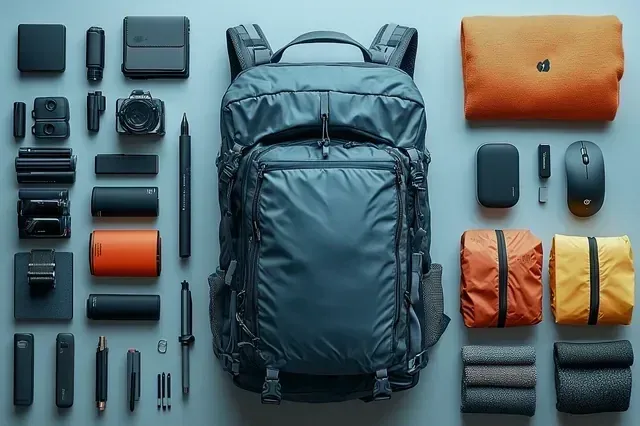
Why Leather Bag Brands Need a Pop-Up Strategy
Before diving into execution, let's examine the strategic reasons why pop-up stores are particularly powerful for leather bag brands:
1. The Touch Factor: Leather is a Sensory Product
Unlike electronics or apparel (where sizing charts and spec sheets suffice), leather goods live and die by hand-feel. A customer picking up a luxury handbag in full-grain leather experiences something no website can convey. This is why leather goods have some of the highest in-store conversion rates in retail — 25–35% for qualified foot traffic, compared to 2–3% for e-commerce.
2. Customer Acquisition Cost (CAC) Advantage
DTC brands typically spend $25–75 in digital advertising to acquire each new customer. A well-executed pop-up store can reduce effective CAC by 30–50% when you factor in the lifetime value of customers acquired through in-person experiences. Pop-up customers have 2.3× higher retention rates than pure e-commerce customers, according to data from retail analytics firm Narvar.
3. Market Testing with Minimal Risk
Planning to expand into a new city or country? A pop-up store lets you test demand, gather customer feedback, and build local brand awareness in 2–4 weeks — for 1/10th the cost of a permanent lease. Brands like MZ Wallace and Cuyana have used pop-ups as their primary market-entry strategy before committing to permanent locations.
4. Content Generation Engine
A beautifully designed pop-up store generates enormous content value. Every visitor becomes a potential social media advocate. Brands report generating 3–5× more user-generated content during pop-up periods compared to normal operations, providing months of authentic marketing material.
Fixed Store vs. Pop-Up Store: Cost Comparison
One of the most important decisions for DTC brands is whether to invest in permanent retail space or pursue a pop-up-first strategy. Here is a detailed comparison:
Key insight: The financial advantage of pop-ups goes beyond direct cost savings. A permanent store requires 12–18 months to break even on fit-out costs. A pop-up store can generate positive ROI within its first week if traffic and conversion are managed properly.
Site Selection: The Scoring Framework
Location is the single most important factor in pop-up success. Use this scoring framework to evaluate potential sites. Each factor is rated 1–5, with a total score above 35 indicating a strong candidate.
Top global cities for leather goods pop-ups in 2024–2025:
- New York (SoHo, Nolita, Brooklyn): Highest foot traffic, premium positioning
- London (Shoreditch, Covent Garden, Notting Hill): Strong luxury accessories market
- Paris (Le Marais, Saint-Germain): Fashion-forward, leather heritage market
- Tokyo (Omotesando, Daikanyama): High-quality consciousness, gift culture
- Melbourne (Fitzroy, South Yarra): Emerging DTC-friendly market

Visual Merchandising: Making Leather the Star
Leather bags require specific merchandising approaches that differ from general fashion retail. The goal is to create an environment where the tactile and visual qualities of leather are the primary sensory experience.
Lighting Design
Lighting is the most critical element in leather merchandising. Use warm white light (2700K–3000K) to enhance the natural warmth and richness of leather tones. Avoid cool white or daylight LEDs (>4000K) which can make leather look flat and lifeless. Combine ambient lighting with focused spotlights on hero products to create depth and drama.
Display Hierarchy
Structure your displays in three tiers:
- Hero Zone (Eye Level, 52–60 inches): Your 3–5 most important pieces. These should be your bestsellers or newest arrivals. Use individual shelf spaces or dedicated pedestals.
- Exploration Zone (Waist Level, 30–42 inches): Tables and lower shelves where customers can pick up, open, and examine bags. This is where conversion happens — customers need to hold the product.
- Aspiration Zone (Upper Walls, 60+ inches): Statement pieces displayed for visual impact. These may not be directly accessible but create desire and draw customers into the store.
The Touch Rule
Every bag in your pop-up must be touchable. Remove all dust bags, stuff bags with tissue paper to maintain shape, and position them so customers can naturally reach out and pick them up. Research by the Retail Industry Leaders Association (RILA) shows that customers who touch a leather product are 3.5× more likely to purchase compared to those who only look.
Lifestyle Vignettes
Create 2–3 lifestyle scenes that show the bag in context. For example: a leather briefcase on a mid-century modern desk with a laptop and coffee; a structured handbag hanging on a vintage coat rack next to sunglasses and a scarf. These vignettes help customers visualize the bag in their own lives.
Inventory Planning: What and How Much to Stock
Inventory planning for a pop-up requires a fundamentally different approach than e-commerce. You need to balance variety (to attract diverse customers) with depth (to avoid stockouts of popular items).
Recommended Product Mix
- Hero Products (40% of display): Your 5–8 bestselling styles. Stock 3–5 units per style in key colors.
- New Arrivals / Exclusives (25% of display): Products available only at the pop-up or not yet launched online. Creates urgency and exclusivity.
- Entry-Price Products (20% of display): Small leather goods, cardholders, and accessories (see leather accessories) that serve as impulse purchases and lower the entry barrier for new customers.
- Statement / Limited Edition (15% of display): 2–3 high-value pieces that serve as visual anchors and generate social media buzz. Consider one-of-a-kind pieces or pre-order-only items.
Inventory Depth Calculator
Use this formula to estimate inventory needs:
Total Units = Expected Daily Visitors × Conversion Rate × Average Units per Transaction × Pop-Up Duration
Example: For a 4-week pop-up expecting 200 visitors/day, 20% conversion, 1.3 units per transaction:
Total = 200 × 0.20 × 1.3 × 28 = 1,456 units (including safety stock of 15–20%, target ~1,700 units)
For DTC brands working with OEM manufacturers like Junyuan Bags, plan pop-up inventory 60–90 days in advance to ensure production and shipping timelines are met. Our wholesale program supports pop-up brands with dedicated production slots and expedited timelines.

Customer Experience: Beyond the Transaction
In a pop-up environment, every interaction is magnified. You have one chance to make an impression. Here's how to create experiences that convert visitors into long-term customers:
Staff Training: The Leather Ambassador Model
Pop-up staff should not be "sales associates" — they should be "leather ambassadors." Train them on:
- The origin and characteristics of each leather type used in your products
- The manufacturing process (partner story — for brands working with manufacturers like Junyuan Bags, share the craftsmanship story)
- Styling recommendations for different body types, occasions, and lifestyles
- Leather care education — how to maintain, condition, and age leather properly
Personalization Stations
Offer on-site personalization services — monogramming, color-edge painting, or charm attachment. Personalization increases average transaction value by 25–40% and creates a memorable experience that customers share on social media. For brands offering custom design services, the pop-up is the perfect venue to showcase the customization process.
Post-Purchase Engagement
The experience doesn't end at the register. Implement these post-purchase touchpoints:
- Handwritten thank-you note in the bag
- Leather care sample included with purchase
- QR code linking to a video showing how the bag was made
- Invitation to join your brand's VIP community (email/SMS)
- Offer for a future online purchase discount (drives cross-channel loyalty)
Omnichannel Integration: Connecting Pop-Up to Online
The most successful pop-up strategies treat the physical space as one node in a broader omnichannel ecosystem. Here is how to connect the dots:
Pre-Launch (4–6 Weeks Before Opening)
- Launch countdown campaigns on email, Instagram, and TikTok
- Create a "VIP Preview" event for your top online customers — exclusivity drives attendance
- Partner with local influencers for co-created content
- Set up a pop-up landing page on your website with RSVP functionality
During the Pop-Up
- Live-stream opening day on Instagram/TikTok
- Create a pop-up-exclusive product or colorway (drives custom collection interest)
- Use QR codes throughout the store linking to online reviews, styling content, and your full e-commerce catalog
- Capture every customer's email and phone number — offer a leather care guide PDF as incentive
- Enable "buy online, pick up in-store" (BOPUS) for items sold out on-site
Post-Pop-Up (Ongoing)
- Send personalized follow-up emails to every captured lead within 48 hours
- Share pop-up highlights, customer photos, and behind-the-scenes content on social media
- Analyze which products performed best in-store vs. online — inform future OEM production decisions
- Offer pop-up attendees exclusive early access to your next collection
Key data point: According to Eventbrite's 2024 Experiential Report, 78% of consumers who visit a brand's pop-up store make an online purchase from that brand within 30 days. The pop-up doesn't replace e-commerce — it supercharges it.
ROI Analysis: Measuring Pop-Up Success
To justify future pop-up investments, you need rigorous ROI tracking. Here are the essential KPIs:
Calculating total ROI:
Total ROI = (Direct Revenue + 60-Day Online Uplift + Estimated Content Value + Estimated Brand Awareness Value) ÷ Total Pop-Up Investment
A well-executed leather bag pop-up typically delivers 200–500% total ROI when all value components are included.
Sourcing Your Pop-Up Inventory: Working with OEM Partners
Your pop-up inventory strategy depends heavily on your supply chain. For DTC brands working with OEM manufacturers, here are key considerations:
Lead Time Planning
- 8–12 weeks before pop-up: Finalize product selection and place OEM orders
- 6–8 weeks before: Sample approval and first production run
- 3–4 weeks before: Receive inventory, quality check, prepare display stock
- 1–2 weeks before: Pre-pop photography, social media content creation
Pop-Up Exclusive Designs
Consider creating pop-up-exclusive colorways or limited-edition pieces. This not only drives urgency at the event but also gives your OEM partner an opportunity to showcase their customization capabilities. Small design modifications — a different leather color, unique hardware, or exclusive monogram option — can create significant buzz without major additional cost.
Small-Batch Strategy
For brands testing new product categories at a pop-up, leverage small-batch manufacturing capabilities. Producing just 200 pieces of a new handbag design allows you to test market response with minimal commitment. If the pop-up validates demand, scale production for your next event or online launch.
Common Mistakes to Avoid
- Understaffing: Leather goods require consultation selling. Have at least 2 staff members during peak hours (weekends, evenings).
- Poor lighting: Cold or dim lighting kills leather's visual appeal. Invest in proper warm-tone lighting.
- No email capture: Every visitor who leaves without buying should still leave their contact information.
- Too much inventory on display: Cluttered displays reduce perceived value. Less is more for leather goods.
- Ignoring social media: Create at least 3 "Instagrammable" moments in your pop-up space.
- No post-event follow-up: The real ROI comes from nurturing leads after the pop-up closes.
- Not tracking data: Without KPIs, you can't optimize future pop-ups or justify the investment.
Permits, Insurance and Compliance Before You Open the Door
Nothing closes a pop-up faster than paperwork discovered a week before opening. Temporary retail sits in an awkward regulatory space: too commercial for a market stall licence in some cities, too short-term to qualify for standard retail leasing in others. Landlords and mall operators will usually tell you what they require, but the obligation remains yours, and the request chain — certificate of insurance naming the landlord, business licence for that jurisdiction, temporary sales tax registration — typically takes longer to assemble than the fixtures do to build.
| Requirement | Who asks for it | Start working on it |
|---|---|---|
| Certificate of insurance naming the landlord | Property operator or mall management | Four weeks before opening |
| Temporary business or vendor licence | City or municipal authority | Six weeks before opening |
| Sales tax registration for the selling jurisdiction | State or national tax authority | Six weeks before opening |
| Public and product liability cover | Insurer and sometimes the landlord | Three weeks before opening |
| Electrical and fire safety approval for temporary fittings | Venue facilities team | Three weeks before opening |
Insurance deserves particular attention for leather ranges because stock value per square metre is unusually high. Cover should be written against the full replacement value of inventory, fixtures and any borrowed equipment, not against a token figure. Ask your broker for two certificates minimum: one naming the landlord for their file, one kept at the counter for inspectors. Keep digital copies reachable by phone, since most requests arrive while you are standing in the unit.
- Confirm whether the venue requires you to list the property operator as an additional insured party
- Photograph stock before it enters the unit so insurance claims have a dated condition record
- Check tax obligations for any state, province or country where you will be physically selling
- Keep printed licences at the counter — inspectors rarely accept a phone screenshot as proof
Payments and Loss Prevention in a Temporary Space
Card acceptance, refunds and shrink behave differently in a temporary unit because none of your usual routines exist yet. Back-office systems should be set up and tested before merchandise arrives, ideally with a live transaction pushed through and refunded. A reader that fails during the busiest hour of the week not only loses sales, it damages the first impression you get only once with each visitor.
Loss prevention works best when it looks like hospitality. A visitor accompanied by a staff member is both better served and far less likely to pocket a small leather good, so greet everyone at the threshold and keep one person positioned near the door whenever the unit is busy. Display units should be light enough for staff to move but anchored enough that nothing can be swept off in one motion, and the top three pieces by price should sit in a locked case regardless of how good the sightlines are.
- Run and refund one live transaction on every terminal the morning you open.
- Set a written threshold above which merchandise is held behind the counter.
- Log stock counts at opening and closing, signed by whoever performed the count.
- Keep the till, card stock and personal belongings in a secured drawer away from the entrance.
- Review the daily shrink figure each evening rather than waiting until teardown.
Seasonal Timing: Choosing the Weeks That Sell Leather
Footfall and conversion move independently, and leather bags sit at the point where they cross. High-traffic weeks in a shopping district may deliver browsers with no intent to spend, while a quieter week at a buying office or members club can convert a fraction of that traffic into substantial orders. Mapping both curves before you sign the lease is the single highest-leverage decision in pop-up planning.
| Period | Footfall expectation | Leather-specific consideration |
|---|---|---|
| Late November to late December | Very high | Gifting intent is strongest; plan replenishment well ahead because nothing can be re-cut quickly |
| Early January | Moderate to high, driven by returns traffic | Good for personalisation services and gift-card redemption |
| March to April | Moderate | Light seasonal colourways perform; rain requires a covered entry mat and umbrella station |
| July to August | Varies sharply by location | High humidity demands dehumidified storage and careful dust-bag handling |
| September to October | Steady | Strong for work and business-bag categories as the professional calendar restarts |
Weather interacts with leather in ways most first-time exhibitors underestimate. A humid summer week raises the risk of surface bloom on stored pieces, and heavy rain at an entrance drives customers to brush against hides rather than touch them carefully. Plan dehumidified storage behind the counter, keep products away from direct sunlight through glazing, and rotate displayed pieces every couple of days so no single unit absorbs all the handling.
- Fix dates against both footfall and intent, not footfall alone
- Reserve a covered storage area away from direct sunlight and street-level humidity
- Rotate hero display pieces every second day so wear is spread across the collection
- Avoid scheduling during the peak weeks when your own supply cannot support a restock
Teardown, Unsold Stock and What Happens After the Last Day
Every event ends, and how you close it decides whether the unit was profitable on paper as well as in the room. Unsold inventory is not automatically a loss — it is working capital that needs routing — but it becomes a loss quickly if it is dumped into a warehouse without a destination or folded into a vague miscellaneous line that nobody reviews again. Decide the routing rule before opening, because decisions made at midnight on the last day are rarely the best ones.
| Outcome | Best used when | What it protects |
|---|---|---|
| Transfer to permanent store or online channel | Pieces sit within core catalogue and are still in season | Full margin and clean inventory records |
| Hold for next activation | The unit was a display model or belongs to a seasonal capsule | Presentation quality for the next event |
| Members-only or waitlist sale | Demand exceeded supply during the run | Price integrity with no public discounting |
| Return for refurbishment | Floor handling has marked linings or edges | Resale value above clearance cost |
| Clearance through outlet partner | Season is finished and storage cost exceeds residual value | Cash recovery and warehouse space |
Refurbishment is worth a second look whenever leather has been handled heavily on the floor. Cleaning, edge refinishing and hardware polishing frequently restore a piece close to new condition at a fraction of replacement cost, and any units beyond saving become valuable reference samples for future training. When planning replenishment, remember the production clock rather than the shipping clock: depending on the category, refining a repeat order takes weeks, and refreshing a colourway starts from the same minimum quantity as the original run.
- Photograph and count every unit during teardown so the floor-to-system reconciliation is immediate
- Document which pieces marked fastest so the next unit's merchandising plan reflects evidence
- Log fixture condition and note anything that should be rebuilt rather than re-used
- Send the visitor feedback summary to whoever plans the next seasonal collection
For teams planning their next activation, the practical limits of a repeat order matter as much as the fixture plan — see the sampling and minimum-order guide, or schedule a conversation about a sell-out restock through the project team.
Conclusion
A leather bag pop-up store is more than a temporary retail experiment — it is a strategic investment in brand building, customer acquisition, and market validation. For DTC brands, the ability to let customers touch, feel, and experience leather products in person creates conversion rates and loyalty metrics that digital channels alone simply cannot match.
The key to success lies in three pillars: strategic site selection (using data-driven scoring), exceptional customer experience (where leather quality meets human connection), and rigorous measurement (tracking both direct revenue and long-term brand value).
At Junyuan Bags, we understand that great retail starts with great products. Since 2004, our Quanzhou production floor (4,950 m², SGS-verified) has been producing leather bags, luxury handbags, and accessories for DTC brands worldwide. Whether you need a pop-up-exclusive collection or are scaling your bestsellers, our team is ready to support your growth.
Ready to create your pop-up collection? Contact our team to discuss your product requirements, timelines, and volume needs.
Related Resources:
Wholesale Program |
Custom Collections |
OEM/ODM Services |
Luxury Handbags |
Handbags Collection |
Small Batch Orders
Last Updated: August 14, 2026
Frequently Asked Questions
How much insurance cover should a leather bag pop-up carry?
Cover should at least equal the full replacement value of inventory, fixtures and borrowed equipment, because leather carries unusually high value per square metre. Most landlords require public liability cover and demand to be named on the certificate. Ask your broker for two extra copies of every certificate, since representatives tend to request them at the counter rather than by email.
Do we legally need a permit for a two-week retail unit?
Usually yes, though the route differs by city. Some municipalities treat short-term retail as a market stall requiring a temporary vendor licence, others require a full business licence for that jurisdiction, and shopping centres add their own approvals. Start the process six weeks out and confirm tax registration for the location, because that step often takes longest.
What payment setup is most reliable for temporary retail?
Use two independent terminals on different mobile carriers and test both with a live sale plus a refund before opening. Offline fallback modes protect against dead zones inside older buildings. Keep receipt stock charged, and make sure the refund path matches the tender — a card refund cannot go back through cash.
How do we prevent theft without making the space feel unwelcoming?
Combine hospitality with limits. Staff greet every visitor at the threshold and one person stays near the door during busy hours, which deters theft without security theatre. Pieces above an agreed price threshold are kept behind the counter or tethered, and daily stock counts are logged by two people at opening and close.
Which months perform best for leather bag pop-ups?
Gifting weeks from late November through December deliver the strongest conversion, while September and October suit work-oriented categories as the professional year restarts. Early January benefits from gift-card redemption. Evaluate each window on both intent and traffic — a quiet week in the right building can outperform a busy one in the wrong crowd.
How do humidity and rain affect leather stock at events?
High humidity encourages surface bloom on stored hides and heavy rain draws visitors in who brush past wet displays. Keep reserve stock in a dehumidified area away from direct glazing, provide an umbrella station at the entrance, and rotate displayed pieces every second day so no single unit absorbs all the handling.
Can unsold inventory be returned to the production partner?
Custom-branded units generally cannot be returned, since they carry your hardware, lining and logo. Route them instead to another sales channel, hold them for the next activation, or send them for cleaning and edge refinishing. Agreeing this routing plan before opening avoids a rushed decision on the final evening.
How quickly can a sold-out style be replenished?
Plan against the production clock rather than freight time: confirming a repeat order, then refining and producing it, typically occupies several weeks, and the colourway starts from the same minimum quantity as the original. If a pop-up is scheduled in a peak gifting window, reserve critical styles before the doors open.
Should we discount at the end of the run?
Public discounting trains audiences to wait for the next temporary unit. Offer instead a private waitlist sale or a members-only extension, preserving the price integrity of permanent channels. If discounting is unavoidable, keep it to display models rather than core catalogue pieces and record the reason.
What happens to display fixtures after teardown?
Log each fixture's condition before packing, since items that survive one event often fail during transport rather than use. Anything structurally sound goes into storage labelled by assembly sequence; the rest is rebuilt. Keep photographs of every layout so the next build is faster and does not depend on someone's memory.
How should visitor contact details gathered at events be handled?
Collect only what you commit to use, record the consent basis at the point of capture, and state how the address will be used. Paper sign-up sheets need transferring into the same system with their consent note attached. Untagged lists cannot be messaged later, which usually means several hundred names quietly become worthless.
What daily reporting should a pop-up manager review?
Track units sold by style, conversion rate against footfall, average transaction value and any shrinkage at close, reviewed every evening rather than at the end. Later in the week enough pattern exists to move inventory between racks, which frequently rescues an otherwise mediocre unit before the final weekend.