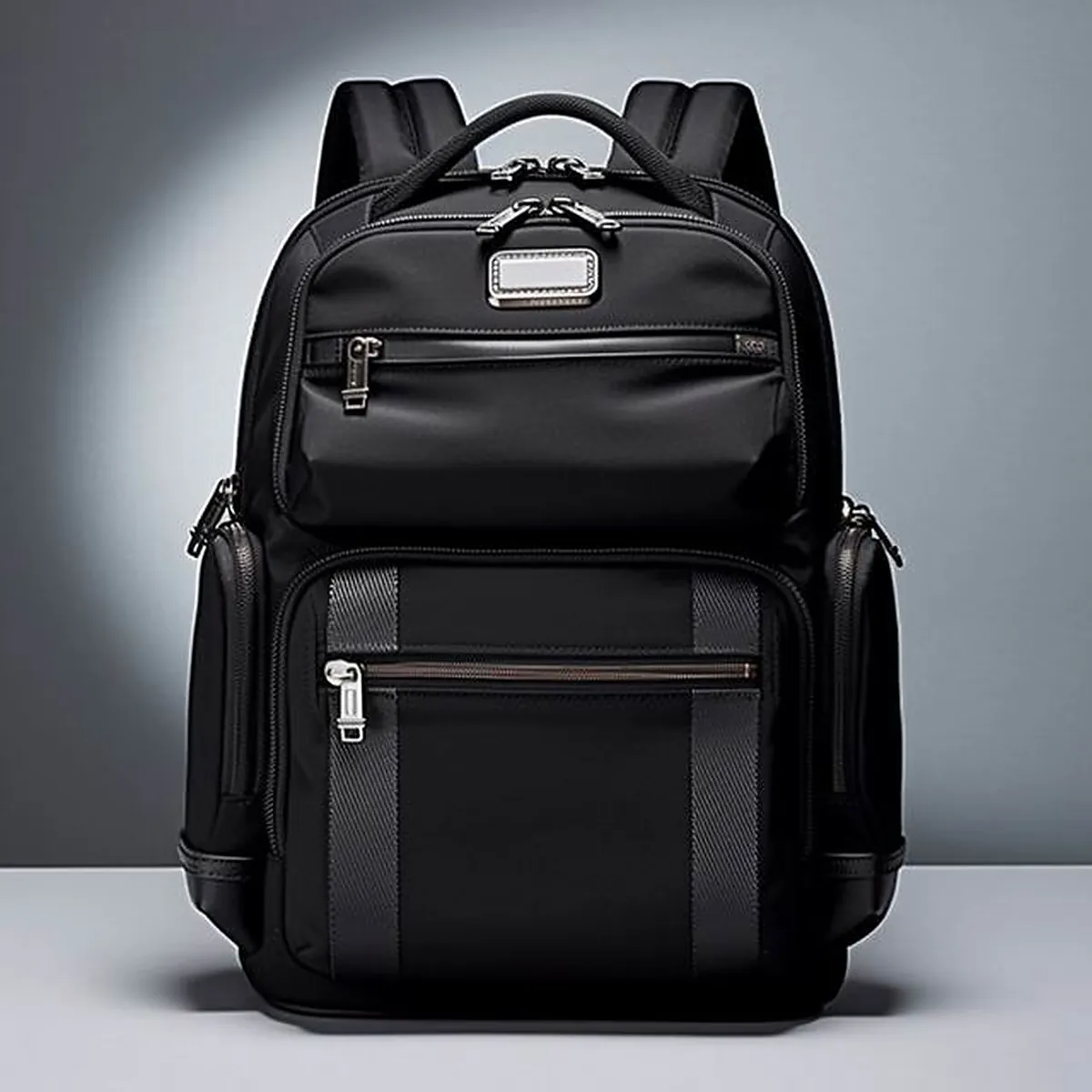
A bag with an integrated power bank is an attractive product and a compliance problem. Lithium cells are regulated as dangerous goods, and the regulations apply to the finished bag as much as to a loose battery. Brands that treat the battery as a component sourced from a supplier discover the issue at the air freight booking, which is the worst possible moment.
The good news is that the rules are well documented and the work is front-loaded. The bad news is that they are strict, they differ between air and sea, and they are enforced by carriers who will refuse a shipment rather than investigate it.
The Rules That Apply
Four documents govern almost everything a bag brand needs to know, and they interlock.
| Instrument | What it covers | Who needs it |
|---|---|---|
| UN Manual of Tests and Criteria, Part III, subsection 38.3 | The test regime every lithium cell and battery must pass | The cell and battery manufacturer, with a test summary |
| IATA Dangerous Goods Regulations | Air transport, including packing instructions for batteries in and with equipment | The shipper and the freight forwarder |
| IMDG Code | Sea transport | The shipper and the forwarder for ocean freight |
| UN Model Regulations / national implementing rules | Classification, marking and documentation | The shipper, and the brand as the responsible party |
The UN38.3 test summary is the document that unlocks everything else. Without it, no forwarder will accept a lithium battery, and no carrier will load it. Ask for it before the first sample, not before the first shipment.
Testing: What UN38.3 Requires
UN38.3 sets out eight tests, and a battery must pass all of them before it can be shipped. The regime is designed to establish that a cell survives transport conditions rather than normal use.
- **T.1 Altitude simulation** — low pressure equivalent to 15,000 m at 20 °C.
- **T.2 Thermal test** — cycling between 72 °C and −40 °C.
- **T.3 Vibration** — sinusoidal sweep across a defined frequency range.
- **T.4 Shock** — half-sine impact pulses.
- **T.5 External short circuit** — at 57 °C.
- **T.6 Impact and crush** — mechanical abuse on cells.
- **T.7 Overcharge** — for rechargeable batteries.
- **T.8 Forced discharge** — for cells and battery packs.
Programme parameters at a glance
| Parameter | Commitment |
|---|---|
| Minimum order quantity | 500 pieces per style / colourway |
| Sampling lead time | 6–10 working days (12–15 days for complex constructions) |
| Bulk production lead time | 35–50 days after sample approval |
| Inspection standard | AQL 2.5 (ISO 2859-1), single sampling, general level II |
| Incoterms | FOB Xiamen — EXW, CIF and DDP available on request |
| Payment terms | T/T 30% deposit / 70% before shipment; L/C at sight for container loads |
| Verified production floor space | 4,950 m² (SGS-verified) |
| Team | 137 staff across 7 production lines |
| Equipment | 149 machines including computerised saddle-stitch and edge-painting units |
| Monthly capacity | 200,000 pieces |
| Entity | Founded 2014; principal has worked in bag development since 2004 |
Battery In Equipment Versus Battery With Equipment
How the battery is presented changes the packing instruction, and the distinction catches brands out because it depends on the product design rather than the paperwork.
| Presentation | Definition | Practical consequence |
|---|---|---|
| Contained in equipment | The battery is installed and the equipment is not packed separately | The most permissive route; the bag ships as equipment with a battery inside |
| Packed with equipment | The battery ships in the same box as the bag but is not installed | Stricter packing requirements; terminals must be protected against short circuit |
| Shipped alone | The battery is the product | Strictest route; usually not applicable to a bag programme |
A removable power bank in a zip pocket is not "contained in equipment" when it is packed separately in the carton. Design the product so the battery is either genuinely installed, or accept the stricter packing requirement and document it.
Watt-Hour Limits and What They Mean Commercially
Aviation rules set thresholds by watt-hour rating, and the thresholds determine whether a product can fly at all. A power bank above 100 Wh moves into a stricter category and one above 160 Wh is generally prohibited for passenger carriage. Most bag-integrated power banks are designed well below 100 Wh precisely to stay inside the simpler regime.
The commercial implication is that battery capacity is a design constraint rather than a marketing number. A 20,000 mAh pack at 3.7 V nominal is roughly 74 Wh, comfortably inside the limit. Pushing to a larger capacity to win a specification comparison can move the whole product into a category that costs more to ship and cannot be carried by a passenger.
Design Decisions That Reduce the Compliance Burden
A few product decisions make the difference between a straightforward shipment and a recurring problem.
- **Keep the battery removable.** A removable pack can be shipped separately or left out, which gives flexibility when a route becomes restricted.
- **Keep capacity below the threshold.** Designing under 100 Wh avoids approval processes for passenger carriage and simplifies forwarder acceptance.
- **Isolate the charging circuit.** A bag that can charge while the battery is installed needs a protection circuit and a clear instruction that it must not be charged unattended during transit.
- **Specify the cell, not just the pack.** The UN38.3 summary belongs to a specific cell. A substitution at the battery supplier level invalidates it.
- **Label visibly.** Mark the battery compartment, the capacity and the air-transport restriction in the product documentation.
- **Plan the returns process.** A customer returning a bag with a battery faces the same rules in reverse, which most brands discover after the first return.
Documentation and the Forwarder Relationship
Freight forwarders are the practical gatekeepers. A forwarder who understands the product will tell you which route and which packing instruction applies; one who does not will simply refuse the booking. Establishing the relationship before the first shipment, with the UN38.3 summary and the product specification in hand, saves weeks.
The documents to have ready are the UN38.3 test summary, a safety data sheet for the battery, the product specification showing the installed configuration, and a shipper's declaration where the route requires one. Keep them with the commercial invoice set, because a shipment held at origin for a missing document is more expensive than any of the documents.
The question to ask first
Before designing the product, ask the battery supplier for the UN38.3 test summary naming the exact cell. If they cannot provide one, the product cannot ship by air, and that is a decision to take before tooling rather than after.
Sea Freight and the Cabin Question
Sea freight follows the IMDG Code and is generally more permissive for installed batteries, but it is slower and the documentation requirements do not disappear. For a bag with a small installed pack, ocean freight is often the practical route for bulk, with air used only for samples and urgent replenishment.
The cabin question is separate and belongs in the product documentation. Airlines restrict power banks in checked baggage and generally require them in the cabin, which means a bag with an installed battery may not be checked. That is a product positioning issue as much as a compliance one, and it should appear in the retail copy rather than being discovered by a customer at the gate.
Where the Programme Fits
QUANZHOU JUNYUAN BAGS treats the battery as a nominated component with its own documentation trail: the cell and pack reference, the UN38.3 summary, the installed configuration and the capacity are recorded with the tech pack before sampling, so that the compliance position is settled while the product is still being designed.
Where a programme intends to ship by air, the documentation is assembled at the sampling stage rather than at the booking stage, and the packing configuration is fixed in the specification so that a change at the factory cannot silently alter the shipping category.
Settle the battery before the tooling
Send the product concept and the intended battery. The programme team will confirm which transport category applies and what documentation the route requires.
Frequently Asked Questions
What is UN38.3?
Subsection 38.3 of the UN Manual of Tests and Criteria, Part III. It sets out eight tests that lithium cells and batteries must pass before they can be transported, covering altitude, thermal cycling, vibration, shock, short circuit, impact and crush, overcharge and forced discharge.
Do I need UN38.3 for a bag with a built-in power bank?
Yes. The battery inside the bag is still a lithium battery for transport purposes, and the shipment requires the UN38.3 test summary naming the specific cell and pack.
What is the difference between "contained in equipment" and "packed with equipment"?
Contained in equipment means the battery is installed in the product and the product is not packed separately. Packed with equipment means the battery is in the same consignment but not installed. The second is subject to stricter packing requirements, including terminal protection.
What watt-hour limit applies to air transport?
Generally 100 Wh per battery without approval for passenger carriage, with up to 160 Wh possible with airline approval. Most integrated bag power banks are designed below 74 Wh to stay comfortably inside the simpler regime.
Can a power bank bag be checked in as luggage?
Many airlines require power banks to travel in the cabin rather than in checked baggage. A bag with an installed battery may therefore need to be carried on. This should be stated in the product documentation rather than left for the customer to discover.
Who provides the UN38.3 test summary?
The cell or battery manufacturer, through the testing laboratory. It names the specific cell, the manufacturer and the results. A summary that does not name your cell is not applicable to your product.
What happens if the battery supplier changes a cell?
The test summary becomes invalid. A substitution at cell level requires a new summary for the new cell. This is why the cell reference, not just the pack reference, belongs in the specification.
Do batteries need special packing?
Yes. Each battery must be protected against short circuit, typically by individual packaging or by protecting the terminals, and the pack must be strong enough to prevent movement and damage in transit.
How much state of charge should the battery ship at?
Cells and packs shipped alone are typically required to be at 30% state of charge or less. Installed batteries in equipment usually follow the same guidance, and it is worth confirming against the current edition of the applicable regulations rather than assuming.
How do returns work for a bag with a battery?
They follow the same dangerous goods rules in reverse, which means a customer cannot simply post the bag back. Brands need a returns process that either removes the battery or routes the return through a compliant carrier. It is worth designing before launch.