The Global Backpacking Bag Market: Why Now Is the Right Time to Invest
The worldwide outdoor backpack market reached an estimated $12.4 billion in 2025, and projections place it above $19 billion by 2032 at a compound annual growth rate of 6.3%. This expansion is driven by rising participation in hiking, trekking, and thru-hiking — particularly among millennials and Gen Z consumers in North America, Europe, and the Asia-Pacific region.
For brands looking to enter or expand within the outdoor segment, partnering with a factory that understands the engineering requirements of load-bearing packs is essential. At Bespoke Bags, we have spent 20+ Years producing technical bags for brands across 40 countries. Our SGS-verified 4,950 m² production floor in Quanzhou houses dedicated lines for backpack production, from pattern cutting through to final load testing.
This guide covers every major design decision an outdoor brand needs to make when developing a backpacking gear bag — from frame architecture and suspension tuning to fabric selection and compartment layout — plus the OEM manufacturing considerations that determine whether a design translates into a reliable, field-tested product.
Types of Backpacking Bags: Capacity Categories and Use Cases
Backpacking bags fall into four primary capacity categories. Each serves a distinct use case and demands different engineering priorities from a manufacturing standpoint.
Daypacks (20–35 Liters)
Daypacks dominate unit volume in the outdoor backpack category. They serve hikers, trail runners, and cyclists who need to carry water, layers, food, and safety equipment on single-day outings. The best daypacks balance minimal weight against useful organization.
Key engineering priorities: Lightweight frameless or minimal-frame construction, breathable back panels, hydration compatibility (2–3L reservoir sleeve), trekking pole attachment points, and stretch mesh side pockets. Most daypacks use 100D–210D ripstop nylon or 200D Cordura for the main body.
OEM considerations: Daypacks are the most cost-efficient to produce at scale. With fewer panels and simpler construction, a 25L daypack can be manufactured at $12–$18 per unit at MOQ of 500 pieces using standard nylon constructions.
Weekend Packs (35–50 Liters)
Weekend packs handle 1–3 night trips. They introduce internal frames (typically aluminum stays or framesheets), structured hip belts, and dedicated sleeping bag compartments. This is where suspension engineering becomes critical — a poorly designed 40L pack causes more discomfort than a well-designed 55L pack because the weight sits in an awkward zone between a simple daypack and a full expedition system.
Key engineering priorities: Semi-rigid framesheet or single aluminum stay, contoured shoulder straps with load-lifter straps, padded hip belt with load-transfer capability, top lid pocket, hydration sleeve, and gear attachment points.
Multi-Day Packs (50–70 Liters)
Multi-day packs represent the core segment for serious backpacking brands. They carry 4–7 days of gear including shelter, sleeping system, cooking equipment, and food. At full load (15–22 kg), the suspension system must transfer 70–80% of weight to the hips.
Key engineering priorities: Dual aluminum stays or contoured framesheet with lumbar pad, adjustable torso length (16–22 inch range), ventilated back panel (trampoline-style or channeled foam), load-lifter straps, sternum strap with whistle, and reinforced haul loop.
OEM considerations: Multi-day packs require specialized stitching at 12–18 load-bearing points. Each attachment — shoulder strap anchor, hip belt mount, haul loop, compression strap — must use bar tack reinforcement (minimum 42 stitches per tack). This increases sewing time by 25–35% compared to frameless daypacks, which is reflected in the $35–$65 unit cost range.
Expedition Packs (70+ Liters)
Expedition packs serve mountaineering, extended thru-hikes, and polar travel. Capacity above 70L demands robust frame systems, burlier materials (420D–1000D base fabrics), and additional attachment points for ice axes, crampons, and ropes.
Key engineering priorities: Dual aluminum stay system with load-bearing hip belt rated for 25+ kg, reinforced base panel with removable lid that converts to summit pack, ice axe loops with shock cord management, sleeping pad straps, and full-perimeter compression straps.
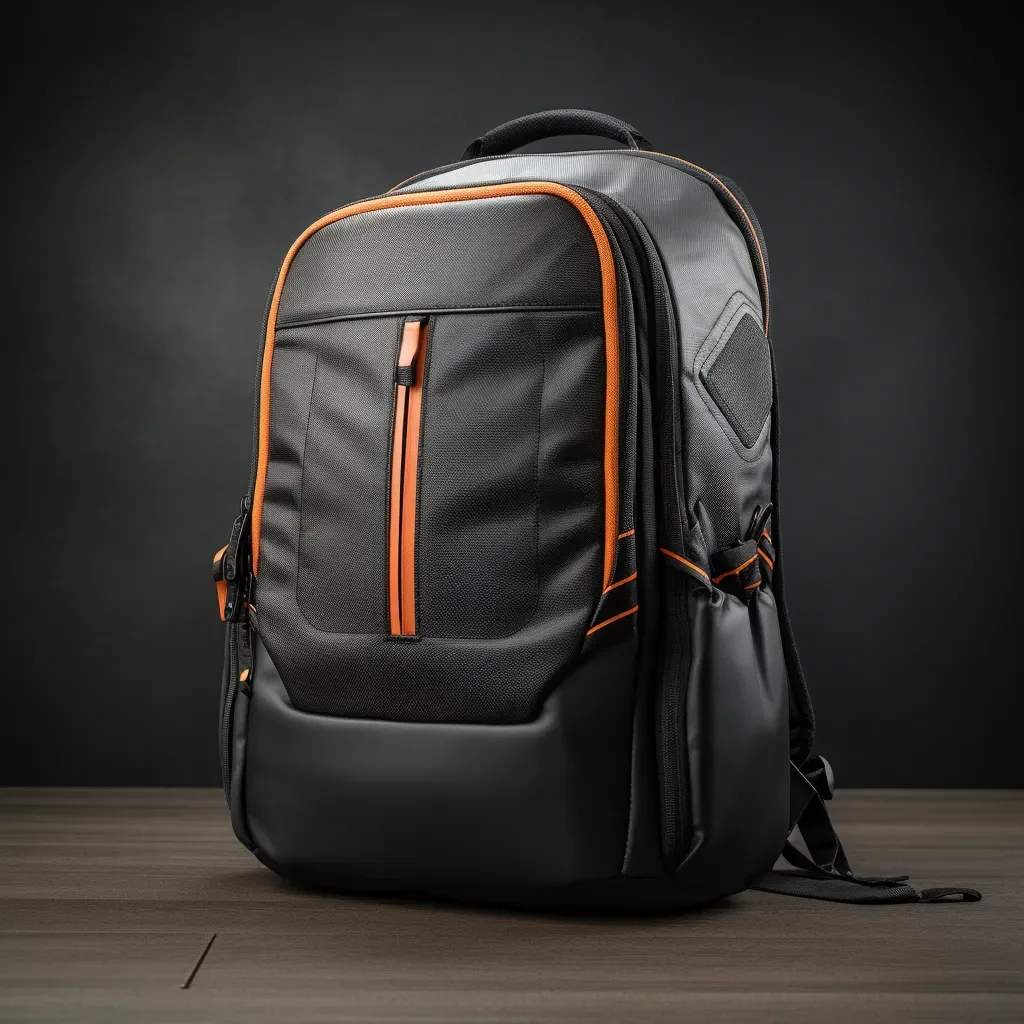
Internal frame construction with load-bearing suspension components — a critical manufacturing consideration for multi-day and expedition packs.
Backpacking Bag Comparison Table
Frame Systems: Internal, External, and Frameless Architecture
The frame system determines how a pack carries weight. This is the single most impactful engineering decision in backpack design.
Internal Frame Systems
Internal frame packs use aluminum stays (typically 6061-T6 aluminum, 2mm thickness) or injection-molded framesheets embedded inside the pack body. The frame conforms to the wearer's back, keeping the center of gravity close to the spine — ideal for technical terrain where balance matters.
Manufacturing requirements: Internal frame packs require a dedicated channel or sleeve sewn between the back panel and the lining. Stay pockets must be reinforced with bartacked edges to prevent the aluminum stays from punching through under load. Framesheet attachment points need rigorous quality control — a detached framesheet renders the pack unusable.
External Frame Systems
External frame packs mount the pack body to an exposed frame (historically aluminum, now also carbon fiber in premium models). They offer superior ventilation and heavier load capacity but add weight and bulk. They remain popular for hunting, military, and heavy-load transport applications.
Manufacturing requirements: External frames require frame-to-pack attachment hardware — typically webbing loops with ladder lock buckles or bolt-through systems. The pack body attaches to the frame at 4–6 points, each of which must withstand multi-directional force. Frame assembly is typically a separate production step that adds $3–$8 to unit cost.
Frameless Systems
Frameless packs have gained market share in the ultralight backpacking segment. They rely on a foam back panel (often closed-cell EVA or Z-Lite style foam) that also serves as a sleeping pad. Without a rigid frame, the load must be packed carefully — frameless packs work best for experienced backpackers carrying base weights under 9 kg.
Manufacturing requirements: Frameless packs are simpler and faster to produce. The foam panel is cut to shape and bonded or sewn into the back panel. Reduced part count means lower labor cost and fewer failure points. Production cost averages 30–40% less than equivalent-capacity internal frame packs.
Suspension Systems: Engineering the Load Transfer
A well-designed suspension system transfers the majority of pack weight from the shoulders to the hips. The engineering challenge lies in making this transfer work across a range of body types and load weights.
Shoulder Straps and Load Lifters
Contoured shoulder straps use multi-density foam — firmer EVA at the attachment points for load distribution, softer PU foam against the body for comfort. Load lifter straps connect the top of the shoulder strap to the frame, angling at 45° to pull the load closer to the body when tightened.
Production note: Shoulder strap assembly requires 4 bartack reinforcement points at the attachment to the pack body. Load lifter attachment points on the frame need identical reinforcement. These 8 reinforcement points add approximately 90 seconds of sewing time per pack.
Hip Belts
The hip belt carries 60–80% of the total load in a properly fitted internal frame pack. Premium hip belts use thermo-moldable foam that conforms to the wearer's hip geometry. Width ranges from 65mm (ultralight) to 110mm (expedition), with thicker padding at the iliac crest contact points.
Production note: Hip belt attachment is the most critical load-bearing seam in the entire pack. It must withstand a minimum static pull of 250 N. At Bespoke Bags, we test hip belt seams on every sample batch using calibrated load cells before approving bulk production. See our quality control protocols for details.
Sternum Straps
A sliding sternum strap on the shoulder strap webbing stabilizes the load laterally and prevents strap slippage. It doubles as an emergency whistle mount (required by many outdoor safety standards). Sternum straps add minimal cost but significant perceived quality — packs without one feel incomplete to most users.
Ventilated Back Panels
Trampoline-style mesh back panels (suspended mesh over a frame) create an air gap between the pack and the wearer's back, reducing sweat buildup by 25–40% compared to foam-on-back designs. Channeled foam designs (such as the "accordion" style) offer a compromise — moderate airflow with better load contact.
Production note: Suspended mesh panels require a separate sub-assembly: the mesh is stretched over a wire or plastic frame, then the entire sub-assembly is attached to the pack body. This adds $2–$4 in materials and 3–4 minutes of labor per unit.
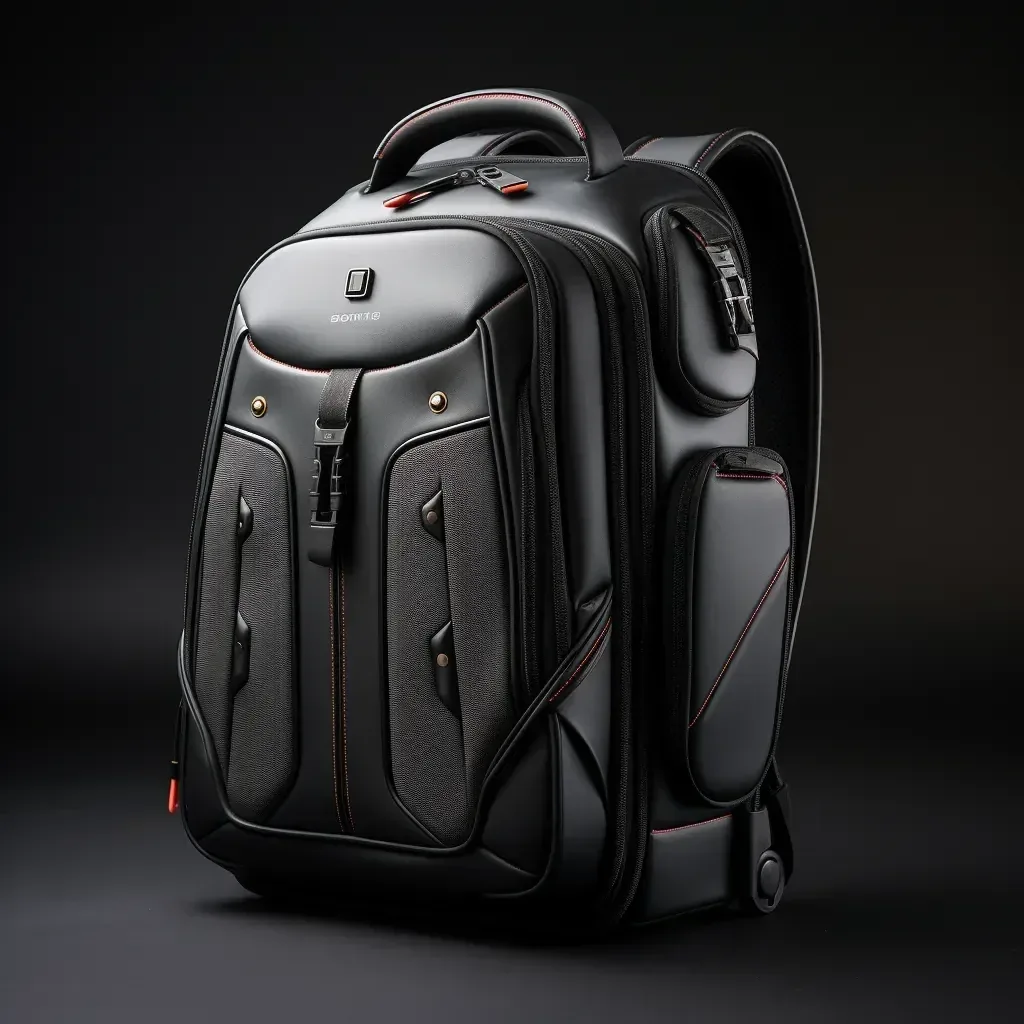
Suspended mesh back panel construction — reduces back sweat by 25–40% compared to foam-on-back designs.
Material Requirements: Fabric Selection for Performance and Durability
Fabric selection directly affects weight, durability, water resistance, and cost. The outdoor backpack market has converged on several proven materials, each with distinct tradeoffs.
Ripstop Nylon (70D–210D)
The workhorse of the backpacking industry. Ripstop weave uses thicker reinforcement threads at regular intervals (typically every 5–8mm) to prevent tears from propagating. 70D ripstop weighs approximately 90 gsm and costs $2.50–$4.00 per linear meter. 210D ripstop doubles the denier for high-abrasion zones like the base panel.
Cordura Nylon (330D–1000D)
Developed by Invista, Cordura offers 3–5x the abrasion resistance of standard nylon at equivalent denier counts. 500D Cordura is the most popular choice for multi-day packs — it balances durability with manageable weight (approximately 200 gsm). 1000D Cordura is used for expedition pack base panels and load-bearing attachment areas.
Dyneema Composite Fabric (DCF)
Formerly Cuben Fiber, DCF uses ultra-high-molecular-weight polyethylene fibers laminated between polyester film layers. It is waterproof by construction, has zero stretch, and weighs 30–50% less than equivalent nylon. Material cost runs $15–$30 per linear meter — roughly 5–8x the cost of Cordura — which is why DCF packs retail at $300–$500+.
X-Pac Laminate (VX21, VX42, VX07)
X-Pac combines a face fabric (21D–500D nylon or polyester) with a waterproof laminate layer and a polyester X-ply reinforcement grid. VX21 (210D face) is popular for technical packs that need waterproof performance without the DCF price point. Cost: $8–$14 per linear meter.
Waterproof Coatings and Treatments
DWR (Durable Water Repellent): A surface treatment that causes water to bead and roll off nylon or polyester fabrics. Standard DWR uses fluorocarbons (C6 or C8 chemistry). DWR-free alternatives use silicone or wax-based treatments that are more environmentally friendly but require more frequent reapplication.
PU (Polyurethane) Coating: Applied to the inner face of the fabric. PU coatings provide the primary waterproof barrier in most backpacks. Standard PU coating achieves 1,000–1,500mm hydrostatic head. Premium PU or PE (polyethylene) coatings reach 5,000–10,000mm. All seam joints require seam sealing tape or liquid seam sealer to maintain waterproof integrity.
Compartment Design and Access Systems
How a pack opens and organizes gear determines real-world usability. The two dominant access systems each have manufacturing implications.
Top-Loading vs. Panel-Loading
Top-loading remains the default for dedicated backpacking packs. It is simpler to construct, lighter, and more weather-resistant (the opening faces upward, away from rain). The tradeoff: accessing gear at the bottom of the pack requires unloading everything above it.
Panel-loading (front or back panel zipper access) provides full visibility and access to the main compartment. It requires a larger, longer zipper (increasing cost by $1.50–$3.00 per zipper) and additional reinforcement around the zipper opening to prevent blowout under load. Panel-loading is increasingly common on packs in the 35–50L range.
Essential Compartment Features
- Sleeping bag compartment: Separate bottom compartment with internal divider (removable zip or drawcord closure). Standard on packs 40L+. Requires an additional YKK zipper and fabric panel.
- Hydration sleeve: Internal sleeve for 2–3L reservoir with hose port. Typically constructed from mesh-lined nylon. Adds $0.80–$1.20 in materials and labor.
- Trekking pole attachments: Two shock cord loops with cord locks on the front panel. One of the highest-value, lowest-cost features in backpack design.
- Ice axe loops: Reinforced webbing loops at the base with shock cord retention at the shaft. Required on alpine and mountaineering packs.
- Top lid pocket: Removable or fixed zippered pocket on the top lid. Serves as a quick-access compartment for maps, snacks, and sunscreen. Removable lids that convert to hip packs add $2–$4 in hardware and assembly time.
Waterproofing Technologies for Backpacking Bags
True waterproofing in backpacks requires addressing three vulnerability points: fabric, seams, and closures.
Roll-Top Closures
Roll-top closures have become the standard for waterproof daypacks and ultralight packs. The fabric rolls over itself 3–5 times and clips at the sides, creating a watertight seal without any zipper. Manufacturing requires reinforced fold lines (bonded or stitched) and side-release buckles or ladder locks.
Waterproof Zippers
YKK Aquaguard and similar water-resistant zippers use a laminated TPU coating over the zipper teeth to reduce water ingress. They are not fully waterproof under submersion but handle sustained rain effectively. Cost: $2.50–$5.00 per zipper, roughly 3x the cost of standard YKK coil zippers.
Seam Sealing
Every stitch hole in a nylon or polyester fabric is a potential water entry point. Waterproof packs use either:
- Internal seam tape: Heat-activated polyurethane tape applied over stitched seams with a hot-air welding machine. Adds $1.50–$3.00 per pack in materials and processing time.
- Liquid seam sealer: Brush- or machine-applied sealant on high-stress seams. Lower cost ($0.50–$1.00 per pack) but less consistent coverage.
- Welded construction: For DCF and some X-Pac packs, seams are ultrasonically welded rather than sewn, eliminating stitch holes entirely. Requires specialized welding equipment and adds 15–20% to production cost.
Weight-to-Capacity Optimization
The outdoor market measures pack efficiency in grams per liter of capacity. Competitive benchmarks:
- Ultralight category: Under 35 g/L (e.g., a 50L pack weighing less than 1.75 kg)
- Lightweight category: 35–50 g/L
- Standard category: 50–65 g/L
- Heavy-duty/expedition: 65+ g/L
Achieving ultralight targets requires DCF or silnylon construction, minimal framing, and removal of non-essential features. Each omitted feature (sternum strap, hip belt padding, compression straps) saves 20–80 grams. OEM manufacturers can work with brands to identify which features the target user actually needs versus which are traditional expectations that add weight without improving the experience.
For brands developing an OEM backpack line, the design phase should include a feature-by-feature weight audit. At Bespoke Bags, our design team produces a component weight breakdown before the first sample, allowing brands to make informed decisions about where to add or subtract weight.
Load Distribution Engineering
Effective load distribution is the difference between a pack that feels comfortable at 15 kg and one that causes shoulder pain within the first kilometer. The engineering principles:
Vertical load balance: Heavy items should sit close to the spine and between shoulder height and the top of the hip belt. This is achieved through internal compartment design — a dedicated heavy-item sleeve against the back panel, with lighter bulk items (sleeping bag, clothing) packed away from the spine.
Frame-to-body geometry: The frame should follow the natural S-curve of the spine. A straight frame pushes the pack away from the lower back, creating a lever effect that increases perceived weight. Contoured frames (curved at the lumbar region) reduce this lever by 15–25%.
Hip belt angle: The hip belt should sit at a slight upward angle (5–10°) relative to horizontal when loaded. This prevents the belt from sliding down the iliac crest during movement. Achieving the correct angle requires testing on multiple body types during the prototype phase.
OEM Manufacturing Considerations
Manufacturing backpacking bags involves several production challenges that differ from standard bag production.
Specialized Stitching for Load-Bearing Points
Every point where a strap, handle, or compression system attaches to the pack body is a potential failure point under load. These points require:
- Bar tack reinforcement: A dense zigzag stitch pattern (typically 42–60 stitches per bar tack) that distributes force across a wider fabric area than a straight seam.
- Webbing anchor construction: Load-bearing webbing must pass through the pack body and anchor on the opposite side, or anchor to a structural panel. Surface-only stitching (webbing sewn to the outside only) is acceptable only for low-load attachment points.
- Thread selection: Load-bearing seams use bonded nylon thread (T-70 or T-90 weight). Standard polyester thread is unsuitable for high-load applications due to lower tensile strength and UV degradation resistance.
Testing Protocols
Before any backpack design enters bulk production, it must pass a comprehensive testing regimen. At our OEM/ODM facility, the testing sequence includes:
- Static load test: Pack loaded to 150% of rated capacity, suspended for 24 hours. Inspection for seam deformation, fabric stretch, or frame bending.
- Dynamic drop test: Loaded pack dropped from 1.2 meters onto concrete (once per face). Inspection for hardware breakage or structural damage.
- Strap pull test: Shoulder straps pulled to 180 N, hip belt to 250 N, haul loop to 100 N. Must withstand without seam failure.
- Zipper cycle test: All zippers cycled 5,000 times under load. Maximum allowable friction increase: 15%.
- Abrasion test: Base panel tested on Taber abrasion machine (minimum 20,000 cycles with CS-10 wheel, 500g load).
- Seam strength test: Strip test per ASTM D1683 on all load-bearing seams. Minimum acceptable strength: 80% of fabric tensile strength.
Pricing Structure by Capacity and Material Tier
The following pricing reflects OEM manufacturing costs (not retail) at MOQ of 500 pieces per style, based on our Quanzhou production floor's current production parameters.
Note: Pricing includes labor, standard hardware (YKK zippers, Duraflex buckles), and basic packaging. Custom-molded components, proprietary hardware, and specialty treatments (DWR-free, solvent-free adhesives) incur additional costs.
Brand Case Studies: What Market Leaders Do Right
Osprey
Osprey's Anti-Gravity suspension system, used in the Atmos and Aura series, popularized the full-wrap suspended mesh back panel. Their manufacturing approach uses thermo-molded hip belts with EVA foam that is heat-formed to a specific contour — a process that requires dedicated molding equipment. Osprey's All Mighty Guarantee (lifetime repair or replacement) reflects confidence in construction quality that any OEM partner must match.
Deuter
Deuter's Aircomfort system pioneered the trampoline back panel in 1984. Their manufacturing emphasis is on the aluminum frame — each stay is bent to a specific radius in a CNC bending operation, then anodized for corrosion resistance. Deuter produces packs in both Vietnam and Germany, with the German line reserved for their top-tier alpine models.
Gregory
Gregory (now owned by Samsonite) differentiates through its Response A3 suspension system, which uses auto-angle hip belt technology. The hip belt pivots independently to track hip movement during stride. This requires a specialized pivot hardware component — injection-molded from glass-filled nylon — that adds approximately $1.80 to unit cost but delivers noticeable comfort improvement in field testing.
Patagonia
Patagonia's approach emphasizes recycled materials and PFC-free DWR treatments. Their Refugio and Atmo packs use 100% recycled nylon face fabrics with a polyurethane laminate for waterproofing. For OEM manufacturers, working with recycled fabrics requires attention to slight variations in tensile strength and elongation — recycled nylon typically shows 8–12% lower tear strength than virgin nylon of equivalent denier.
For brands looking to develop competitive products in this space, our backpack manufacturing capabilities cover the full range from daypacks to expedition packs. We work with brands to develop custom backpack collections that balance performance specifications with target retail pricing.
Start Your Backpacking Bag Project with Bespoke Bags
Whether you are launching a new outdoor brand or expanding an existing line with technical backpacking packs, the manufacturing partner you choose determines whether your designs perform in the field or fail under real-world load. Bespoke Bags brings 20+ Years of backpack production expertise, a SGS-verified 4,950 m² production floor equipped for internal frame assembly, suspension system construction, and comprehensive load testing.
Our standard MOQ of 500 pieces per style means you can develop a complete product line — from 20L daypack through 70L expedition pack — without the volume commitments that traditional factories require. We support full OEM/ODM services, from initial design through production and quality assurance.
Frequently Asked Questions
What is the minimum order quantity for custom backpacking bags?
At Bespoke Bags, the MOQ is 500 pieces per style. This MOQ applies across all capacity ranges from 20L daypacks to 70L+ expedition packs, making it accessible for emerging outdoor brands and established labels testing new product lines.
Which fabric is best for high-altitude expedition backpacks?
For high-altitude expedition packs, 500D–1000D Cordura nylon with DWR coating provides the optimal balance of abrasion resistance, weight, and weather protection. Dyneema Composite Fabric (DCF) is preferred for ultralight variants where weight savings are critical, though at higher material cost. X-Pac VX21 or VX42 offers excellent ripstop performance with laminate waterproofing for technical alpine packs.
How long does OEM backpack development take from design to production?
A complete OEM backpack development cycle typically takes 90–150 days. This includes 15–20 days for design finalization and pattern making, 7–10 days for first sample creation, 14–21 days for sample revision and approval, and 45–60 days for bulk production. Complex frame systems or custom-molded components can extend this timeline by 20–30 days.
What testing protocols are required for load-bearing backpacks?
Load-bearing backpacks require static load testing (150% capacity for 24 hours), dynamic drop testing (1.2m), strap pull testing (shoulder straps to 180 N, hip belts to 250 N), zipper cycle testing (5,000+ cycles), Taber abrasion testing (20,000+ cycles on base panels), and seam strength testing at all load-bearing attachment points. Buckle components undergo fatigue testing through 500 open-close cycles.
What is the price range for OEM backpacking bags at different capacity levels?
OEM pricing varies by capacity, materials, and features. Daypacks (20–35L) typically range from $12–$28 per unit. Weekend packs (35–50L) fall in the $22–$42 range. Multi-day packs (50–70L) with internal frames run $35–$65. Expedition packs (70L+) with full suspension systems range from $48–$95. Premium materials like Dyneema or full X-Pac laminate can increase costs by 40–70% over standard nylon constructions.
How long does backpack sampling take before a bulk order is approved?
Sampling for a standard backpacking pack runs 6-10 working days from a confirmed tech pack to the first physical sample. Designs with internal frame systems, thermo-moulded hip belts or welded DCF seams need 12-15 working days, because the frame sleeve and moulding tools are prepared separately. A bespoke bag specialist books the sampling slot once fabric and hardware are in hand.
Which frame architecture suits a brand launching its first backpacking collection?
Internal frames suit most first collections: aluminium stays sit inside a sewn sleeve, keep the load close to the spine and handle 50-70L volumes well. Frameless construction works for ultralight lines under 9 kg base weight, while external frames belong in hunting or heavy-load ranges. The programme coordinator matches architecture to target capacity, price band and user profile.
How is load transfer at the hip belt checked before bulk production starts?
Every sample batch is pulled on a calibrated load cell: shoulder straps to 180 N, hip belt seams to 250 N, haul loop to 100 N. Framesheet attachment points get the same treatment, since a detached framesheet makes a pack unusable. Readings are logged against the tech pack, and bulk sewing on the Quanzhou production floor starts only after the numbers clear specification.
What waterproofing level should a four-season backpacking pack target?
A four-season pack needs three layers of defence: a PU or PE coating reaching 5,000-10,000 mm hydrostatic head, taped or liquid-sealed seams at every stitch line, and a roll-top or Aquaguard closure at the main opening. Welded DCF seams remove stitch holes entirely at 15-20% added cost. DWR handles surface beading but is never the primary barrier.
How can a pack weight-to-capacity ratio be improved without losing durability?
Run a component-level weight audit before the first sample: the ultralight band sits under 35 g/L and lightweight runs 35-50 g/L. Keep 500D Cordura at the base and other high-abrasion zones, drop to 70D-210D ripstop on upper panels, and strip features the target user never touches. Each dropped strap or pocket saves 20-80 grams.
Which compartment layout decisions cause the most complaints in the field?
Three recur: a top-loading opening on a pack sold for travel use, a hydration sleeve set too far from the hose port, and compression straps that foul the side pockets. Panel-loading adds 1.50-3.00 dollars per zipper but removes the dig-to-the-bottom problem. Layout should be settled at sample stage, when changes still cost nothing.
Is the 500-piece minimum applied per colour as well as per style?
MOQ is 500 pieces per style per colour, so a three-colour launch of one pack design totals 1,500 units. Splitting a single style across several colourways raises unit cost, because cutting and thread changes are repeated each time. A bespoke bag specialist can group colourways into one production run to keep the economics workable.
How long does bulk backpack production take and how is shipment arranged?
Bulk production runs 35-50 days after sample approval, depending on capacity, frame type and order size. Finished goods are inspected to AQL 2.5 under ISO 2859-1 single sampling, general level II, then released FOB Xiamen. Standard terms are T/T with a 30% deposit and the 70% balance settled before the shipment leaves the Quanzhou production floor.