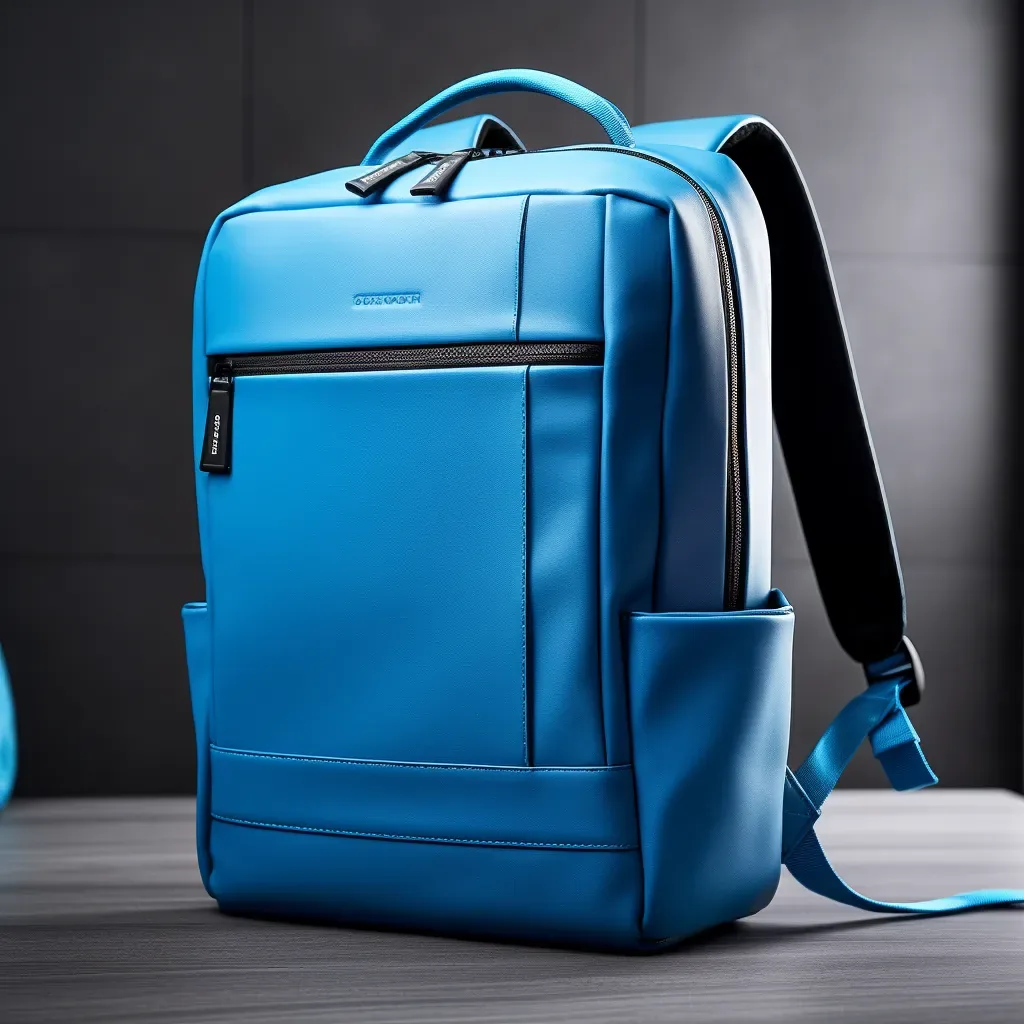
A bespoke backpack collection for professional use is specified correctly when the harness is engineered before the shell, because the category's commercial failure is discomfort rather than appearance. A workable range covers three builds — a slim urban backpack, an executive business backpack with structured device protection, and a travel-adjacent piece with expandable capacity — sharing one harness architecture so that strap geometry, webbing and adjustment hardware are approved once. Brands that design a backpack as a bag with two straps attached produce pieces that look considered and feel wrong after an hour.
The professional positioning adds a second constraint. A buyer who carries a laptop, a charger, documents and a water bottle every working day is unforgiving about access and organisation, and will notice within a week whether a compartment is in the right place. That makes the category unusually sensitive to decisions taken at pattern stage and unusually resistant to correction afterwards.
It is also a category where the customer's tolerance for iteration is low. A buyer who buys a professional backpack and finds it uncomfortable does not return it; they stop using it and do not buy from the house again. That silent attrition is more damaging than a visible complaint, and it is why the testing step at sample stage matters more here than in almost any other part of a collection.
What the Professional Brief Actually Asks For
Professional buyers differ from casual ones in three specific ways: they carry a predictable and heavy load, they need to reach particular items repeatedly during the day, and they expect the bag to look appropriate in a meeting. Those requirements pull in different directions, and the specification is the negotiation between them.
| Requirement | Design implication | Where it conflicts |
|---|---|---|
| Carries a laptop daily | Padded, suspended device sleeve | Padding adds bulk to a slim silhouette |
| Frequent access | External or top-access pockets | External pockets break a clean line |
| Appropriate in meetings | Restrained surface and hardware | Technical detailing reads as sportswear |
| Commute durability | Abrasion-resistant base and back panel | Technical fabrics can look non-luxury |
| Organisation | Defined slots for small items | Over-organisation adds weight and seams |
The third conflict is the one luxury brands resolve worst. A backpack that reads technical sells the functional story and loses the professional one; a backpack that reads purely formal tends to lack the padding and access the daily load requires. The successful pieces in this category usually resolve it by keeping the external surface quiet — one material, minimal visible hardware — and putting all the technical content inside.
Programme parameters at a glance
| Parameter | Commitment |
|---|---|
| Minimum order quantity | 500 pieces per style / colourway |
| Sampling lead time | 6–10 working days (12–15 days for complex constructions) |
| Bulk production lead time | 35–50 days after sample approval |
| Inspection standard | AQL 2.5 (ISO 2859-1), single sampling, general level II |
| Incoterms | FOB Xiamen — EXW, CIF and DDP available on request |
| Payment terms | T/T 30% deposit / 70% before shipment; L/C at sight for container loads |
| Verified production floor space | 4,950 m² (SGS-verified) |
| Team | 137 staff across 7 production lines |
| Equipment | 149 machines including computerised saddle-stitch and edge-painting units |
| Monthly capacity | 200,000 pieces |
| Entity | Founded 2014; principal has worked in bag development since 2004 |
Harness Engineering and the Load Path
The harness is where a professional backpack succeeds or fails, and it is a system rather than a pair of straps. Load enters at the shoulders, travels through the strap and its attachment, and is distributed by the back panel. Every element in that chain should be specified together.
Attachment geometry deserves more attention than it usually receives. A strap anchored low on the body creates a moment arm that pulls the bag away from the wearer's back, and the resulting swing is what customers describe as heaviness even when the bag is not especially heavy. Raising the attachment and narrowing its span is a pattern change that costs nothing and materially improves how the load feels.
Three Builds and Their Commercial Roles
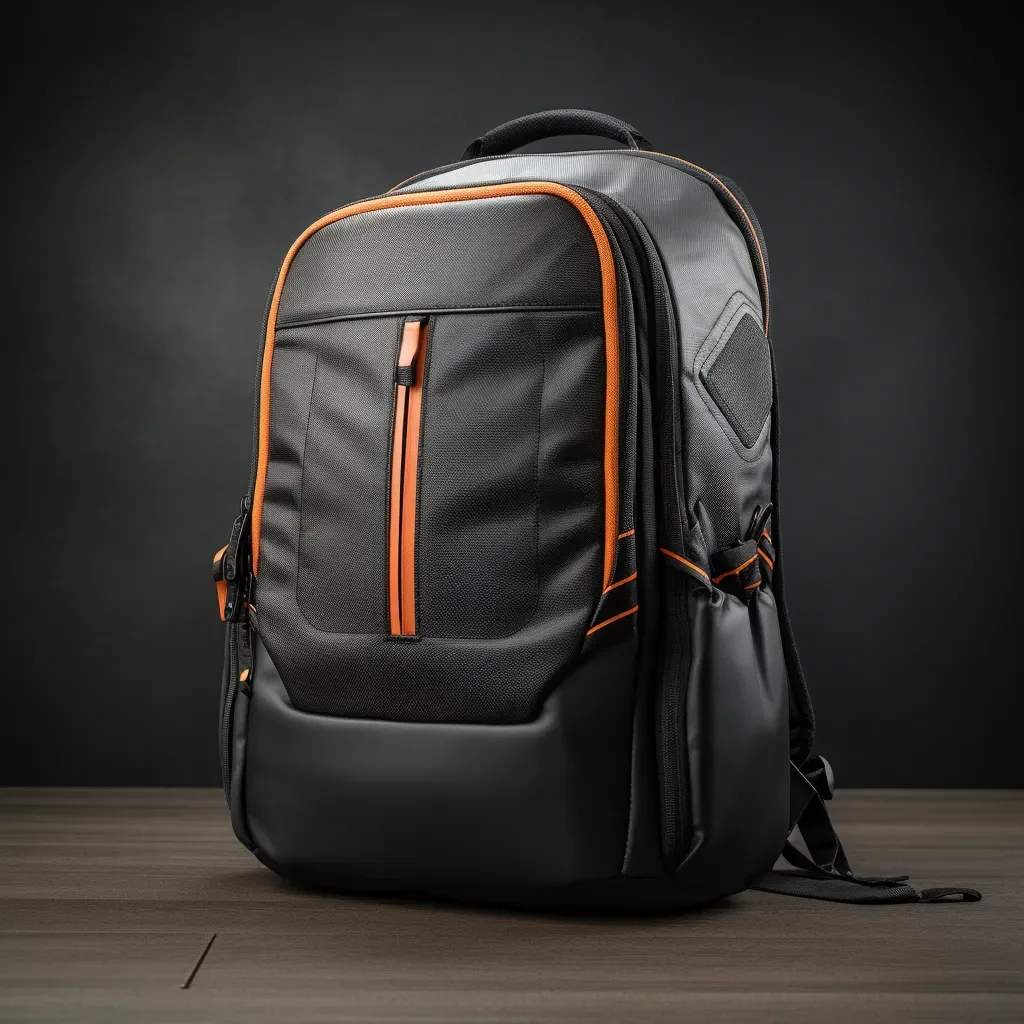
A collection rarely needs more than three backpack builds. Each implies a different customer and a different price, and the gaps between them should be structural rather than cosmetic.
| Build | Construction character | Typical load | Price position |
|---|---|---|---|
| Urban slim | Minimal structure, light padding, clean exterior | Tablet and light daily items | Accessible |
| Executive | Structured body, suspended device sleeve, defined organisation | Laptop, documents, charger | Mid to premium |
| Travel-adjacent | Expandable capacity, trolley sleeve, robust base | Laptop plus overnight kit | Premium |
| Convertible | Backpack and briefcase modes with a stowable harness | Varies | Premium within the category |
The convertible build is commercially attractive and technically demanding, because it requires a harness that disappears convincingly. A stowable harness adds a pocket, a zip and a set of attachment points that must be engineered to carry load in one mode and stay invisible in the other. Where a brand wants it, the piece should be designed as a convertible from the outset rather than adapted from a fixed backpack.
Materials and Abrasion Mapping
Backpacks wear in predictable places, and specifying one material for the whole shell is usually the wrong economy. Mapping abrasion zones and varying the material accordingly is standard practice in technical bags and underused in leather ones.
| Zone | Wear mechanism | Appropriate specification | Risk if uniform |
|---|---|---|---|
| Base | Set down repeatedly on rough surfaces | Heavier leather or a coated fabric panel | Scuffing and eventual wear-through |
| Back panel | Rubbing against clothing all day | Smooth, low-friction material | Pilling on knitwear |
| Strap underside | Friction against the shoulder | Soft facing or webbing | Clothing wear and discomfort |
| Top handle | Carried briefly and often | Reinforced core with a comfortable wrap | Stretching at the attachment |
| Opening edge | Contact on every use | Bound or reinforced edge | Fraying at the most visible point |
| Interior base | Sharp objects dropped in | Dense lining with a sealed seam | Puncture into the shell |
Where a brand uses leather throughout, the base and the back panel are the two places where a heavier cut or a coated finish repays its cost. Where a technical fabric is used, the same logic applies in reverse: leather at the trim points — handle, zip garage, base corners — is what allows a synthetic body to read as a professional accessory rather than as sports equipment.

Compartments, Device Protection and Organisation
Device protection is the single specification most likely to be got wrong, usually because padding is added without considering suspension. A padded sleeve against the outer wall does not protect a laptop dropped on its corner; a suspended sleeve that holds the device away from the base does.
- Suspended sleeve. The device compartment should stop short of the base, so an impact at the bottom is not transmitted directly.
- Corner reinforcement. Where the sleeve meets the base, a reinforced corner absorbs the drop that actually happens.
- Sized to the device. A stated laptop size should be verified by measurement, and the sleeve should not be so generous that the device slides.
- Charger and cable management. A dedicated pocket prevents cables from abrading the lining and the device.
- Quick-access zone. Keys, pass and phone need a pocket reachable without setting the bag down.
- Document separation. Papers carried against a laptop will crease; a flat divider solves it for very little cost.
Over-organisation is the opposite failure and is more common than under-organisation. Every added pocket is a seam, a panel and a few grams, and a backpack with twelve compartments is heavier, slower to pack and harder to search than one with five. The test is whether a pocket has a named item that belongs in it; if it does not, it is decorative weight.
Access, Closure and Security
How a professional backpack opens determines whether it is used daily or abandoned after a fortnight. The trade-off is between access speed and security, and the right answer depends on the commute rather than on the silhouette.
| Access type | Advantage | Disadvantage | Best context |
|---|---|---|---|
| Top-loading with a flap | Weather resistance, clean exterior | Items at the bottom are hard to reach | Executive and formal |
| Full clamshell zip | Complete access, packs like a case | Requires a flat surface to open | Travel-adjacent |
| Front panel zip | Reach the main compartment on the move | Longer zip run, more failure points | Urban daily use |
| Roll-top | Adjustable capacity, weather resistant | Slower to open and close | Commuter and casual-professional |
| Magnetic flap over a zip | Quiet exterior, secure closure | Two-step opening | Premium professional |
Security features should be judged against the actual commute rather than against marketing. A hidden back pocket against the wearer's spine is genuinely useful in crowded transit and costs almost nothing. A lockable zip is heavier, noisier and rarely used. Anti-slash mesh adds weight throughout the shell and is very seldom the deciding factor in a purchase.
Water resistance deserves a decision at the same time as access, because the two interact. A roll-top or a flap provides genuine protection against rain, while a long front zip needs a storm guard or a water-resistant tape to offer anything comparable. Where a brand sells into a wet climate, that choice should follow the climate rather than the silhouette preference.
Where Backpack Programmes Go Wrong
The failure patterns in professional backpacks are consistent, and nearly all of them originate in the brief rather than on the production floor.
| Failure | Origin | Symptom in use | Prevention |
|---|---|---|---|
| Straight straps on a heavy bag | Harness not engineered | Strap edge digs into the shoulder | Specify an S-curve and test loaded |
| Low, wide attachment | Pattern chosen for looks | The bag swings away from the back | Raise and narrow the attachment |
| Unsuspended device sleeve | Padding without suspension | Damage from a drop at the base | Stop the sleeve short of the base |
| Uniform material throughout | Cost simplification | Base and back panel wear early | Map abrasion zones |
| Over-organised interior | Feature competition | Heavy, slow to pack | Require a named item per pocket |
| Technical exterior detailing | Functional story overdone | Reads as sportswear in a meeting | Keep technical content internal |
Testing loaded is the cheapest prevention available. A sample carried empty tells a brand almost nothing about how the piece will behave; the same sample loaded with a laptop, a charger, a bottle and a notebook, worn for an hour, reveals strap comfort, swing, access and balance in a single session. That test costs nothing and prevents most of the failures listed above.
Building a Professional Backpack Capsule
Three builds sharing one harness is a realistic opening commitment. The sequence below keeps development inside a standard window and leaves the bulk run uncomplicated.
- Engineer the harness first. One strap profile, one attachment geometry, one webbing and one adjustment set, used by every build.
- Develop the executive build next. It carries the most structure and its reinforcement logic can be reduced for the urban piece.
- Derive the urban build from it. Same harness and hardware, lighter body, fewer compartments, no trolley sleeve.
- Material-map before pricing. Abrasion zones should be decided while the quotation is open, not value-engineered afterwards.
- Test every sample loaded. Wear it for an hour at the intended weight before approving strap geometry and balance.
- Inspect at AQL 2.5. Single sampling, general level II under ISO 2859-1, with specific attention to strap attachment and zip runs.
Sampling runs 6–10 working days for standard constructions and 12–15 for complex ones, with bulk production following at 35–50 days after approval. Because the builds share a harness, hardware family and lining, the capsule usually samples inside the window required for one complex bag, which is what makes a three-build range achievable inside a quarter.
Colour should be concentrated rather than spread. A minimum applies per style and per colourway, so three builds in one shared colour is three runs, while three builds in three colours is nine. Professional backpacks also sell most reliably in one or two dark neutrals, which is a rare case where commercial reality and budget discipline point in exactly the same direction.
Documentation follows the same logic as elsewhere in a collection. REACH declarations cover leather, coatings and any technical fabric; OEKO-TEX certification is commonly requested for linings and webbing; and where a brand makes leather provenance claims, LWG traceability on the tannery supports them. One shared specification across the capsule makes all three straightforward to compile.
Freight should be planned with the same care as the pattern, because a structured backpack with a padded back panel does not compress for shipping. Carton volume per unit is high, so packing specification — whether the piece ships flat, nested or upright — has a measurable effect on landed cost. Shipments leave FOB Xiamen, with EXW, CIF and DDP available on request.
Specify a professional backpack range
Send your build plan, device sizes and volume targets. The programme team at our production floor in Quanzhou will engineer the harness first and sequence the sampling.
Frequently Asked Questions
How many backpack styles should a professional collection include?
Three builds are usually enough: a slim urban piece, a structured executive bag with a suspended device sleeve, and a travel-adjacent option with expandable capacity. They should share one harness architecture so strap geometry, webbing and adjustment hardware are approved once, rather than being engineered separately for each style.
What makes a backpack comfortable to carry all day?
Harness geometry more than padding. An S-curved strap follows the shoulder instead of digging in, and straps attached high and narrow on the body stop the bag swinging away from the back. Width distributes load better than padding above roughly a laptop's weight, so a wide, well-shaped strap beats a heavily padded straight one.
How should a laptop compartment be specified?
Suspended rather than merely padded. The sleeve should stop short of the base so an impact at the bottom is not transmitted into the device, with reinforcement at the corner where the sleeve meets the base. Stated device sizes should be verified by measurement, and the sleeve should not be so generous that the laptop slides inside it.
Should a professional backpack use one material throughout?
Usually not. Abrasion concentrates at the base, the back panel, the strap underside and the opening edge, and mapping those zones lets a specification put heavier or coated material where it earns its cost. With leather, the base and back panel repay a heavier cut; with technical fabric, leather trim is what keeps the piece reading professional.
What is the most common mistake in backpack specification?
Designing the shell first and attaching straps afterwards. Discomfort, not appearance, is what makes a professional backpack fail commercially, and comfort is a function of strap curvature, attachment geometry and back panel structure. The cheapest prevention is to wear a loaded sample for an hour before approving it.
Should a backpack open from the top or the front?
It depends on the commute. A top-loading flap is weather-resistant and reads more formally but makes items at the bottom hard to reach. A front panel zip gives access on the move. A full clamshell packs like a case but needs a flat surface. The right choice follows how the bag is actually used each day.
Are security features worth specifying?
Selectively. A hidden pocket against the wearer's back is genuinely useful in crowded transit and costs almost nothing. Lockable zips are heavier and rarely used, and anti-slash mesh adds weight throughout the shell without usually deciding a purchase. Features should be judged against the real commute rather than a marketing list.
How much organisation is too much?
More than the customer can name a use for. Every pocket adds a seam, a panel and weight, so a bag with twelve compartments is heavier, slower to pack and harder to search than one with five. The test is whether each pocket has a specific item that belongs in it; if not, it is decorative weight.
How long does a backpack capsule take to develop?
Sampling takes 6–10 working days for standard constructions and 12–15 for complex ones, followed by 35–50 days of bulk production after sample approval. Because a well-planned capsule shares its harness, hardware and lining across every build, the full set usually samples inside the window needed for a single complex bag.
What does AQL 2.5 mean for a backpack order?
It is the acceptance quality limit under ISO 2859-1 using single sampling at general level II, setting how many minor and major defects a batch may contain before rejection. For backpacks, inspection should pay particular attention to strap attachment and zip runs, which are the two areas most likely to fail in use rather than in a visual check.
Can a backpack also work as a briefcase?
Yes, but only if designed as a convertible from the outset. A stowable harness needs a pocket, a zip and attachment points engineered to carry load in one mode and stay invisible in the other. Adapting a fixed backpack usually produces a piece that works well in one mode and badly in the other.
Why does a backpack feel heavier than it is?
Usually because of swing. Straps attached low and wide on the body create a moment arm that pulls the bag away from the wearer's back, and the resulting motion is perceived as weight. Raising and narrowing the attachment is a pattern change that costs nothing and measurably changes how the load feels.
What colours sell best in professional backpacks?
One or two dark neutrals, consistently. That is convenient commercially, because a minimum applies per style and colourway: three builds in one shared colour is three runs, while three builds in three colours is nine. Budget discipline and actual demand happen to point in the same direction in this category.
How does documentation work for a mixed-material backpack?
It is simpler when the material list is short. REACH declarations cover leather, coatings and technical fabrics; OEKO-TEX certification is commonly requested for linings and webbing; and LWG traceability supports leather provenance claims. Compiling all three for one shared specification across the capsule is straightforward; doing it separately per colourway is not.
Should padding or strap width come first in the budget?
Width. Padding prevents pressure points but adds bulk, while width distributes load across the shoulder. Above roughly a laptop's weight, a wider, correctly curved strap will outperform a narrow heavily padded one, and it keeps the silhouette slimmer, which matters for a bag that has to look appropriate in a meeting.