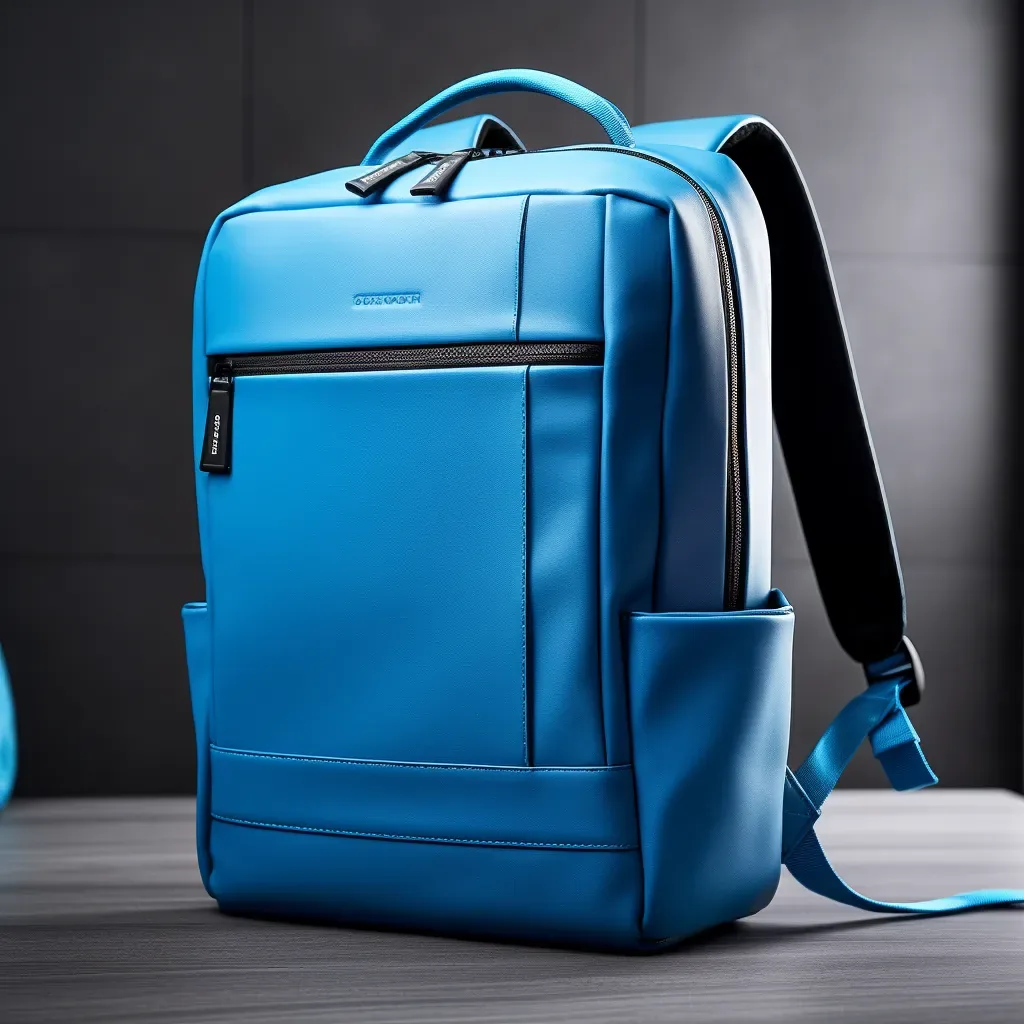
A bespoke travel backpack is specified around three measurable things — how the load reaches the hips, how the pack opens when it is full, and how well it resists opportunistic theft — and only then around how it looks. Get those three right and the pack carries a nine-kilogram load comfortably for a full travel day, passes as cabin baggage on most carriers, and survives years of overhead bins. Treat them as styling afterthoughts and the result is a handsome object that gets carried on one shoulder, which defeats the entire format.
Why the Travel Backpack Is an Engineering Problem
Everyday backpacks are designed for a predictable three to five kilograms: a laptop, a bottle, a jumper. Travel packs carry more, carry it longer, and carry it through contexts — check-in queues, station stairs, hotel lobbies — where the wearer cannot set the bag down. That changes the specification. The harness becomes load-bearing structure, the panel layout has to work when the pack is stuffed to capacity, and the fabric has to tolerate abrasion from conveyor belts and aircraft interiors rather than just from a desk chair.
| Design pressure | Everyday backpack | Travel backpack | Consequence for the specification |
|---|---|---|---|
| Carried load | 3–5 kg | 7–12 kg | Load-bearing harness and a real hip belt |
| Time on the back | 20–40 minutes | 2–6 hours | Ventilated back panel, wider strap contact area |
| Opening frequency | Low | High, often in public | 180-degree access, one-handed closures |
| Abrasion environment | Office, commute | Conveyors, bins, pavements | Higher-denier shells and reinforced base |
| Theft exposure | Moderate | High in transit hubs | Rear-panel access, lockable sliders, hidden pockets |
Programme parameters at a glance
| Parameter | Commitment |
|---|---|
| Minimum order quantity | 500 pieces per style / colourway |
| Sampling lead time | 6–10 working days (12–15 days for complex constructions) |
| Bulk production lead time | 35–50 days after sample approval |
| Inspection standard | AQL 2.5 (ISO 2859-1), single sampling, general level II |
| Incoterms | FOB Xiamen — EXW, CIF and DDP available on request |
| Payment terms | T/T 30% deposit / 70% before shipment; L/C at sight for container loads |
| Verified production floor space | 4,950 m² (SGS-verified) |
| Team | 137 staff across 7 production lines |
| Equipment | 149 machines including computerised saddle-stitch and edge-painting units |
| Monthly capacity | 200,000 pieces |
| Entity | Founded 2014; principal has worked in bag development since 2004 |
Buyers often arrive with a silhouette and no load figure. The first question the programme team asks is what the pack has to hold and for how long, because those two answers determine strap width, back-panel construction and frame-sheet choice before a single aesthetic decision is made.
Load Transfer: Harness, Back Panel and Hip Belt
Comfort is a mechanical outcome. A pack that sits correctly transfers roughly seventy to eighty per cent of its weight to the hip belt and the remainder to the shoulders; a pack that hangs off the shoulder straps puts the whole load on the trapezius and becomes painful within the hour. Achieving the correct transfer requires the harness geometry, the internal frame sheet and the torso length to be specified together.
| Element | Specification that works | Failure mode when it is wrong |
|---|---|---|
| Shoulder strap width | 55–75 mm at the contact point, tapered | Straps roll and cut into the neck |
| Strap foam | Closed-cell EVA, 8–12 mm, dual density | Foam compresses flat within a season |
| Back panel | Moulded EVA with air channels, or laminated mesh over a frame sheet | Sweat pooling and a hard pressure ridge |
| Frame sheet | HDPE or aluminium stay, 1.5–2.5 mm, removable | Pack folds around the load and sags |
| Hip belt | Padded, 80–120 mm wide, load-bearing webbing to the frame | Belt slides up; weight returns to the shoulders |
| Sternum strap | Adjustable on a rail, 25 mm webbing | Fixed position suits nobody |
| Load lifters | 15–20 degree angle from the shoulder strap top | Pack pulls away from the back |
Torso length is the measurement most often skipped. A harness sized to a single torso length fits roughly half of any mixed group, which matters for corporate and crew programmes where the recipients vary. Where the budget allows, two harness sizes or an adjustable yoke are worth more than any material upgrade.
Volume, Dimensions and the Cabin Question
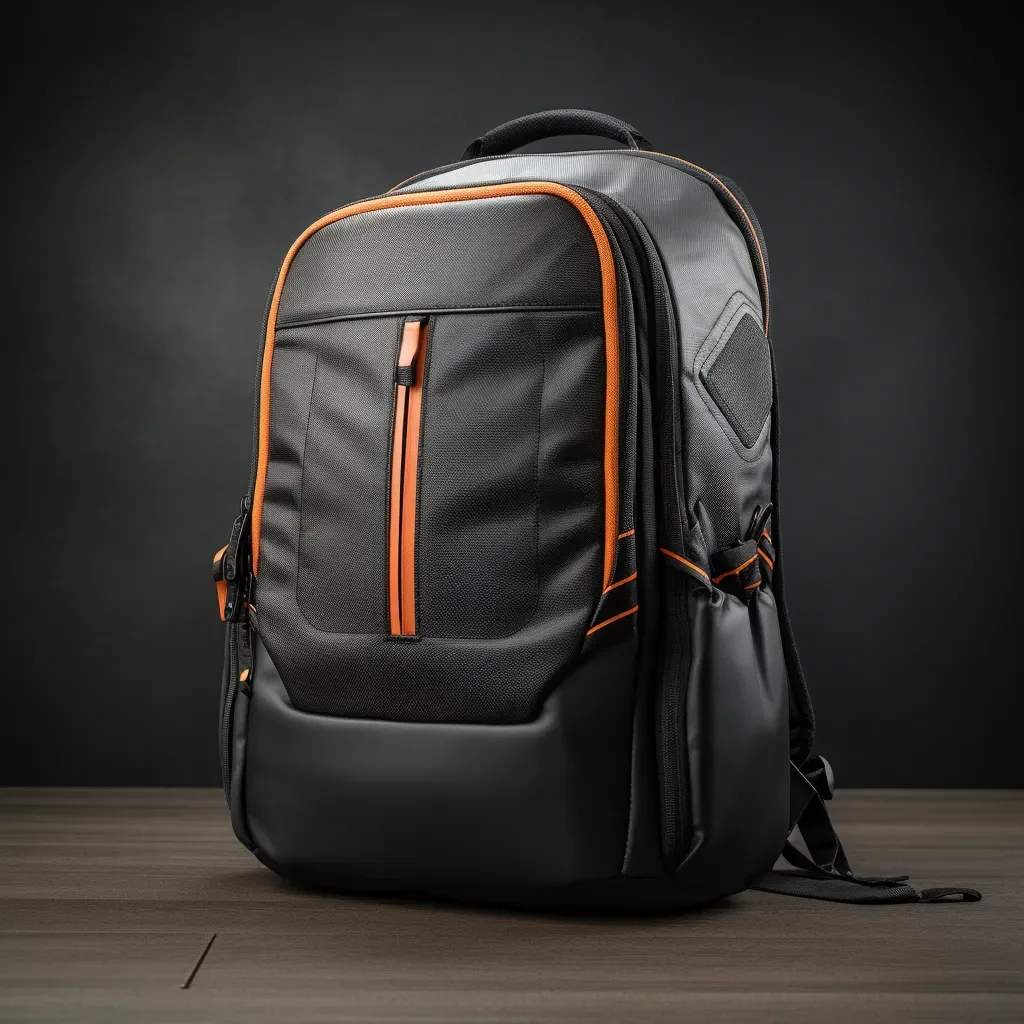
Volume is the number buyers ask for first and the one that means least on its own. Two 40-litre packs can carry very differently depending on panel shape, opening geometry and how much of the volume sits in usable rectangular space. For travel, the practical band is 30–45 litres: below 30 the pack cannot hold a two-day load, above 45 it stops passing cabin allowances and starts encouraging overpacking.
| Volume band | Usable for | Cabin status | Typical traveller |
|---|---|---|---|
| 20–28 litres | Day use, laptop and light layers | Under-seat on most carriers | City break, commuter |
| 30–38 litres | Two days, laptop, wash bag | Overhead on most carriers | Short-haul business travel |
| 38–45 litres | Three to four days with packing discipline | Overhead; tight on low-cost carriers | Weekend and regional travel |
| 45–60 litres | A week with compression sacks | Check-in only | Long-haul and expedition use |
For a pack intended as cabin baggage, the external dimensions govern the design rather than the volume target: 55 × 38 × 20 cm is the envelope that clears most sizers. A 40-litre pack built within that envelope will be deeper and squarer than a hiking pack of the same volume, and the pattern has to be cut accordingly rather than scaled down from a trekking block.
Compression is the other half of the volume story. Internal or external compression straps let a 42-litre pack behave like a 30-litre one on a light trip, which matters because a half-full pack lets its contents settle and slump against the wearer's back. Two horizontal straps on each side, anchored into the frame rather than into the lining, cost almost nothing and make a single volume serve several trip lengths. Where the pack is issued as part of a set, this is the difference between one pack and three.
Weight distribution inside the volume matters as much as the total. Heavy items should sit between the shoulder blades and close to the back panel; soft, light items belong in the base and the outer shell. A pack loaded the wrong way round — shoes and chargers at the top, clothing at the back — pulls away from the spine and feels a kilogram heavier than it is. Where a programme issues the pack with a fixed kit, the interior should be zoned so that the correct loading is the obvious one.
Access Patterns: Panel, Top or Clamshell
How a pack opens matters more once it is full. Top-loading works for expedition packs that are unpacked once a day at camp; it is wrong for travel, where the wearer needs a cable from the bottom of the bag in an airport queue. Panel and clamshell access are the two patterns worth considering for a bespoke travel pack.
| Access pattern | How it behaves | Where it suits | Watch-outs |
|---|---|---|---|
| Top loader with lid | Efficient to pack; poor mid-trip access | Expedition and long-haul | Contents are unreachable without unpacking |
| U-shaped front panel | Opens the main body like a case | Two to four day travel | Zip runs through a high-stress corner |
| Full clamshell, 180 degrees | Lies flat for security and packing | Business travel and crew use | Needs a structured back panel to hold shape |
| Rear-panel access | Laptop reaches the wearer's back | High-theft environments | Panel lies on the ground when opened |
| Hybrid: front panel plus side zip | Grab access without full opening | Photography and equipment carry | Two zips to inspect and maintain |
Zip specification is the quiet failure point in panel-loading designs. A U-shaped zip on a travel pack should be a number eight or number ten coil with a reverse-slider pair, bound at both ends, with a storm flap over the run. Number five zips on a 40-litre panel are the most common cause of warranty claims in this category, and the saving per unit is negligible against the cost of a return.
Security Features That Actually Work
Most anti-theft features sold on travel packs are decorative. What genuinely reduces loss is keeping the opening away from the crowd, keeping the valuable contents against the wearer's back, and making a fast, quiet theft difficult. Everything else — slash-proof mesh, RFID shielding, locking carabiners — is secondary to those three principles and should be specified only where a specific threat justifies it.
- Put the laptop sleeve against the back panel, not the outer face, so access requires removing the pack.
- Use lockable slider pairs on the main compartment so the two pulls can be joined with a small lock.
- Keep the main opening on the rear or top panel where it faces the wearer in a queue.
- Add one discreet internal pocket for passport and cards, positioned above the hip belt line.
- Specify a webbing loop and a short cable tie-out for securing the pack to a fixed object in a cafe or station.
- Avoid external mesh bottle pockets on the crowd side; they are the easiest target on any pack.
- Choose dark, low-contrast hardware so the pack does not advertise the location of its closures.
For programmes that involve high-value contents, the specification can go further: a cable-reinforced slash-resistant layer between shell and lining, a lockable main compartment with a cable tie-out, and an internal tracker sleeve. All three add weight and cost, so they belong where the risk justifies them — press and media crews, equipment-heavy field work, and long overland routes — rather than as standard on every unit.

Grab handles deserve a specific note because they are routinely underspecified. A travel pack is lifted by its top handle dozens of times per trip, often one-handed and fully loaded, and a single-layer webbing loop sewn into the shell will eventually tear out. The specification that survives is a three-layer webbing core, bar-tacked through the frame sheet rather than through the lining, wrapped in leather or spacer mesh. It is a small detail that recipients notice only when it is missing.
Materials, Hardware and Wear Points
A travel backpack fails at predictable points: the base, the strap attachment, the zip run and the grab handle. Reinforcing those four areas costs a few grams and a small amount of labour, and it removes the majority of field failures. Material selection then becomes a question of positioning and weight rather than durability, because every credible shell material in this class is durable enough.
| Component | Recommended specification | Reason |
|---|---|---|
| Shell fabric | 1680D ballistic nylon or 500D Cordura; leather facings optional | Abrasion resistance against conveyors |
| Base panel | Double layer with a bonded stiffener, leather or TPU | Base takes the entire abrasion load |
| Strap attachment | Bar-tacked through the frame sheet, not through lining only | Attachment is the highest-stress join |
| Grab handle | Three-layer webbing with a leather or spacer wrap | Handles are loaded when the pack is full |
| Zips | YKK or equivalent number eight or ten coil, reverse sliders | Panel zips carry structural tension |
| Buckles | Acetal or aluminium, 25–40 mm, field-replaceable | Buckles are the first thing to break |
Where leather enters the specification, it should be placed where hands go — grab handles, strap wraps, zip pulls, base trim — rather than across the whole shell. Full-leather travel packs exist and look superb, but they weigh roughly a kilogram more than an equivalent technical build and they mark visibly after a season of overhead bins, which is rarely the outcome a brand wants for a premium product.
Sustainability credentials should be handled with the same discipline as any other specification. Recycled polyester shells with a documented recycled content claim, OEKO-TEX certified linings and Leather Working Group accredited trims are all available and all verifiable through their certificate numbers. What should be avoided is a general eco claim with nothing behind it, which creates more exposure than it removes and is increasingly the first thing a retail buyer's compliance team asks about.
Developing a Travel Backpack Programme
Backpack programmes take slightly longer to sample than flat goods because the harness has to be assembled and fitted before the pack can be judged. The sequence below is the one used on the floor in Quanzhou, where seven lines and 149 machines are scheduled around sampling slots alongside bulk work.
- Brief: pack volume, load weight, torso range, cabin allowances, branding position and target price band.
- Harness and frame-sheet proposal, with strap width, foam density and hip-belt geometry dimensioned.
- First sample in 6–10 working days, or 12–15 where a moulded back panel or custom hardware is involved.
- Loaded fit test: the pack is filled to the declared weight and worn for a fixed period before review.
- Revision round on harness comfort, panel layout and zip specification.
- Bulk production of 35–50 days after approval, with material and hardware lots reserved at confirmation.
- Inspection to AQL 2.5 (ISO 2859-1), single sampling, general level II, including a loaded strap-pull check.
Reorders behave differently from first orders in this category. Once the harness pattern, frame sheet and hardware tooling exist, a repeat run drops the development stage entirely and typically shortens the schedule by the sampling window. Programmes that expect to reorder should say so at the first brief, because it justifies reserving hardware finishes and keeping the pattern file open rather than archiving it after shipment.
Commission a travel backpack built around the load
Send the pack volume, the weight it has to carry and the allowances you fly against. The programme team will return a harness and panel proposal. Email service@junyuanbags.com or WhatsApp +86 177 5002 0688.
Frequently Asked Questions
What size backpack is best for travel?
Between 30 and 45 litres for most travel. Below 30 litres the pack will not hold a two-day load; above 45 it stops passing cabin allowances and encourages overpacking. Within that band, the external envelope matters more than the volume figure, because a pack has to clear the carrier sizer before its capacity is of any use.
Are leather backpacks comfortable for travel?
They can be, provided the harness is engineered rather than decorative. Comfort comes from strap width, foam density, frame sheet and hip-belt geometry, none of which depend on the shell material. Full leather adds roughly a kilogram over a technical build, so leather facings on a woven shell usually give the better result for a pack carried for hours.
How do I stop a travel backpack from hurting my shoulders?
Specify a load-bearing hip belt that transfers seventy to eighty per cent of the weight to the hips, with straps 55–75 mm wide and dual-density foam. Add a frame sheet and load lifters set at 15–20 degrees. Most shoulder pain comes from a pack that hangs rather than one that is too heavy.
What makes a backpack genuinely secure rather than merely marketed as secure?
Three things: the main opening faces the wearer rather than the crowd, the laptop and valuables sit against the back panel, and the sliders can be joined with a small lock. Slash-resistant mesh and RFID shielding address narrower threats and should only be specified where a specific risk justifies them.
Can a bespoke travel backpack be made to airline cabin size?
Yes. Design the external envelope to 55 × 38 × 20 cm and the pack will pass most sizers, which corresponds to roughly 38–42 litres in a squarer travel block. A hiking pack of the same volume will usually be taller and narrower and may fail. The pattern has to be cut for the envelope, not scaled down.
Which is better for travel, a backpack or a wheeled cabin bag?
A backpack wins on stairs, cobblestones, kerbs and any surface where wheels fail, and it leaves both hands free. A wheeled cabin bag wins on long terminal walks and for travellers who cannot carry weight on their backs. Many frequent travellers own both and choose by trip, which is why matching sets are a popular programme structure.
How long does it take to develop a custom backpack sample?
Six to ten working days for a standard construction, extending to twelve to fifteen where the design includes a moulded back panel, a custom frame sheet or bespoke hardware. The harness has to be assembled and fitted before the pack can be assessed, which is why backpacks sit at the longer end of the sampling range compared with flat goods.
What is the minimum order quantity for bespoke backpacks?
Five hundred pieces per style or colourway is the standard starting point, covering pattern development, material reservation and line setup. Small-batch pilots below that figure are available for market testing at a different unit cost. The minimum applies per colourway, so plan a multi-colour launch accordingly.
Which zip should be used on a travel backpack?
A number eight or number ten coil zip with reverse sliders on the main panel, bound at both ends and covered by a storm flap. Number five zips on a 40-litre panel are the most common cause of warranty claims in this category. The cost difference per unit is small against the cost of a return.
How is quality checked on a bulk backpack order?
Bulk orders are inspected to AQL 2.5 under ISO 2859-1, single sampling, general level II. Alongside the standard defect checklist, the inspection includes a loaded strap-pull test on drawn units and a check of bar-tack placement at the strap attachments, which are the highest-stress joins on the pack.
Can the harness be adjusted for different body sizes?
Yes. An adjustable yoke covers a range of torso lengths, and specifying two harness sizes covers a mixed recipient group properly. This matters most for corporate and crew programmes where the pack is issued rather than chosen. A single fixed harness length will fit roughly half of any diverse group.
Should a travel backpack have a hip belt?
For loads above seven kilograms, yes. A hip belt moves the majority of the weight off the shoulders and stabilises the pack on stairs and uneven ground. Below five kilograms it adds bulk for little benefit, which is why day packs often use a simple webbing strap instead. Specify width of 80–120 mm with load-bearing webbing to the frame.
What branding works best on a bespoke travel backpack?
Tonal debossing on a leather facing, a woven label on the shoulder strap, or a small metal plate on the lower front panel. Large contrast logos on the back panel tend to be hidden in wear, and heavy plates near the base add weight at exactly the wrong point. Position should be agreed at sample stage with photographs from several angles.
How much does a bespoke travel backpack programme cost?
Costs turn on volume, material and harness complexity rather than on a fixed list price. A 40-litre technical build with a standard harness sits at the lower end; leather facings, moulded back panels and custom hardware move it up. The programme team quotes FOB Xiamen against a dimensioned tech pack, with sampling charged separately and credited on confirmation where agreed.