
A bespoke bag sampling workflow for brands runs through five decision gates: brief confirm, prototype or first sample, revision sample, pre-production sample, and the approved bulk reference. Each gate has defined evidence and a named approver, and bulk production cannot begin until the final gate is signed in writing. Standard constructions sample in 6–10 working days from confirmation of the material schedule and complex builds in 12–15, so the total calendar is driven less by the sample itself than by how quickly each gate closes.
This guide describes how the programme team runs sampling with brand owners: what each sample type is for, what to examine at each gate, how remote approval can be made reliable, and how the signed reference passes to bulk. It is aimed at brands commissioning a first range and at sourcing managers who want a repeatable approval process rather than an ad hoc one.
A word on what a sample is not. It is not a finished good, and it is not a marketing asset. A sample exists to prove or disprove a specification before money is committed to a bulk run. Viewing it as a preview rather than a test is the root of most sampling disputes, because a piece that looks correct in a photograph may fail the fit, hardware and dimensional checks that only a sample can expose.
Programme parameters at a glance
| Parameter | Commitment |
|---|---|
| Minimum order quantity | 500 pieces per style / colourway |
| Sampling lead time | 6–10 working days (12–15 days for complex constructions) |
| Bulk production lead time | 35–50 days after sample approval |
| Inspection standard | AQL 2.5 (ISO 2859-1), single sampling, general level II |
| Incoterms | FOB Xiamen — EXW, CIF and DDP available on request |
| Payment terms | T/T 30% deposit / 70% before shipment; L/C at sight for container loads |
| Verified production floor space | 4,950 m² (SGS-verified) |
| Team | 137 staff across 7 production lines |
| Equipment | 149 machines including computerised saddle-stitch and edge-painting units |
| Monthly capacity | 200,000 pieces |
| Entity | Founded 2014; principal has worked in bag development since 2004 |
The Five Sample Types in a Bag Programme
Different sample types answer different questions, and conflating them wastes both time and material. Naming the purpose of each sample before it is made keeps the workflow honest and prevents a brand from asking one sample to serve two incompatible purposes.
| Sample type | Purpose | What it proves | Typical timing |
|---|---|---|---|
| Prototype | Test the idea and the construction route | Feasibility; whether the design works as a bag | Roughly 6–10 working days, or longer for a new construction |
| First sample | Realise the approved design in the specified materials | Aesthetics, proportions, hardware and function | 6–10 working days; 12–15 for complex builds |
| Revision sample | Resolve comments from the first sample review | That specific corrections have been made and nothing else moved | Shorter than a first sample once tooling exists |
| Pre-production sample | Confirm the exact build, materials and branding for bulk | That the piece in hand is what the line will reproduce | Before the bulk run is scheduled |
| Approved bulk reference | Become the standard for every unit produced | Nothing new; it freezes the specification | Retained on the line during bulk |
The pre-production sample is the gate most often skipped and the one that causes the most expensive failures. Its only job is to confirm that the build about to be replicated at volume matches the approved design in every material, colour and brand element. When it is omitted, the first time a brand sees the true bulk build is in the shipment.
What Triggers a Sample and What It Must Prove
A sample should only be started when the inputs it depends on are confirmed. Starting sampling while a leather or hardware finish is still being debated produces a piece that answers a question the brand has not yet settled, and it usually requires a second sample to answer the real one.
Time spent confirming these six inputs is time saved twice over. In our experience the majority of revision rounds trace back to an input that was assumed rather than written down, and a single assumed detail can cost an entire sample cycle and the freight attached to it.
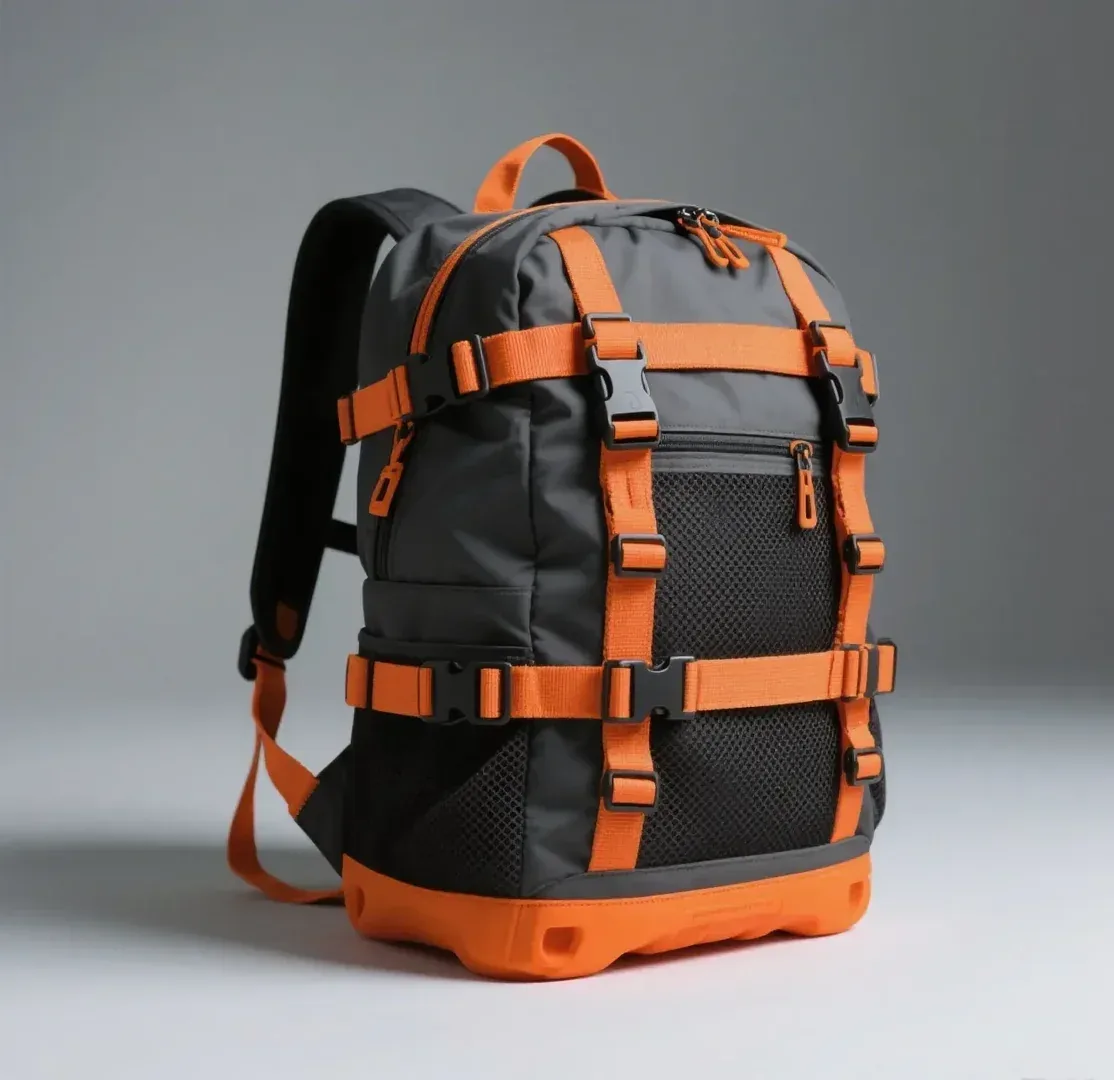
The Approval Gates, in Sequence
Running the workflow as a sequence of gates, each with an owner and a written outcome, is what keeps a multi-style programme on schedule. Parallelism is possible within a construction family, but every style must pass through the same logic.
- Brief confirm: the programme team reviews the tech pack against manufacturing feasibility and returns feasibility notes before any pattern is cut.
- Prototype gate: the initial sample is reviewed for construction feasibility and proportion, and the route to the first sample is agreed.
- First-sample gate: the full specification is examined — aesthetics, dimensions, hardware, function, branding — and comments are consolidated into one revision list.
- Revision gate: corrections are verified against the previous list only, so that fixing one detail does not silently alter another.
- Pre-production gate: the exact bulk build is confirmed in hand, including materials, colour and branding, and the run is released.
- Reference freeze: the approved unit is signed, photographed, dimensionally recorded and retained on the line for the bulk run.
The revision gate deserves particular discipline. A revision sample should be checked against the previous comment list and nothing else, because the purpose is to confirm that specific corrections were made cleanly. A revision that introduces a fresh change is not a revision; it is a new design iteration, and it restarts the clock.
What to Check at Each Gate
An approval checklist turns a subjective review into a repeatable one. The same checklist should be used at every gate, with depth increasing from prototype to pre-production. Buyers who review from memory approve different things on different days, which is exactly how drift enters a programme.
| Area | Prototype | First sample | Pre-production |
|---|---|---|---|
| Silhouette and proportion | Rough check | Full check against the drawing | Confirm no change since approval |
| Dimensions and tolerance | Not applicable | Measure every stated dimension | Re-measure and confirm tolerance |
| Materials and colour | Indicative only | Confirm against the schedule | Confirm the exact production lot |
| Hardware and function | Feasibility check | Full functional test | Confirm identical hardware and seating |
| Branding | Not applicable | Position, size and method | Confirm the production branding |
| Interior and lining | Rough check | Full check against the layout | Confirm the production build |
| Workmanship | Indicative | Stitching, edges, symmetry | Full pass at AQL 2.5 reference standard |
Dimensional checking is the discipline that most improves remote approval. A 3 mm variance is invisible on a wash bag and obvious on a structured tote, so dimensions should be measured and recorded rather than assessed by eye. We supply a dimensional check sheet with every sample so that the buyer is comparing figures, not impressions.

Remote Approval: Documents That Make It Safe
Most brands approve samples remotely, and done well it is faster and no less reliable than approving in person. Done badly, it approves things nobody actually examined. The difference is documentation: a remote approval is safe when the buyer has enough evidence to reach a confident decision without handling the piece.
Video is the single most valuable addition to a remote review, because it conveys the elements a photograph cannot: how a zip runs, how a handle feels under load and how a strap attachment behaves when flexed. These are the details that determine whether a bag feels well made in the hand, and they are exactly what a static image hides.
Brands reviewing several styles at once should standardise the evidence pack so that submissions are compared like for like. A consistent format also makes it obvious when a measurement or a functional test has been omitted, which is far harder to spot when every review arrives in a different shape. The discipline of a fixed template is what allows a buyer to trust the documents rather than the presentation.
Revision Management and Round Limits
Revisions are normal, but unbounded revisions indicate a broken input rather than a difficult design. Building explicit expectations around rounds protects both the schedule and the relationship.
- Consolidate comments into a single written list per round; scattered comments across emails are how details get missed.
- Limit a revision to items on the current list, and log any new request as a separate change with its own schedule consequence.
- Expect two rounds per style as normal; treat a third as a signal that the brief, tech pack or material choice needs review.
- Distinguish a correction from a preference change: preferences raised late reset the schedule, so price them honestly.
- Photograph and record each revision sample so the version history is documented, not remembered.
- Confirm in writing when a revision is closed, even if the change was minor, so the record stays clean.
A useful habit is to log every late request as a decision rather than absorbing it silently. A small change that arrives after approval is not free; it consumes a revision cycle and moves the bulk start date. Framing it that way is not obstructive — it simply makes the trade-off visible while there is still time to choose.
From Approval to Bulk: Handing Over the Reference
The approved sample is the most valuable document in a bag programme, because it is the physical standard against which every bulk unit is judged. How it is handed over determines whether bulk reproduces the sample or merely resembles it.
| Handover element | Why it matters | Where it is used |
|---|---|---|
| Signed approval note | Records that the buyer approved this exact unit and specification | Programme file and production release |
| Retained approved sample | The physical reference on the line | Line-side, checked at each shift start |
| Component schedule | Names every hardware item by part number and finish | Procurement and in-process checks |
| Dimensional record | States the approved dimensions and tolerances | First-article inspection |
| Material lot reference | Enables matching on reorder | Procurement and quality control |
| Branding specification | Fixes method, size and position | Branding and finishing stages |
Bulk then proceeds at 35–50 days after approval, with first-article inspection at the line and final inspection at AQL 2.5 under ISO 2859-1, single sampling, general level II. Minimums are 500 pieces per style and colourway, with small-batch pilots for brands establishing a format; the default shipping term is FOB Xiamen, EXW, CIF and DDP are available on request, and payment is T/T with a 30% deposit and the balance before shipment.
Set up a sampling approval workflow for your brand
Send your tech pack or brief to service@junyuanbags.com or message the programme team on WhatsApp at +86 177 5002 0688. We will return a sampling plan with gates, evidence requirements and a documented approval sequence for your range.
Frequently Asked Questions
How long does bespoke bag sampling take?
Standard constructions sample in 6–10 working days from confirmation of the material schedule, and complex builds take 12–15 working days. The clock starts once materials and hardware are confirmed, so the most common cause of a slipping schedule is a delay in selecting a leather, a lining or a hardware finish. Revision samples are usually quicker than a first sample because tooling already exists.
How many sample rounds should a brand expect?
Two revision rounds per style is a normal expectation and should be built into the calendar. A third round usually signals that the brief, tech pack or material choice was unclear from the outset, and that is worth reviewing at the source. Revising without a written comment list is how the same detail reappears, and it is also how a schedule quietly extends by a week.
What is the difference between a first sample and a pre-production sample?
A first sample realises the approved design in the specified materials so the brand can judge aesthetics, proportions, hardware and function. A pre-production sample confirms the exact build, materials, colour and branding that the line will reproduce. The pre-production gate is the one most often skipped and the one that prevents a brand from first seeing the true bulk build in the shipment itself.
What should a brand check at the first-sample gate?
Measure every stated dimension against the tech pack and its tolerance, confirm materials and colour against the schedule, test every hardware element through its full range of motion, check branding position and size, and review the interior build against the layout. Consolidate all comments into a single written list so the revision is unambiguous and the next sample answers a defined set of questions.
Can I approve a bag sample remotely?
Yes, and remote approval is now standard. It is safe when the documentation is disciplined: multiple-angle exterior photography, interior photography, a dimensional check sheet with measured figures, a video walk-through of zips, handles and strap attachment, and a written note of any deviation from the tech pack. Approving from a single photograph is the practice that makes remote approval unreliable.
What information must be confirmed before sampling begins?
Six inputs should be confirmed: the material schedule, the hardware list named by part number and finish, the dimensions with tolerance, the branding method and position, the dimensioned interior layout, and the specific functional tests the sample must pass. Each is a dependency, and starting sampling while one is unresolved produces a piece that answers a question the brand has not yet settled.
Why does my revision sample introduce a new problem each time?
That usually happens when a revision is treated as a new design pass rather than a correction. A revision sample should be checked against the previous comment list and nothing else, so that fixing one detail does not silently alter another. New requests belong to a separate change with its own schedule consequence, logged and priced honestly rather than absorbed into the revision.
What is a prototype sample used for?
A prototype tests whether the design works as a bag at all: construction feasibility, proportion and the route from pattern to finished piece. It is not made in the final materials and is not a marketing asset. Approving a prototype is a decision about direction, not about specification, and confusing the two leads brands to treat a feasibility exercise as though it were the production standard.
Do I need a new sample for every colourway?
Not always, but a new colourway should be confirmed on a swatch and, where it affects edge finishing, lining contrast or hardware contrast, on at least a partial sample. Because minimums apply at 500 pieces per style and colourway, a colourway is a separate unit commitment, and the pre-production gate is the right place to confirm that the production lot of the new colour matches the approved reference.
What happens after I approve a sample?
Bulk production begins at 35–50 days after approval, starting with material procurement against the approved lot and line scheduling. The approved unit is retained on the line as the reference, its component schedule and dimensional record accompany it, and first-article inspection confirms the first units match before the run proceeds. Final inspection then follows at AQL 2.5 under ISO 2859-1.
Who keeps the approved sample?
The production partner retains the signed sample as the line-side reference for the bulk run and for the reorder, while the brand should receive its own approved unit together with full photography and the dimensional record. Holding both copies matters: the partner needs the reference to reproduce the build, and the brand needs its own copy to compare against future shipments and against reorders.
How do I stop details changing between my sample and bulk?
Freeze the specification in writing and enforce it at the line. Name every hardware component by part number and finish, record the material source and lot, keep the signed sample on the line and re-check it at the start of each shift, and run first-article inspection against the full specification rather than against a photograph. Material lot variation and silent component substitution are the two most common sources of drift.
Should sampling be done for every style in a collection?
Yes, and each style needs its own written approval before it can enter bulk, because bulk cannot begin without an approved reference. Styles within the same construction family can be sampled in parallel to save calendar time, but approving two styles on the strength of one physical sample is a false economy. The approved unit for each style is what protects that style's bulk run.
What causes sampling to run over schedule?
Late or scattered comments are the most common cause, followed by unconfirmed materials that force a second sample in the correct specification. Approving from a photograph and then revising on receipt of the physical sample is the third. A single written comment list per round, with confirmed inputs before sampling starts, addresses all three and is the most effective scheduling discipline available.
How does the approval workflow differ for complex constructions?
Complex constructions take longer to sample — 12–15 working days rather than 6–10 — because they involve more pattern work, skiving, reinforcement and hand finishing. They also tend to need a prototype gate before the first sample, since the construction route itself may be unresolved. Building those two extra weeks into the calendar at the planning stage is far cheaper than discovering them mid-season.
What standard is used to inspect bulk bags after sampling?
Final inspection follows AQL 2.5 under ISO 2859-1, single sampling, general level II, with defect classes agreed in advance and the approved sample present as the reference. Visual inspection alone is insufficient; add functional checks on zip travel, strap attachment load, handle seating and dimensional conformance, and arrange third-party inspection alongside internal release where independent verification is required.