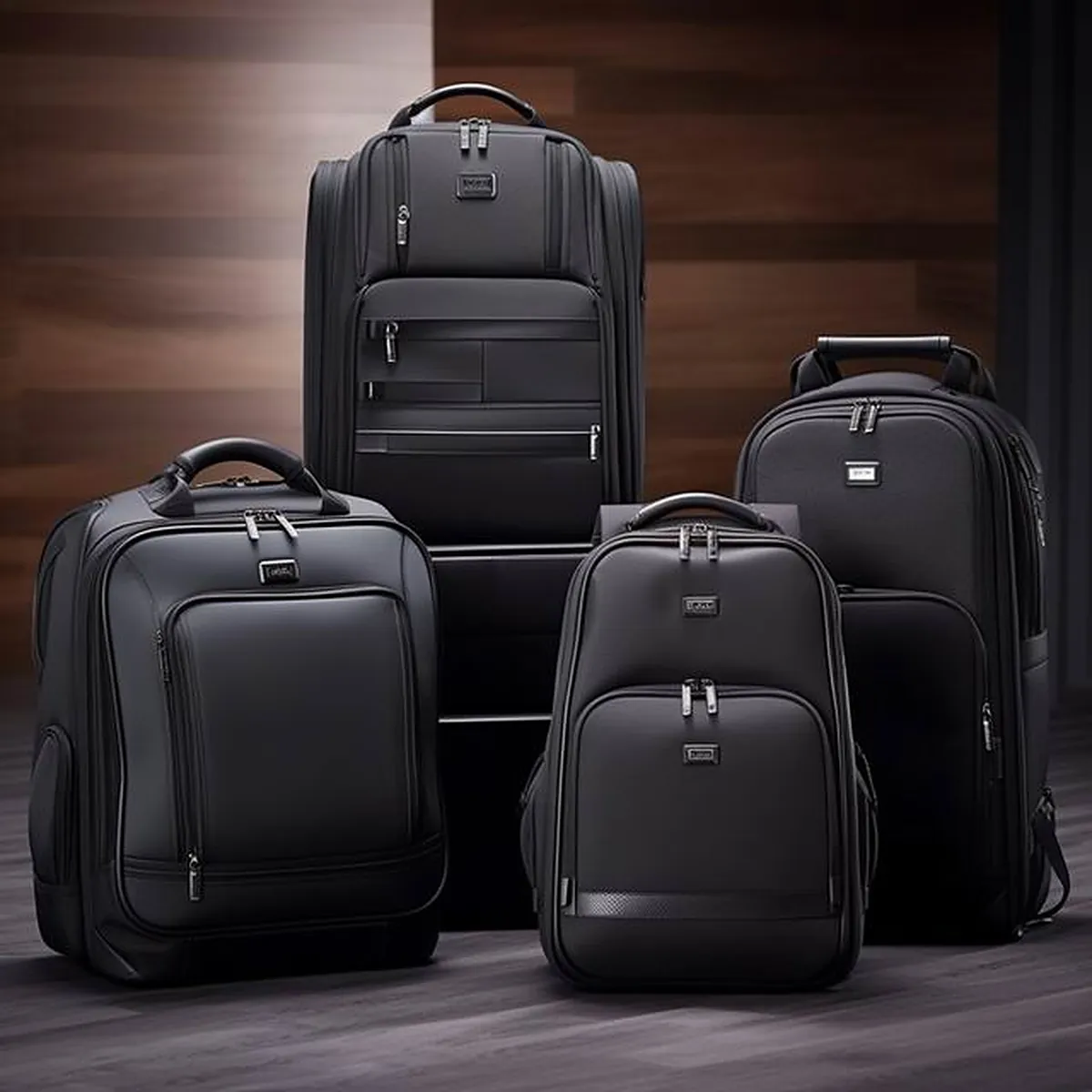
A trekking pack is engineered around a load path. Weight sits on the hips through the hip belt, is stabilised by the harness and shoulder straps, and is held away from the back by the frame and back panel. Every one of those elements has dimensions that decide whether the pack is comfortable at 15 kg or painful at 8 kg.
That makes outdoor programmes structurally different from fashion bag programmes. The critical decisions are not the leather, the hardware or the logo placement; they are frame type, torso length range, hip belt geometry and the fabric's balance of weight, abrasion resistance and water resistance. A brand that briefs a trekking pack as though it were a large backpack will receive exactly that.
The Load Path Comes First
The single most important design decision is how much of the load reaches the hips. A well-designed trekking pack transfers sixty to seventy percent of the load to the hip belt; a poorly designed one leaves it on the shoulders, which is why inexpensive packs feel heavy at modest weights.
Load transfer depends on the frame and the hip belt working together. A stiff frame with a soft, narrow hip belt puts the load back on the shoulders; a good hip belt on a flexible frame cannot transfer anything. They have to be specified as a system, and tested as one.
| Frame type | Load transfer | Best for | Trade-off |
|---|---|---|---|
| Internal frame, aluminium stay pair | Good | Multi-day trekking, 12–20 kg | Requires correct torso sizing to work |
| Internal frame, H-frame or X-frame | Very good | Heavy loads, 18–25 kg | Heavier, stiffer, less forgiving of poor fit |
| Framesheet with perimeter wire | Moderate | Day packs, 8–14 kg | Light, but transfers less load |
| Frameless with padded back | Low | Ultralight and packable, under 8 kg | Comfort falls away quickly above its rating |
| External frame | Very good | Expedition and hauling | Bulky, niche, difficult to ship |
Specify the frame before anything else. Changing frame type after the pattern is developed means redeveloping the harness attachment points, the back panel and often the whole body panel.
Torso Length, Not Body Height
Packs are sized by torso length — the distance from the C7 vertebra to the iliac crest — not by the wearer's height. Two people of the same height can need different sizes, which is why a programme that offers only S/M/L by height will generate fit complaints.
A practical commercial compromise is to build one adjustable-torso harness covering a defined range, plus two fixed sizes at the extremes. Adjustable systems add weight and a small amount of complexity, but they reduce inventory risk substantially for a new brand entering the category.
Programme parameters at a glance
| Parameter | Commitment |
|---|---|
| Minimum order quantity | 500 pieces per style / colourway |
| Sampling lead time | 6–10 working days (12–15 days for complex constructions) |
| Bulk production lead time | 35–50 days after sample approval |
| Inspection standard | AQL 2.5 (ISO 2859-1), single sampling, general level II |
| Incoterms | FOB Xiamen — EXW, CIF and DDP available on request |
| Payment terms | T/T 30% deposit / 70% before shipment; L/C at sight for container loads |
| Verified production floor space | 4,950 m² (SGS-verified) |
| Team | 137 staff across 7 production lines |
| Equipment | 149 machines including computerised saddle-stitch and edge-painting units |
| Monthly capacity | 200,000 pieces |
| Entity | Founded 2014; principal has worked in bag development since 2004 |
Fabrics: The Weight-to-Durability Trade
Outdoor fabrics are specified by denier and by coating, and the trade-off is explicit: heavier fabric resists abrasion better, lighter fabric carries better. The right answer depends on where the pack will be used and how it will be abused.
| Fabric | Typical use | Abrasion | Water resistance |
|---|---|---|---|
| 210D nylon ripstop | Ultralight body panels | Low to moderate | PU coating plus DWR |
| 420D nylon, PU coated | General body panels | Good | Good; the workhorse specification |
| 500D–1000D Cordura-type nylon | Bases, high-wear zones | Very good | Good, with a heavier coating |
| 210D high-tenacity with silicone coating | Ultralight, waterproof | Moderate | Excellent, but seam sealing required |
| Recycled 420D with PFC-free DWR | Sustainability-led ranges | Good | Good, with a shorter DWR life than C8 |
Specify different fabrics by zone rather than one fabric throughout. A 420D body with a 1000D base costs less than 1000D everywhere and performs better than 420D everywhere.
Component Specification That Buyers Overlook
Outdoor packs fail at components more than at panels. The list below covers the parts that generate the most after-sales problems.
- **Zips.** Coil zips with a storm flap on the main body, and #8 or #10 where the pack will be over-packed. Water-resistant zips are not waterproof and need a flap.
- **Buckles and adjusters.** Acetal rather than nylon for cold-weather flexibility. Test at −15 °C; cheap buckles crack at the first cold morning.
- **Webbing.** Plain weave nylon webbing for compression straps, with bar-tacked ends. Polyester webbing holds less water but has more stretch.
- **Thread.** Bonded nylon, UV-stabilised, sized for the seam load. Outdoor thread failures are almost always UV degradation rather than tensile failure.
- **Rain cover.** Include one on any pack sold into a market with real rainfall, and specify the attachment so it cannot be lost.
- **Hip belt padding.** Two-layer foam with a firm structural layer; single-density foam collapses within a season.
Testing an Outdoor Pack
Outdoor packs need tests that fashion bags do not. The core set is short and, run properly, decides whether the design works.
| Test | Method | Pass criterion |
|---|---|---|
| Static load | Load to 1.5× rated capacity, hang by the haul loop, 24 h | No seam failure, no frame deformation, no attachment tear |
| Dynamic walk test | Loaded wearer, 5 km mixed terrain | No hot spots, no strap migration, harness stays adjusted |
| Harness pull-out | Static pull on shoulder strap and hip belt anchors at 3× rated load | No stitch tear-out, no webbing slip |
| Cold flex | Buckles and adjusters at −15 °C | No cracking, full function retained |
| Abrasion, base panel | Martindale or Taber to the zone threshold | No substrate exposure |
| Water resistance | Spray rating plus a shower test on the assembled pack | No pooling inside after 10 minutes; dry contents |
| Zip burst | Over-pack and burst test on the main compartment seam | No tape separation, no slider failure |
The dynamic walk test is the one that finds design faults nothing else will. Two hours on a loaded wearer identifies strap migration and hot spots that no laboratory rig reproduces.
Programme Practicalities
Outdoor programmes have a different cost structure from fashion bags. Multiple fabrics by zone, a frame, a moulded hip belt and a lot of small components raise tooling and minimum quantities, and the sampling cycle is longer because load testing cannot be compressed.
Expect to budget two sampling rounds at minimum, and to run the load and walk tests in parallel with the second round. The 6–10 working day sampling window covers the first physical sample; the testing adds two to three weeks on top, and should be started as soon as a sample exists rather than after approval.
Where the Category Fits
QUANZHOU JUNYUAN BAGS develops outdoor and trekking programmes at a minimum of 500 pieces per style and colourway, with sampling on a 6–10 working day cycle and bulk production at 35–50 days. Frame, harness and hip belt components are nominated at the sampling stage because they determine the pattern, and load testing is scheduled alongside the second sample round.
Brief the load path, not the look
Send the intended load range and the terrain. The programme team will propose a frame, harness and fabric specification and a test plan that proves the load transfer.
Frequently Asked Questions
How is a trekking pack different from a backpack?
It is built around load transfer. A trekking pack has a frame, a load-bearing hip belt and a harness sized by torso length, so that most of the weight reaches the hips. A backpack carries load on the shoulders and does not need those systems.
What torso size range should a new brand offer?
One adjustable harness covering roughly 40 to 53 cm of torso length, plus fixed sizes at the extremes, is a workable commercial compromise. Sizing by wearer height instead of torso length is the most common cause of fit complaints.
What percentage of load should reach the hips?
Sixty to seventy percent on a properly fitted trekking pack. Below that the wearer feels the weight on the shoulders, which is the usual reason an inexpensive pack feels heavier than its specification suggests.
Which fabric should I use for a trekking pack?
420D PU-coated nylon for the body and a heavier 500D to 1000D fabric for the base and high-wear zones. Specify by zone rather than one fabric throughout; it costs less and performs better.
Do I need a rain cover?
For any pack sold into a market with real rainfall, yes. Specify the attachment so it cannot be lost, and note that a rain cover is not a substitute for water-resistant zips and sealed seams on a pack intended for sustained rain.
Why do buckles crack?
Cold embrittlement. Acetal buckles stay flexible at low temperature, while cheaper nylon and unidentified mouldings can crack at the first sub-zero morning. Specify the material and test at −15 °C.
How do I test load transfer?
On a load cell rig with a loaded pack and a fitted wearer, measuring the force at the hip belt and the shoulder straps. It is the one measurement that tells you whether the frame and hip belt are working as a system.
How long does outdoor pack development take?
Two sampling rounds typically, with load and walk testing adding two to three weeks on top of the 6–10 working day sampling cycle. Plan for eight to twelve weeks from brief to approved sample.
What is the minimum order for a trekking pack programme?
500 pieces per style and colourway as a standard starting point, higher where a frame or moulded hip belt requires dedicated tooling. Tooling amortisation is the main reason outdoor minimums sit above fashion bag minimums.
Can a fashion bag supplier make a trekking pack?
Only if it has access to frame, harness and moulded foam components and can run load testing. The cutting and stitching skills transfer; the structural engineering and test regime do not, and those are the parts that decide whether the pack works.