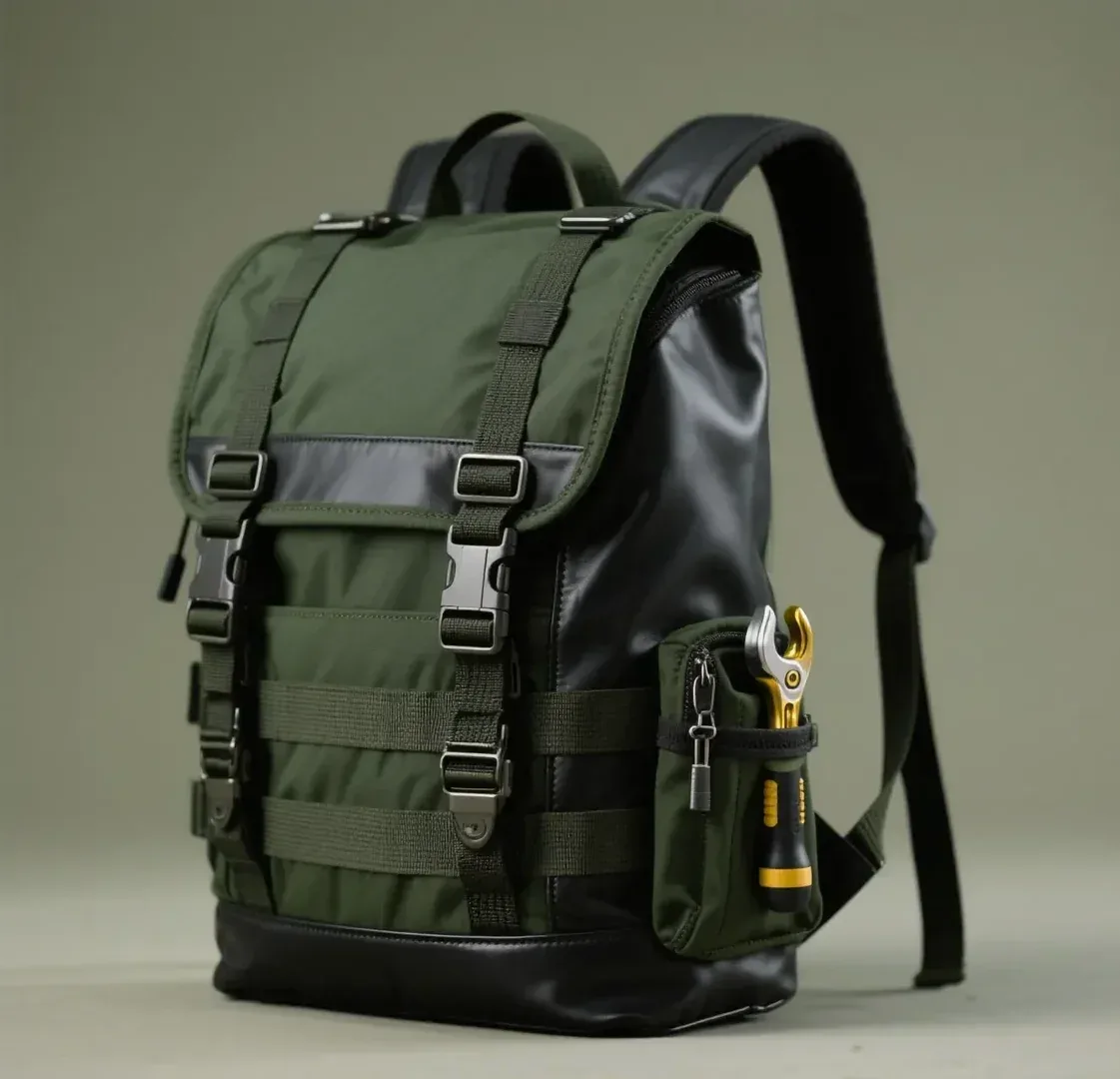
A bag sample brief should specify four things precisely: the measurements, with tolerances where they matter; the materials, named by type and finish rather than by appearance; the construction, described in terms of how the bag is built; and the hardware, branding and finishing details in their exact positions. A brief that covers all four lets a sample be built once and correctly. A brief that leaves any of them open moves the same decision-making into the paid sampling window, where it costs material, labour and 6–10 working days of scheduling to resolve.
Writing a brief is unglamorous work, and it is the single highest-return activity in the sampling process for exactly that reason. The measure of a good brief is simple: a pattern maker who has never spoken to the buyer should be able to build from it without guessing. Every point where a guess is still required is a point where the sample will reveal the guess rather than the design.
What a Complete Sample Brief Contains
A complete brief has a fixed set of sections, and its value comes from covering all of them rather than from length. Each section below answers a question the pattern room will otherwise have to interpret, and interpretation is where rounds are lost.
| Section | What it specifies | What it prevents |
|---|---|---|
| Purpose and use | What the bag is for and how it is carried | Construction suited to the wrong purpose |
| Measurements | External and internal dimensions with tolerances | A sample outside the intended proportions |
| Materials | Leather, lining, reinforcement and finish by name | Substitution with a similar but wrong article |
| Construction | Panels, seams, gussets, turns and reinforcement | A bag that is assembled the wrong way |
| Hardware | Every fitting, finish and position | Mismatched or incorrectly placed fittings |
| Branding | Logo, label and stamping positions and methods | Branding that cannot be corrected once applied |
| References | Images and notes showing intent | Ambiguity resolved later by trial and error |
The sections interlock, which is why partial briefs fail in ways that seem unrelated to the missing part. A brief with excellent measurements but a vague material specification produces a sample that fits perfectly in a leather that behaves wrongly. A brief with perfect materials and no construction notes produces a well-made bag built in the wrong order. Completeness, rather than precision in one section alone, is what keeps a sample confirmatory.
Programme parameters at a glance
| Parameter | Commitment |
|---|---|
| Minimum order quantity | 500 pieces per style / colourway |
| Sampling lead time | 6–10 working days (12–15 days for complex constructions) |
| Bulk production lead time | 35–50 days after sample approval |
| Inspection standard | AQL 2.5 (ISO 2859-1), single sampling, general level II |
| Incoterms | FOB Xiamen — EXW, CIF and DDP available on request |
| Payment terms | T/T 30% deposit / 70% before shipment; L/C at sight for container loads |
| Verified production floor space | 4,950 m² (SGS-verified) |
| Team | 137 staff across 7 production lines |
| Equipment | 149 machines including computerised saddle-stitch and edge-painting units |
| Monthly capacity | 200,000 pieces |
| Entity | Founded 2014; principal has worked in bag development since 2004 |
Measurements: How to Specify Dimensions
Measurements are the most objective part of a brief and the easiest to specify well. The discipline is to state where each dimension is measured, because a width taken at the base is not the same as a width taken at the widest point, and an ambiguous figure forces the pattern room to choose.
| Dimension | Where to measure | Common specification error |
|---|---|---|
| Width | At the base and at the widest point, separately | Stating one number for a tapered bag |
| Height | From the base to the top of the body, excluding handles | Including handles without saying so |
| Depth and gusset | At the base and at the opening, separately | Assuming a constant depth throughout |
| Handle drop | From the top of the handle to the opening | Measuring the handle length instead |
| Strap length | At both ends of the adjustable range | Giving a single length that cannot be adjusted |
| Opening width | The clear width when open and closed | Assuming it equals the bag width |
Internal dimensions deserve the same care as external ones. A bag can meet its outside specification and still fail to hold what the buyer intended, because the lining, reinforcement and interior divisions consume space. Specifying the usable internal width, depth and height — the clear volume the contents occupy — prevents a common and avoidable disappointment.
Tolerances: Where Variation Is Allowed
Leather is a natural material, and a specification allowing no variation is not demanding; it is unrealistic, and it guarantees disagreement. A good brief states tolerances where they matter and permits natural variation where they do not, which reflects how production actually behaves and gives inspection a fair standard.
The point of stating tolerances is not to excuse poor work. It is to define the specification in a way that can be met consistently and inspected objectively. A brief with a single ideal number and no tolerance invites a dispute about whether a unit is correct; a brief with stated tolerances lets both parties agree in advance what ‘correct’ means, and lets inspection apply that standard rather than an opinion.
Materials: Specifying Without Ambiguity
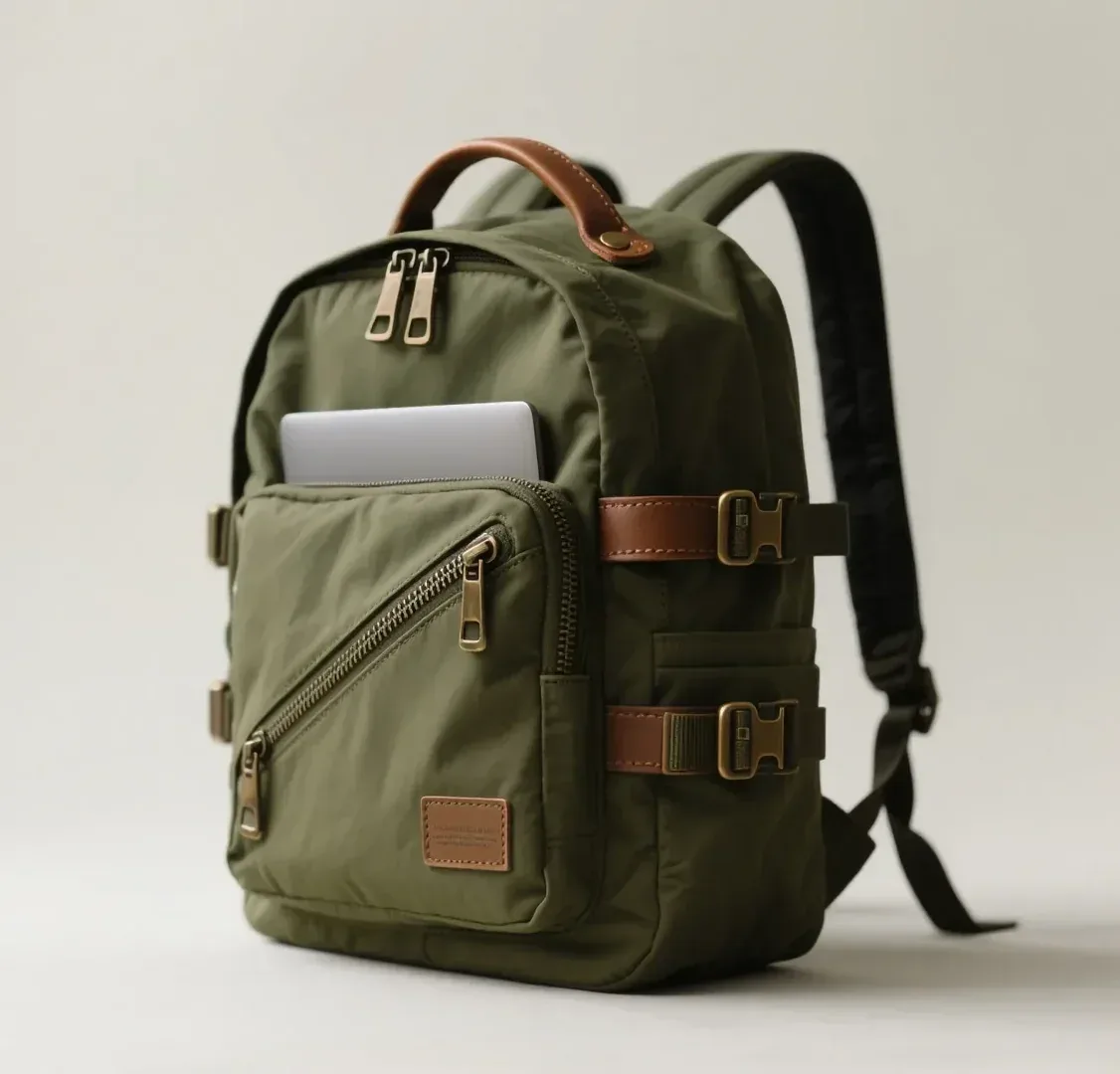
Material specification fails most often through description by appearance. Naming a colour does not name a leather, and naming a leather does not name its finish or substance. A brief should specify each material well enough that a supplier could supply it and a partner could order it, without reference to how it looks.
| Attribute | What to state | Why description alone is insufficient |
|---|---|---|
| Type and tannage | Full-grain, top-grain, pebbled, vegetable-tanned | Two hides can look alike and behave differently |
| Substance | Thickness in millimetres or ounces | Determines hand, structure and durability |
| Finish | Aniline, semi-aniline, pigment, patent, matte | Changes appearance and wear characteristics |
| Colour reference | A specific swatch or reference, not a word | Colour names mean different things to different people |
| Lining | Type, weave and colour of the lining | Lining determines interior feel and pocket behaviour |
| Reinforcement | Material and placement of stiffeners | Directly affects the bag’s shape and weight |
Swatches are the practical solution. A physical swatch, or a precise supplier reference for a standard article, removes interpretation entirely, and it carries forward into inspection as the approved standard. Where a specific hide cannot be guaranteed, the brief should state what properties are essential — colour family, substance, finish — so that an alternate can be approved deliberately rather than substituted silently.
Construction: Describing How the Bag Is Built
Construction is the section buyers write least and partners need most. A drawing shows what the bag looks like; construction notes explain how it is assembled, and the order of assembly frequently determines whether the design is even feasible. Describing the build is what turns a picture into a manufacturable specification.
- Panel breakup. How the surface divides into pieces, and where seams are intended to fall.
- Gusset construction. Whether the depth is formed from a separate panel, folded from the body, or boxed at the corners.
- Turning and edge treatment. Whether the bag turns through an opening or is bound at the edge, and how the edge is finished.
- Reinforcement. Where stiffeners sit, how thick they are, and whether they are bonded or sewn.
- Lining attachment. Whether the lining is bagged, turned or drop-lined, and how it is secured at the top.
- Closure mechanism. How the bag opens and closes, and the exact hardware that performs the action.
Where a construction is unusual, a reference image or a note about how a comparable bag is built is worth more than a paragraph of description. The aim is not to teach a pattern maker their trade but to make the buyer’s intent legible, so that the partner’s technical knowledge is applied to the intended design rather than to a reasonable but different interpretation of it.
Hardware and Branding
Hardware and branding are small in scale and large in consequence, because their positions cannot be corrected once applied. Neither can be specified by appearance alone: a finish name is interpreted differently across suppliers, and a logo position that is approximate on a brief becomes a permanent defect on a bag.
| Item | What to specify | How to make it unambiguous |
|---|---|---|
| Closure fittings | Type, size, finish and supplier reference | Name the finish and provide a reference image |
| Zips | Tape colour, teeth finish, and pull type | Specify tape and teeth separately |
| Feet and studs | Quantity, size, finish and placement | Show placement on the base view |
| Logo plate or stamp | Method, size and exact position | State two reference dimensions from a seam |
| Interior label | Position, size and attachment method | Specify whether sewn or bonded |
| Strap hardware | Adjusters, hooks and rings with finish | Match finish across all fittings in the brief |
Position specification deserves particular care. A logo placement described as ‘centred on the front panel’ is ambiguous, because centring can be measured from several references. Stating the position with two dimensions from a named seam removes the ambiguity entirely and produces the same result across the sample, the bulk run and every reorder. The same discipline applies to every fitting that is fitted once and cannot be moved.
The Brief Checklist
Before sending a brief, a buyer can check it against the questions below. The purpose is not to add paperwork but to confirm that no decision has been left to the pattern room, because a decision made there is made by guessing, and a guess costs a round.
| Question | Why it matters | Section it belongs to |
|---|---|---|
| Are all dimensions measured from a stated point? | Removes ambiguity in assembly | Measurements |
| Are tolerances stated where they matter? | Gives inspection a fair, agreed standard | Tolerances |
| Is every material named by type and substance? | Prevents like-for-like substitution | Materials |
| Is a swatch or supplier reference attached? | Removes interpretation of appearance | Materials |
| Is the assembly order described? | Confirms the design is buildable as intended | Construction |
| Are branding positions given in two dimensions? | Prevents a permanent placement error | Branding |
| Does a stranger understand it without asking? | The surest test of completeness | Whole brief |
The last question is the useful summary. A brief that a pattern maker can build from without a conversation is a brief that will produce a correct sample, and the effort it took to reach that standard is repaid the first time a round is avoided. In a process where a round costs material, labour and a full working window, clarity in the brief is not administrative neatness; it is the cheapest form of quality control available.
Common Briefing Mistakes
The same shortcomings appear in briefs across brands and budgets. Each is easy to correct once named, and each otherwise costs a round that need not have been spent.
| Mistake | Consequence | Correction |
|---|---|---|
| Colour named by word, not swatch | A hide in the wrong colour family | Attach a physical swatch or supplier reference |
| Single dimension for a tapered bag | A sample with the wrong silhouette | State width at base and at the widest point |
| No tolerances stated | A dispute over whether a unit is correct | State tight, moderate and relaxed limits by feature |
| Construction left to interpretation | A bag built in a feasible but unintended way | Describe the build order in notes |
| Approximate branding position | A permanent placement error | Give position in two dimensions from a seam |
| References sent separately | References missed and the brief read alone | Keep all references inside the brief document |
The final correction is worth emphasising because it is procedural rather than technical. When references travel in a separate message, they are frequently missed, and the brief is then built as written rather than as intended. Keeping all images, swatches and notes inside one document ensures the pattern room works from a single, complete source, which is exactly the condition under which a sample is right first time.
Write a brief that is right first time
Send your concepts, dimensions and references. The programme team in Quanzhou will check the brief against measurements, materials, construction, hardware and branding, and flag any open decision before a 6–10 working day sampling window opens.
Frequently Asked Questions
What should a bag sample brief include?
Four things above all: measurements with tolerances where they matter, materials named by type and substance rather than appearance, construction described in terms of how the bag is built, and hardware and branding with exact positions. Purpose, use and reference images complete the picture. A brief that covers all of these lets a sample be built once and correctly.
How detailed should measurements be?
Detailed enough that no dimension needs interpretation. State where each one is measured, because a width at the base differs from a width at the widest point, and give internal usable dimensions as well as external ones. For a tapered bag, give two widths; for an adjustable strap, give both ends of the range.
Why do I need to specify tolerances?
Because leather is a natural material and assembly introduces unavoidable variation. A specification allowing no variation is unrealistic and guarantees disagreement. Stating tight tolerances for handle drop and closure alignment, moderate ones for overall dimensions, and relaxed ones for interior elements gives both parties an agreed standard and lets inspection apply it objectively.
How do I specify leather without ambiguity?
Name the type and tannage, the substance in millimetres or ounces, and the finish, then attach a physical swatch or a precise supplier reference for the colour. Naming a colour in words does not name a leather, and two hides can look alike while behaving differently. Where a specific hide cannot be guaranteed, state the essential properties so an alternate is approved deliberately.
What does construction mean in a bag brief?
It is the description of how the bag is assembled: how the surface divides into panels, how the gusset forms the depth, whether the bag is turned or edge-bound, where reinforcement sits, how the lining is attached, and what mechanism opens and closes it. It is the section buyers write least and pattern rooms need most.
Why is construction order important?
Because the order of assembly often determines whether a design is feasible at all. Two bags can look identical in a drawing and require entirely different build sequences, and an unintended but reasonable interpretation produces a bag that works differently to the design. Describing the build turns a picture into a manufacturable specification.
How should branding position be specified?
With two reference dimensions from a named seam, never as an approximate description such as centred on the front panel. Centring can be measured from several references, so it is ambiguous, whereas two dimensions from a stated seam produce the same result on the sample, the bulk run and every reorder.
Should I attach reference images to a brief?
Yes, and they should be inside the brief document rather than sent separately. A reference image showing how a comparable bag is built is often worth more than a paragraph of description. When references travel in a separate message they are frequently missed, and the brief is then built exactly as written rather than as intended.
What happens if my brief leaves something open?
The pattern room fills the gap by choosing, and that choice is a guess. A guess built into a sample is discovered when the unit arrives, and correcting it consumes a charged revision round and a further working window. Every point left open in a brief moves a decision from paper, where it is free, into sampling, where it is charged.
How long should a bag sample brief be?
Length is not the measure; completeness is. A brief can be concise and still complete if it covers purpose, measurements with tolerances, materials with swatches, construction notes, hardware, branding positions and references. The useful test is whether a pattern maker who has never spoken to the buyer could build from it without asking a question.
How do I brief an adjustable strap?
State the minimum and maximum length at both ends of the adjustment range, the width, the material and thickness, and the hardware that performs the adjustment, including finish. A single length figure cannot be built as an adjustable strap, and omitting the range forces the pattern room to choose a range that may not suit the intended use.
What internal dimensions should I specify?
The usable clear internal width, depth and height, because lining, reinforcement and interior divisions consume space. A bag can meet its external specification and still fail to hold the intended contents. Where the bag holds a specific item, stating that item’s dimensions alongside the internal figures removes all ambiguity.
Do I need to specify the lining?
Yes. The lining determines the interior feel, the behaviour of pockets and the overall weight, and a substitute lining is one of the more common causes of an otherwise correct sample feeling wrong. Specify the type, weave and colour, and state whether the lining is bagged, turned or drop-lined.
How do I describe a reinforcement I want?
State the material, its thickness, where it sits in the construction, and whether it is bonded or sewn. Reinforcement directly affects the bag’s shape, weight and how it holds up in use, so a vague instruction such as ‘make it firmer’ cannot be built reliably and will be interpreted differently in each round.
What is the biggest mistake in a bag sample brief?
Leaving construction and hardware positions to interpretation. Measurements and materials are usually covered reasonably well, but the build order and the exact placement of fittings and branding are frequently vague, and those are precisely the decisions that cannot be corrected after the bag is assembled.
Can a brief reduce sampling rounds?
Substantially. Most extra rounds trace back to a brief as much as to a build, because an open decision becomes a guess and a guess becomes a revision. A complete, dimensioned brief that a pattern maker can build from without a conversation frequently removes an entire round, which saves material, labour and a full 6–10 working day window.
How does a brief connect to the tech pack?
The brief is the input and the tech pack is the formal output. Once a design is developed and a sample approved, the measurements, materials, construction notes and positions from the brief become the specification the tech pack records and production is measured against. A complete brief makes the tech pack straightforward rather than a scramble.
Should I write a brief differently for OEM or private label?
The principles are the same; the emphasis shifts. In private label the buyer often supplies the full specification and the partner builds to it, while in OEM the partner may contribute design and construction expertise. Either way the brief must state measurements, materials, construction, hardware and branding clearly, since ambiguity costs a round regardless of the model.