
To design a custom luxury handbag that survives production, begin with the constraints — target retail price, minimum quantity, launch date and destination market — and let the concept develop inside them rather than against them. The concept then becomes a technical brief: dimensions, silhouette family, structure, material, hardware and branding, each written down. That brief drives pattern drafting, which produces a first sample in 6–10 working days, or 12–15 for complex constructions. This article follows that path, showing which decisions are cheap to change on paper and expensive to change once panels are cut.
The method below assumes no in-house technical team. It is written for founders, designers and buyers who have a clear idea of what they want and no particular wish to learn pattern drafting. The aim is not to turn you into a technician; it is to make sure the technician receives something they can act on.
Start With the Constraint, Not the Sketch
Designs that fail in production rarely fail because they looked wrong. They fail because they were drawn without reference to what the target price can fund, what the launch window can absorb, or what a line can actually assemble. Writing the four constraints down before the first line is drawn converts aesthetic arguments into engineering ones.
| Constraint | Why it shapes the design | What to write down |
|---|---|---|
| Target retail price | Sets the landed cost ceiling, which caps material tier and complexity | A single number, plus expected channel discount |
| Intended volume | Determines whether development amortisation is affordable | First order quantity and expected reorder across two seasons |
| Launch date | Fixes how many sampling rounds fit in the calendar | On-shelf date, then the date the brief must be signed |
| Destination market | Determines which compliance frameworks apply | Every market the bag will be sold in |
Order matters. Price is the hardest constraint because it is the least negotiable — a hide either fits the budget or it does not. Volume is second, because development is charged once and the question is only how thinly it can be spread. Date is third and the most commonly misjudged, since first-time buyers consistently underestimate how long approval takes on their own side.
Programme parameters at a glance
| Parameter | Commitment |
|---|---|
| Minimum order quantity | 500 pieces per style / colourway |
| Sampling lead time | 6–10 working days (12–15 days for complex constructions) |
| Bulk production lead time | 35–50 days after sample approval |
| Inspection standard | AQL 2.5 (ISO 2859-1), single sampling, general level II |
| Incoterms | FOB Xiamen — EXW, CIF and DDP available on request |
| Payment terms | T/T 30% deposit / 70% before shipment; L/C at sight for container loads |
| Verified production floor space | 4,950 m² (SGS-verified) |
| Team | 137 staff across 7 production lines |
| Equipment | 149 machines including computerised saddle-stitch and edge-painting units |
| Monthly capacity | 200,000 pieces |
| Entity | Founded 2014; principal has worked in bag development since 2004 |
Translating Concept Into a Technical Brief
A concept is an image; a brief is a set of instructions. The translation is where most value is added and most misunderstanding introduced. A brief that states dimensions and tolerances can be quoted accurately; one that states mood has to be interpreted, and interpretations differ.
State the non-negotiables explicitly. A partner who knows that the handle drop and the clasp are fixed, while the interior layout and the lining are open, can propose a cheaper or more robust alternative where it costs nothing politically. A partner who does not know will either change nothing or change something you cared about.
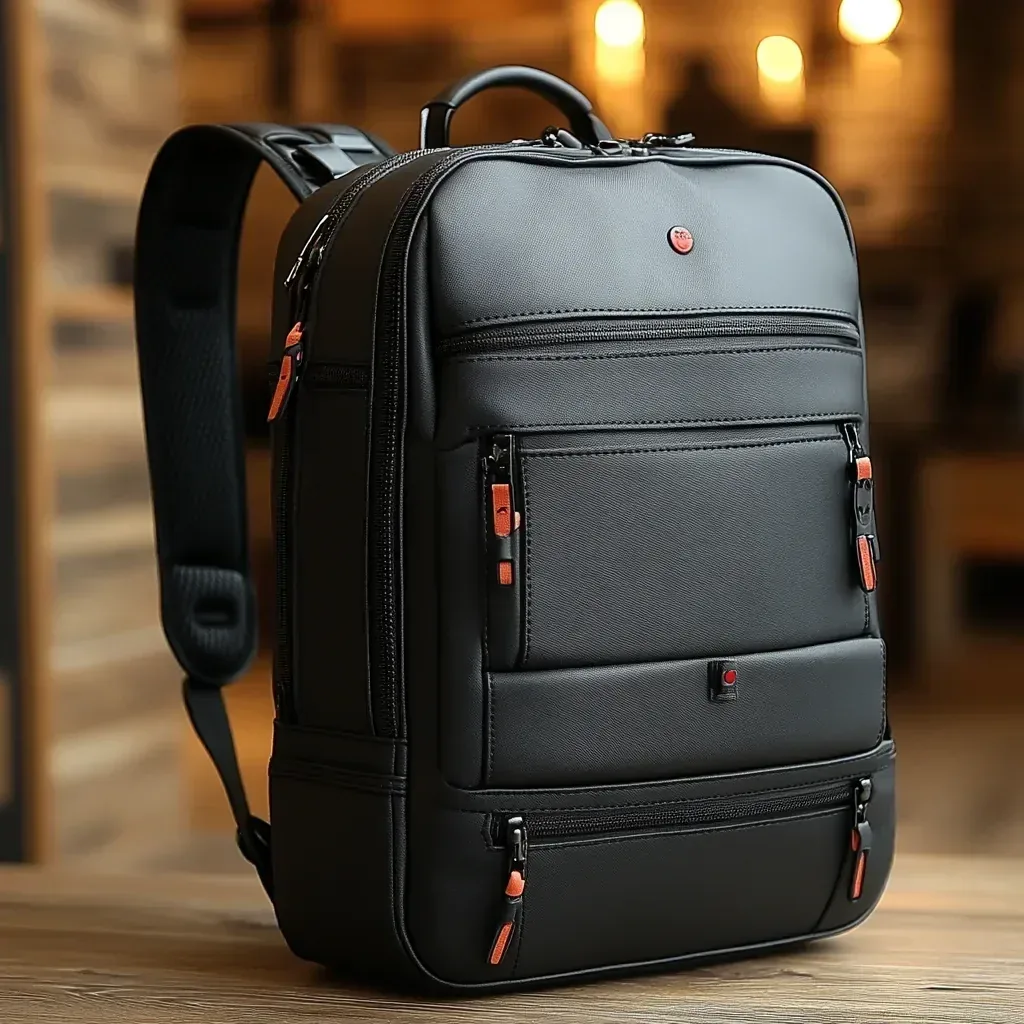
Silhouette Families and What Each Demands
Silhouette is not only an aesthetic decision. Each family carries a characteristic set of construction demands, and choosing one whose demands conflict with your price or your material is the fastest route to a disappointing sample.
| Silhouette | Construction demand | Material tendency | Development difficulty |
|---|---|---|---|
| Top handle | Reinforced handle attachment and a stable base | Firm hides that hold shape | Moderate |
| Tote | Large panels needing clean cutting and edge discipline | Mid-weight hides or coated textiles | Low to moderate |
| Crossbody | Strap engineering and balanced load distribution | Softer hides that drape | Moderate |
| Hobo | Panel shaping to create controlled collapse | Supple leather with consistent stretch | High; slouch is difficult to specify |
| Bucket | Base shaping, drawcord channel and closure integration | Firm to mid-weight | Moderate to high |
| Frame clutch | Metal or moulded frame set into the mouth | Firm hides with precise skiving | High; tooling and fitting skill |
| Structured satchel | Multiple panels, gussets, flap geometry and closure alignment | Firm hide with reinforcement | High |
Two families deserve a caution. Hobo shapes look effortless and are among the hardest to specify, because the desired collapse is a behaviour rather than a dimension: the same pattern in two hides of different temper produces two different bags. Frame clutches are equally unforgiving, since the frame dictates the mouth geometry and the leather must be skived to fit it precisely.
Structure: Framed, Semi-Structured and Soft
Structure is the decision with the widest downstream effect. It determines reinforcement, interlining, edge treatment, packing method and freight volume. It also determines how the bag behaves in a customer's hands, which is what ultimately gets reviewed.
| Structure level | How it is achieved | Cost effect | Customer perception |
|---|---|---|---|
| Framed | Metal or moulded frame set into the mouth, with heavy reinforcement | Highest; tooling plus considerable labour | Formal, archival, precise |
| Fully structured | Interlining or reinforcement across all panels, self-supporting | High; material and labour intensive | Executive, architectural |
| Semi-structured | Reinforced base and panels, soft gussets or upper | Moderate | Modern, practical, lighter |
| Soft with base support | Firm base insert only, body unlined or lightly reinforced | Low to moderate | Relaxed, everyday |
| Fully soft | No reinforcement; shape comes from the hide alone | Lowest structurally, highest in material demand | Slouchy, artisanal |
Note the last row. A fully soft bag removes reinforcement cost but transfers the requirement to the hide, because a soft bag in an indifferent leather does not drape — it sags. Where the budget cannot fund both structure and premium material, semi-structured with a firm base usually reads better than fully soft in a compromised hide.

Material and Hardware Decisions That Shape the Sample
Material and hardware are usually selected after the silhouette, but they should be selected with it, because each constrains the other. A firm bridle hide will not gather into a drawcord channel the way a soft nappa will; a heavy cast chain will distort a light panel unless the attachment is reinforced.
- Match temper to movement. Folding, gathering and turning need a hide that complies; flat panels and sharp edges need one that resists.
- Match weight to hardware. Every fitting adds load at its attachment point; heavy fittings need reinforcement behind them or they will print through.
- Match finish to use. A bag intended for daily commuting needs a finish that resists marking more than one intended for occasional evening use.
- Confirm availability before sampling. A hide that exists only as a mill reference will reset the schedule once the sampling clock has already started.
- Decide the metal family once. One plating standard across the programme prevents the mismatch that is visible from three metres away.
Hardware tooling is the single largest avoidable up-front cost in a first programme, and also the most visible. Where budget is tight, a catalogue fitting with a custom finish frequently delivers most of the effect of a bespoke component at a fraction of the development cost. Reserve bespoke tooling for the one element customers touch most, which is usually the closure or the zip pull.
The Sampling Sequence: What Happens in 6–10 Days
Sampling is often imagined as a single act of making. In practice it is a sequence of dependent operations, and understanding the sequence explains why it takes the time it does and why certain changes are cheap early and expensive late.
| Step | What happens | What you can still change cheaply |
|---|---|---|
| Material confirmation | Hides and fittings confirmed as physically held, not merely referenced | Colour, finish and fitting selection |
| Pattern drafting | Panels drafted and graded from the brief dimensions | Dimensions, panel count and seam placement |
| Marker and cutting | Panels laid out for yield and cut | Yield-influencing details; dimension changes now cost material |
| Preparation | Skiving, reinforcement, edge preparation and hole marking | Reinforcement and interlining decisions |
| Assembly | Panels closed, lining set, hardware attached | Very little; changes here usually mean recutting |
| Finishing | Edge treatment, cleaning, final pressing and branding | Edge colour and branding depth only |
| Internal review | Unit measured against the brief before release | Nothing; this is the check that catches the rest |
The practical implication is straightforward. Every decision gets more expensive as the sequence advances, so the discipline is to resolve dimensions and material before drafting starts, resolve construction before cutting starts, and leave only cosmetic variables for the last steps. Buyers who request a dimension change after assembly are effectively asking for a second sample, and should expect to be quoted for one.
Reviewing the First Sample: A Working Checklist
The first sample is a proposal, not a product. Reviewing it properly means separating three questions: does it match the brief, does it work as an object, and is it repeatable at volume. A bag can pass the first two and still be unbuildable five hundred times.
- Measure first. Check width, height, depth, handle drop and strap range against the brief before forming any impression.
- Assess symmetry. Compare left and right panels, handle alignment and flap centring; asymmetry is easier to catch now than in bulk.
- Operate every fitting. Open and close the closure repeatedly, run the zip its full length, and check that feet sit flush.
- Inspect the interior. Look for clean lining attachment, no adhesive residue, and pockets that sit where they were specified.
- Evaluate the edges. Edge finish is the most reliable indicator of overall finishing discipline across a whole unit.
- Consider repeatability. Ask which operations required unusual skill, because those are the ones that will vary across a run of five hundred.
- Record it. Photograph the approved unit from agreed angles and retain it as the golden sample that bulk will be measured against.
Return written comments rather than a general impression. A comment such as "reduce the handle drop by 15 mm and raise the interior pocket lip by 8 mm" can be actioned directly; a comment such as "it feels heavy" generates a conversation. Both are valid, but only one produces a revised sample in the next window.
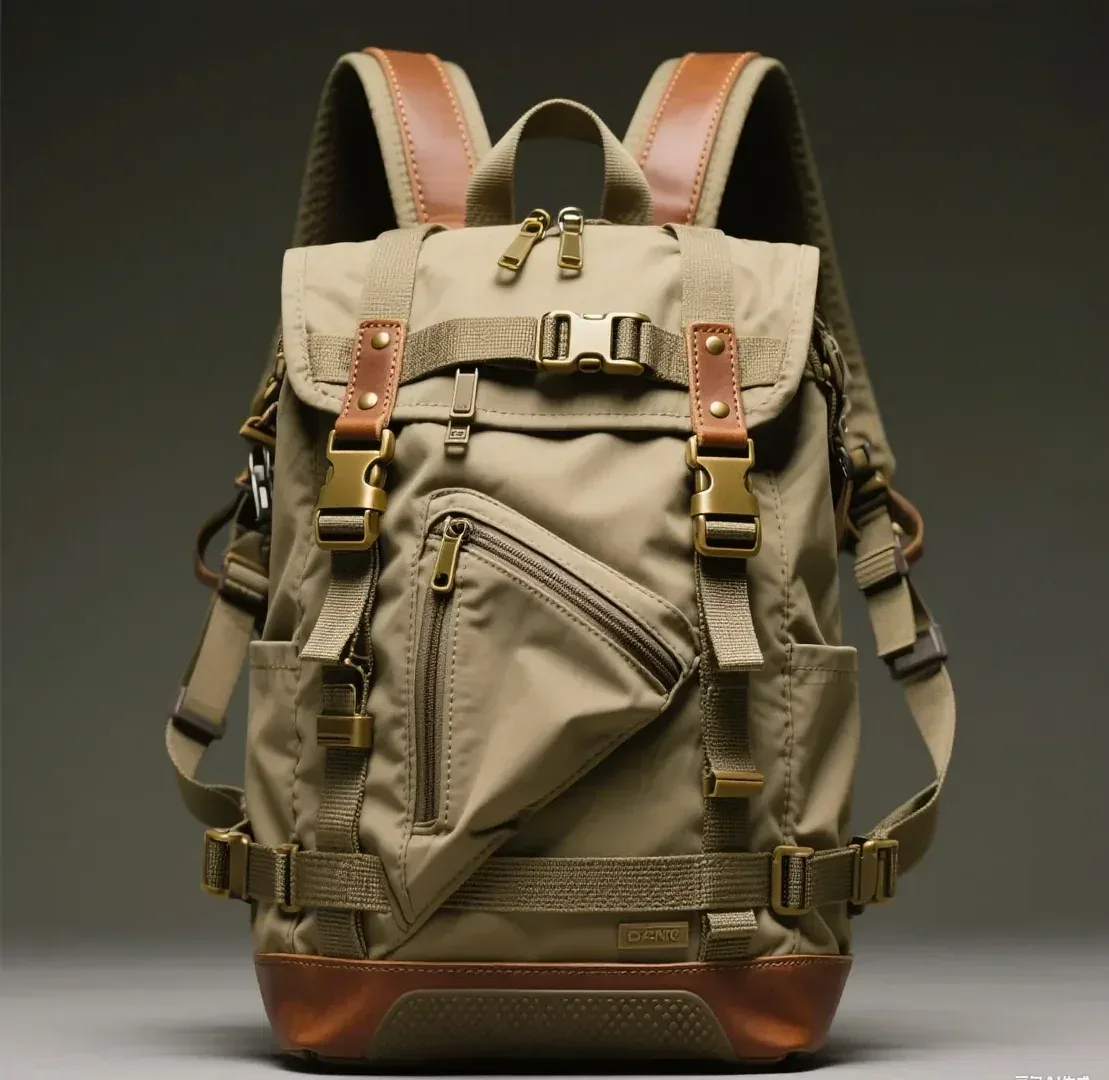
From Approved Sample to Repeatable Production
Approval is not the end of design; it is the point at which design stops changing. What follows is the translation of a single unit into a documented, repeatable specification: consumption figures, standard operations, tolerances and an inspection regime agreed before bulk begins.
| Deliverable | Why it matters | Who holds it |
|---|---|---|
| Approved golden sample | The physical reference every bulk unit is compared against | One retained by each party |
| Confirmed consumption figures | Material per unit, driving both cost and procurement | Programme coordinator and buyer |
| Written tolerances | Objective acceptance limits that prevent opinion disputes | Both parties, agreed before bulk |
| Standard operations list | The sequence that makes unit 500 match unit 1 | Production floor |
| Inspection regime | AQL 2.5 under ISO 2859-1 and the defect grading convention | Quality team and buyer |
| Compliance documentation | Test reports covering each destination market | Buyer, with copies held by the programme team |
Two items on that list are routinely skipped and later regretted. Written tolerances remove the argument about whether a mark is acceptable, because the limit was agreed when nobody had a financial interest in the answer. Compliance documentation belongs in the buyer's hands rather than in a shared folder, because a retailer onboarding request arriving mid-season is not a good moment to discover that reports were addressed to somebody else's brand.
Turn your concept into a sample
Send your sketch, target dimensions, target retail price and destination market. The programme team in Quanzhou will return a technical brief for your approval and a first sample in 6–10 working days.
Frequently Asked Questions
How do I start designing a custom luxury handbag?
Begin with four constraints rather than with a drawing: target retail price, intended volume, launch date and destination market. Those set what the design can afford and how long it has. Then write a technical brief covering dimensions, silhouette family, structure level, material, hardware, interior layout and branding, and mark which two or three elements are non-negotiable.
Do I need a technical pack to design a custom handbag?
A formal tech pack helps but is not essential if the brief is otherwise complete. What matters is that dimensions, tolerances, materials and hardware are stated in writing rather than implied by an image. Where a brand has no technical resource, the programme team can draft the specification from annotated references and return it for approval before any cutting begins.
How long does it take to get a custom handbag sample?
Sampling runs 6–10 working days from confirmed materials, extending to 12–15 days for complex constructions such as framed openings or multi-material builds. Each revision round occupies a further window of the same length. Material confirmation is the step that most often delays the start, so confirm hides and fittings are physically held before the clock is counted.
Which silhouette is easiest to develop first?
Totes and simple top-handle shapes are the most forgiving, because they use flat panels and forgiving geometry. Hobo shapes are deceptively difficult, since the desired collapse is a behaviour rather than a dimension and varies with hide temper. Framed clutches are also demanding, because the frame dictates mouth geometry and the leather must be skived precisely to fit.
What is the difference between structured and soft construction?
Structured construction uses interlining or reinforcement so the bag holds its shape empty; soft construction relies on the hide alone. Structured costs more in material and labour but reads as more precise. Fully soft removes reinforcement cost and transfers the requirement to the leather, so a soft bag in an indifferent hide sags rather than drapes.
How much can I change after the first sample?
You can change anything, but the cost rises sharply as the sequence advances. Dimensions and materials are cheap to change before pattern drafting, expensive after cutting, and effectively mean a new unit after assembly. Cosmetic variables such as edge colour and branding depth remain adjustable at the finishing stage with little consequence to cost or schedule.
Should I use bespoke hardware for a first design?
Usually only for one element. Bespoke tooling is the largest avoidable up-front cost in a first programme, and catalogue fittings with a custom finish deliver much of the same effect. Reserve bespoke tooling for the component customers touch most, typically the closure or the zip pull, and let the rest come from a vetted catalogue.
How do I know if a design can be produced at volume?
Ask which operations in the sample required unusual skill, because those are the ones that will vary across a run. Then confirm consumption figures, written tolerances and a standard operations list before bulk. A design that depends on one exceptional operator is a design that will produce inconsistent results five hundred times.
What tolerances should I specify for a handbag?
Specify dimensional tolerance on external measurements, alignment tolerance on handles, flaps and branding placement, and a colour tolerance referencing an approved swatch under stated lighting. Agree them before bulk begins, when neither party has a financial interest in the answer. Written tolerances convert later disputes from opinion into measurement.
How many samples should I expect to approve?
Simple shapes often settle in one or two units. Complex constructions, framed openings and anything requiring size matching routinely take two or three. Cap the number of rounds in writing at the outset and agree the price of additional rounds, so neither the calendar nor the budget absorbs an unwelcome surprise later.
Can I design a custom handbag without visiting the production floor?
Yes, provided the brief is written and the review is disciplined. Dimensioned sketches, annotated references and approved swatches travel well; impressions do not. Ask for photography at defined stages, keep comments in writing, and retain a golden sample on your side so that remote approval still has a physical reference behind it.
What is a golden sample and why does it matter?
A golden sample is the approved unit retained by both parties as the physical reference for bulk production. It settles arguments that written specifications cannot, particularly about finish, hand and colour. Without one, bulk inspection compares units against a description, and descriptions are interpreted differently depending on who is reading them.
Who owns the design once the sample is approved?
Rights follow whoever funded the development, but only if that was recorded before work started. Patterns created and paid for by you are normally yours to move; dies and moulds are a separate matter needing their own clause. Ask plainly whether the silhouette may be shown to other brands, and keep the reply on file rather than relying on an understanding.
How does material choice affect the design timeline?
Material choice affects the timeline more than most buyers expect, because the sampling clock cannot start before components are physically held. A hide or fitting that exists only as a mill reference resets the schedule. Confirming availability during selection, and reserving lots at quotation stage, protects both the calendar and colour consistency on later repeats.
What should I check on the first sample?
Measure against the brief first, then assess symmetry, operate every fitting repeatedly, inspect the interior for clean lining and adhesive residue, and evaluate edge finish as an indicator of overall discipline. Finally ask which operations required unusual skill. Return written comments with specific numbers rather than general impressions, so the revision can be actioned directly.
How do I brief a design I cannot draw?
Collect reference images and annotate them with what you would change, then state dimensions and intended use in writing. Annotations matter more than the images themselves. Add your target price and volume so the partner can propose within budget, and mark the two or three elements that are non-negotiable so proposals land where they are welcome.
What happens between sample approval and bulk production?
The approved unit is converted into a documented specification: consumption figures, written tolerances, a standard operations list, an inspection regime and compliance documentation for each market. Bulk production then runs 35–50 days after approval. That documentation phase is where repeatability is established, and skipping it is the usual cause of inconsistency later.