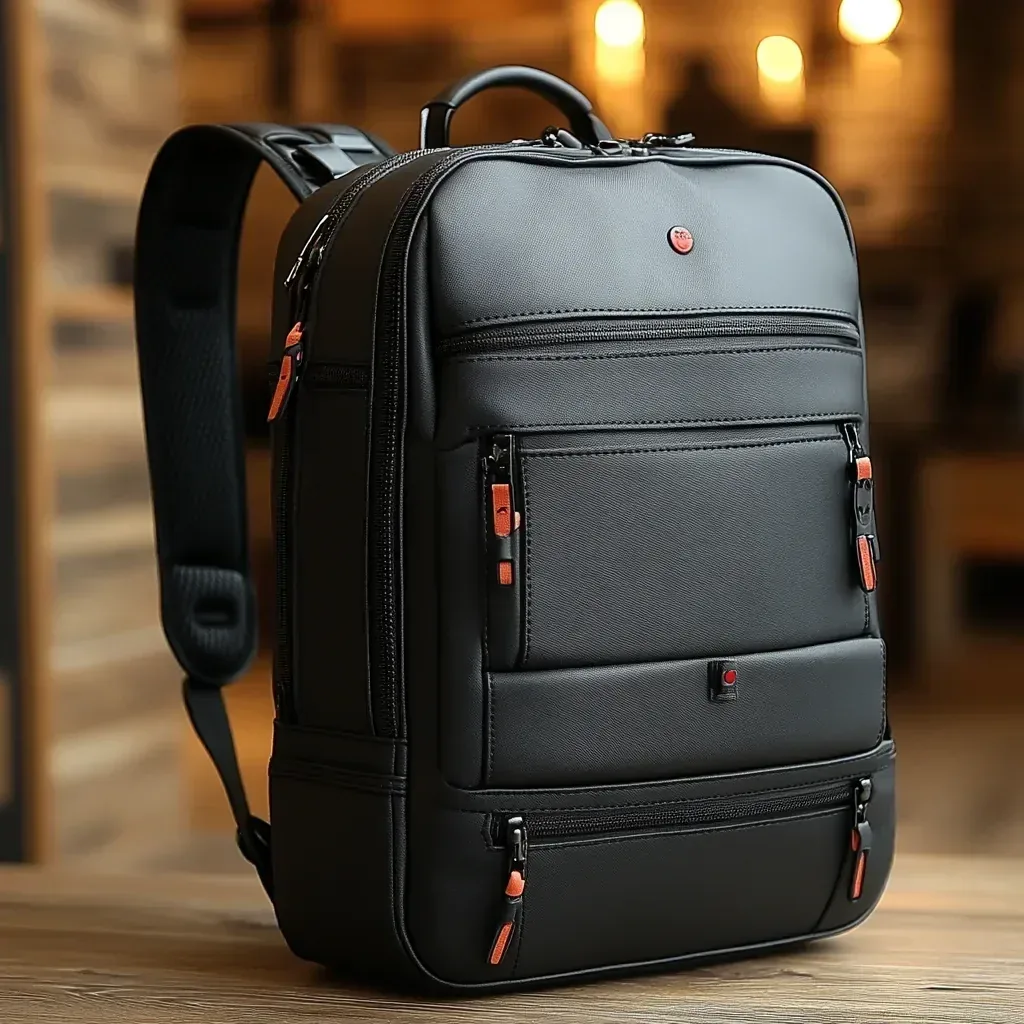
Leather Bag Import Regulations by Country: Complete Compliance Guide 2025
📅 August 20, 2025👤 Bespoke Bags Editorial Team📖 15 min read
Importing leather bags and accessories across international borders involves navigating a complex web of regulations, chemical restrictions, labeling requirements, and customs procedures. For B2B buyers, brand owners, and importers, non-compliance can result in shipment seizures, hefty fines, product recalls, and significant reputational damage.
This comprehensive guide maps the regulatory landscape across all major import markets for leather bags in 2025. Whether you're importing handbags to the European Union, luggage to the United States, or leather accessories to the Middle East, this resource provides the actionable compliance intelligence your business needs.
Manufacturer's Note: At Bespoke Bags, we have over 20 years of experience producing leather goods that meet international compliance standards. Our quality control system includes pre-production chemical testing, in-line inspections, and full documentation support for all destination markets.
Why Compliance Matters: The Real Cost of Non-Compliance
Before diving into specific regulations, it's worth understanding the stakes. In 2024, customs authorities across major markets intercepted thousands of non-compliant leather goods shipments. The consequences of getting it wrong are severe:
- Shipment seizure and destruction: Non-compliant goods can be confiscated at the border, with all costs borne by the importer
- Financial penalties: Fines range from €5,000 to €50,000+ in the EU, and up to $100,000+ per violation in the US
- Product recalls: Post-market surveillance means non-compliant products already on shelves can be forced to recall
- Trade blacklisting: Repeated violations can result in enhanced scrutiny on all future shipments, dramatically increasing lead times
- Brand damage: Public RAPEX notifications (EU) and CPSC recalls (US) are published online and damage brand reputation
Building compliance into your sourcing strategy from the start is dramatically more cost-effective than dealing with violations after the fact.
European Union: REACH, EN Standards & CE Considerations
REACH Regulation (EC) No 1907/2006
The Registration, Evaluation, Authorization, and Restriction of Chemicals (REACH) is the EU's primary chemical safety regulation. For leather bags, REACH imposes strict limits on hazardous substances used in tanning, dyeing, and finishing processes.
Key chemical restrictions for leather bags under REACH:
- Hexavalent Chromium (Cr VI): Maximum 3 mg/kg (0.0003% by weight) in leather articles. This is the most commonly violated restriction, as Cr VI forms during the chrome tanning process when pH levels are improperly controlled
- Azo dyes: Maximum 30 mg/kg of aromatic amines listed in Annex XVII, Entry 43. Applies to all colored leather components
- Pentachlorophenol (PCP): Maximum 0.1% (1000 mg/kg) in leather articles. PCP was historically used as a biocide during leather transport and storage
- DMFa (Dimethylformamide): Restricted since 2023 in leather articles placed on the EU market. DMFa is commonly used as a solvent in PU coating processes
- Phthalates (DEHP, DBP, BBP, DIBP): Maximum 0.1% each in plasticized leather components and coated accessories
- Nickel release: Applicable to metal hardware (buckles, clasps, chains) in contact with skin: max 0.5 µg/cm²/week
Labeling Requirements in the EU
The EU does not have mandatory labeling regulation specific to leather goods, but several directives apply:
- Textile components (linings, straps) must comply with Regulation (EU) No 1007/2011 on textile fiber names and labeling
- All products must include adequate safety information in the language(s) of the destination member state
- Country of origin marking, while not mandatory at EU level, is required by many individual member states
- The "Made in" labeling should follow the non-preferential origin rules of the Union Customs Code
Tariff Rates (EU)
Leather bags (HS Code Chapter 42) entering the EU are subject to Common Customs Tariff (CCT) rates. The standard duty rate is 2.7-4.5% depending on the specific classification. Countries with EU Free Trade Agreements (FTAs) may benefit from reduced or zero tariffs.
United States: CPSIA, CPSC & CBP Requirements
CPSIA (Consumer Product Safety Improvement Act)
While CPSIA primarily targets children's products, leather bags marketed for or intended for use by children under 12 must comply with additional restrictions:
- Total lead content: Maximum 100 ppm in substrate materials
- Lead in surface coatings: Maximum 90 ppm
- Phthalates: Eight phthalates restricted at 0.1% individually (DEHP, DBP, BBP, DINP, DIBP, DPENP, DHEXP, DCHP)
- Third-party testing: Required from CPSC-accepted laboratories
- Children's Product Certificate (CPC): Must be issued before import
For adult leather bags, the primary regulatory body is U.S. Customs and Border Protection (CBP), which enforces proper classification and valuation.
HTS Classification & Labeling
Leather bags are classified under Harmonized Tariff Schedule (HTS) Chapter 42, specifically:
- 4202.11: Trunks, suitcases, briefcases with outer surface of leather
- 4202.21: Handbags with outer surface of leather
- 4202.31: Articles of a kind normally carried in the pocket or handbag, with outer surface of leather
- 4202.91: Other articles with outer surface of leather
Labeling requirements include:
- Country of origin (mandatory, must be legibly marked)
- Textile fiber content (if textile components are present, per Textile Fiber Products Identification Act)
- Care instructions (per FTC Care Labeling Rule, if applicable)
- Leather content must be accurately represented (no false "genuine leather" claims)
Tariff Rates (US)
US tariff rates for leather bags vary by specific HTS classification but generally range from 5.3% to 20%. Notably, products from China may be subject to additional Section 301 tariffs (currently 7.5-25% on many leather goods categories).
United Kingdom: UKCA & Post-Brexit Regulations
UK REACH
Following Brexit, the UK established its own REACH framework under the Health and Safety Executive (HSE). UK REACH largely mirrors EU REACH chemical restrictions but may diverge over time. Leather bags entering the UK must comply with UK REACH substance restrictions, which currently align with EU REACH Annex XVII.
UKCA Marking
As of 2025, the UK recognizes both CE and UKCA markings for most product categories, though certain categories now require UKCA exclusively. For leather bags, the CE mark remains acceptable unless the product includes safety-relevant features that trigger specific UK regulatory requirements. However, importers should monitor for divergence as UK regulations continue to evolve post-Brexit.
UK Tariff Rates
The UK Global Tariff (UKGT) applies post-Brexit. Standard rates for leather bags (Chapter 42) are generally 2.5-4%. The UK has negotiated continuity agreements with many of the EU's FTA partners, maintaining preferential rates for qualifying goods.

Leather goods prepared for international export with complete compliance documentation
Japan: JIS Standards & DENAN Act
Formaldehyde Restrictions
Japan's Consumer Product Safety Act and JIS standards impose some of the world's strictest limits on formaldehyde in leather products:
- Formaldehyde: Maximum 16 mg/kg (detected by JIS L 1041 test method) for products in direct skin contact. Note: Japan uses a different detection threshold compared to other markets
- Azo dyes: Specific aromatic amines prohibited per Japan's Ordinance on Regulation of Household Products Containing Harmful Substances
JIS Standards for Leather
Japan Industrial Standards (JIS) provide quality benchmarks that many Japanese buyers require:
- JIS S 6030: Leather bags—general requirements for construction, materials, and finishing
- JIS K 6550: Testing methods for leather physical properties
- JIS L 1901: Testing for colorfastness
Labeling (Japan)
Japanese labeling law requires:
- Product name and material composition in Japanese
- Country of origin
- Importer/distributor name and address in Japan
- Size specifications where applicable
Tariff Rates (Japan)
Japan's tariff on leather bags ranges from 0% to 8% depending on the specific product category. Japan has extensive EPA/FTA networks that provide preferential rates for many origin countries.
Australia: ACCC & Mandatory Standards
Consumer Protection Framework
The Australian Competition and Consumer Commission (ACCC) enforces the Australian Consumer Law (ACL). Key requirements for leather bags include:
- Accurate product description and material representation
- Country of origin labeling (mandatory under the Country of Origin Food Labelling regime—applicable analogously to consumer goods)
- Compliance with the ban on certain chemical substances in consumer products
- Products must be safe and fit for purpose under the general safety provision
Chemical Restrictions
Australia's Industrial Chemicals Act 2019 (AICIS) regulates chemical imports. While leather bags themselves are articles (not chemicals), imported leather goods must not contain chemicals that are prohibited or restricted under Australian industrial chemicals legislation, including certain azo colorants and heavy metals above specified limits.
Tariff Rates (Australia)
Australia's general tariff rate for leather bags (Chapter 42) is 5%. Preferential rates (including 0%) apply under various FTAs with China, Japan, Korea, ASEAN nations, and CPTPP member countries.
Canada: CCPSA & Textile Labelling
Canada Consumer Product Safety Act (CCPSA)
Health Canada administers the CCPSA, which applies to leather bags as consumer products. Key requirements include:
- Products must not pose unreasonable danger to health or safety
- Mandatory incident reporting for importers
- Mandatory recall authority if products are found non-compliant
- Specific restrictions on lead and certain phthalates in products that may be used by children
Textile Labelling Act
If leather bags contain textile components (linings, fabric inserts, textile straps), the Textile Labelling Act requires bilingual (English/French) labeling showing fiber content. Leather components themselves are not covered by textile labeling but must be accurately described.
Tariff Rates (Canada)
Canada's Most-Favored-Nation (MFN) tariff for leather bags ranges from 0% to 8%. Under CUSMA (formerly NAFTA), qualifying US and Mexican leather goods enter duty-free. Similar preferential rates apply under CPTPP for qualifying goods from member countries.
UAE & GCC: GSO Standards & Customs Union
Gulf Standardization Organization (GSO)
The GCC customs union applies a standardized framework across Bahrain, Kuwait, Oman, Qatar, Saudi Arabia, and the UAE. Leather bags imported into these markets must comply with:
- GSO Technical Regulations: Safety requirements for leather goods, including limits on certain heavy metals and formaldehyde
- Arabic labeling: Product labels must include Arabic text describing the product, material composition, country of origin, and importer information
- Halal considerations: While not legally mandated, many GCC buyers require confirmation that leather materials are not processed with pork-derived substances
Tariff Rates (GCC)
The GCC Common External Tariff applies a standard rate of 5% on leather bags across all member states. Goods originating from countries with GCC free trade agreements may qualify for reduced rates.
Comparative Overview: Regulations by Market
Chemical Restrictions Comparison: Key Limits Across Markets

Laboratory testing of leather materials for chemical compliance across international standards
Tariff Rate Comparison: Leather Bags by Destination & Product Type
Note on Section 301 Tariffs (US): If your leather bags originate from China and are imported to the United States, additional Section 301 tariffs of 7.5-25% may apply on top of the base MFN rate. Many importers are now diversifying manufacturing origins or structuring supply chains through FTA-eligible countries to mitigate this impact.
Required Documentation for Customs Clearance
Regardless of destination market, leather bag importers should prepare the following documentation package:
Universal Documents (All Markets)
- Commercial Invoice: Detailed description of goods, HTS/HS codes, unit values, total value, Incoterms
- Packing List: Quantity, weights, dimensions, package markings
- Bill of Lading / Airway Bill: Transport document
- Certificate of Origin: Required for preferential tariff treatment under FTAs
- Insurance Certificate: Where applicable
Market-Specific Compliance Documents
- EU: REACH compliance declaration, test reports from accredited labs (Cr VI, azo dyes), textile composition declarations for lined products
- US: CPC (for children's products), test reports from CPSC-accepted labs, FDA compliance for certain leather treatments, Customs Bond for shipments valued over $2,500
- UK: UK REACH declaration, test reports, UK Responsible Person designation (if applicable)
- Japan: Import declaration form, JIS test reports, formaldehyde test certificates, quarantine certificate (if applicable)
- Australia: Declaration of Conformity, chemical compliance documentation, BICON import permit (if applicable)
- Canada: CCPSA compliance documentation, bilingual labels, customs coding documentation
- GCC: GSO Conformity Certificate, Arabic labels, Certificate of Origin (stamped by Chamber of Commerce)
Building a Compliance Management System
For businesses importing leather bags across multiple markets, a systematic approach to compliance management is essential. Here's a framework based on best practices:
Step 1: Build a Chemical Restriction Matrix
Create a comprehensive spreadsheet mapping every chemical substance used in your products (leather, dyes, adhesives, hardware finishes, textile components) against the restrictions in each target market. This matrix should be your single source of truth for compliance decisions.
Step 2: Pre-Production Testing Protocol
Before any bulk production, all materials should be tested by an accredited third-party laboratory (SGS, Bureau Veritas, Intertek, or TÜV). Test for the strictest standard among all your target markets—this simplifies compliance management significantly.
Step 3: Supplier Declarations & Agreements
Obtain formal Declarations of Conformity from all material suppliers. Include compliance requirements in your purchase agreements with contractual remedies for non-compliant materials.
Step 4: In-Process Quality Control
Implement batch testing during production, especially for chrome-tanned leather where Cr VI levels can vary between batches. Periodic re-testing provides ongoing assurance.
Step 5: Pre-Shipment Verification
Before goods leave the factory, verify all labeling requirements, documentation completeness, and final product test compliance. This is your last line of defense.
Step 6: Regulatory Monitoring
Regulations evolve constantly. Subscribe to updates from ECHA (EU), CPSC (US), HSE (UK), and relevant bodies in all your target markets. Many compliance consultancies offer monitoring services that alert you to regulatory changes affecting your product categories.
Step 7: Documentation Archiving
Maintain complete compliance documentation for a minimum of 5 years (10 years recommended). This includes test reports, declarations, correspondence with testing labs, and production records. In the event of a market surveillance inquiry, rapid access to complete documentation is your strongest defense.
HS Classification Practice: Getting the Code Right Before Shipping
Almost every customs problem that begins as a tariff dispute started as a classification decision made weeks earlier. Chapter 42 appears straightforward until an importer discovers that a small leather pouch with a wrist strap has been entered under a code intended for handbags, and that the duty difference plus the retrospective assessment is larger than the margin on the shipment. Classification is a decision about the product as it will be presented at the border, and it should be settled before the commercial invoice is typed rather than during clearance.
| Heading | Covers | Common misclassification | Consequence of getting it wrong |
|---|---|---|---|
| 4202.11 | Trunks, suitcases and briefcases with leather outer surface | Entering a soft laptop bag as a briefcase | Higher duty than the correct heading attracts |
| 4202.21 | Handbags with leather outer surface | Entering a leather-trimmed textile bag here | Duty assessment plus a material-misdescription query |
| 4202.31 | Articles normally carried in the pocket, leather outer | Entering a wristlet as a handbag | Retrospective reassessment across prior entries |
| 4202.32 | The same articles with plastic or textile outer surface | Entering a coated split leather item here | Questioning of the whole entry, not the line |
| 4202.39 | The same articles of other materials | Used as a catch-all without evidence | Heightened scrutiny on subsequent shipments |
The discipline is to classify on the outer surface material and the essential character of the article, and to record the reasoning in a file that can be produced later. Where a market offers a binding ruling procedure, use it before the first bulk entry rather than after a dispute: a ruling costs a fraction of a reassessment and it converts an argument into a document. Importers who keep a classification file per style also find that reorders clear faster, because the entry presented at the border matches one that has already been accepted.
Customs Valuation: What the Declared Value Must Contain
The price on the commercial invoice is the starting point for valuation, not the final answer. Customs authorities in most markets work from the transaction value, and that value is expected to include more than the unit price. Under-declaring rarely saves money, because the common outcome of a valuation query is a reassessment across several past entries plus a penalty, and the shipping record makes the earlier entries easy to find.
- Assists: Materials, components, tooling, dies or designs supplied to the producer free of charge or at reduced cost are generally part of the value.
- Royalties and licence fees: Amounts paid as a condition of sale, including brand licence fees, can be dutiable.
- Packing costs: The cost of packing for shipment is typically included even when it is invoiced separately.
- Proceeds of resale: Any later payment that accrues to the seller from the buyer's resale may need to be accounted for.
- Related-party transactions: Where buyer and seller are related, the value has to be shown to be unaffected by the relationship.
- Transport arrangement: Keep the declared basis consistent with the delivery term, so freight and insurance are treated correctly at the border.
Practical control comes from one habit: keep a valuation worksheet per style that lists the unit price, any separately invoiced tooling or development charge, the packing cost and the delivery term, and update it whenever the specification changes. Without that worksheet, an officer asking why three entries of the same style carry different values has only the invoices to read, and the explanation usually takes longer than the assessment. Where a brand supplies its own hardware or dies, that is exactly the case where the worksheet earns its keep.
Origin, Preference Claims and Certificate Discipline
Preferential duty treatment is valuable and conditional. A claim that reduces duty from the standard rate to nothing requires the goods to qualify under the relevant rule of origin, and the evidence to prove it must exist before the entry is made. Most failed preference claims fail on documentation rather than on substance: the goods qualified, but the certificate was issued late, or the description on it did not match the invoice.
| Requirement | What it means in practice | Why claims are rejected |
|---|---|---|
| Certificate matches the invoice | Same consignee, description and quantity | Certificate describes an earlier or broader shipment |
| Issued by the authorised body | Issued before or at export, not afterwards | Certificate is dated after the goods arrived |
| Origin criterion stated | The basis of the claim is recorded | Criterion field left blank or marked incorrectly |
| Consistency across the set | Commercial invoice, packing list and certificate agree | Descriptions differ between documents |
| Retention for audit | Records held for the statutory period | Documents discarded before the audit window closes |
The second half of the problem is the rule of origin itself, which asks where the change in character happened rather than where the goods were shipped from. A bag assembled in one country from leather tanned in another does not automatically confer origin; the applicable rule decides. This is worth establishing before a product is designed rather than after it is priced, because shifting a material source is cheap on the drawing board and expensive once a production run is committed. We supply the material declaration and supplier documentation that supports a claim, and we flag where a planned material change would affect one.
When a Shipment Is Detained: A Working Response Sequence
Detentions are routine enough that every importer should have a rehearsed response, yet most handle their first one improvised, which is how a two-day hold becomes a three-week one. The objective is narrow: give the authority exactly what it asked for, in the format it expects, as early as possible, and keep a record of every exchange.
- Identify the reason in writing: Ask for the specific ground for the hold rather than responding to a general notice, because a sampling request and a documentation request need different responses.
- Answer within the stated window: Late responses are treated as acquiescence and move the file towards seizure rather than release.
- Send one complete package: Commercial invoice, packing list, bill of lading, certificate of origin and any test reports, cross-referenced in a covering note.
- Correct a genuine error proactively: If the classification or the value was wrong, say so and submit a corrected entry; volunteered corrections are treated far more leniently than discovered ones.
- Record the outcome and the cause: Add the reason to the compliance file so the next entry is right, and update the classification worksheet if the entry was amended.
- Review the root cause: After release, decide whether the cause was a documentation habit, a supplier declaration or a design choice, and fix that rather than the single entry.
Preventing recurrence is cheaper than responding well. The importers who rarely experience holds are the ones whose documents were consistent before the container was loaded, whose material declarations were collected from suppliers at the quotation stage, and whose goods were inspected to AQL 2.5 under ISO 2859-1, single sampling, general level II before the invoice was raised. That inspection report is also useful at the border: it is a dated, independent record that the goods were checked against a stated standard before export, and it answers the quality-based questions before they are asked.
Working with Your OEM Manufacturer on Compliance
Choosing a manufacturer that understands international compliance requirements is one of the most important sourcing decisions you can make. A compliant OEM partner should:
- Provide full material transparency, including chemical composition data for all leather, dyes, adhesives, and finishes used
- Maintain relationships with accredited third-party testing laboratories
- Offer pre-production sampling with full test report packages
- Have documented quality control procedures that include compliance checkpoints
- Support your custom design specifications while advising on material choices that meet target market requirements
- Assist with labeling and packaging requirements specific to each destination market
- Provide complete logistics documentation support for smooth customs clearance
At Bespoke Bags, our OEM/ODM services include end-to-end compliance support. Whether you're importing to the EU, US, Japan, or GCC markets, our team ensures every shipment meets the destination country's requirements. We serve brands across luxury handbags, business bags, travel luggage, and leather accessories—all manufactured at the SGS-verified 4,950 m² production floor behind these programmes in Quanzhou, China with MOQs of 500 pieces per style.
FAQ: Leather Bag Import Regulations
Frequently Asked Questions
What chemicals are restricted in leather bags imported to the EU?
Under EU REACH regulation, leather bags imported to the European Union must comply with restrictions on hexavalent chromium (Cr VI, max 3 mg/kg), azo dyes that release certain aromatic amines (max 30 mg/kg), pentachlorophenol (PCP, max 0.1%), and various phthalates in coated leather components. Since 2023, additional restrictions on DMFa (dimethylformamide) apply to leather articles.
Do leather bags need special labeling for US customs?
Yes. Leather bags imported to the United States require country-of-origin labeling, fiber content labeling under the Textile Fiber Products Identification Act (if textile components exceed specific thresholds), proper care labeling, and accurate material composition declarations. Leather products must be declared under the correct HTS code (typically Chapter 42) with precise material descriptions.
What testing standards apply to leather bags for international markets?
Key testing standards include ISO 17075 for chromium VI detection, ISO 17226 for tensile strength and tear load, EN 15949 for azo dye testing, ASTM D3884 for abrasion resistance, and JIS S 6030 for Japanese market requirements. Most buyers require testing from accredited laboratories such as SGS, Bureau Veritas, Intertek, or TÜV.
What is the average tariff rate for leather bags in major markets?
Tariff rates vary significantly: the EU applies 0-4.5% depending on material composition, the US applies 5.3-20% based on surface material (HTS Chapter 42), Japan applies 0-8%, Australia applies 5%, and Canada applies 0-8% depending on the type. The UAE and GCC countries apply a standard 5% customs duty. Trade agreements can significantly reduce these rates.
How can leather bag importers build a compliance management system?
A comprehensive compliance system should include: (1) a chemical restriction matrix mapping all target markets' requirements, (2) pre-production testing of all materials including leather, dyes, adhesives, and hardware, (3) supplier declarations of conformity, (4) periodic batch testing during production, (5) proper labeling verification before shipment, (6) documentation archiving for minimum 5 years, and (7) monitoring of regulatory updates in all target markets.
Last Updated: August 14, 2026
What happens if a leather bag is entered under the wrong HS code?
The entry can be reassessed at the correct rate, and the review usually extends to earlier entries of the same style. Where the correct rate is higher, the result is additional duty plus interest and, depending on the market, a penalty. Classification errors are also a common trigger for closer scrutiny of later shipments.
Should we apply for a binding ruling before our first bulk import?
Yes, if the market offers it and the style sits between two headings. A ruling costs far less than a retrospective reassessment and it converts a judgement call into a document that can be presented at every subsequent entry, which also speeds clearance on reorders.
Does supplying our own hardware change the declared value?
It can. Materials, components, tooling or designs provided free of charge or at reduced cost are generally treated as assists and form part of the transaction value. Record them on a valuation worksheet so the treatment is consistent across entries rather than decided at each shipment.
Why was our duty preference claim rejected?
Most rejections are documentary rather than substantive: the certificate was issued late, the description did not match the commercial invoice, or the origin criterion was left blank. Align the certificate, invoice and packing list before export and retain copies for the statutory period.
Does assembling a bag in one country give it that country's origin?
Not automatically. The applicable rule of origin asks where the change in character occurred, not where the goods were shipped from. Establish the rule at the design stage, because changing a material source later is far more expensive than specifying it correctly at the start.
What is the first thing to do when a shipment is detained?
Ask for the specific ground for the hold in writing, then respond within the stated window with one complete, cross-referenced document package. Volunteering a correction where the entry genuinely was wrong is treated more leniently than having the error discovered.
How long should import compliance records be kept?
Long enough to cover the audit window in each destination market, and longer where a ruling or a preference claim depends on it. A practical approach is to keep entries, certificates, supplier declarations and test reports per style, so a later query can be answered from one file rather than reconstructed.