
Pebble grain leather carries a raised, irregular pebbled surface produced either by milling a hide so its grain shrinks and gathers naturally, or by pressing a pebble pattern into corrected leather. The texture conceals scuffs, distributes abrasion across high points and keeps a bag looking presentable far longer than a smooth finish of the same grade. It is the sensible default for everyday pieces that will be set down on rough surfaces. Buyers should specify grain scale, depth and origin, because those three variables determine whether the result reads as quality or as a printed imitation.
What Pebble Grain Actually Is
Two distinct routes produce a pebbled surface, and they are not equivalent. Milled or tumbled grain is developed from the hide itself: the leather is tumbled in a heated drum with moisture so that the grain shrinks and gathers into an irregular, organic pattern. Embossed pebble is pressed onto a buffed surface using an engraved plate, giving a regular, repeatable pattern. Both are legitimate; only one develops the depth that improves with handling.
- Milled grain: the hide is shrunk by tumbling, so the pattern follows the natural grain direction and varies across the panel.
- Embossed pebble: a plate presses a repeating pattern into corrected leather, giving uniform coverage and high yield.
- Shrunk grain: a stronger chemical shrinkage producing a pronounced, tight pebble, common on premium calf.
- Printed grain: a surface print that only imitates depth, usually found on coated splits and synthetics.
- Boarded grain: produced by mechanically working the hide in two directions, giving a soft, broken character.
The practical difference shows up at the edge and under the hand. A milled grain continues across a folded edge and feels rounded, because the texture runs through the material. An embossed pattern stops where the plate stopped, and on a turned edge it can look flattened. That is a reliable way to identify which route a swatch represents without asking anyone, and it is worth performing on the first sample rather than the third.
How It Is Produced
Milling is a controlled destabilisation of the grain. The hide is brought to a specific moisture content, placed in a heated drum and tumbled, often with agents that accelerate shrinkage. Time, temperature and moisture together determine how pronounced the pebble becomes, which is why the process is as much craft as specification and why results vary between batches even from the same tannery. Reproducibility, rather than capability, is the reason many programmes ultimately choose the embossed route.
| Stage | Operation | Variable that changes the result |
|---|---|---|
| Retanning | Grain prepared and tightened | Choice of retanning agents and penetration |
| Conditioning | Moisture adjusted before tumbling | Too dry gives no pebble; too damp gives uneven grain |
| Milling | Tumbling in a heated drum | Duration, temperature and drum speed |
| Setting | Grain fixed by drying under tension | Whether the pattern is locked or relaxes out |
| Finishing | Wax, oil or light resin applied | Sheen level and how the pebble reflects light |
Programme parameters at a glance
| Parameter | Commitment |
|---|---|
| Minimum order quantity | 500 pieces per style / colourway |
| Sampling lead time | 6–10 working days (12–15 days for complex constructions) |
| Bulk production lead time | 35–50 days after sample approval |
| Inspection standard | AQL 2.5 (ISO 2859-1), single sampling, general level II |
| Incoterms | FOB Xiamen — EXW, CIF and DDP available on request |
| Payment terms | T/T 30% deposit / 70% before shipment; L/C at sight for container loads |
| Verified production floor space | 4,950 m² (SGS-verified) |
| Team | 137 staff across 7 production lines |
| Equipment | 149 machines including computerised saddle-stitch and edge-painting units |
| Monthly capacity | 200,000 pieces |
| Entity | Founded 2014; principal has worked in bag development since 2004 |

Why Texture Conceals Wear
The mechanism is optical as much as mechanical. On a smooth surface, a scratch creates a continuous line that the eye follows immediately, and abrasion produces a flat glossy patch that contrasts with the surrounding sheen. On a pebbled surface, the same damage lands only on the raised peaks, is interrupted by the valleys between them, and scatters light in many directions rather than reflecting it evenly.
| Damage type | On a smooth finish | On a pebbled finish |
|---|---|---|
| Light surface scuff | Visible continuous mark | Broken across peaks, largely invisible |
| Key or nail scratch | Clear line across the panel | Interrupted, reads as texture variation |
| Corner abrasion | Glossy flat patch at the corner | Peaks polish gradually and blend |
| Fingerprints and oils | Show as distinct marks | Dispersed into the grain pattern |
| Rain spotting | Tide marks on unfinished leather | Less defined where a finish is present |
There is a secondary benefit that matters more than the cosmetic one. Because abrasion is distributed across the peaks, it removes less material from any single point, so the underlying finish survives longer in absolute terms. A pebbled panel does not simply look better after two years; it has genuinely lost less of its protective coating.
The same logic explains why pebbled leather photographs forgivingly in e-commerce. Product imagery is shot under controlled light, but customer expectations are formed there and tested in daylight, on a car seat and under office fluorescents. A surface that scatters light rather than reflecting it evenly is more likely to look like its own photograph across all of those conditions, which reduces the gap between expectation and delivery that drives returns.
Grain Scale and Depth: Reading the Choice
Pebble is not one texture but a family, and scale is the decision that most affects how a finished bag reads. Fine grain looks refined and formal at a distance and suits smaller pieces; bold grain reads relaxed and tactile and carries a large panel better. Depth interacts with scale: a shallow fine grain can look almost smooth under retail lighting, while a deep bold grain can overwhelm a small clutch.
| Grain scale | Typical look | Suits |
|---|---|---|
| Fine (under 1 mm) | Refined, near-smooth at a distance | Small leather goods, evening pieces, formal totes |
| Medium (1–2 mm) | Balanced texture, legible and versatile | Everyday handbags, crossbodies, shoulder bags |
| Bold (2–4 mm) | Relaxed, tactile, strongly dimensional | Hobos, weekend bags, casual backpacks |
| Very bold (over 4 mm) | Rustic, country, distinctly casual | Heritage holdalls, field bags, men's carry |
Matching scale to panel size is the rule of thumb that prevents most mistakes. Texture should be proportionate to the surface it covers: a bold pebble on a card holder looks caricatured, and a fine grain on a large holdall disappears entirely once the bag is on a shoulder. Where a collection spans sizes, two coordinated grains scale better than one compromise.
Pebble Grain Against the Alternatives
Choosing a texture is choosing an ageing path. Each of the common finishes fails differently, and the comparison that matters for a buyer is not how they look new but how they look after the first year of daily use.
| Finish | Hand | Wear visibility | Patina | Best application |
|---|---|---|---|---|
| Pebble grain | Soft to medium, tactile | Low; damage disperses | Subtle; peaks polish slightly | Everyday bags in active use |
| Saffiano | Firm, dry, sealed | Very low until coating cracks | None | Structured, precise colourways |
| Smooth aniline | Soft, natural, warm | High; every mark registers | Strong and rapid | Luxury pieces sold on character |
| Nubuck | Velvety nap | Medium; soiling shows | Nap flattens and glosses | Soft, tactile, low-structure designs |
| Full grain natural | Firm, dense | Moderate; marks become patina | Strong over years | Heritage and repairable pieces |
Pebble grain occupies the pragmatic middle of that table. It gives up the drama of aniline patina and the precision of saffiano in exchange for a surface that simply keeps going. For a brand whose customers carry one bag daily rather than rotating several, that is usually the right trade.
Which Bags Suit Pebble Grain
The texture favours pieces that move, flex and meet rough surfaces. It is less successful where a design depends on razor-sharp edges or on a flat expanse that must read as pure colour, since the grain interrupts both.
- Strong fits: everyday totes, shoulder bags, crossbodies, backpacks, weekend bags and casual briefcases.
- Reasonable fits: structured handbags where the silhouette is softly geometric rather than crisp.
- Weak fits: evening clutches, art-deco geometric pieces and anything relying on a mirror-flat surface.
- Interior note: pebble grain works well as an exterior paired with a smooth lining for contrast.
- Hardware note: matte and brushed fittings sit better against texture than highly polished ones.

Cutting behaviour is the practical consequence most specifications omit. A pronounced grain reduces the usable area per hide, because the pattern must run consistently across adjacent panels or the seams will read as mismatched. Our cutting plans therefore orient every pattern piece to a stated grain direction and allow additional material for matching, which is a yield cost worth acknowledging in the brief rather than discovering as a price adjustment later.
Care, Cleaning and Service Life
Maintenance is straightforward but not negligible. The valleys between the pebbles collect dust, lint and residue, so a pebbled surface benefits from occasional brushing with a soft horsehair brush before wiping. Cleaning products should be worked in circular movements rather than straight strokes, so they reach into the grain rather than skimming the peaks.
One caution applies to conditioning. A pebbled surface presents more area to any product applied to it, so it absorbs cream more readily than a smooth panel of the same leather. Over-conditioning will soften the grain and flatten the peaks over time, which removes the very property the material was chosen for. Apply sparingly, work it in, and buff off everything that has not been absorbed.
| Task | Frequency | Method |
|---|---|---|
| Dust removal | Monthly in regular use | Soft brush along and across the grain |
| Surface wipe | As needed | Slightly damp cloth, circular motion |
| Conditioning | Every 6–12 months | Light neutral cream, sparingly applied |
| Deep cleaning | Every 1–2 years | Specialist cleaner, tested on a hidden area |
| Reshaping | As needed | Light stuffing; steam only by a professional |
Repairability sits between the extremes. Pebbled leather hides a touch-up well, because a colour-matched repair blends into the pattern rather than sitting as a flat patch, and light re-embossing of a small area is possible where the grain was pressed. Where the grain was milled into the hide, a repairer can sand and re-texture locally with reasonable success. That is a materially better outlook than a sealed, printed surface offers.
Specifying Pebble Grain in a Programme
Because the texture is produced by a process rather than defined by a standard, the written specification has to carry more detail than usual. Our production partners in Quanzhou work from a tannery article code supported by a retained reference swatch, and the programme team will record grain scale, depth and production route alongside substance and colour before sampling begins.
One approval test is worth adding for this material specifically: a visual assessment under raking light at the intended viewing distance. Pebble grain changes character dramatically between direct and angled illumination, and a sample approved under flat office lighting can look entirely different in a showroom. Photographing the sample under both conditions prevents a disagreeable surprise at launch.
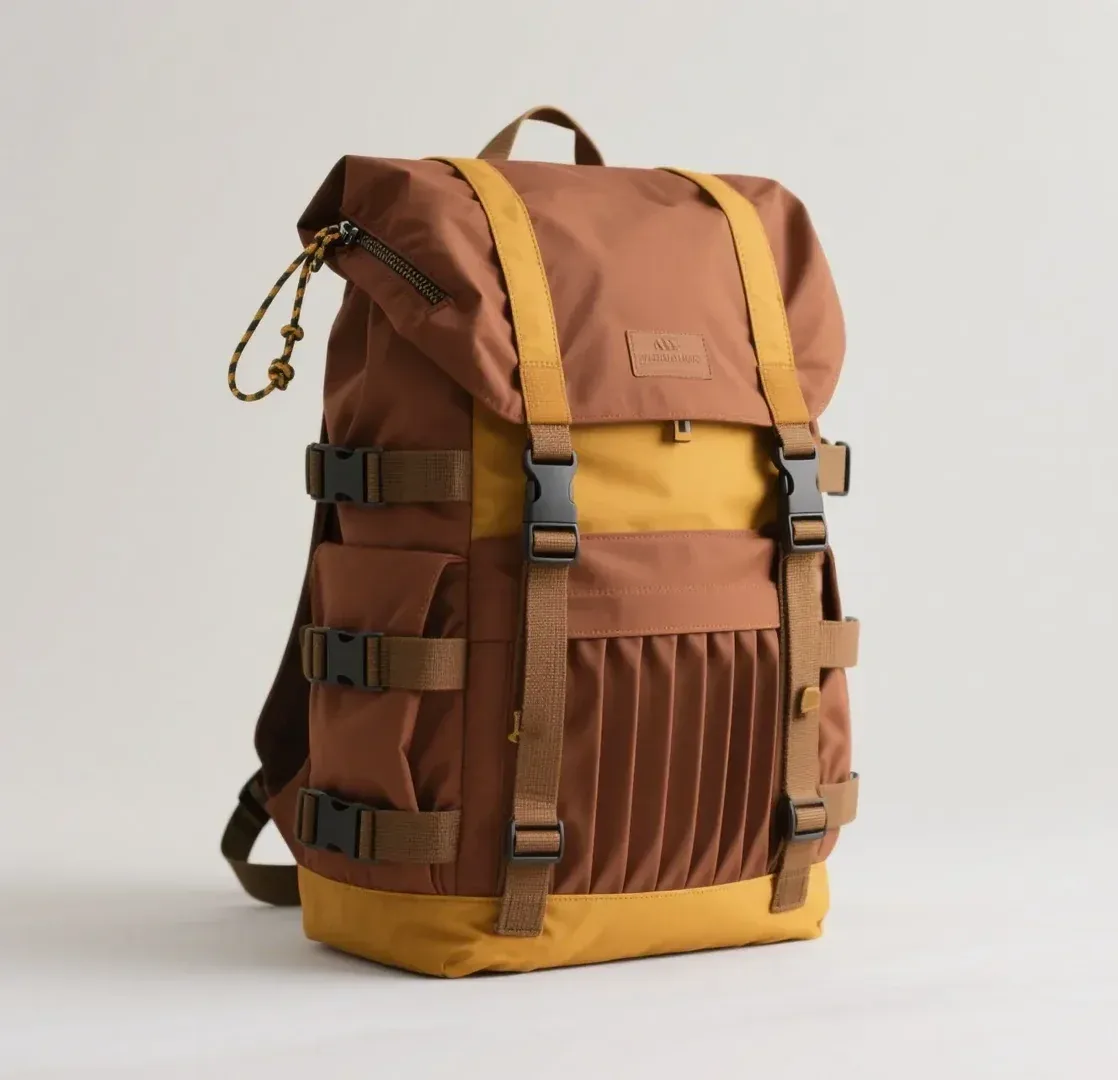
Pebble grain is the quiet workhorse of the leather family: rarely the material a designer reaches for first, and frequently the one a customer thanks them for later. It rewards specification in detail and forgives ownership in practice, and examples of how different grain scales resolve in finished work appear across the tote bags and crossbody bags ranges.
Choose a grain that still looks right in year three
Share the silhouette, panel sizes and how the bag will be carried. The programme team will recommend grain scale, depth and production route, then build a sample for assessment under raking light within 6–10 working days.
Frequently Asked Questions
What is pebble grain leather?
Pebble grain leather has a raised, irregular pebbled surface. It is produced either by tumbling a hide in a heated drum so the grain shrinks and gathers naturally, or by pressing a repeating pebble pattern into corrected leather. The milled route carries texture through the material, while the embossed route is uniform and repeatable.
Why does pebble grain leather hide wear?
Texture interrupts damage optically and mechanically. A scratch on a smooth surface forms a continuous line; on a pebbled surface it lands only on raised peaks and is broken by the valleys between them, scattering light instead of reflecting it evenly. Abrasion is also distributed, so less protective finish is removed from any single point.
Is pebble grain leather real leather?
Genuine pebble grain is real leather with texture produced by milling or embossing. Imitations exist, usually as printed patterns on coated splits or synthetic sheets, and they lack true depth. Check whether the texture continues across a folded edge, examine the cut edge for fibre, and ask for the tannery article code in writing.
What is the difference between milled and embossed pebble grain?
Milled grain is developed from the hide by tumbling it under heat and moisture, so the pattern follows natural grain direction and varies across the panel. Embossed pebble is pressed onto a buffed surface with an engraved plate, producing uniform coverage and better yield. Milled grain develops more depth with handling and reads at a folded edge.
Does pebble grain leather scratch easily?
It resists visible scratching better than a smooth finish, because marks land on the peaks and are interrupted by the grain. It is not scratch proof: a sharp object will cut the surface. The practical advantage is that ordinary daily scuffs, which would register clearly on smooth leather, are essentially invisible on a pebbled panel.
What grain size should I choose for a handbag?
Medium grain, roughly one to two millimetres, is the most versatile choice for an everyday handbag: legible enough to conceal wear and refined enough for formal settings. Fine grain suits small leather goods and evening pieces, while bold grain carries large relaxed shapes such as hobos and weekend bags better.
Is pebble grain leather good for everyday bags?
It is one of the strongest choices for daily use. The texture conceals scuffs, keys and corner abrasion, the hand stays soft rather than stiff, and the material does not demand the careful handling an aniline surface needs. It gives up some patina development and precise colour uniformity in exchange for that resilience.
How do you clean pebble grain leather?
Brush first with a soft horsehair brush, working along and across the grain to lift dust from the valleys between the pebbles. Wipe with a slightly damp cloth using circular movements so the cloth reaches into the texture. Condition lightly every six to twelve months, and use a specialist cleaner for stubborn marks after testing on a hidden area.
Does pebble grain leather develop patina?
Subtly. The raised peaks polish with handling and can gloss slightly over years, while the valleys stay matte, which deepens the visual depth of the grain. It is a much slower and quieter change than an aniline hide produces, and it reads as the texture becoming richer rather than the colour shifting noticeably.
Can pebble grain leather be repaired?
Reasonably well. Colour-matched touch-ups blend into the pattern instead of sitting as a flat patch, which is a real advantage over smooth or sealed surfaces. Small areas can sometimes be re-textured locally. Deep gouges that break the surface structure still require panel replacement, so the repair ceiling remains finite.
Is pebble grain leather waterproof?
Not inherently, though most pebbled articles carry a light finish that sheds brief moisture. The texture itself slightly increases surface area, so an unfinished pebbled hide can absorb water as readily as any other. Where weather resistance matters, specify a hydrophobic finish or a wax treatment and confirm it by testing the sample.
What thickness suits pebble grain leather?
Most pebbled articles are supplied between 1.2 and 1.8 millimetres, with the figure set by silhouette. Softer milled grains need slightly more substance to hold shape, while firm embossed articles manage with less. Because milling increases apparent fullness, a pebbled panel often reads heavier than a smooth one of identical measurement.
Does pebble grain work on structured bags?
It works on softly structured shapes where the geometry is gentle rather than razor sharp. A crisp architectural edge reads better on a smooth or sealed finish, because the grain interrupts the line. For a structured bag that must also tolerate daily wear, a fine grain with internal reinforcement is usually the better compromise.
How is pebble grain specified on a technical pack?
Record the production route as milled, shrunk or embossed, the approximate pebble diameter in millimetres, and the depth referenced to an approved sample. Add base grade, substance with tolerance, temper, finish type and sheen. Require comparison against a retained swatch at goods receipt under AQL 2.5 single sampling per ISO 2859-1.
Does pebble grain leather show dust and lint?
It collects more than a smooth surface, because the valleys between the pebbles trap particles. Regular brushing removes it easily, and darker colourways hide it better than pale ones. This is a minor maintenance obligation rather than a defect, and it is the direct trade-off for the texture's ability to conceal scratches.
Should a collection use one grain or several?
Two coordinated grains usually work better than one across a range spanning small and large pieces. A single fine grain disappears on a holdall; a single bold grain overwhelms a card holder. Selecting a fine and a medium grain from the same tannery family keeps the collection visually coherent while letting texture stay proportionate to each panel.
How should pebble grain leather be assessed before approval?
Examine the sample under raking light at the intended viewing distance, because the texture changes character dramatically between flat and angled illumination. Check the folded edge to confirm which production route was used, and handle the swatch after warming it in the hand. A sample approved only under flat office lighting often surprises everyone at launch.
Does pebble grain leather cost more than smooth leather?
Milled grain generally carries a premium, because the additional tumbling stage adds process time and reduces usable yield per hide once panels must be matched for grain direction. Embossed pebble can be cheaper than smooth full grain, since the pattern conceals defects on corrected leather. The route chosen therefore moves cost in either direction.
Can pebble grain leather be embossed with a logo?
Yes, but legibility suffers. Fine logo detail is interrupted by the grain, so blind embossing and small foil stamps read poorly on bold textures. The practical alternatives are a metal logo plate, a larger and simpler stamp, or placing the mark on a smooth panel or an interior label. Always trial the actual tooling on the actual material.
Is pebble grain leather suitable for men's bags?
It suits them well, particularly in medium to bold grains on briefcases, holdalls and backpacks, where a relaxed texture reads as durable rather than delicate. The material conceals the desk-edge and boot-scrape marks that men's working bags collect. Pair it with matte or brushed hardware and a firm temper so the silhouette stays disciplined despite the soft surface.