What are leather grading standards? Leather grading standards classify hides into hierarchical quality tiers based on the integrity of the fiber structure, the extent of surface processing, and measurable physical properties including tensile strength, tear resistance, and thickness uniformity. According to the Leather Working Group (LWG), which audits and certifies over 75% of the global leather supply chain's environmental compliance, leather grades range from Full Grain (Grade A) — retaining the complete, unaltered grain layer with intact collagen fiber density — to Bonded Leather — a reconstituted composite made from leather fibers bonded with latex or polyurethane onto a fabric backing. The International Organization for Standardization (ISO) publishes over 80 standards for leather testing (ISO 11640 series), covering everything from grain crack assessment to colorfastness and thermal stability.
Sources: Leather Working Group Protocols | ISO/TC 120 — Leather Standards
Understanding leather grades is the single most important knowledge a B2B buyer can develop. The difference between full grain and bonded leather is not merely cosmetic — it translates to a lifespan difference of 40+ years versus 2-3 years, a price differential of 5-10x per square meter, and a dramatic divergence in customer satisfaction and brand reputation. Yet the market is rife with grade inflation, misleading terminology, and outright misrepresentation.
At Bespoke Bags, we have spent over 20 years mastering leather selection, testing, and sourcing for premium bag manufacturing. Our 4,950 m² production floor in Quanzhou processes leather exclusively from LWG-certified tanneries, and our quality control protocols include grade verification at every stage. This guide distills our expertise into a comprehensive resource for B2B buyers navigating the leather grading landscape.

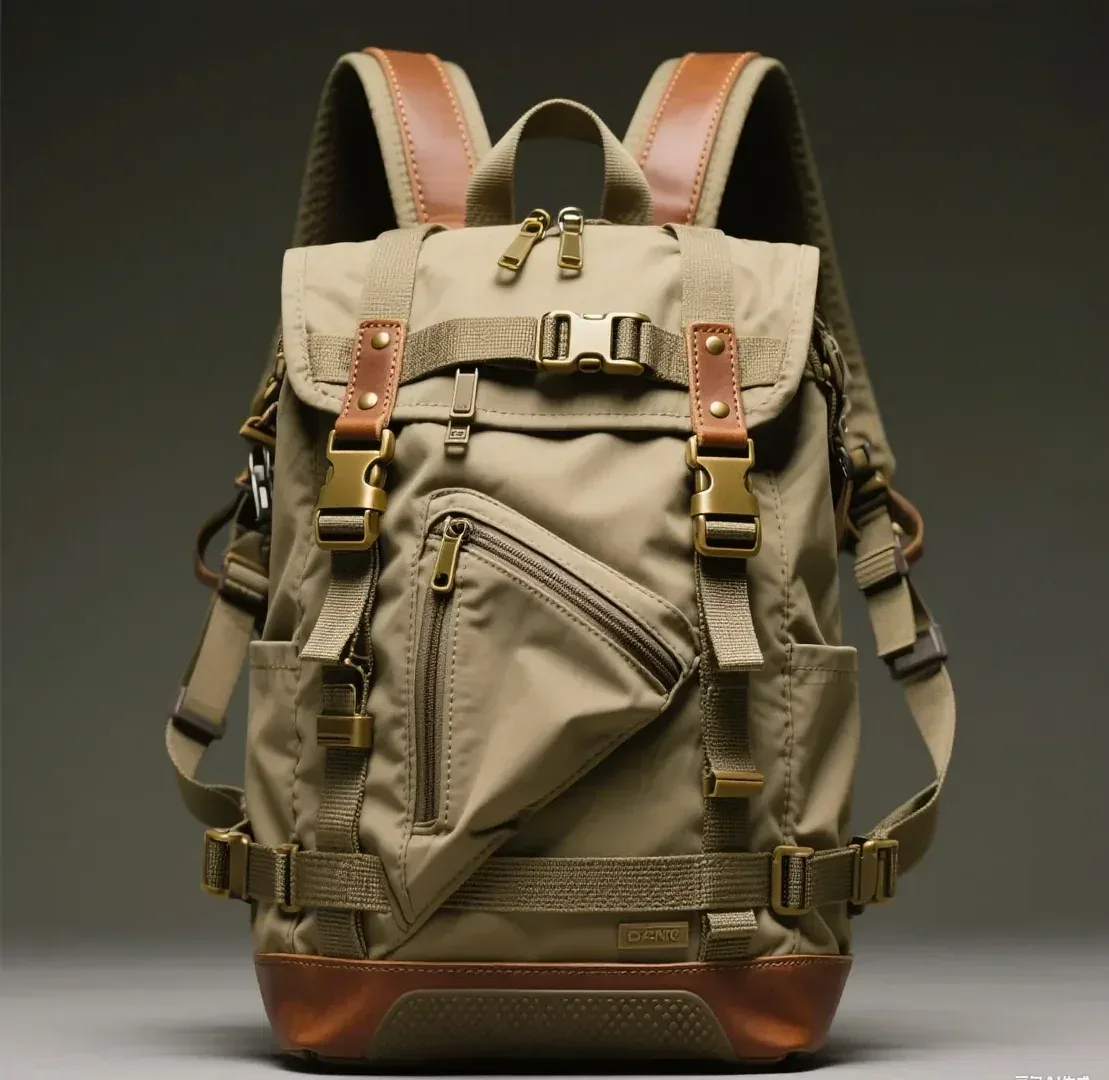
Cross-section analysis reveals the fundamental structural differences between leather grades
The Leather Grading Hierarchy: A Complete System
Unlike industries with centralized, legally enforceable grading standards, the leather industry uses a de facto grading system that has evolved through market convention. While terms like "full grain" are widely understood among professionals, their application is not governed by a single international authority. Instead, the Leather Working Group (LWG), the International Union of Leather Technologists and Chemists Societies (IULTCS), and ISO standards collectively define the testing methods and performance criteria that underpin each grade.
Grade 1: Full Grain Leather
Full grain leather represents the pinnacle of leather quality. It retains the entire grain layer — the outermost, densest, and most durable portion of the hide — without any sanding, buffing, or correction of the natural surface. The grain layer contains the tightest, most interwoven collagen fiber structure in the hide, which gives full grain leather its unmatched strength and longevity.
Key characteristics:
- Fiber structure: Intact, tightly interwoven collagen fibers at maximum density. The grain layer is 3-5x denser than the corium (inner layer).
- Surface appearance: Shows natural markings — pores, hair follicles, occasional scars, wrinkle patterns from the animal's body movement. No two pieces look identical.
- Tactile quality: Firm but supple; develops a rich patina with age and use rather than deteriorating.
- Water behavior: Absorbs water slowly (minimal surface coating); water spots can be conditioned out.
- Lifespan: 25-50+ years with proper care; many full grain leather goods become more beautiful with age.
- Price range: $8-25 per square foot (depending on origin, tannage, and hide quality).
Grade 2: Top Grain Leather
Top grain leather (also called "corrected grain") undergoes a mechanical process where the outermost surface of the grain layer is sanded or buffed to remove natural imperfections — scars, insect bites, stretch marks, and brand marks. After correction, an artificial grain pattern is embossed onto the surface, followed by application of finishes and coatings.
Key characteristics:
- Fiber structure: Grain layer is partially removed, reducing fiber density by 15-30%. The underlying structure remains intact and strong, but not at full grain density.
- Surface appearance: Uniform, consistent grain pattern. Fewer natural markings; more "perfect" aesthetic. Preferred by brands targeting uniform product appearance.
- Tactile quality: Softer and more pliable than full grain due to surface reduction; does not develop a natural patina in the same way.
- Water behavior: More water-resistant than full grain due to surface coatings and finishes.
- Lifespan: 10-25 years; maintains structural integrity well but surface finishes may wear over time.
- Price range: $5-15 per square foot (typically 40-60% of full grain pricing).
Grade 3: Genuine Leather
The term "genuine leather" is perhaps the most misunderstood term in the industry. It does mean real leather — it is not synthetic — but in professional grading terminology, it refers to the split layers of the hide that remain after the top grain has been separated. These inner layers (sometimes called "split leather") have a looser, more fibrous structure with significantly less density and strength.
Key characteristics:
- Fiber structure: Loose, open collagen fiber network from the corium layer. Significantly less interwoven than grain layers.
- Surface appearance: Fuzzy, suede-like on the natural side. Typically receives a heavy surface coating or lamination to simulate grain appearance.
- Tactile quality: Less supple than grain leather; coated varieties feel somewhat plastic-like.
- Lifespan: 3-5 years; prone to cracking, peeling of surface coatings, and fiber separation.
- Price range: $2-5 per square foot.
⚠️ Consumer Misconception Alert
Many consumers believe "genuine leather" means high-quality leather. In reality, it is the lowest structural grade of real leather. Some jurisdictions have taken regulatory action against misleading "genuine leather" marketing. The European Union's Regulation 468/2014 and various US state laws require that leather product labels accurately reflect the material composition.
Grade 4: Bonded Leather
Bonded leather is a composite material made by shredding leather scraps and fibers into small particles, mixing them with bonding agents (latex, polyurethane, or acrylic binders), and pressing the mixture onto a fabric or fiber backing. The resulting material contains only 10-20% actual leather fiber, with the remainder being synthetic adhesives and backing materials.
Key characteristics:
- Fiber structure: No continuous fiber network. Leather fibers are dispersed in a synthetic matrix with no structural integrity of their own.
- Surface appearance: A PU or PVC coating is applied to simulate leather grain; appearance is uniform but artificial under close inspection.
- Tactile quality: Initially similar to low-grade leather but deteriorates rapidly; surface coating cracks and peels within 1-3 years.
- Lifespan: 1-3 years; does not age gracefully and cannot be repaired or conditioned.
- Price range: $1-3 per square foot.
Grade 5: PU (Polyurethane) / Faux Leather
PU leather and other synthetic leathers contain no animal hide at all. They are manufactured entirely from petroleum-based polymers applied to textile or non-woven backings. While modern PU leathers have improved significantly in appearance and hand-feel, they lack the fundamental fiber structure, breathability, and aging characteristics of real leather.
Key characteristics:
- Fiber structure: No collagen fiber structure; synthetic polymer film on textile backing.
- Surface appearance: Very consistent and uniform; can closely mimic leather grain patterns.
- Tactile quality: Varies widely; high-end PU can approach genuine top grain feel but lacks natural warmth.
- Lifespan: 2-5 years; surface coating eventually cracks; not repairable.
- Price range: $2-8 per square meter (significantly cheaper than real leather by area).
ISO-standardized testing methods provide objective measurements to verify leather grade claims
Comprehensive Grade Comparison Table
Testing Methods: How Grades Are Objectively Measured
Professional leather grading relies on standardized testing methods published by ISO and IULTCS. These tests provide measurable, repeatable data that can objectively verify grade claims. Here are the critical tests every B2B buyer should understand:
Thickness Measurement (ISO 2589)
Measures the total thickness of the leather sample under standardized pressure (10 kPa). While thickness alone does not determine grade, it provides important context:
- Full grain leather typically ranges from 1.2-2.0 mm for bag applications, as it retains the full grain layer
- Top grain leather is slightly thinner (1.0-1.6 mm) because the surface has been corrected
- Genuine leather (split) can be any thickness but often shows greater variability
- Consistency of thickness across a hide indicates quality splitting — premium tanneries maintain ±0.1 mm tolerance
Tensile Strength (ISO 3376)
Measures the maximum force the leather can withstand before breaking when pulled in a standardized test strip. This is one of the most discriminating tests between grades:
- Full grain: typically ≥18 N/mm² — the intact grain layer provides maximum fiber engagement
- Top grain: 14-18 N/mm² — reduced grain density proportionally reduces tensile strength
- Genuine leather: 8-14 N/mm² — loose fiber structure dramatically reduces strength
- Bonded: 3-8 N/mm² — no continuous fiber network; strength comes primarily from binders
Flex Resistance / Grain Crack Test (ISO 5402-1 / IUP 5590)
This test repeatedly flexes a leather sample and measures the number of cycles before visible cracks appear on the grain surface. It is particularly important for bag manufacturing because bags experience repeated flexing during normal use:
- Full grain: >100,000 cycles before any cracking — the intact, dense grain layer resists flex fatigue exceptionally well
- Top grain: 50,000-100,000 cycles — the embossed surface and applied finishes crack sooner than natural grain
- Genuine leather: 10,000-50,000 cycles — heavy surface coatings crack as the loose fiber base flexes
- Bonded: 5,000-15,000 cycles — synthetic surface coating separates from fiber composite base
Tear Load (ISO 3377-1)
Measures the force required to propagate a tear through the leather. This is a critical durability indicator for bag products, particularly at stress points like strap attachments and corners:
Premium leather selection and grade verification are foundational to luxury bag manufacturing
Matching Leather Grades to Product Types
Not every product requires full grain leather. The art of smart product development lies in matching the right leather grade to each product's function, price positioning, and expected customer use patterns. Here is our professional recommendation matrix:
Luxury Handbags & Heritage Products
Recommended grade: Full Grain leather
Why: Luxury positioning demands the highest material quality. Full grain's ability to develop a rich patina over decades aligns with the heirloom positioning of luxury brands. Products from our luxury handbag collection are crafted exclusively from full grain and premium top grain leathers.
Business Bags & Briefcases
Recommended grade: Full Grain or Premium Top Grain
Why: Business bags experience heavy daily use and need exceptional durability. Top grain is acceptable for brands prioritizing uniform appearance across large production runs. Our business bag line uses top grade top grain for consistent aesthetics and full grain for premium models.
Small Leather Accessories
Recommended grade: Top Grain or Full Grain (depending on price positioning)
Why: Wallets, card holders, and belts need durability in a compact form factor. Top grain is the sweet spot for most accessories — offering excellent durability at a more accessible price point. Explore our leather accessories range for examples of grade-matched products.
Fashion-Forward / Seasonal Products
Recommended grade: Top Grain
Why: Seasonal collections benefit from top grain's uniform surface for consistent dyeing, printing, and embossing of trend patterns and colors.
Budget / Promotional Products
Recommended grade: Genuine Leather (split) or high-grade PU
Why: When price is the primary driver, genuine leather offers real leather content at budget prices. However, we strongly recommend clear communication to end consumers about the material grade to manage expectations and protect brand reputation.
How Suppliers Misrepresent Leather Grades — And How to Detect It
Grade inflation is the leather industry's most persistent problem. Unscrupulous suppliers exploit the lack of a single, legally enforceable grading standard to misrepresent materials. Here are the most common tactics and how to detect them:
Tactic 1: "Full Grain" Corrected Grain
The scheme: Supplier sells corrected grain (top grain) leather while labeling it as full grain. The leather has been sanded and embossed but the supplier claims the original grain was preserved.
Detection methods:
- Examine pore patterns: Full grain shows irregular, natural pore distribution. Corrected grain has uniform, repeating patterns from embossing plates.
- Request a cross-section photo: Full grain shows a continuous, dense grain layer; corrected grain shows the sanded surface transition.
- Water drop test: Place a water drop on the surface. Full grain absorbs slowly; coated corrected grain repels water due to surface finish.
- Verify with ISO 5402-1 flex test: Corrected grain typically shows grain cracking earlier than true full grain.
Tactic 2: Embossed Split Sold as Top Grain
The scheme: Split leather (genuine leather grade) is heavily embossed with a grain pattern and coated to simulate top grain appearance.
Detection methods:
- Check the reverse side: Split leather has a fibrous, suede-like reverse; top grain shows a smoother, more fibrous-but-tight reverse.
- Tensile strength test: Split leather typically measures below 14 N/mm²; top grain exceeds 14 N/mm².
- Thickness analysis: If the leather is unusually thick but has low tensile strength, it's likely split leather with heavy coatings.
- Microscopic examination: Under 10x magnification, split leather shows loose fiber bundles; top grain shows interwoven fibers.
Tactic 3: "Genuine Leather" Premium Marketing
The scheme: Using the technically accurate term "genuine leather" in marketing materials while consumers interpret it as meaning "quality leather" or "real premium leather."
Detection methods:
- Request the specific grade designation: Ask suppliers to specify "full grain," "top grain," "split," or "genuine" explicitly.
- Price analysis: If pricing is significantly below market rates for full grain or top grain, the material is likely genuine (split) grade.
- Weight comparison: Genuine leather products are lighter than equivalent full grain products due to lower fiber density.
Tactic 4: Blended Materials
The scheme: Combining leather fibers with synthetic materials and marketing the product as "leather" without disclosing the blend ratio.
Detection methods:
- FTIR spectroscopy: Identifies synthetic polymer content in the material.
- Burn test: Real leather smells like burning hair; synthetic components produce chemical odors.
- Request LWG certification documentation: Certified tanneries maintain complete material traceability.
- Chemical analysis: ISO 17133 can determine leather fiber content versus synthetic content.
🛡️ Bespoke Bags Verification Protocol
Every leather shipment to our facility undergoes mandatory grade verification as part of our quality control system. We conduct tensile strength testing (ISO 3376), flex resistance testing (ISO 5402-1), and thickness measurement (ISO 2589) on every batch. Our sourcing team only works with LWG Gold and Silver-rated tanneries, ensuring full chain-of-custody documentation from raw hide to finished leather.
Cost vs. Quality: Finding the Right Balance
The relationship between leather grade and product cost is not linear — it is exponential. Understanding this relationship helps buyers make strategic decisions that balance quality aspirations with commercial realities.
The True Cost Equation
When calculating the impact of leather grade on your final product cost, consider these factors:
- Material cost: Full grain costs 2-3x more than top grain and 5-8x more than genuine leather per square meter.
- Yield efficiency: Full grain hides have more usable area (fewer sections rejected for defects) when sourced from quality tanneries. Top grain hides also yield well due to correction of imperfections. Genuine leather hides may require more patching and cutting waste management.
- Production cost: Full grain leather is slightly more demanding to work with (requires sharper tools, more careful handling), but the difference in labor cost is typically 5-10% — marginal compared to material cost differences.
- Warranty & returns: Products made from lower-grade leather generate 3-5x more warranty claims and returns, which can cost more in the long run than the material savings.
- Brand equity impact: Premium leather products command 4-10x higher retail prices, making the material cost difference a small fraction of the value created.
Strategic Grade Selection Framework
Working with Bespoke Bags: Grade Assurance from Factory to Finish
When you source leather goods from Bespoke Bags, grade integrity is guaranteed at every step. Our OEM/ODM services include comprehensive leather selection guidance, material certification, and production-grade quality control that ensures you receive exactly what you order.
Our 20+ years of leather expertise, 4,950 m² production floor, and partnerships with LWG-certified tanneries mean that whether you need full grain Italian calfskin for a luxury handbag line or top grain buffalo leather for business bags, we deliver consistent, verified quality on every order.
References & Standards Sources
- Leather Working Group (LWG) — Audit Protocols & Guidance
- ISO/TC 120 — Leather Standards Committee
- IULTCS — International Union of Leather Technologists and Chemists Societies
- ISO 3376:2019 — Leather — Physical and mechanical tests — Determination of tensile strength and percentage extension
- ISO 5402-1:2017 — Leather — Tests for colour fastness — Colour fastness to repeated flexing
- ISO 2589:2018 — Leather — Physical and mechanical tests — Determination of thickness
Last Updated: August 14, 2026
Frequently Asked Questions
What is the difference between full grain and top grain leather?
Full grain leather retains the complete original grain layer including all natural markings, making it the most durable and premium grade with a lifespan of 25-50+ years. The intact grain layer provides maximum collagen fiber density, resulting in tensile strength typically exceeding 18 N/mm² per ISO 3376. Top grain leather has the outermost surface sanded or buffed to remove imperfections, then embossed with an artificial grain pattern. While top grain is softer and more uniform in appearance, it has reduced fiber density (approximately 70-85% of full grain) and typically lasts 10-25 years versus full grain's multi-decade lifespan. The price difference is typically 40-60%, with full grain commanding $8-25 per square foot versus top grain's $5-15 per square foot. At Bespoke Bags, both grades are available for our luxury handbag lines depending on client specifications.
Is genuine leather actually real leather?
Yes, genuine leather is made from real animal hide, but the term indicates the lowest structural grade of leather that maintains meaningful integrity. "Genuine leather" specifically refers to the split layers — the corium — that remain after the valuable top grain has been separated for higher-grade products. These inner layers have a loose, open collagen fiber structure that is significantly less dense and strong than grain leather. While genuine leather will last 3-5 years in accessories and small items, it is prone to cracking, surface coating peeling, and fiber separation over time. The key concern for B2B buyers is that consumers often misinterpret "genuine leather" as meaning "high-quality leather," which can lead to brand reputation damage if expectations are not managed. For our leather accessories, we recommend minimum top grain for branded products.
How can I test if leather is genuinely full grain?
Several methods can help verify full grain leather claims: First, examine pore patterns — full grain shows irregular, natural pore distribution while corrected grain has uniform, repeating patterns from embossing plates. Second, request a cross-section photo or sample — full grain shows a continuous, dense grain layer. Third, conduct a water drop test: full grain absorbs water slowly due to minimal surface coating. Fourth, request ISO-standard test reports: tensile strength (ISO 3376) should exceed 18 N/mm² and flex resistance (ISO 5402-1) should exceed 100,000 cycles. Finally, verify the supplier's Leather Working Group (LWG) certification number and request chain-of-custody documentation. Bespoke Bags provides complete test reports with every order through our quality control system.
What leather grade is best for luxury handbags?
Full grain leather is the universally accepted standard for luxury handbags, offering superior durability, natural beauty, and the ability to develop a rich patina over decades that enhances the product's character and value. The world's most prestigious luxury houses — Hermès, Louis Vuitton, Bottega Veneta — use full grain leather as their primary material. Top grain leather is also widely used in accessible luxury and premium contemporary brands that prioritize uniform appearance and consistency across large production runs. The choice between full grain and top grain depends on brand positioning, target price point, and desired aesthetic. Bespoke Bags uses LWG-certified full grain and premium top grain leathers for our luxury handbag collection, with full chain-of-custody documentation.
How do suppliers misrepresent leather grades and how can buyers detect it?
The most common misrepresentation tactics include: (1) labeling corrected grain leather as full grain — detect by examining pore patterns for unnatural uniformity; (2) selling embossed split leather as top grain — detect by checking the reverse side (split has a suede-like reverse) and requesting tensile strength tests; (3) marketing genuine leather as premium — detect through price analysis and explicit grade designation requests; (4) blending leather with synthetics without disclosure — detect through LWG certification verification and chemical analysis. The most reliable prevention strategy is to work with manufacturers that maintain transparent quality systems. At Bespoke Bags, our OEM/ODM process includes mandatory material verification and ISO-standard testing on every batch. We encourage all buyers to request pre-production samples with accompanying test reports before committing to full production.