Published: July 15, 2025Reading time: 15 minCategory: Sustainability & Packaging
Sustainable packaging for leather bags refers to the design, material selection, and production of protective and presentational packaging for leather goods that minimizes environmental impact while maintaining the premium aesthetic expectations of luxury consumers. According to the Ellen MacArthur Foundation, the global fashion industry produces over 92 million tonnes of textile waste annually, with packaging accounting for approximately 40% of all plastic produced worldwide. For leather goods manufacturers and the brands they serve, transitioning to sustainable packaging is no longer optional—it is a strategic imperative driven by consumer demand, regulatory pressure, and long-term cost efficiency.
The leather goods industry occupies a unique position in the sustainability conversation. While the leather itself often draws environmental scrutiny, the packaging that protects, presents, and delivers these products represents an equally significant—and often more easily addressable—environmental footprint. A single luxury handbag may ship with a rigid box, dust bag, tissue paper, ribbon, care card, and outer shipping carton. Multiply that by millions of units annually, and the cumulative waste becomes staggering.
This guide provides leather goods brands and their manufacturing partners with a comprehensive framework for transitioning to sustainable packaging without sacrificing the luxury experience that justifies premium pricing.
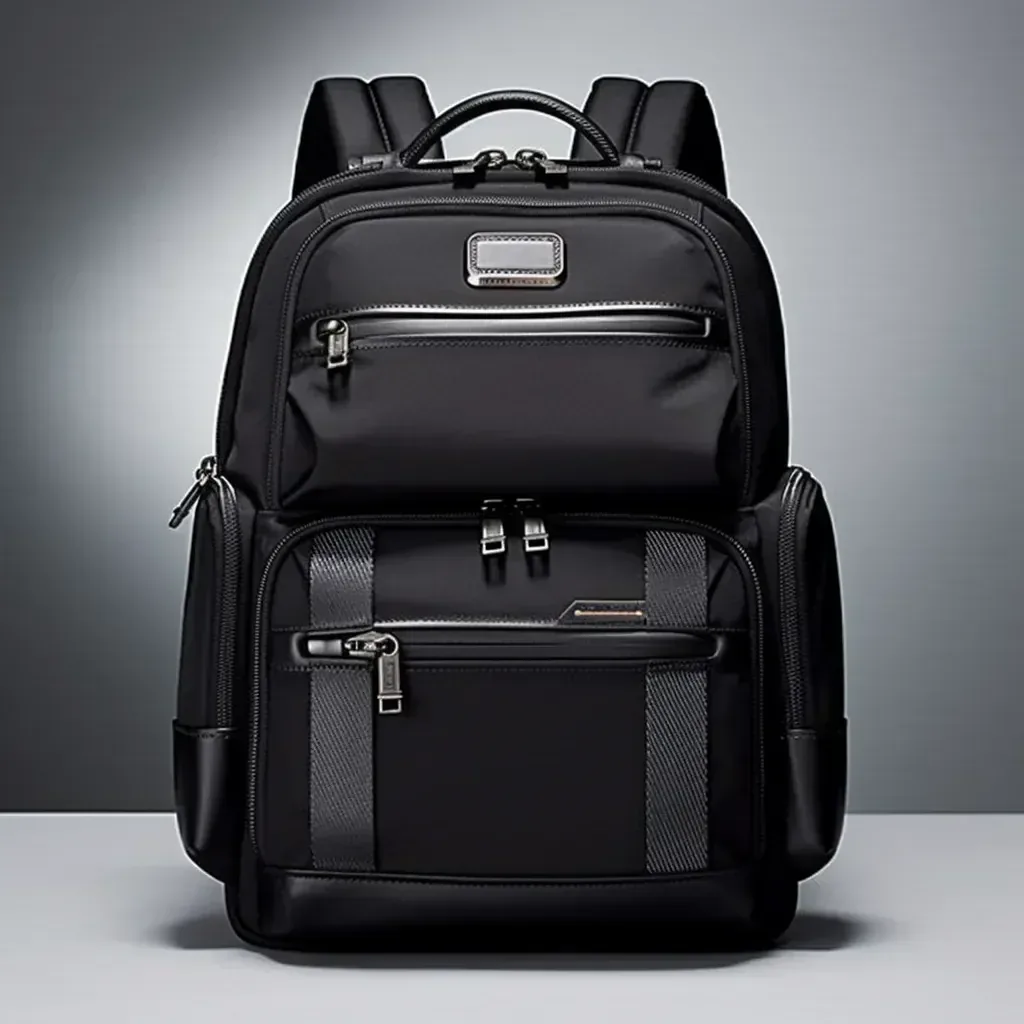
Eco-conscious packaging solutions designed for premium leather goods
The Environmental Impact of Luxury Packaging
The luxury packaging industry generates an estimated $18 billion in annual revenue globally, with a significant portion dedicated to protecting and presenting leather goods. However, this investment comes at a considerable environmental cost that brands can no longer afford to ignore.
According to research published by the Ellen MacArthur Foundation in their landmark report "A New Textiles Economy," the fashion industry's linear production model—where materials are extracted, processed, used briefly, and then discarded—generates approximately 1.2 billion tonnes of CO2 equivalent emissions annually. Packaging represents a disproportionate share of this impact relative to its functional lifespan, which for luxury boxes often extends no further than the journey from store shelf to consumer's closet.
Key Industry Statistic: The Ellen MacArthur Foundation reports that less than 1% of all materials used in fashion packaging are recycled into new packaging, representing a lost economic value of over $100 billion annually. This linear waste model is fundamentally incompatible with the long-term viability of luxury brands that depend on perceived quality and enduring value.
For leather goods specifically, the packaging challenge is multifaceted. Leather products require protection from moisture, dust, scratching, and deformation during transit. Traditional solutions have relied on plastic polybags, synthetic tissue paper, foam inserts, and petroleum-based adhesives—all of which present significant environmental concerns. The average luxury handbag packaging generates approximately 1.5 to 3 kilograms of waste, with plastic components comprising 30-50% of that total weight.
The Scale of the Problem
Sources: Ellen MacArthur Foundation, UNEP Global Partnership on Waste Management, industry estimates 2024
Sustainable Packaging Material Options
The good news for leather goods brands is that the market for sustainable packaging materials has matured dramatically over the past five years. What was once a compromise between environmental responsibility and product protection is now a landscape where sustainable options often outperform their conventional counterparts.
FSC-Certified Paper & Board
The Forest Stewardship Council (FSC) certification system ensures that paper and board products originate from responsibly managed forests that provide environmental, social, and economic benefits. For leather bag packaging, FSC-certified rigid board offers identical structural performance to virgin fiber board while supporting sustainable forestry practices.
FSC-certified materials are available in three certification levels: FSC 100% (all material from FSC-certified forests), FSC Mix (combination of FSC-certified, recycled, and/or controlled wood), and FSC Recycled (100% recycled content). For luxury leather goods, FSC Mix typically provides the best balance of quality, availability, and cost.
Recycled Cardboard & Paperboard
Post-consumer recycled (PCR) cardboard has improved dramatically in quality and appearance. Modern recycled paperboard can achieve brightness levels comparable to virgin fiber while maintaining the rigidity required for premium gift boxes. The key consideration for leather goods packaging is ensuring that recycled materials meet the aesthetic standards expected by luxury consumers—this means selecting high-grade recycled board with consistent color and texture.
Soy-Based & Vegetable Inks
Traditional petroleum-based inks contain volatile organic compounds (VOCs) and make paper recycling more difficult. Soy-based inks, derived from soybean oil, offer vibrant color reproduction with significantly lower environmental impact. They produce richer, more saturated colors on uncoated papers—a characteristic that actually enhances the natural, authentic aesthetic that many sustainable brands seek.
Biodegradable & Compostable Films
For applications where moisture protection is essential (such as protecting leather from humidity during international shipping), biodegradable films made from cellulose, PLA (polylactic acid), or starch-based polymers offer viable alternatives to conventional plastic polybags. These films decompose within 90-180 days in industrial composting conditions, compared to the 500+ year decomposition timeline of conventional plastic films.
Material innovation in sustainable luxury packaging continues to accelerate
Alternative Material Comparison
Sources: Sustainable Packaging Coalition, Smithers Pira Packaging Reports 2024, manufacturer quotations
Design Strategies for Sustainable Luxury Packaging
Material selection is only one dimension of sustainable packaging design. The strategic approach to how packaging is designed, assembled, and experienced determines whether sustainability efforts succeed or fail—in both environmental terms and consumer perception.
Minimalism as a Design Philosophy
The most effective sustainable packaging strategy for leather goods is rooted in minimalist design philosophy. This means eliminating unnecessary layers, reducing the total number of components, and ensuring that every element serves a clear protective or experiential function. A minimalist approach not only reduces material consumption but also communicates a brand confidence that resonates with luxury consumers.
Consider the packaging architecture of brands like Bottega Veneta, which has shifted to a single-box solution with integrated recycled paper cushioning, eliminating the need for separate tissue, ribbon, and polybag. The result is packaging that is simultaneously more sustainable and more recognizable—proving that reduction and brand identity can work in concert.
Reusable & Multi-Functional Design
Packaging designed for reuse extends its environmental benefit far beyond the initial unboxing moment. For leather goods, this takes several forms: rigid boxes designed as permanent storage solutions for the product, dust bags that function as travel organizers, and care accessories that serve dual purposes. The key principle is designing packaging that consumers want to keep rather than discard.
Recycled cotton dust bags, for example, can be designed with brand-appropriate prints and sizing that makes them useful for travel, storage of other accessories, or even as small produce bags. This transforms packaging from waste into a valued brand touchpoint that continues to generate positive associations long after the initial purchase.
Zero-Plastic Packaging Architecture
Achieving zero-plastic packaging for leather goods requires systematic identification and replacement of every plastic component in the packaging chain. Common plastic elements in leather bag packaging include: polybag product wrappers, plastic window patches on boxes, synthetic ribbon, plastic-based adhesive tape, foam protective inserts, and plastic-coated magnetic closures.
Each of these has viable plastic-free alternatives: cellulose film replaces polybags, paper-based windows use transparent cellulose, cotton or jute ribbon replaces synthetic alternatives, water-activated kraft tape replaces plastic tape, molded pulp replaces foam, and metal snap closures replace magnetic plastic closures.
Zero-plastic packaging design that maintains luxury presentation standards
Cost Comparison Analysis
One of the most persistent concerns about sustainable packaging is cost. While it is true that sustainable materials currently carry a price premium in most cases, the total cost picture is more nuanced than the initial material price suggests.
Sources: Bespoke Bags internal cost analysis, McKinsey State of Fashion 2024, Bain Luxury Report
When the total cost of ownership is considered—including waste disposal fees, regulatory compliance risk, brand value enhancement, and consumer retention impact—the gap between traditional and sustainable packaging narrows dramatically. For brands selling into the European market, the EU PPWR regulation makes the cost calculation even more favorable for sustainable options, as non-compliant packaging will face increasing financial penalties.
Consumer Perception & Brand Value Impact
The business case for sustainable packaging extends well beyond compliance and cost. Consumer research consistently demonstrates that sustainable packaging positively influences purchase decisions, brand perception, and long-term loyalty—particularly in the luxury segment where brand values are inseparable from product value.
A 2024 study by McKinsey & Company found that products making ESG-related claims averaged 28% cumulative growth over a five-year period, versus 20% for products making no such claims. In the luxury segment specifically, sustainability credentials ranked as the third most important purchase driver after quality and design, ahead of price and brand heritage.
For leather goods brands working with OEM manufacturers, sustainable packaging serves multiple strategic functions: it demonstrates brand values consistency (a brand that cares about leather craftsmanship should equally care about how that product is presented and protected), it satisfies the increasing expectations of younger luxury consumers (Gen Z and Millennial buyers represent over 60% of luxury market growth), and it provides compelling content for marketing communications and social media storytelling.
"The brands that will define the next decade of luxury are those that treat sustainability not as a constraint but as a design brief. Packaging is where that philosophy becomes tangible for the consumer—it is the first physical touchpoint of the brand promise."
— Industry analysis, Bain & Company Luxury Report 2024
Regulatory Compliance: EU PPWR & Global Standards
The regulatory landscape for packaging is shifting rapidly, with the European Union leading global efforts through the Packaging and Packaging Waste Regulation (PPWR). For leather goods manufacturers and brands—regardless of their location—understanding and preparing for PPWR compliance is essential.
EU PPWR Key Requirements
The EU PPWR, which reached political agreement in late 2024, introduces comprehensive requirements that directly impact leather goods packaging:
- Recyclability Mandate: All packaging placed on the EU market must be recyclable by 2030. This effectively eliminates packaging components that cannot be processed in existing recycling streams.
- Waste Reduction Targets: Packaging waste must be reduced by 5% by 2030, 10% by 2035, and 15% by 2040 compared to 2018 baseline levels.
- Recycled Content Requirements: Plastic packaging must contain minimum recycled content—30% by 2030 for contact-sensitive packaging, with higher targets for non-contact applications.
- Restrictions on Single-Use Packaging: Certain formats of single-use packaging will be restricted, with specific implications for decorative outer packaging and unnecessary secondary packaging.
- Labeling Requirements: Packaging must be labeled with material composition information to facilitate proper sorting and recycling by consumers.
EU PPWR Regulation Reference: Article 6 of the PPWR states that "packaging shall be designed, manufactured and placed on the market in such a way to enable its recycling" and establishes minimum recycling efficiency rates of 65% for paper and board by 2030. Brands working with manufacturers outside the EU must ensure that packaging components meet these standards if products are destined for European markets.
For OEM manufacturers like Bespoke Bags, PPWR compliance means proactively ensuring that all packaging materials and components offered to clients meet or exceed EU recyclability standards. This includes verifying that adhesives, inks, coatings, and composite materials do not compromise the recyclability of primary packaging components.
Global Regulatory Trends
Beyond the EU, similar packaging regulations are emerging worldwide. California's SB 343 establishes strict truth-in-recycling standards. India's Extended Producer Responsibility (EPR) framework requires packaging producers to finance collection and recycling. South Korea's revised packaging regulations mandate reduced packaging ratios. Brands working with a single manufacturing partner benefit from consistent compliance management across all destination markets.
Supplier Selection Criteria
Selecting the right packaging supplier—or ensuring that your OEM leather goods manufacturer offers sustainable packaging capabilities—requires evaluation across multiple dimensions beyond simple material sourcing.
Essential Supplier Qualification Criteria
- Certification Portfolio: Suppliers should hold FSC certification at minimum, with additional certifications (GOTS for textiles, TÜV for compostability, SFI for North American markets) demonstrating comprehensive commitment.
- Material Traceability: Sustainable packaging requires verified supply chains. Suppliers must be able to provide documentation tracing materials from source to finished packaging component.
- Minimum Order Flexibility: The transition to sustainable packaging often begins with testing and sampling. Suppliers who accommodate smaller initial orders (200 pieces for bags, 500 pieces for accessories) enable brands to iterate designs before committing to large production runs.
- Design Integration Capability: The best packaging suppliers offer design consultation services, helping brands optimize structural design for both sustainability and product protection. This is particularly important for leather goods, where packaging must balance luxury presentation with physical protection needs.
- Regulatory Knowledge: Suppliers serving international markets must maintain current knowledge of packaging regulations across major destination markets (EU, North America, Asia-Pacific) and proactively advise clients on compliance requirements.
- Integrated Logistics Support: Sustainable packaging decisions intersect with shipping, warehousing, and fulfillment operations. Suppliers who can integrate packaging decisions into the broader logistics strategy deliver superior outcomes.
Questions to Ask Potential Packaging Suppliers
- What percentage of your material portfolio is certified sustainable (FSC, GOTS, or equivalent)?
- Can you provide third-party audit reports verifying your supply chain claims?
- What is your minimum order quantity for custom sustainable packaging?
- Do you offer design consultation and prototyping services for sustainable packaging?
- How do you stay current with evolving packaging regulations across different markets?
- Can you provide lifecycle assessment (LCA) data comparing your sustainable options against conventional alternatives?
- What is your lead time for sustainable packaging materials compared to conventional options?
Implementation Roadmap
Transitioning to sustainable packaging is not an overnight process. Successful brands approach the transition as a phased implementation, balancing environmental goals with operational realities and budget constraints.
Phase 1: Assessment & Quick Wins (Months 1-3)
Audit current packaging components, identify the highest-impact materials for replacement (typically plastic polybags and virgin fiber boxes), and implement quick-win substitutions that require minimal design changes.
Phase 2: Design Optimization (Months 3-6)
Redesign packaging architecture to eliminate unnecessary components, optimize structural efficiency, and integrate sustainable materials throughout. This phase benefits from collaboration between your brand team and your manufacturing partner.
Phase 3: Full Integration & Certification (Months 6-12)
Complete the transition across all product lines, obtain relevant certifications for your packaging claims, and develop consumer-facing communications that articulate your sustainability commitment.
Conclusion: The Strategic Imperative of Sustainable Packaging
Sustainable packaging for leather bags has evolved from a niche preference to a mainstream expectation. The convergence of regulatory mandates (EU PPWR), consumer demand (60%+ of luxury consumers prefer sustainable brands), and material innovation (cost premiums narrowing to single digits) creates a compelling business case that applies regardless of brand size or market position.
For brands working with OEM manufacturers, the transition is significantly smoother when packaging decisions are integrated into the manufacturing relationship from the outset. A partner with deep expertise in both leather goods production and sustainable packaging—offering services from luxury handbag creation through to business bag packaging—ensures that sustainability is not an afterthought but a foundational element of the product experience.
The brands that move decisively on sustainable packaging today will not only comply with tomorrow's regulations—they will have built the consumer trust, operational expertise, and supply chain relationships that define market leadership in the next era of luxury goods.
Volume: the Overlooked Lever in Packaging Impact
Material choice attracts most of the attention in sustainable packaging programmes, and volume quietly determines more. A slightly larger box consumes more board, more void fill and more freight space on every single shipment, and it does so invisibly because nobody re-checks dimensions once a range is specified. Reducing volume is unglamorous, measurable, and usually the largest available reduction in both footprint and cost per unit shipped.
| Decision | Effect on material use | Effect downstream |
|---|---|---|
| Box sized to the largest variant rather than per style | Excess board on every other unit in the range | Higher cube per shipment; more void fill needed |
| Rigid box with a separate lid and base | Substantially more board than a folding carton | Better presentation, heavier cartons, higher damage risk if under-specified |
| Void fill used to compensate for oversized boxes | Additional material with its own disposal burden | Increased packing time per unit at carton level |
| Nesting dust bags rather than individual presentation | Less textile per unit and often less board | Lower cube; presentation adjusted rather than lost |
| Flat-packed components assembled at destination | Less transit volume for the outer packaging | Requires reliable assembly instructions and handling |
| Reused carton dimensions revalidated annually | Removes accumulated drift from incremental style changes | Freight quotes stay accurate rather than padded |
The last row describes what actually happens over time: ranges drift, a slightly larger product is added, and nobody resizes the box because doing so means re-quoting freight. Scheduling an annual dimension review is dull work with a reliable return, and combining it with volume reduction usually means the same programme delivers both a footprint improvement and a freight saving, which is considerably easier to approve internally than a measure justified only by the first of those.
Transit Protection Without Plastic
Removing plastic from packaging is straightforward in a showroom and harder across six weeks in a container. Leather needs protection from humidity, abrasion and compression, and each has a plastic-free answer that works if it is specified before packing rather than improvised after a damaged shipment. Treating all three separately is important, because the failure modes are unrelated and one solution rarely covers another.
Hardware contact is worth calling out because it generates a specific and avoidable complaint: zips and plated fittings marking the leather next to them during transit. A small wrap addresses it completely and costs very little per unit. The verification item matters equally, since every one of these measures behaves differently under real transit conditions than in a packing trial — our production partners can run a trial carton through its usual lane, and inspecting on arrival gives evidence rather than assumption.
The Evidence File Behind a Packaging Claim
Sustainable packaging claims are now scrutinised in the same way as any other environmental statement, which means each one needs a document behind it that can be produced on request. Assembling that file is not difficult, but it involves several suppliers and a deadline usually arrives with the request. Building it while the specification is being written converts a scramble into a folder.
| Claim | Supporting evidence | Where it comes from |
|---|---|---|
| Recycled content in board or paper | Recycled percentage stated per component with supplier documentation | Board or paper supplier, quoted against a lot reference |
| Certified responsible fibre | Certification number and scope for the material used | Supplier certificate, checked against validity dates |
| Plastic-free packaging | Component-by-component declaration covering every element including tapes and coatings | Assembled internally from each supplier statement |
| Compostable or biodegradable film | Test result stating the conditions under which it breaks down | Film manufacturer, with the test standard named |
| Reduced freight impact | Carton dimensions before and after, with weight and units shipped | Packaging specification change log and freight documents |
| Reusable packaging design | Product specification showing the intended second use | Your own product design record |
The plastic-free row defeats more programmes than any other, because components nobody counts — tapes, coatings, release liners, adhesive strips — are quietly plastic. Listing every element rather than every obvious element is the whole task, and it is far easier during specification than during a challenge. Note also the conditions stated in the compostable row: a film that breaks down only in industrial conditions supports a narrower claim than most labels imply.
Locking Packaging Decisions Into the Production Timeline
Packaging is decided late in most programmes, after the product is approved, by which point the interactions between box dimensions, carrier requirements and production schedules have become expensive to change. Pulling those decisions earlier in the calendar costs nothing and removes a recurring source of last-minute compromise. The sequence below maps them against standard programme timings.
- Raise packaging alongside the product brief so dimensions can influence the design rather than follow it.
- Request sustainable options with the first material round, inside the initial sampling window of 6-10 working days.
- Confirm packaging suppliers and their certification documents while the product sample is being reviewed, before any tooling decisions are locked.
- Validate protection and fit on a trial carton during bulk production rather than after it closes.
- Book printing and component quantities early enough to sit inside the 35-50 day bulk window rather than after it.
- Confirm the packing specification while the order is still on the floor so inspection can cover presentation as well as product.
- Reconcile carton counts, desiccant and markings against the shipping documents before booking freight.
The third and fifth items are where late decisions become expensive: certification documents take time to obtain from whoever holds them, and printed components have lead times that do not compress for anyone. Everything else in this sequence is a matter of asking earlier. Minimums of 500 pieces per style and colourway apply to the products, not to their packaging, which means packaging trials can run at modest cost before a commitment is made, and shipments leave FOB Xiamen against T/T terms of 30% deposit and 70% before shipment.
Frequently Asked Questions
What is the most cost-effective sustainable packaging material for leather bags?
Recycled cardboard and FSC-certified kraft paper are the most cost-effective options, typically costing 5-15% more than conventional packaging. When ordered in bulk quantities of 200 pieces or more, the per-unit premium often drops to under 8%. Soy-based ink printing adds minimal cost compared to petroleum-based alternatives. Many brands find that the investment is offset by increased consumer willingness to pay—studies show 60-70% of luxury consumers express preference for sustainably packaged goods.
How does EU PPWR regulation affect leather bag packaging?
The EU Packaging and Packaging Waste Regulation (PPWR), which entered political agreement in 2024, mandates that all packaging placed on the EU market must be recyclable by 2030. For leather bag packaging, this means plastic dust bags, synthetic tissue paper, and non-recyclable plastic components must be replaced. The regulation also introduces mandatory reduction targets: packaging waste must be reduced by 5% by 2030, 10% by 2035, and 15% by 2040 compared to 2018 baselines. Brands selling into the EU market through OEM partners must ensure their packaging complies regardless of the manufacturer's location.
Can sustainable packaging maintain a luxury unboxing experience?
Absolutely. Many premium brands have demonstrated that sustainable packaging can enhance the luxury unboxing experience. FSC-certified rigid boards offer the same structural integrity as virgin fiber board. Recycled cotton dust bags provide a tactile, artisanal feel that synthetic alternatives cannot match. Soy-based inks produce rich, deep colors on uncoated papers that convey authenticity and craftsmanship. Brands like Hermès and Stella McCartney have shown that minimalist, plastic-free packaging often creates a more memorable unboxing moment than heavily layered conventional packaging.
What is the typical cost increase when switching to sustainable packaging for leather goods?
The cost increase typically ranges from 5% to 25% depending on material selection and order volume. Recycled cardboard boxes cost approximately 8-12% more than virgin cardboard. FSC-certified rigid gift boxes may cost 15-20% more initially, but economies of scale at 500+ unit orders reduce this to 10-15%. Biodegradable films cost 20-30% more than conventional plastic films but are rapidly decreasing in price. Most brands report that the investment pays for itself within 6-12 months through increased customer satisfaction scores and repeat purchase rates.
How can an OEM manufacturer help brands transition to sustainable packaging?
An experienced OEM programme partner like Bespoke Bags can support the transition through several pathways: sourcing certified sustainable materials from verified suppliers, offering design consultation to optimize packaging for both protection and minimal environmental impact, providing small-batch sampling (from 500-piece MOQ) so brands can test new packaging before full production, ensuring compliance with international regulations including EU PPWR, and integrating packaging into the overall logistics and shipping strategy to minimize waste throughout the supply chain.
Last Updated: August 14, 2026
What single change reduces packaging footprint fastest?
Reducing carton volume. Oversized boxes consume excess board and void fill and increase freight cube on every unit shipped. Size each box closer to its own style rather than to the largest variant, and revalidate dimensions annually, since ranges drift silently.
Can plastic-free packaging survive sea transit?
Yes, provided the three risks are addressed separately: humidity with desiccant and a moisture barrier, abrasion with tissue or cellulose wrap against finished edges, and compression with a carton grade specified for stacked load rather than unit weight. Validate on a trial carton rather than assuming it will hold.
How do I evidence a recycled-content claim?
Request a recycled percentage stated per component, together with supplier documentation quoting a lot reference. A general statement that materials contain recycled content is not evidence of anything. Keep those documents with the specification so they can be produced the moment somebody asks.
Why do plastic-free claims often fail audit?
Because small overlooked components get missed: tapes, coatings, release liners and adhesive strips are frequently plastic. List every element in the pack rather than only the obvious ones, then assemble a component-by-component declaration before publishing any claim that describes the pack as plastic-free.
Do compostable films break down in normal disposal?
Often only under industrial conditions, which is considerably narrower than most packaging implies. Ask the manufacturer for the test result and the conditions stated, then word the claim to match exactly what was tested. Check local collection infrastructure before calling anything compostable.
When should packaging be specified in a programme?
Alongside the product brief, so that dimensions influence the design rather than merely following it. Certification documents and printed components carry their own lead times, and those sit comfortably inside the standard 35-50 day bulk window only when requested early.
Does sustainable packaging change how goods are inspected?
Presentation becomes part of the inspection once packing is specified, since a damaged or incorrectly packed unit is a complaint regardless of the product's condition. Confirm the packing specification while units are still accessible, which allows correction inside the window.
Can we trial packaging without committing to volume?
Yes. Minimums apply to products rather than to packaging components, so a trial carton can be validated cheaply before committing. Run it through the real lane and inspect on arrival, which gives genuine evidence rather than a favourable packing test.