
Made-to-measure luggage means an existing luggage architecture — a holdall, a cabin case, a garment carrier — modified to a buyer's specified dimensions, materials and interior, rather than a shape invented from scratch. The process runs in six stages: brief and measurement set, pattern and technical translation, sampling and approval, material reservation, bulk production, and inspection and release. Most programmes take 6–10 working days to sample and 35–50 days to produce. The two stages where commissions go wrong are the first and the third, and both are avoidable with the right documentation.
What Made-to-Measure Means in Luggage
The terminology in this trade is loose, and loose terminology produces mismatched expectations. Made-to-measure sits between a modification of an existing block and a fully original build, and the distinction matters because it determines cost, sampling time and how much of the pattern has to be drafted from zero. A buyer who asks for bespoke when they want made-to-measure pays for development they do not need; a buyer who asks for made-to-measure when they need a new architecture receives a compromise.
| Route | What changes | Development required | Typical use |
|---|---|---|---|
| Ready to order | Branding andcolour only | None beyond artwork | Fast launches and gifting |
| Made-to-measure | Dimensions, materials, interior layout, hardware | Existing block modified and re-graded | Most corporate and retail programmes |
| Custom design | New silhouette and construction | Full pattern development | Signature styles and hero pieces |
| Private label | An existing design under the buyer's brand | Branding and packaging only | Category entry and testing demand |
Programme parameters at a glance
| Parameter | Commitment |
|---|---|
| Minimum order quantity | 500 pieces per style / colourway |
| Sampling lead time | 6–10 working days (12–15 days for complex constructions) |
| Bulk production lead time | 35–50 days after sample approval |
| Inspection standard | AQL 2.5 (ISO 2859-1), single sampling, general level II |
| Incoterms | FOB Xiamen — EXW, CIF and DDP available on request |
| Payment terms | T/T 30% deposit / 70% before shipment; L/C at sight for container loads |
| Verified production floor space | 4,950 m² (SGS-verified) |
| Team | 137 staff across 7 production lines |
| Equipment | 149 machines including computerised saddle-stitch and edge-painting units |
| Monthly capacity | 200,000 pieces |
| Entity | Founded 2014; principal has worked in bag development since 2004 |
For a buyer deciding between the middle two routes, the test is simple. If the change can be expressed as a set of measurements applied to a shape that already exists — 5 cm longer, a different leather, an extra divider, a wheeled base — it is made-to-measure. If the change cannot be described without a new drawing, it is custom design, and it should be briefed and costed as such from the start.
One further distinction is worth stating plainly, because it affects how a commission should be judged. Made-to-measure does not mean handmade in the sense of a single artisan building one piece; it means the specification is the buyer's while the construction is industrial and repeatable. That is what allows a 500-piece order to match the approved sample within a stated tolerance, and it is also what keeps the unit cost inside a commercial range. Buyers who need the romance of a one-off should commission a single bespoke piece and expect to pay accordingly.

Nothing in the following stages can rescue a brief that omits a dimension or a material weight. The paperwork at this point is not administrative overhead; it is the specification, and it is the only document that will be read identically by a pattern cutter, a costing clerk and an inspector.
Stage One: The Brief and the Measurement Set
The brief is the single highest-leverage document in the whole process. A commission that arrives with a dimensioned sketch, a contents list, a material direction and a target price band can be quoted accurately and sampled once. A commission that arrives as a mood board and a reference photograph will be sampled three times and still might not land, because the team is guessing at the measurements that matter.
The measurement set deserves particular care on luggage because external and internal dimensions diverge substantially. A 50 cm holdall in 1.4 mm leather with a padded base and a full lining might offer only 44 cm of usable internal length. Buyers who specify internal capacity without stating whether it is internal or external create a problem that surfaces at sample stage and costs a revision round to resolve.
Stage Two: Pattern, CAD and Technical Translation
Once the brief is accepted, the existing block is modified in CAD and a technical pack is produced. The tech pack is the document that governs production: it carries the dimensioned drawings, the material specification by component, the hardware list with finishes, the stitch density, the construction sequence and the tolerance. Everything downstream — costing, sampling, bulk, inspection — refers back to it.
- Block selection: the closest existing architecture is chosen as the base for modification.
- Re-grading: external dimensions are adjusted, with seam and hardware allowances recalculated rather than scaled.
- Component breakdown: every panel, gusset, strap and lining piece is listed with material and cut quantity.
- Hardware schedule: finishes, sizes and supplier references are fixed and checked for availability.
- Construction sequence: the assembly order is written so the line can follow it without interpretation.
- Costing: materials, cutting, labour minutes and overheads are computed against the component list.
- Tolerance and defects: measurement tolerances and the defect classification for inspection are recorded.
Where a modification touches structure — a wheeled base added to a soft holdall, a frame inserted into a garment bag — the stage extends. The frame or base has to be engineered rather than chosen, because load paths change when a soft bag becomes a wheeled one. Those programmes move into the 12–15 working day sampling band and should be planned as such from the outset.
Costing at this stage is component-level rather than a single figure, and buyers who see the breakdown make better decisions. Materials, cutting, labour minutes, hardware and overheads are listed separately, which makes the effect of any individual change visible: moving from a stock lining to a custom-dyed one, or from a stock zamak puller to a plated brass one, can be priced on its own rather than absorbed into a lump sum. That transparency is also what makes a target-price conversation possible instead of adversarial.
Stage Three: Sampling and the Approval Loop
The sample is the first physical object in the process and the point at which the buyer sees whether the specification works. It is built by the pattern team rather than on the bulk line, using production-intent materials wherever they are available. Sampling runs 6–10 working days for a standard modification, or 12–15 where tooling, frames or custom hardware are involved.
| Sample round | What is checked | Typical outcome |
|---|---|---|
| First sample | Proportion, dimensions, construction feasibility | One to two revision notes on fit or finish |
| Revised sample | Fit of the revisions; material and hardware confirmation | Approval, or a final minor adjustment |
| Pre-production sample | Built on the line with bulk materials and tooling | Approval to cut bulk |
| Photo or sales sample | Finished to final standard for imagery and press | Held for the launch |
The most useful thing a buyer can do at sample stage is use the object. Fill the bag with the declared contents, carry it, wheel it, put it in the intended space, photograph it in daylight. Notes that arrive as observations — the strap slips when the bag is full, the base flexes with a laptop in it — are far more actionable than notes that arrive as preferences, and they shorten the loop by a round.
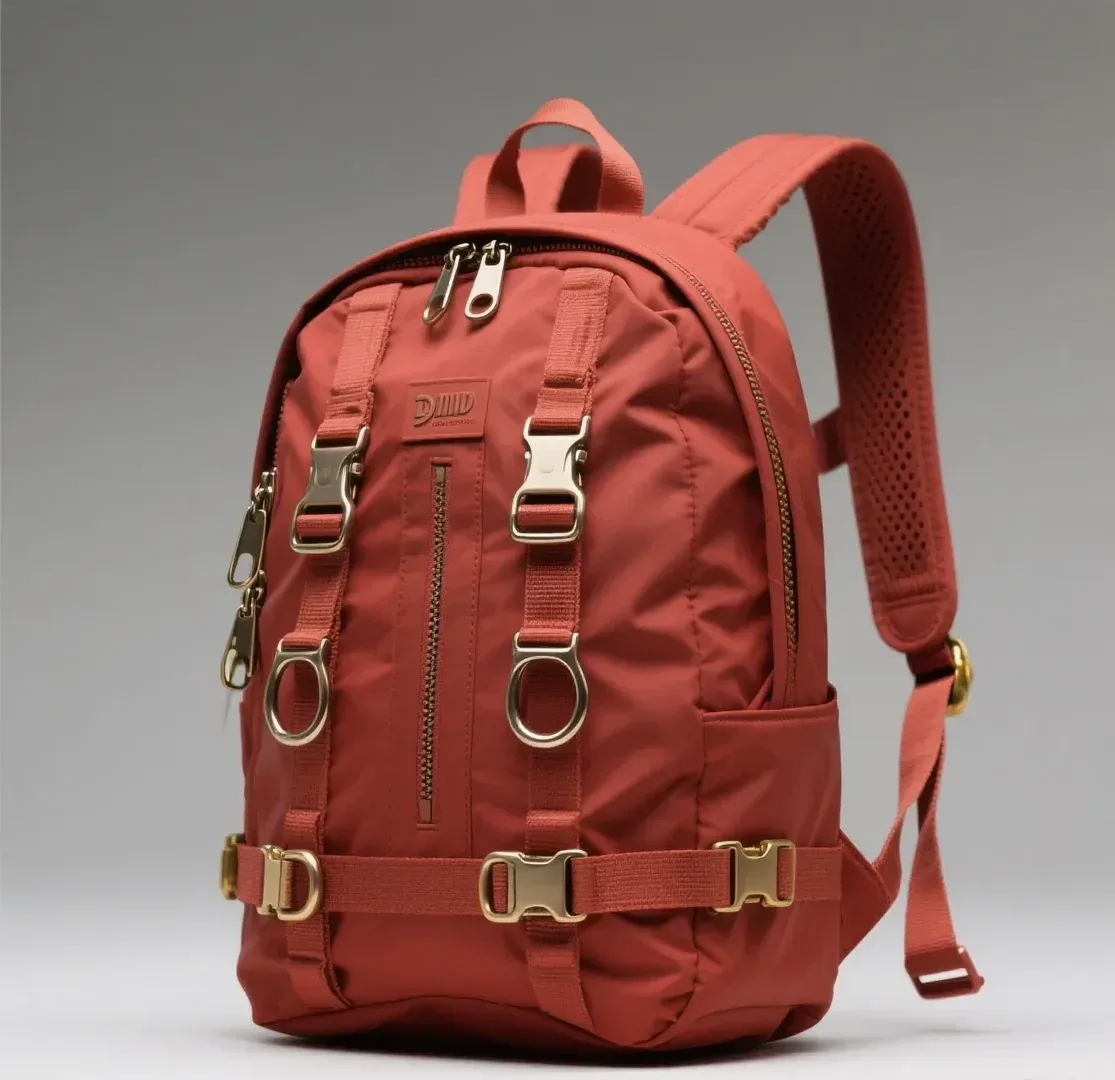
Photography of the sample is also worth doing properly, because it serves two purposes. It gives the buyer a record to review against when the physical sample has been returned, and it gives the production floor a reference for what the approved finish looks like under daylight rather than under workshop lighting. Where a programme involves a brand team rather than a single decision-maker, photographs resolve disagreement about colour far faster than a second sample round would.
Stage Four: Material and Hardware Reservation
Materials are reserved at confirmation rather than at approval, and this is the stage most likely to slip a schedule. Non-stock leathers, custom-dyed linings and plated hardware finishes all carry their own lead times, and those lead times run in parallel with sampling only if the reservation is placed early enough. A programme that waits for sample approval before ordering materials frequently adds two to three weeks.
- Confirm leather selection by tannery reference and finish, and book the hides against the order quantity.
- Check that the hide yield supports the cut; large panels on a cabin case consume hides quickly.
- Order hardware with a margin of two to three per cent over the unit count for setting losses.
- Approve lining and thread colours against physical swatches under daylight, not on screen.
- Record certificate numbers for REACH, OEKO-TEX or Leather Working Group claims in the material file.
- Agree the fallback if a material becomes unavailable, before it becomes unavailable.
Traceability is the part of this stage that compliance teams care about. Hide lot numbers, lining batch references and hardware supplier codes are recorded against the order so that any future question about a material can be answered with a document rather than a memory. Where a programme sells into the EU or the US, that file is what supports REACH, CPSIA or general product safety responses, and it is far cheaper to assemble during production than to reconstruct afterwards.
Stage Five: Bulk Production and Line Assignment
Bulk runs 35–50 days after sample approval. The range exists because different constructions consume different amounts of line time: a soft holdall with a standard lining sits at the shorter end, a framed case with moulded panels and a fitted interior at the longer. Within the SGS-verified production floor in Quanzhou, seven lines and 137 staff are scheduled so that complex luggage work is not interrupted by short-run flat goods.
| Construction | Where it sits in the 35–50 day window | What drives the time |
|---|---|---|
| Soft holdall or duffle | 35–40 days | Cutting yield and strap assembly |
| Semi-structured cabin bag | 38–45 days | Base panel and interior fitting |
| Garment bag with frame | 42–48 days | Frame assembly and hanger system |
| Rolling case with moulded shell | 45–50 days | Shell forming, wheel and handle setting |
| Matched set of three pieces | 45–50 days | Sequenced so all three finish together |
Capacity is rarely the constraint it is assumed to be. At 200,000 pieces per month across the floor, a 500-piece luggage order occupies a small fraction of available throughput; the binding constraints are material lead-in, hardware availability and the position of the order in the seasonal queue. Buyers who share a twelve-month forecast get better slots than buyers who order against a fixed date with no warning.
Progress reporting during bulk is worth agreeing in advance. Most programmes are adequately served by a photograph update at the cutting stage, one at first assembly and one at eighty per cent completion, with a written status note against the schedule. Buyers who want weekly reporting can have it, but the useful information is the same three checkpoints, and the discipline of photographing them is what actually keeps a run honest rather than the frequency of the emails.
Stage Six: Inspection, Packing and Release
Inspection to AQL 2.5 (ISO 2859-1), single sampling, general level II, happens before release. A defined sample size is drawn from the lot and assessed against the defect classification agreed in the tech pack: critical, major and minor, each with its own acceptance number. Luggage inspection adds checks that flat goods do not need — wheel rotation, handle extension cycles, frame alignment and zip run under load.
- Pre-final audit at roughly eighty per cent completion, to catch drift while there is time to correct it.
- Final random inspection on packed cartons, with measurement of external dimensions on drawn units.
- Functional checks: wheels, handles, locks, zips, straps, on a defined number of units per carton draw.
- Packing verification: carton specification, unit protection, labelling and barcodes against the buyer's requirement.
- Release to the forwarder under FOB Xiamen, with EXW, CIF or DDP available on request.
- Balance payment of 70 per cent before shipment, against the 30 per cent deposit taken at confirmation.
After shipment, the loop closes on performance data. Returns, warranty claims and recipient feedback should be fed back into the tech pack before any reorder, because the modifications that matter most are usually the ones nobody noticed at sample stage: a strap that stretches in week three, a lining that pilled, a wheel that picked up grit. A programme on its third run should have a specification that is measurably better than the one on its first, and the only way to get there is to write the field data down.
Commission made-to-measure luggage with a documented process
Send the dimensions, contents list and material direction, and the programme team will return a stage-by-stage schedule with dates. Email service@junyuanbags.com or WhatsApp +86 177 5002 0688.
Frequently Asked Questions
What is the difference between made-to-measure and bespoke luggage?
Made-to-measure modifies an existing luggage architecture to specified dimensions, materials and interior layout. Bespoke, or custom design, develops a new shape and construction from zero. Made-to-measure is faster and cheaper because the block already exists; if your change cannot be described without a new drawing, it is custom design and should be costed that way from the start.
How long does a made-to-measure luggage commission take?
Sampling takes 6–10 working days for a standard modification, or 12–15 where tooling, frames or custom hardware are involved. Bulk production runs 35–50 days after sample approval, depending on construction: a soft holdall sits at the shorter end, a rolling case with a moulded shell at the longer. Material lead-in is additional.
What should a luggage brief contain?
External dimensions with a stated tolerance, a contents list given by item and dimension, an empty-weight target, the material direction by component, the hardware schedule with finishes, the branding position and method, and the quantity per style per colourway. A brief with those seven items can be quoted accurately and sampled once; a mood board usually cannot.
Can I change the dimensions of an existing luggage design?
Yes, that is the core of made-to-measure. Dimensions are adjusted by re-grading the pattern rather than scaling it, so seam allowances, hardware positions and reinforcement are recalculated rather than stretched. Changing one dimension usually affects others: a longer holdall needs a revised gusset and a re-checked handle position to keep the balance correct under load.
How many sample rounds should I expect?
Two, typically: a first sample for proportion and construction, and a revised sample confirming the changes. Programmes with a complete dimensioned brief often approve at the second; programmes briefed from photographs frequently need three. Where the order is large or the construction is new, a pre-production sample built on the bulk line is worth adding.
What is the minimum order for made-to-measure luggage?
Five hundred pieces per style or colourway is the standard starting point, which covers block modification, material lot reservation and line setup. Small-batch pilots below that figure are available for market testing at a different unit cost. The minimum applies per colourway, so a three-colour launch means three times the floor quantity.
When should materials be ordered?
At confirmation rather than at sample approval, wherever the schedule is tight. Non-stock leathers, custom-dyed linings and plated hardware finishes carry their own lead times, and those run in parallel with sampling only if reservation is placed early. Waiting for approval before ordering materials commonly adds two to three weeks to a programme.
What does AQL 2.5 mean for a luggage order?
AQL 2.5 under ISO 2859-1 sets the acceptable number of defects in a randomly drawn sample, using single sampling at general inspection level II. Minor, major and critical defects each have their own acceptance number, and critical defects are not tolerated. For luggage, the inspection adds functional checks on wheels, handles, locks and zip runs.
Can I inspect the order myself before shipment?
Yes. Buyers may attend the final inspection, send their own QC team, or appoint a third-party inspector; all three are accommodated. The programme team shares the tech pack and the defect classification in advance so that any inspection party is working to the same standard as the internal inspectors, which avoids disputes at the acceptance decision.
What payment terms apply?
Standard terms are T/T with a 30 per cent deposit taken at confirmation and the 70 per cent balance paid before shipment. Letters of credit can be accommodated on larger orders. Sampling is charged separately and, where agreed in advance, credited against the bulk order when it is confirmed.
How is made-to-measure luggage shipped?
Standard terms are FOB Xiamen, with EXW, CIF and DDP available on request. Luggage is bulky relative to its weight, so freight is usually calculated on volumetric rather than actual weight, and carton specification has a direct effect on landed cost. Nested packing for matched sets reduces volume measurably.
Can a made-to-measure design be reordered later?
Yes, and reorders are materially faster because pattern, tooling and hardware specifications already exist. The development stage drops out entirely, so a repeat run is scheduled on bulk lead time alone. Programmes that expect to reorder should say so in the first brief so the pattern file and hardware finishes are kept open rather than archived.
Who owns the design of a made-to-measure piece?
Designs developed to a buyer's brief belong to that buyer, and the technical file is held for their use. Blocks that existed before the commission remain the property of the production partner. This should be stated in the agreement before development begins, particularly where the pattern will be exclusive to one brand or market.
What is the most common cause of a delayed luggage programme?
An incomplete brief, followed closely by late material reservation. Both are buyer-side and both are avoidable. The third is a sample review that returns preferences rather than observations, which costs an extra revision round. Programmes that brief with dimensions and contents, and review with the bag loaded, run to schedule far more reliably.