
Executive summary: The strongest bespoke collections are built on one or two leather families rather than a different hide for every style. A single base family shared across totes, crossbodies, business carry and small goods produces visual coherence and material buying efficiency at the same time; a second family, used for accents and linings, supplies enough contrast to stop the range looking flat. Everything beyond that should be justified by a price tier or a genuine functional requirement, not by novelty.
Leather choice is usually made style by style, which is understandable and expensive. Each additional hide introduces its own tannery relationship, minimum purchase, tolerance behaviour and set of sample swatches. Multiply that by six or eight styles and the programme carries complexity that customers never asked for and never see rewarded. A better sequence starts with the material question — what family does this house speak in? — and then asks which silhouettes can be rendered in it.
This matters commercially as well as aesthetically. Buying fewer articles in greater quantity improves price negotiation, cutting yield and dye-lot consistency, all of which reach the customer as a better-finished bag at a defensible cost. Restraint at the material stage is what funds generosity elsewhere — better hardware, a heavier lining, a longer sampling round. The sections below set out how we map families against roles, what each costs to run, and how to keep a material library useful season after season.
Programme parameters at a glance
| Parameter | Commitment |
|---|---|
| Minimum order quantity | 500 pieces per style / colourway |
| Sampling lead time | 6–10 working days (12–15 days for complex constructions) |
| Bulk production lead time | 35–50 days after sample approval |
| Inspection standard | AQL 2.5 (ISO 2859-1), single sampling, general level II |
| Incoterms | FOB Xiamen — EXW, CIF and DDP available on request |
| Payment terms | T/T 30% deposit / 70% before shipment; L/C at sight for container loads |
| Verified production floor space | 4,950 m² (SGS-verified) |
| Team | 137 staff across 7 production lines |
| Equipment | 149 machines including computerised saddle-stitch and edge-painting units |
| Monthly capacity | 200,000 pieces |
| Entity | Founded 2014; principal has worked in bag development since 2004 |
Why one collection should lean on fewer leather families
The argument for restraint is not minimalism for its own sake. It is that every additional family behaves differently under the knife, the needle and the dye lot, and each difference has to be solved again in development. A shared family means one set of approved thread references, one edge-finish recipe, one machine setting group and one comparison standard at inspection. Those shared solutions are where programmes find both consistency and time.
| Dimension | Several unrelated hides per style | One family plus one accent |
|---|---|---|
| Visual coherence | Pieces read as separate purchases | Pieces read as one house from a distance |
| Cutting yield | Each hide optimised separately, offcuts stranded | Larger panels nest together; offcuts feed small goods |
| Machine settings | Reset per hide on every line change | Stable settings held across the run |
| Edge and thread matching | New recipe and thread reference each time | One recipe reused, verified against a retained swatch |
| Sampling risk | Each style reveals a different behaviour | Behaviour learned once and applied across the range |
| Purchasing leverage | Many small tannery orders | Fewer, larger orders with better pricing |
A useful rule of thumb we share with brand teams: if you cannot explain in one sentence why a style needs a hide no other style uses, it probably does not. The exception is genuine function. A holdall that is carried by its handles in the rain needs a different temper from a clutch that sits on a shelf, and that is a defensible divergence.

Mapping the families: base, accent and specialist
We tend to structure materials in the same three tiers as colour. The base family carries the majority of styles and the majority of units. The accent family supplies contrast on trims, handles, piping and interiors, and is where texture usually lives. A specialist material — a suede, an exotic-effect, a performance-coated fabric — appears in one or two pieces where the function demands it, and nowhere else. Naming the tier of each material makes the line plan easier to argue about.
The most common structural error is allowing the accent to grow until it rivals the base. It usually begins innocently: a suede trim on one style looks good, so it migrates to a second, then a third, and suddenly two hides are being purchased in similar volume with none of the efficiency of either. Setting the accent's share of the range in writing — typically under a quarter of visible surface — prevents that drift.
Cost behaviour of each family in a shared range
Leather cost is driven by grade, finish and yield rather than by the raw price printed on a tannery quote. A seemingly cheap corrected hide that cuts at forty per cent is more expensive per finished panel than a fuller-grain article that cuts at sixty-five. Equally, an exotic-effect finish may carry a higher unit price yet improve margins because it tolerates smaller panels and hides handling marks. Understanding these mechanics is what turns a material discussion into a costing discussion.
| Family | Role in the range | Cost character | Watch point |
|---|---|---|---|
| Full-grain smooth hide | Signature shells on premium styles | Highest price per foot, best durability and patina | Natural marking means lower usable yield per hide |
| Top-grain corrected hide | The workhorse base for most collections | Mid price, uniform surface, strong yield | Heavier correction can read as plastic at close range |
| Pebble or embossed grain | Textured accent or full-range alternative | Moderate; hides handling marks well | Deep embossing reduces flexibility at folds |
| Suede split | Trims, linings, soft unstructured pieces | Low to moderate per foot | Needs protection; shows water spotting and wear burnish |
| Coated canvas or performance fabric | Travel, backpack and golf categories | Low; priced by metre rather than by foot | Coating quality determines whether it chalks or cracks |
| Exotic-effect finished hide | Occasion pieces and top-tier price points | Premium; often used on smaller panels | Scale pattern must be planned around panel placement |
Two further levers deserve attention in any costing conversation. First, sharing tooling: pockets, strap ends and flap shapes that repeat across styles can use shared patterns and clicker dies, which removes set-up cost from every subsequent style. Second, offcut recovery: once a family is established, the offcuts from larger panels become the raw material for card holders, luggage tags and valet trays, turning waste into margin. Further detail on how this works on the floor sits in our overview of the leather bag manufacturing process.
Weight and temper: matching hide to silhouette
Substance matters at least as much as grade. A bag can be made beautifully from the wrong thickness and still fail in use, because it will either collapse under its own contents or stand away from the body like a box. Temper — how stiff or supple the hide has been finished — interacts with substance, and the two together should be specified per silhouette. This is the part of material selection most often skipped in a first collection, and it accounts for a large share of second-round sample revisions.
| Silhouette | Preferred substance | Preferred temper | Why it matters |
|---|---|---|---|
| Structured tote | 1.6–2.0 mm with reinforcement | Firm | Holds the panel flat and resists slumping when loaded |
| Soft shopper or hobo | 1.2–1.6 mm | Supple | Body needs to drape; heavier substance fights the shape |
| Crossbody and small bags | 1.0–1.4 mm | Medium to supple | Keeps weight down and folds cleanly at the flap |
| Briefcase and business carry | 1.8–2.2 mm on the base panel | Firm | Edges must stay defined through daily handling |
| Holdall and travel | 1.6–2.0 mm with coated alternatives | Firm with flexibility | Resists abrasion in transit without becoming rigid |
| Small leather goods | 0.8–1.2 mm | Supple | Turning and edge finishing require thin material |
| Evening and clutch | 0.8–1.4 mm, sometimes fabric-backed | Soft | Wraps cleanly around a frame or closes softly |

Creating variety within one family
The objection to a narrow material palette is that the range will look repetitive. In practice it rarely does, because variation within a family offers more than enough vocabulary: a change of grain, a shift from matte to sheen, contrast stitching, a turned rather than painted edge, or the same hide reversed to its suede side. Isomorphism achieved through finish rather than through new hides is cheaper, faster to sample and easier to reorder.
- Alternate smooth and textured panels from the same tannery article, so the dye reference stays constant while the surface reads differently.
- Vary edge treatment across price tiers: painted edges on entry pieces, turned and stitched edges on premium ones.
- Use the reverse side of the hide — the flesh side or a suede split from the same tannery — for interiors and trims.
- Change stitch construction rather than material: denser stitch on premium styles, tonal thread rather than contrast.
- Introduce a single hardware family in two finishes, separating categories rather than mixing them inside one range.
- Reserve one genuinely different material for the top tier, where a distinctive surface justifies the price jump.
Each of those moves preserves the underlying efficiency of one family while giving merchandising something to differentiate. The result is a range that photographs well together, ships on shared patterns and can be extended without renegotiating the whole material supply chain every season.
Traceability, certification and due diligence
Material decisions are also compliance decisions. Programmes selling into Europe and North America need their leather supply chain documented, and asking for evidence late in the sampling round is a reliable way to lose weeks. The practical approach is to settle tannery and finishing requirements at the same time as the family itself, so that every subsequent article comes from an already-audited source. Our own development runs through an SGS-verified production floor in Quanzhou (4,950 m²), but the materials themselves carry their own certificates.
| Framework | What it covers | Why a collection depends on it |
|---|---|---|
| Leather Working Group | Environmental performance of tanneries | Gives a traceable, audited source for every hide in the range |
| OEKO-TEX | Restricted substances in materials | Evidence that linings and leathers meet common retailer requirements |
| REACH | Chemical regulation for the EU market | Restricted dyestuffs and finishes can block a shipment |
| CPSIA | Product safety for the US market | Relevant for children's pieces and for coatings and metals |
| ISO 14001 | Environmental management systems | Useful evidence for tender documentation and ESG reporting |
Documentation should be requested before the first bulk, not afterwards. A tannery that can supply its certificates within a day is telling you something useful about its record-keeping; one that takes three weeks is telling you something else. Programmes that build this requirement into their material policy rarely face surprises at customs, and the habit also simplifies any later expansion into a market with stricter rules. Our sustainable leather guide explores the sourcing side in more depth.
Building a standing material library
Every serious programme should own a physical material library: tagged swatches of every approved leather, lining, thread, hardware finish and reinforcement, held by the brand and duplicated with the development partner. It transforms future seasons. Instead of describing a material across time zones, both sides reach for the same card and know exactly what is meant. It also prevents the slow, unnoticed drift that turns a third-season collection into something unrecognisable from its first.
- Record every approved material with its tannery article number, finish description, substance range and date of approval.
- Tag each swatch with the compatible thread reference and the edge-finish recipe verified during sampling.
- Note the supplier and certificate numbers, with renewal dates, alongside each entry.
- Keep a duplicate library with the development partner so reorder discussions reference identical cards.
- Review the library before each line plan, retiring materials that introduced problems rather than repeating them.
- Add every newly tested material with the test outcome attached, whether or not it was adopted.
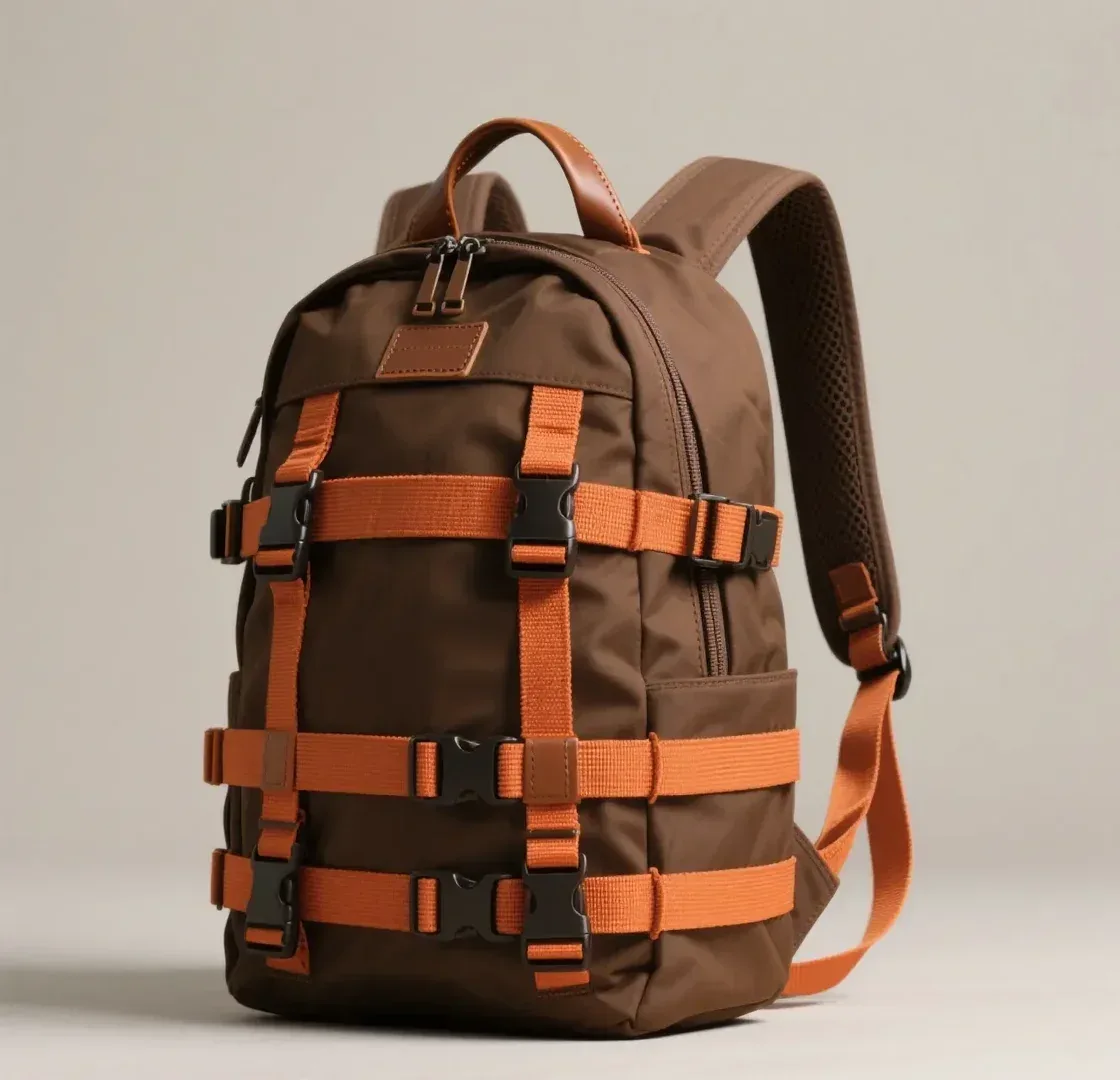
Testing a new material before adopting it
New materials arrive constantly, and some are worth adopting. The discipline is to test rather than to believe: a novel plant-based leather may perform beautifully in hand and badly after three months in a shop window. Submission testing should be short and brutal, because the purpose is to eliminate rather than to confirm. We run candidates through a standard set of checks before recommending anyone commit a production minimum to them.
| Test | What it protects against | Typical method |
|---|---|---|
| Abrasion resistance | Surface wear at corners, base and strap contact | Specified rub cycles against a standard abrasive |
| Colour transfer | Dye marking clothing or light linings | Dry and wet rub against a white cloth |
| Flex and fold behaviour | Cracking where panels repeatedly bend | Repeated folding of a sample at the specified substance |
| Dimensional stability | Panels stretching during assembly | Measured relaxation on the rack before cutting |
| Water and humidity response | Spotting, swelling or mould in transit | Controlled exposure followed by inspection |
| Handle heat sensitivity | Surface breakdown under heat during finishing | Press test at the temperature used in production |
Materials that pass are added to the library with their results attached; those that fail are recorded too, which saves someone proposing them again in eighteen months. Once adopted, a new material enters the normal inspection regime using AQL 2.5 (ISO 2859-1), single sampling at general level II, so its behaviour is judged against the same standard as the established families.
Define your material family
Tell us your target price bands and the categories you are building. Our programme team based in Quanzhou will propose a base-and-accent material structure with costed options, tested candidates and a swatch library you keep. Email service@junyuanbags.com or WhatsApp +86 177 5002 0688.
Frequently Asked Questions
How many leather families should one collection use?
Two is usually right: one base family used across most shells and one accent family supplying texture and contrast on trims and interiors. A third is defensible when it serves a genuine function, such as a coated fabric for travel pieces or a specialist hide for occasion styles. Beyond three, the range starts paying for tannery relationships and sampling rounds that customers never perceive as value.
What is the difference between a leather grade and a leather finish?
Grade describes where the hide sits in the grain structure — full-grain retains the original surface, top-grain has been corrected, and bonded leather is a composite. Finish describes what is applied to that surface afterwards: pigment, embossing, wax or a protective coating. A mid-grade hide with a well-executed finish often performs better in a collection than a fuller grain used without a clear specification.
Why does a seemingly cheaper leather sometimes cost more per bag?
Because price per foot ignores yield. A low-cost hide with heavy natural marking may return forty per cent usable panels, while a slightly dearer corrected article returns sixty-five. Once cutting labour, waste handling and the higher cost of matching multiple dye lots are included, the cheaper quotation can invert. Always compare cost per finished panel across the actual pattern rather than cost per unit of material.
How thick should leather be for a structured tote?
Around 1.6 to 2.0 millimetres with a reinforcement board in the base panel is the usual answer, combined with a firm temper. Thinner, softer material will slump once the bag carries weight, and heavier substance with no reinforcement simply makes the piece tiring to carry. The specification belongs in the tech pack, verified during sampling by loading the bag and letting it stand.
Can one leather family really support a varied-looking range?
Yes, because finish and construction vary more visibly than species or grade. Grain direction, matte against slight sheen, painted against turned edges, tonal against contrast thread and changes in hardware finish all alter how a piece reads. Using the reverse side of the same hide for interiors keeps continuity while introducing surface interest that photographs distinctly from the shell.
Should linings come from the same family as the shell?
Linings usually should not be the same hide, since leather linings add weight and cost without improving durability. A microfibre, cotton twill or suede split chosen as its own family performs better against abrasion and allows a deliberate interior colour. The important thing is that the lining is specified once for the range rather than chosen per style, which keeps the buying and the approval process efficient.
Which certifications should a leather materials programme request?
Start with Leather Working Group status for the tannery, OEKO-TEX or equivalent evidence for restricted substances in leathers and linings, and REACH documentation for anything destined for the EU. Add CPSIA evidence for the US market and total-lead or metal-release data where hardware is involved. Request these at sampling stage, since substitutions made later can invalidate certificates already collected.
How do exotic-effect leathers fit into a family structure?
Treat them as a specialist tier with their own rules rather than as a variation of the base family. Embossed and exotic-effect hides often behave differently under heat and folding, need planned scale placement, and are usually cut in smaller panels. Restricting them to one or two pieces per collection keeps their impact high and prevents the handling difficulties from spreading across the whole range.
What should a physical material library contain?
A tagged swatch for every approved leather, lining, thread, edge-finish reference and hardware finish, each recording tannery article number, finish description, substance range and approval date. Include certificate numbers with renewal dates and the test results for rejected candidates. Keep one library with the brand and a duplicate with the development partner, so both sides reference identical cards in every conversation.
How long does it take to test a new material?
Basic abrasion, rub and behaviour checks can be completed within a typical sampling window, and it is sensible to run them alongside the physical sample rather than ahead of it. If a candidate needs bespoke dyeing or finishing before it can be assessed, allow for that additional tannery time. Decisions made without any testing are far more expensive than the delay, because failures surface after the bulk has shipped.
Is suede practical in a general-purpose collection?
It works well as an accent or interior family and less well as a primary shell for everyday pieces, since it marks with water and develops burnish at contact points. Suede and nubuck are excellent choices for seasonal or occasion styles where the owner accepts more careful handling. Specifying a protective finish at tannery stage reduces the risk, though it also softens the tactile quality people choose suede for.
How do we keep material consistency across reorders?
Retain the tannery article number and a signed reference swatch from the approved lot, then compare each new lot to it before cutting begins. Include a material clause in the purchase documentation stating substitutions require written approval. Where a hide is genuinely discontinued, treat it as a new approval rather than a like-for-like swap, because even close substitutes behave differently under heat and skiving.
Does using offcuts really affect programme economics?
It can, particularly once a family is established and larger panels generate predictable offal. Cutting waste becomes card holders, luggage tags, valet trays and small accessories that would otherwise require separate material purchases. It also supports the sustainability narrative with a real, auditable reduction in waste rather than a marketing claim, which is increasingly important in tender documentation and ESG reporting.
Should hardware be part of the material conversation?
It should. Hardware finish sets the temperature of a piece and is one of the first things customers register, yet it is often chosen after the leather is locked. Deciding the plating family early avoids situations where a beautiful hide is paired with a tone that fights it. Consistent hardware finishes across a collection also simplify ordering, reduce inventory and make eventual replacement parts easier to source.
What happens if a material fails during bulk production?
Stop, isolate and test. A failure found at cutting stage is contained; the same problem discovered at final packing has already consumed labour across hundreds of units. Our inspection regime treats material defects as their own class under AQL 2.5 (ISO 2859-1), which gives an objective basis for rejecting a lot. Keeping a second approved source for every critical material is the strongest insurance available.
Do plant-based leathers belong in a leather family plan?
Where a brand has a stated sustainability position, yes, but test them against the same criteria as anything else. Abrasion, flex, coating durability and how the surface responds to heat during finishing determine whether these materials survive real use. Where they perform, they add a credible story; where they do not, they generate returns. Adopting one at a time, in a low-risk category, keeps that exposure contained.