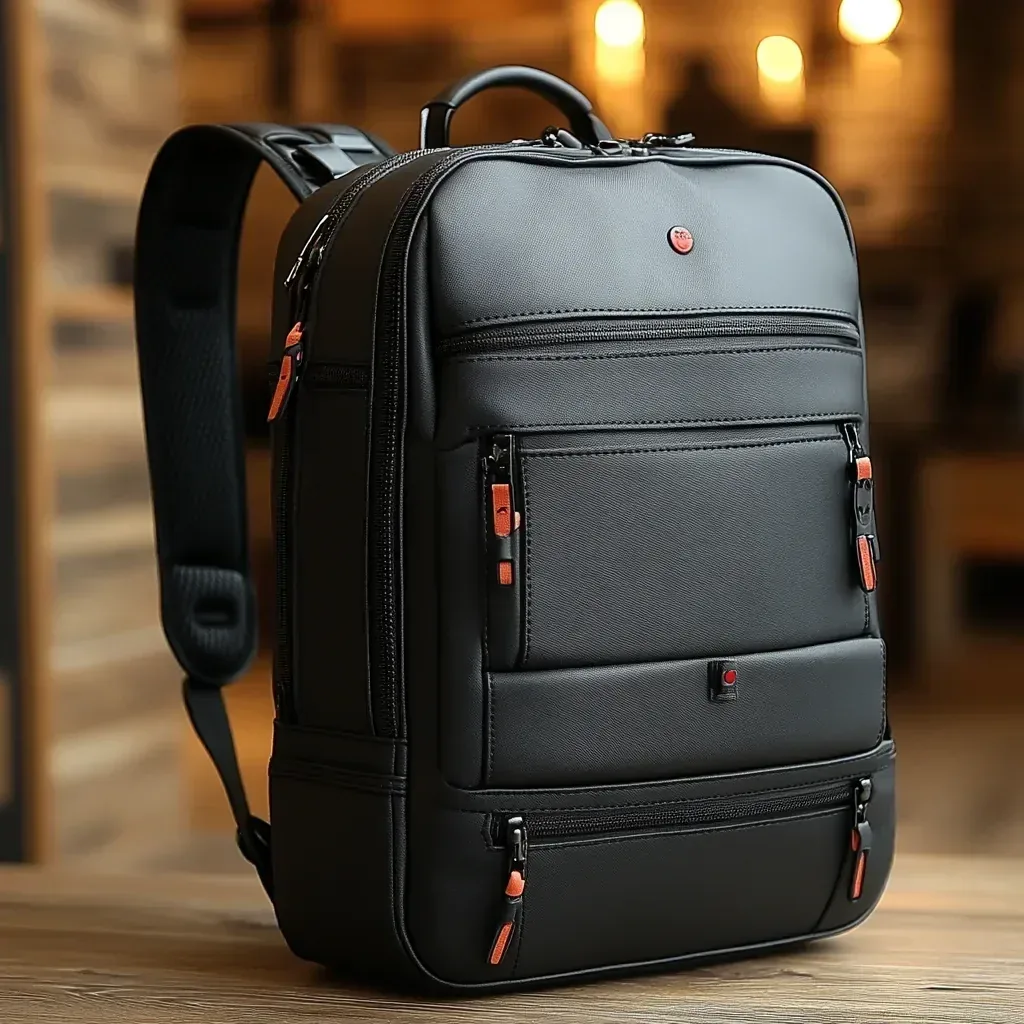
Nappa, nubuck and suede are all soft, and that is where the similarity ends. Nappa is a smooth, full-grain leather tanned for suppleness, so it keeps the grain layer and drapes without collapsing. Nubuck is the grain side lightly buffed to a short nap, keeping most of the strength while giving a matte, velvet surface. Suede is the flesh side, or a split, buffed to a longer nap, which makes it the softest and the most absorbent of the three. Nappa suits structured bags that must feel luxurious, nubuck suits premium bodies where a matte surface is wanted, and suede suits panels and linings where tactility matters more than exposure.
Defining the Three Surfaces
All three terms describe a finish or a treatment rather than an animal, which is why they are so frequently confused and so often mis-specified. A tannery can make nappa from calf, sheep or cowhide; nubuck and suede can be produced from the same hide, one from each side. The material question and the finish question are therefore independent, and a specification needs to answer both: which animal and grade, and which surface treatment.
| Material | Side of the hide | Surface | Grain layer present | Position on the softness scale |
|---|---|---|---|---|
| Nappa | Grain side, intact | Smooth, natural grain visible | Yes | Soft, with structure retained |
| Nubuck | Grain side, lightly abraded | Very short, fine nap | Yes, mostly | Soft, matte, slightly firmer than suede |
| Suede | Flesh side, or a split | Longer, open nap | No, or partial on a split | Softest, least structural support |
Because the terms describe finishes, price comparisons between them are frequently meaningless without further detail. A premium full-grain nappa from a select calfskin can cost several times more than a suede produced from a split of the same hide. Comparing a nappa quotation against a suede quotation tells you nothing until both are resolved to a tannery article, a grade, a substance and a finish. That is the first discipline in specifying any of the three.
Programme parameters at a glance
| Parameter | Commitment |
|---|---|
| Minimum order quantity | 500 pieces per style / colourway |
| Sampling lead time | 6–10 working days (12–15 days for complex constructions) |
| Bulk production lead time | 35–50 days after sample approval |
| Inspection standard | AQL 2.5 (ISO 2859-1), single sampling, general level II |
| Incoterms | FOB Xiamen — EXW, CIF and DDP available on request |
| Payment terms | T/T 30% deposit / 70% before shipment; L/C at sight for container loads |
| Verified production floor space | 4,950 m² (SGS-verified) |
| Team | 137 staff across 7 production lines |
| Equipment | 149 machines including computerised saddle-stitch and edge-painting units |
| Monthly capacity | 200,000 pieces |
| Entity | Founded 2014; principal has worked in bag development since 2004 |
How Each Is Made
The three diverge in the finishing hall rather than in the beamhouse. All may be chrome or vegetable tanned; what distinguishes them is what happens to the surface afterwards. Understanding the sequence explains why they behave so differently in use, and why the production handling requirements differ more than buyers expect.
| Stage | Nappa | Nubuck | Suede |
|---|---|---|---|
| Raw material | High-grade hides; the surface must be clean | High-grade hides; defects would show through abrasion | Can use lower grades and splits; defects are invisible in nap |
| Tanning | Chrome or vegetable, tanned for softness | Chrome, usually | Chrome, usually |
| Surface treatment | Dye, minimal correction, light finish | Grain side abraded with a fine abrasive | Flesh side or split buffed to raise nap |
| Finishing | Aniline or semi-aniline; protective topcoat optional | Usually little finish; protection added as a spray or treatment | Treatment applied to slow absorption; nap brushed |
| Final operation | Milled for softness, then graded | Brushed and graded for nap uniformity | Brushed, sheared to an even nap, graded |
- Nappa demands the cleanest raw material. With an aniline finish there is nowhere to hide a scar, which is what makes it expensive.
- Nubuck's abrasion is shallow. Only the very top of the grain is removed, which is why it keeps most of its strength.
- Suede can recover value from lower grades. The nap hides blemishes, which is part of why it is usually the least costly of the three.
- Protection is applied differently. Nappa can carry a topcoat; nubuck and suede rely on treatments that must not seal the nap.
- Handling in assembly differs. Napped surfaces show handling marks, so clean benches and covered hardware matter more for nubuck and suede.
Performance: Marking, Water, Ageing and Repair
The differences that decide a specification are behavioural rather than visual. How does the surface respond to a scratch, to a spill, to three years of handling, and to an attempt at repair? The answers separate the three more cleanly than any description of their appearance, and they are the questions a buyer should put to a sample before committing to a run.
| Behaviour | Nappa | Nubuck | Suede |
|---|---|---|---|
| Scratch response | Marks can often be rubbed out; recovers well | Nap disturbance; brush to lift | Nap disturbance; brush, but matting persists |
| Water | Beads if topcoated; spots if unfinished aniline | Absorbs; darkens and dries with a ring | Absorbs readily; most vulnerable of the three |
| Oil and hand contact | Absorbs slowly; patina develops | Absorbs; darkens with handling | Absorbs quickly; permanent darkening at handles |
| Ageing | Develops patina and deepens attractively | Softens and polishes where handled | Mats where handled; colour may soften unevenly |
| Repairability | Good; can be reconditioned professionally | Moderate; specialist cleaning | Moderate; panel replacement easiest of the three |
| Crocking risk | Higher on deep aniline shades | Moderate | Moderate, test saturated shades |
Two patterns emerge. The first is that all three absorb rather than resist, so the protective question is one of degree rather than kind, and it is best answered at the tannery with a specified finish rather than with a retail spray. The second is that repairability runs in the opposite direction to softness: nappa can be worked on professionally, suede panels are the easiest to replace because there is no grain to match, and nubuck sits awkwardly in the middle, too fine to brush back to new and too expensive to replace casually.
Construction Consequences
A soft leather changes how a bag must be built. The three surfaces each impose requirements on substance, reinforcement, seam construction and edge treatment, and those requirements are what turn a luxurious material into a bag that holds its shape. Most disappointment with soft leathers comes from a pattern designed for a firm material and executed in a soft one.
| Construction decision | Nappa | Nubuck | Suede |
|---|---|---|---|
| Substance | 1.0–1.4 mm; lighter risks collapse | 1.2–1.6 mm; nap needs body beneath | 1.0–1.4 mm; often backed for stability |
| Reinforcement | Light interlining on structured panels | Moderate; prevents creasing at folds | Backing standard; the nap has no structure |
| Seam construction | Fine topstitch works well | Wider allowances; nap compresses | Bound or turned; nap will not hold paint |
| Edge treatment | Edge paint or burnishing, both effective | Edge paint; the nap is very short | Binding or turning; paint absorbs unevenly |
| Hardware setting | Backing washers; heavy plates can distort | As nappa, with care around the nap | Cover during setting; nap marks easily |
| Handle and strap use | Good, with reinforcement at the root | Acceptable with reinforcement | Avoid; use grain leather instead |
- Design for the material's behaviour. A nappa bag needs internal architecture to hold its shape; a firm leather needs less.
- Reinforce at the fold, not everywhere. Soft leathers crease where they are folded; a local interlining solves it without stiffening the bag.
- Choose the edge treatment at design stage. Suede cannot be edge painted to a clean finish; deciding late produces an expensive compromise.
- Match hardware mass to the panel. A heavy plate on soft nappa distorts the surface over time, and the distortion is permanent.
- Test the build, not just the swatch. A sample bag carried for a fortnight tells you whether the reinforcement is sufficient.
Care Regimes Compared
Care guidance is part of the product, particularly with soft leathers where a small habit prevents a large complaint. The three regimes share a foundation — keep away from heat, store stuffed and in a breathable bag, blot rather than rub — and then diverge in the specific tool each surface needs.
| Task | Nappa | Nubuck | Suede |
|---|---|---|---|
| Routine care | Dry cloth wipe; condition once or twice a year | Soft brush to lift the nap | Crepe brush in one direction |
| Water mark | Blot; let it dry away from heat | Dampen the area evenly, then brush | Dampen the whole panel, then brush when dry |
| Oil mark | Blot; specialist cleaning if it persists | Absorbent powder overnight, then brush | Absorbent powder overnight, then brush |
| Protection | Light topcoat at the tannery; conditioner compatible with the finish | Protective treatment that does not seal the nap | Fluorocarbon-free protective treatment |
| Storage | Stuffed, dustbag, away from light | Stuffed, dustbag, nap protected from friction | Stuffed, dustbag, away from light and friction |
| Never | Silicone sprays, household cleaners, heat | Water-based cleaners, aggressive rubbing | Water-based cleaners, household sprays |
The care card included with the product is a commercial asset rather than a formality. Most returns attributed to defects in soft leathers are actually unmanaged expectations: a customer who has been told that water will darken a suede panel and that brushing restores it is unlikely to return the bag. Where a brand sells all three materials, a single card covering each surface is cheap to produce and materially reduces complaints.
Cost, Yield and Sourcing
Cost follows raw material quality and yield rather than the name of the finish. Nappa is usually the most expensive of the three because aniline finishing demands the cleanest hides and rejects the most. Nubuck sits close behind, since abrading the grain exposes rather than hides defects, and suede is usually the least expensive because a nap conceals blemishes and can be produced from splits.
| Factor | Nappa | Nubuck | Suede |
|---|---|---|---|
| Raw hide requirement | Highest; defects cannot be hidden | High; defects show after abrasion | Lower; the nap conceals faults |
| Selection waste | Highest of the three | High | Lowest of the three |
| Relative material cost | Highest | High | Lowest, at comparable grade |
| Labour in finishing | Milling and careful grading | Abrasion, brushing, grading | Buffing, shearing, brushing |
| Assembly labour | Higher; softness demands care | Higher; nap shows handling | Higher; soiling risk in assembly |
| Lot-to-lot consistency | Hardest; aniline shows variation | Moderate | Easier; nap masks minor shade variation |
The practical sourcing consequence is that nappa programmes need the longest planning horizon and the most careful lot reservation, while suede programmes tolerate more variation and are easier to replenish. For a brand running a soft-leather line across several seasons, that difference often matters more than the per-metre price, because a shade that cannot be reproduced is a shade that must be discontinued.
Choosing by Bag Type
The decision resolves quickly when framed by what the bag has to do. Softness is desirable everywhere, but it is affordable only where the material is not asked to resist abrasion or carry load. The table below is how the choice tends to fall across the common categories, assuming the construction is designed for the material rather than adapted to it.
| Bag type | Best of the three | Reasoning | Construction note |
|---|---|---|---|
| Soft hobo and slouchy bodies | Nappa | Drapes beautifully and retains enough structure | Light interlining at the mouth and strap roots |
| Top-handle structured bags | Nappa, with reinforcement | Refined surface, holds crisp detailing | Interlining on the body; firm temper where possible |
| Premium casual totes | Nubuck | Matte surface that reads as understated quality | Reinforce the base; bind or protect the fold line |
| Evening and occasion pieces | Nappa in calf | Finest grain and best drape at light substance | Minimal hardware; light reinforcement only |
| Linings and interior detail | Suede | Tactility where it is protected from weather | A suede split is economical and performs the same |
| Travel and hard-use pieces | None of the three | Abrasion and weather exceed what soft leathers tolerate | Use a waxed or pigmented grain leather instead |
Combination is the professional answer more often than not. A nappa body with a suede lining gives the customer the best of both: the refined surface outside, the tactile surprise inside, and no exposure of the vulnerable material to weather. A nubuck body with grain leather handles and base achieves the same for a casual tote. Specifying one material across an entire bag is rarely the most durable or the most interesting solution.
All three materials make excellent bags and all three are misused when the specification ignores what the surface cannot do. The distinction that matters is not softness but exposure: where the material will be rubbed, rained on or gripped, choose a protected grain; where it will be seen and touched, choose the surface that gives the most pleasure. Testing all three in one sampling round is the least expensive way to make that judgement properly, and it is available through the custom design process, where the panel schedule is written before the first cut.
Test all three materials on one sample
Send your silhouette and intended use. The programme team will build the same prototype in nappa, nubuck and suede, with a cost band and sampling window for each option.
Frequently Asked Questions
What is the difference between nappa, nubuck and suede?
Nappa is a smooth full-grain leather tanned soft, with the grain layer intact, so it drapes without collapsing. Nubuck is the grain side lightly abraded to raise a very short nap, keeping most of the strength while giving a matte surface. Suede is the flesh side, or a split, buffed to a longer nap, making it the softest and most absorbent. The terms describe finishes, not animals, so each can come from several species.
Which of the three is the most durable?
Nappa, because the grain layer remains intact and can be protected with a topcoat. Nubuck follows, retaining most of the grain layer beneath a short nap. Suede is structurally the weakest, having no grain layer, which is why it is best used on panels and linings rather than on handles, straps and bases. Durability in practice depends as much on panel placement as on the material itself.
Is nappa leather expensive?
Usually the most expensive of the three. It is typically finished with aniline or semi-aniline dye, which provides almost no coverage, so only clean, high-grade hides can be used and selection waste is the highest of the three. It can be produced from calf, sheep or cowhide, and a premium calfskin nappa costs considerably more than a bovine one. Compare on the tannery article rather than on the finish name.
Can nubuck get wet?
It can, but it should not. Nubuck absorbs water, darkens while wet and often dries with a visible ring at the boundary of the wetted area. Usually the mark can be removed by dampening the area evenly and brushing when dry; the permanent problem is oil rather than water. A protective treatment applied at the tannery slows absorption materially, and should be specified rather than left to the customer.
Which soft leather is best for a bag carried daily?
Nappa, in most cases. It is the only one of the three that keeps a full grain layer and can carry a protective topcoat, which means it withstands handling, light rain and the friction of daily carry while still feeling soft. Nubuck is workable with reinforcement and treatment, and suede is best avoided on the exterior of a daily-use bag, except as a lining or an accent panel.
How do you clean each of the three materials?
Nappa is wiped with a dry cloth and conditioned once or twice a year with a product compatible with the finish. Nubuck is brushed with a soft brush to lift the nap, with an absorbent powder used overnight for oil. Suede is brushed with a crepe cloth in one direction, and water marks are treated by evenly dampening the whole panel. Avoid water-based cleaners on all three.
Can suede and nubuck be edge painted?
Nubuck can, because its nap is very short and the surface is dense enough to accept paint. Suede generally cannot: the open nap absorbs edge paint unevenly, the result looks rough and it lifts with wear. The standard alternatives for suede are a bound edge in grain leather, a turned edge where the substance allows it, or a carefully sanded bonded edge. Decide at design stage.
Do soft leathers stretch or sag over time?
All leather relaxes slightly under sustained load, and softer leathers relax more. The remedy is construction rather than material: an interlining on structured panels, reinforcement at strap roots and the mouth, and a base that carries the weight of the contents. A nappa bag built without internal architecture will slump; the same leather with proper reinforcement holds its shape for years.
Which material is best for a bag lining?
Suede, generally. It delivers the tactile moment when the bag is opened, it is protected from weather and abrasion inside, and a suede split performs the same role at a lower cost than a full suede. Nappa linings are also possible and are more resistant to marking from pens and cosmetics, though they lack the same softness. Microfibre is the usual vegan alternative.
How should the three be specified so bulk matches the sample?
Name the tannery article rather than the finish, state the animal and grade, state the substance with a tolerance, and state the temper separately, because softness is independent of thickness. Fix the finish type and any protective treatment, and approve a physical reference under controlled lighting with a stated tolerance. Seal the pre-production sample and require the tannery lot identification on bulk material documentation.
What is the risk of colour transfer from these materials?
It is highest on deeply dyed aniline nappa, where there is little surface coverage to hold the dye, and it is a known risk on saturated suede and nubuck shades. Specify a crock rating and test the actual colourway before bulk authorisation rather than relying on a generic figure. Colour transfer onto light clothing is among the most common complaints on soft-leather bags and is resolvable before production.
How long does sampling take when comparing three materials?
One round of 6–10 working days is usually sufficient, or 12–15 for a demanding build, and it is best used to construct the prototype in all three materials at once. Judging handling, drape and weight together is far more reliable than comparing three written descriptions. Bulk then runs 35–50 days from approval, with freight additional.
Can two of the three be combined in one bag?
Yes, and it is often the best answer. A nappa body with a suede lining gives refinement outside and tactility inside with no weather exposure for the vulnerable material. A nubuck body with grain leather handles and base gives a matte premium surface with protection where the bag is gripped. The technical pack should carry a panel schedule naming the article for every panel.
Which of the three ages most attractively?
Nappa, if patina is the goal. Because the grain layer is intact and the finish is light, it records handling as a deepening of colour and a gentle burnishing at contact points, which most people find attractive. Nubuck polishes where it is handled, which can look uneven. Suede mats rather than patinas, and the matting reads as wear rather than character, which is why suede ages least gracefully of the three.