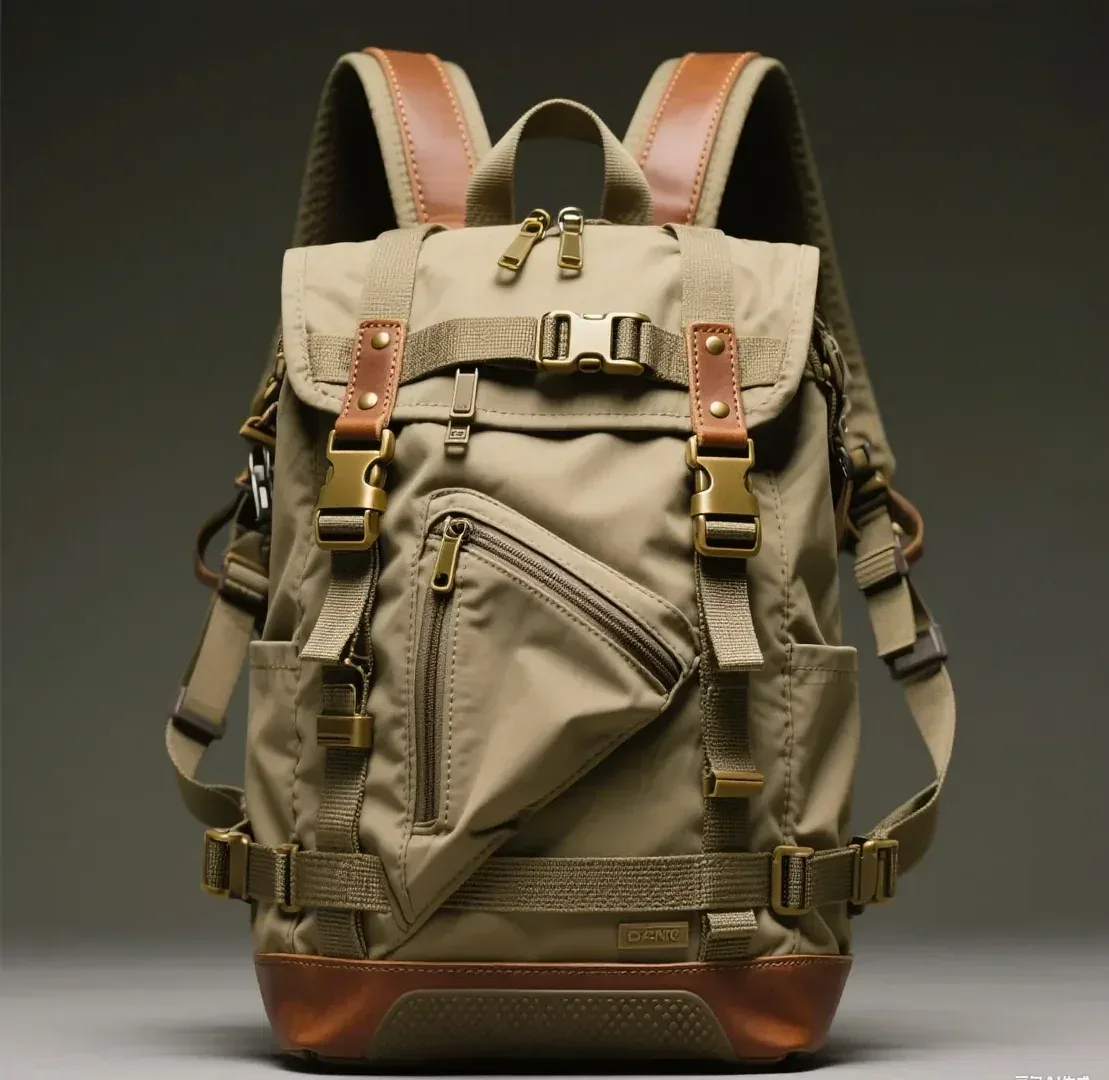
A first private label bag collection works best at three to six styles, each assigned a specific commercial role: one anchor style that defines the brand and carries the largest quantity, one or two volume styles priced for frequency of purchase, one margin style at a higher price point, and optionally a halo piece that sets the perceived ceiling. Fewer than three reads as a single product; more than six splits working capital, development attention and photography budget across styles that cannot each be properly supported.
This article explains why the range of three to six is the workable band, how to assign a role to each style, which category mix suits a first launch, how to build a material and colour story that holds the range together, how to set a price architecture across it, how the 500-piece minimum per style and colourway multiplies across a collection, how to allocate the launch budget, and how to sequence development so the whole range lands together.
Why Three to Six Is the Workable Band
The number of styles in a launch collection is a resource-allocation decision disguised as a creative one. Every style consumes the same four scarce things: development attention, working capital, inventory cover and content. The question is how many styles those resources can carry without any of them being under-supported.
| Range size | What it reads as | Resource load | Typical outcome |
|---|---|---|---|
| One style | A product, not a brand | Lowest, but no range story | Launch is really a single-product test |
| Two styles | A tentative range | Low | Customers ask what else you do |
| Three styles | A coherent capsule | Manageable | Most common successful first launch |
| Four to six | A considered collection | Moderate, requires discipline | Works where capital and content are planned |
| Seven to ten | An ambitious range | High; content and capital strain | Some styles quietly never launch |
| More than ten | A full seasonal offer | Very high | Appropriate for a second season at the earliest |
There is a second consideration that favours the lower end of the band. A collection is read as a set: customers infer the brand from the relationships between the pieces rather than from any single one. Three styles that clearly belong together communicate more than eight that do not, and coherence costs nothing while breadth costs money.
There is also an operational argument that rarely appears in creative discussions. Each additional style adds a pattern to maintain, a specification to control, a sample to approve and a set of measurements to verify on reorder. The administrative load grows faster than the creative return, and it is borne by the same small team that is also launching the brand.
Programme parameters at a glance
| Parameter | Commitment |
|---|---|
| Minimum order quantity | 500 pieces per style / colourway |
| Sampling lead time | 6–10 working days (12–15 days for complex constructions) |
| Bulk production lead time | 35–50 days after sample approval |
| Inspection standard | AQL 2.5 (ISO 2859-1), single sampling, general level II |
| Incoterms | FOB Xiamen — EXW, CIF and DDP available on request |
| Payment terms | T/T 30% deposit / 70% before shipment; L/C at sight for container loads |
| Verified production floor space | 4,950 m² (SGS-verified) |
| Team | 137 staff across 7 production lines |
| Equipment | 149 machines including computerised saddle-stitch and edge-painting units |
| Monthly capacity | 200,000 pieces |
| Entity | Founded 2014; principal has worked in bag development since 2004 |
Assigning a Role to Each Style
Every style in a launch collection should be able to justify its existence in one sentence. Styles without a role tend to be the ones that sell least, because they were chosen for variety rather than for a reason.
| Role | Purpose | Quantity share | What success looks like |
|---|---|---|---|
| Anchor | Defines the brand; the style customers recognise | Largest share of the buy | It leads sell-through and appears in most imagery |
| Volume driver | Priced for frequency, broadest appeal | Second largest share | Highest unit sales, lower contribution per unit |
| Margin style | Higher price point, distinctive detail | Smaller share | Disproportionate share of gross profit |
| Entry style | Lowest price, acquires new customers | Moderate share | Strong first-purchase conversion |
| Halo piece | Sets the perceived ceiling of the range | Smallest share | Rarely the best seller; makes the rest look reasonable |
| Seasonal or experimental | Tests a direction for next season | Smallest share | Learning, not profit |
Assign roles before designing, not after. A collection designed freely and then sorted into roles produces three anchor styles and no entry point, whereas a collection designed against roles from the start produces a range with a shape customers can navigate.
Category Mix for a First Launch
The category mix should reflect how customers actually use bags rather than how a lookbook arranges them. Most first collections benefit from one everyday carry piece, one hands-free piece and one occasion or travel piece.
Small leather goods deserve more consideration than they usually receive. They share materials with the larger pieces, they create an entry price point without a separate development burden, and they are the most frequently gifted category, which makes them a customer-acquisition tool as much as a product line.
One caution on the travel piece. A holdall consumes more material per unit and carries the highest landed cost in a typical range, which means it ties up working capital disproportionately. Unless travel is central to the brand, it is better placed in the second season once demand is known.
The mix should also answer a question customers ask implicitly: what is this brand for? A range built around structured work pieces says something different from one built around soft everyday carry, and both are legitimate. What fails is a range that answers several incompatible questions at once, because the customer cannot place it.
Where a brand intends to sell wholesale later, the mix needs one further property: enough breadth to fill an order. A retailer buying a capsule generally wants a range that stands alone on a fixture, which is an argument for four styles over three where the capital allows.
The Material and Colour Story
Coherence in a first collection comes from restraint in two variables. Choose one material family and one colour story, and let the silhouettes provide the variety. This is also the most effective cost lever available, because shared materials improve yield and simplify procurement.
- Choose one primary material family. One leather or one alternative across the range reads as deliberate; three unrelated materials read as indecision.
- Pick a core neutral and one accent. Two shades across the collection is usually sufficient, and it keeps quantity per colourway high.
- Use hardware as the unifying detail. A consistent finish across every style ties the range together more cheaply than matching materials.
- Repeat the lining. A shared lining in a signature shade is one of the most recognised brand signatures and costs very little.
- Keep the branding method consistent. One technique applied consistently reads as a system; several techniques read as experimentation.
- Vary texture rather than colour where variety is needed. A grain change within one material family adds interest without adding a colourway run.
The commercial logic and the aesthetic logic point the same way. Each additional colourway is effectively an additional production run with its own minimum, so a collection of four styles in one shared shade costs materially less to launch than two styles in three shades, and it usually looks more confident.
One shared material family also simplifies documentation. A single leather or textile, supported by one set of declarations and, where available, one OEKO-TEX certificate or one Leather Working Group audit reference, keeps the compliance file short across the whole collection. Multiple related materials multiply that paperwork without improving the range.
Price Architecture Across the Range
A collection needs a price ladder with visible steps. Customers read the range vertically: they look for the cheapest, the most expensive, and the one that seems like the sensible choice. Gaps and overlaps both confuse that reading.
| Tier | Role | Price position | Typical margin behaviour |
|---|---|---|---|
| Entry | Acquisition | Lowest, often small leather goods | Thinnest margin, highest conversion |
| Core | Volume | The band most customers buy in | Balanced margin and volume |
| Premium | Margin | Clearly above core, justified by material or construction | Highest contribution per unit |
| Halo | Positioning | Top of the range, limited availability | May sell slowly; sets the ceiling |
| Gift or set | Seasonal | Priced as a set, below the sum of parts | Protects margin while moving stock |
Set the steps so they are perceptible. A range priced at closely spaced intervals makes the choice harder and pushes customers towards the cheapest option, whereas clearly differentiated tiers let a customer decide what kind of purchase they are making before comparing styles.
How Minimums Multiply Across a Collection
The 500-piece threshold applies per style and per colourway, which means the total commitment of a collection is the sum of its runs rather than a single figure. First-time launch budgets are most often wrong at exactly this point.
| Collection shape | Effective runs | Total at threshold | Planning note |
|---|---|---|---|
| 3 styles, 1 shared colourway | 3 runs | 1,500 pieces | Most economical coherent launch |
| 4 styles, 1 shared colourway | 4 runs | 2,000 pieces | Adds a role without adding shade complexity |
| 3 styles, 2 colourways each | 6 runs | 3,000 pieces | Doubles commitment for the same silhouettes |
| 6 styles, 1 shared colourway | 6 runs | 3,000 pieces | Fuller range at the same volume as above |
| 2 styles, 3 colourways each | 6 runs | 3,000 pieces | Least range for the same commitment |
| Pilot approach | Negotiated below threshold | Lower, at a unit premium | Buys evidence before committing capital |
The comparison in the last two rows is the one to sit with. Six styles in one shade and two styles in three shades carry the same total commitment, but only one of them reads as a collection. Where the budget supports a fixed number of units, breadth of silhouette is usually worth more than breadth of colour.
Where cash is constrained, the pilot route is the honest alternative. Negotiated quantities below the standard threshold are available where the purpose is validation, and running the anchor style as a pilot while the rest follow on evidence is a defensible structure for a first season.
A hybrid structure works well in practice: commit to the standard quantity on the anchor and volume styles, where demand is most predictable, and treat the margin and halo styles as pilots below the threshold. The premium paid on the uncertain styles is small in absolute terms because their quantities are small, while the confident styles carry the volume at standard cost.
Budgeting the Launch Buy
The launch budget has to cover more than the purchase order. Working backwards from available capital rather than forwards from desired styles prevents the familiar situation of a collection that is fully designed and cannot be fully bought.
- Fix the total capital available for the launch, including a reserve for the reorder that must be placed before the first season closes.
- Allocate roughly half to the anchor and volume styles, since those carry the season.
- Deduct development: sampling for each style, plus any tooling for custom hardware shared across the range.
- Deduct landed costs beyond the unit price: freight, duty, insurance and customs handling, which are frequently omitted from first budgets.
- Deduct content and packaging: photography for the full range, plus mailers, dust bags and inserts.
- Test the remainder against the quantity table above, and reduce styles rather than reducing quantity per style.
- Hold a contingency for a second sampling round on any style, because one of them usually needs it.
Reducing styles rather than quantity per style is the important instruction. A style produced below its economic quantity costs more per unit, carries a weaker reorder story, and consumes development attention that could have gone into doing three styles properly.
Remember that the reorder is part of the launch budget, not a later problem. Bulk runs 35–50 days after sample approval, and freight and clearance add further weeks, so the second order is placed while the first is still selling. Capital reserved for it is what allows a successful first season to become a second one.
Sequencing Development and Launch
A collection lands together only if development is sequenced with that outcome in mind. Styles developed in parallel rather than in series share material procurement and arrive in the same production window.
| Phase | Activity | Duration | Decision required |
|---|---|---|---|
| Range definition | Roles, category mix, price ladder, colour story | 1–2 weeks | Approve the range plan before any design work |
| Briefing | Tech packs for all styles, shared material decisions | 1–2 weeks | Lock shared materials to enable one procurement lot |
| Sampling | All styles sampled in parallel | 6–10 working days per round | Approve each style, or drop it |
| Content | Photograph approved samples as they complete | Overlaps sampling | Confirm imagery matches production units |
| Bulk | All styles in one production window | 35–50 days after approval | Release against AQL 2.5 inspection under ISO 2859-1 |
| Freight and launch | Single consolidated shipment where possible | Several weeks | Launch with all styles physically present |
One consolidated shipment is worth planning for. Splitting a collection across two sailings means launching twice, with half the range each time, and the second half arrives after the first has already set expectations. Where consolidation is impossible, launch in two deliberate drops rather than letting freight decide.

Plan your launch collection
Send your brand positioning, target price band and capital available. The programme team in Quanzhou will return a range plan with roles, quantities and a development sequence.
Frequently Asked Questions
How many styles should a first bag collection have?
Three to six. Fewer reads as a single product rather than a brand, and more than six splits working capital, development attention and photography budget across styles that cannot each be properly supported. Four styles in one shared colourway is usually the most economical coherent launch.
What is an anchor style?
The anchor is the style that defines the brand and carries the largest share of the buy. It appears in most imagery, leads sell-through and is what customers recognise later. Choosing it deliberately, before designing the rest of the range, gives the collection a clear centre.
Should a first collection include small leather goods?
Usually yes. Pouches, cardholders and wash bags share materials with larger pieces, create an entry price point without separate development burden, and are the most frequently gifted category. That makes them a customer-acquisition tool as much as a product line.
How many colourways should a launch collection have?
As few as the concept allows, ideally one core neutral and one accent. Each colourway is effectively a separate production run with its own minimum, so four styles in one shade costs materially less than two styles in three, and it usually reads more confidently.
How do minimums work across a collection?
The 500-piece threshold applies per style and per colourway, so a collection of three styles in one shared colourway is three runs totalling 1,500 pieces. Adding a second colourway to each style doubles the commitment without adding a single new silhouette.
Is it better to have more styles or more colourways?
More styles. Six styles in one shade and two styles in three shades carry the same total commitment, but only one reads as a collection. Where the budget supports a fixed number of units, breadth of silhouette communicates more than breadth of colour.
What price tiers should a launch collection have?
Four tiers work well: an entry point for acquisition, a core band where most customers buy, a premium tier justified by material or construction, and optionally a halo piece that sets the perceived ceiling. Make the steps between tiers perceptible rather than incremental.
How much capital does a launch collection need?
Enough for the purchase order plus development, tooling, freight, duty, content and packaging, and a reserve for the reorder that must be placed before the first season closes. Work backwards from available capital rather than forwards from desired styles. Under-capitalising a launch is the most common reason a good range underperforms.
Should I reduce styles or quantity if the budget is tight?
Reduce styles. A style produced below its economic quantity costs more per unit, carries a weaker reorder story and consumes development attention that could have supported fewer pieces properly. Three styles properly bought and marketed will outperform five that are each under-bought.
How long does a launch collection take to develop?
Roughly four months end to end. Allow one to two weeks for range definition and briefing, 6–10 working days per sampling round with two rounds budgeted, then 35–50 days of bulk production after approval, followed by freight, clearance and delivery. Content and packaging run in parallel throughout.
Can all styles be sampled at the same time?
Yes, and it is usually the better approach. Parallel sampling shares material procurement and puts every style into the same production window, so the collection lands together. Serial sampling risks the later styles missing the window the earlier ones secured.
Should the collection ship in one shipment?
Where possible, yes. Splitting a collection across two sailings means launching twice with half the range each time, and the second half arrives after the first has already set expectations. If consolidation is impossible, plan two deliberate drops rather than letting freight decide.
What role should a travel bag play in a first range?
Usually none, unless travel is the proposition. A holdall consumes the most material per unit, carries the highest landed cost and ties up working capital disproportionately. It is better placed in the second season once demand and capital are better understood.
How do I make a collection look coherent?
Restraint in two variables: one material family and one colour story, with silhouettes providing the variety. Repeat the hardware finish and the lining across every style, and apply branding consistently. Those repetitions read as a system and cost very little.
What is a halo piece and is it worth including?
A halo piece sits at the top of the price range and sets the perceived ceiling, making the rest of the range look reasonable. It rarely sells in volume, so keep the quantity smallest. Its value is positional rather than commercial, and it should be budgeted as such.
How should I allocate quantity across the styles?
Roughly half to the anchor and volume driver combined, since those carry the season. Give the margin style a moderate share and the halo the smallest. Quantity should follow the role assigned at planning, not the enthusiasm generated during sampling.
Can I test one style before committing to the collection?
Yes, and it is a sensible structure for a first season. Run the anchor style as a pilot below the standard minimum, then commit to the full range on the evidence. The pilot carries a unit premium, which is usually cheaper than committing capital to an untested range.
Should every style use the same hardware?
Using the same finish across the range is one of the cheapest ways to create coherence, and it consolidates hardware procurement. The components themselves can differ; it is the finish, plating and colour that should be consistent for the range to read as one family.
What happens if one style is not ready at launch?
Decide early whether to launch without it or delay the whole collection. Launching without a planned style is usually better than delaying, provided the missing piece is not the anchor. Dropping a style is a legitimate outcome of sampling and should be planned for.
How do I plan the second collection?
From the data of the first. Identify which role sold best, which price tier converted, and which style absorbed disproportionate capital. Then extend the range in the direction the evidence points, keeping the anchor and adding one or two styles rather than replacing the collection wholesale.