
The prototype stage in a private label bag programme exists to convert a specification into a physical object that can be judged, measured and approved, and it is ready for bulk when four conditions hold: the sample matches the written specification within agreed tolerances, the materials and hardware are exactly what will be used in production, the construction survives functional testing under load, and the approval is recorded against a dated reference unit. Sampling runs 6–10 working days per round, or 12–15 days for complex constructions.
This article sets out what each sample type is actually for, how to brief a first prototype so the round is not wasted, how many revision rounds to budget and why, how to evaluate a prototype without a laboratory, how to change the right thing when a revision is needed, what separates an approved sample from a pre-production unit, and the mistakes that turn a two-round sampling process into a five-round one.
What the Prototype Stage Is For
Sampling is often described as a step between design and production. That description understates it. It is the only stage at which changing the product is cheap, immediate and entirely within your control, and every hour spent there removes days from the back end of the programme.
| Purpose | What sampling answers | What it cannot answer | Consequence of skipping it |
|---|---|---|---|
| Engineering | Does the construction hold together as drawn | Whether the design will sell | Bulk run reproduces a flaw at scale |
| Material behaviour | How the specified hide or fabric actually performs | Long-term wear over years | Substitution surprises after approval |
| Ergonomics | Whether the bag works on a body, under load | Preference across a whole market | Returns driven by fit and comfort |
| Cost confirmation | Whether the target price survives real construction | Future material price movement | Quotation revised after commitment |
| Compliance input | Whether materials can be documented and tested | Market-level certification outcomes | Testing commissioned too late to act |
| Content input | A physical unit for photography and copy | Nothing; this is a genuine output | Launch waits on goods rather than on a sample |
The last row is worth emphasising because it is genuinely useful and routinely missed. A sample is a complete, photographable product that exists weeks before bulk. Brands that plan their content around the approved sample launch on the day stock lands; brands that wait for bulk stock launch weeks later, having paid for storage while they photographed.
Programme parameters at a glance
| Parameter | Commitment |
|---|---|
| Minimum order quantity | 500 pieces per style / colourway |
| Sampling lead time | 6–10 working days (12–15 days for complex constructions) |
| Bulk production lead time | 35–50 days after sample approval |
| Inspection standard | AQL 2.5 (ISO 2859-1), single sampling, general level II |
| Incoterms | FOB Xiamen — EXW, CIF and DDP available on request |
| Payment terms | T/T 30% deposit / 70% before shipment; L/C at sight for container loads |
| Verified production floor space | 4,950 m² (SGS-verified) |
| Team | 137 staff across 7 production lines |
| Equipment | 149 machines including computerised saddle-stitch and edge-painting units |
| Monthly capacity | 200,000 pieces |
| Entity | Founded 2014; principal has worked in bag development since 2004 |
The Sample Types and What Each Answers
Not all samples are the same object, and asking for the wrong one produces confusion about what has been approved. The distinction that matters most is between a unit made in the sampling room and a unit made on the production line from bulk materials.
| Sample type | How it is made | What it answers | When you need it |
|---|---|---|---|
| Prototype or development sample | In the sampling room, often in substitute material | Does the construction work at all | First round, before material is locked |
| Material or colour sample | Swatches or a panel in candidate materials | Which material and shade to specify | Before the second prototype round |
| Revised prototype | Sampling room, in the chosen material | Does the revised design work as intended | After feedback on round one |
| Confirmation sample | To the approved specification, in production material | Is this what bulk will look like | Immediately before the bulk order |
| Pre-production sample | On the production line, from bulk materials | Is the line set up correctly | Before cutting begins |
| Photo or salesman sample | A finished unit intended for imagery or showings | Nothing; it is an output | Alongside the confirmation sample |
The pre-production sample is the one most often omitted and the one that catches the most expensive class of error. A confirmation sample made in the sampling room by the most skilled people available tells you the design works. A pre-production unit made on the line from the actual bulk lot tells you the run will work.
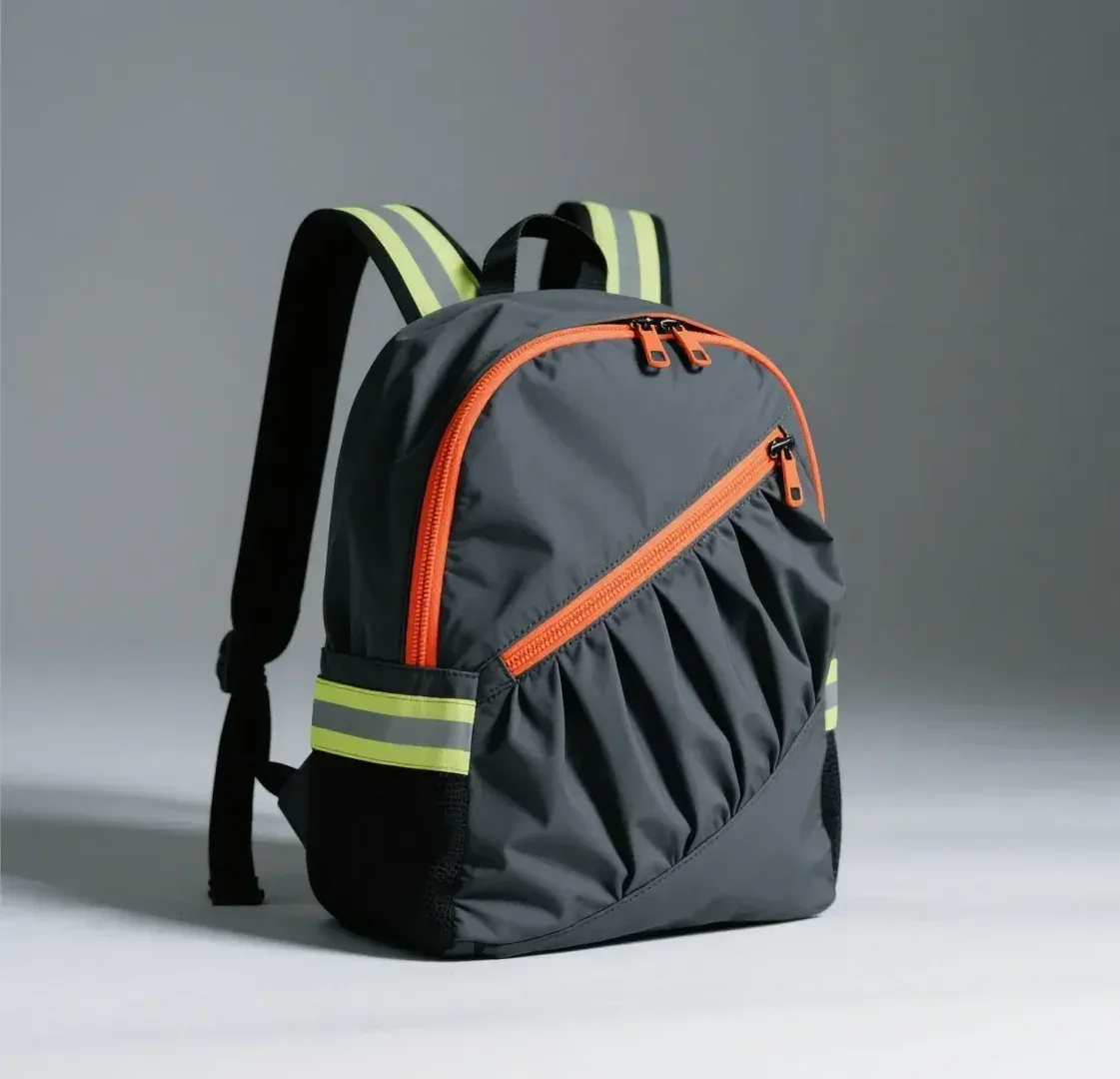
Briefing the First Prototype
The quality of a first sample is almost entirely determined by the quality of the brief. Ambiguity converts directly into rounds, and rounds convert directly into calendar time at 6–10 working days each.
State the target cost. Brands frequently withhold it in the belief that it weakens their negotiating position, and the effect is the opposite: without a cost frame, the sample is built at a standard the brand cannot afford, and the subsequent redesign costs more than the information was worth.
Say clearly which elements are fixed and which are open. A brief that marks handle construction and hardware as fixed and lining and internal layout as open invites useful suggestions in the places where they help, and prevents well-measured changes in the places where they do not.
Include the intended contents. A bag specified only by external dimensions can be technically correct and functionally wrong, because what it must hold determines whether the volume works. Stating that the bag must carry a fifteen-inch laptop, a water bottle and a wash bag, or nothing more than a phone and a cardholder, tells the pattern room something no measurement does.
How Many Rounds to Expect and Budget
Most private label bag programmes settle in two to three rounds. Fewer is possible for a simple construction built on a proven base; more usually indicates an unresolved brief rather than a difficult product.
| Round | Typical outcome | What to decide | Duration |
|---|---|---|---|
| Round one | Construction validated, details imperfect | Whether the silhouette and proportions are right | 6–10 working days |
| Round two | Materials confirmed, details corrected | Whether it is good enough to approve | 6–10 working days |
| Round three | Fine detail only, often branding and finishing | Nothing new; approve or accept | 6–10 working days |
| Complex constructions | Additional rounds for structure or hardware | Whether the complexity is worth it | 12–15 days per round |
| Reorder of a proven style | Usually none, or a confirmation only | Whether the specification is unchanged | Varies |
Budget two rounds in the calendar and treat a third as contingency. The commercial benefit is real: a brand that plans for two rounds can absorb a third without moving the launch, whereas a brand that planned for one and needed three has lost a month before the bulk order was even placed.
Be careful about what a round is used for. Rounds spent on proportion and construction are well spent; rounds spent on minor branding placement or a shade that could have been settled from a swatch are not. Decide the open questions in the cheapest medium available — a swatch, a drawing, a marked-up photograph — and reserve physical rounds for what only a physical object can answer.

Evaluating a Prototype Without a Laboratory
Most of what matters on a prototype can be assessed with a tape measure, a scale, good light and a deliberate sequence. Laboratory testing has its place, but it is not a substitute for handling the object carefully.
- Measure everything against the spec. Record actual figures rather than impressions, and check the bag both empty and lightly filled.
- Load it as it will be used. Fill to intended working weight and carry it; faults in geometry and attachment appear only under load.
- Cycle every fastener repeatedly. Stiffness that increases over fifty cycles predicts a failure within months.
- Inspect it inside out. Turn the lining out and look at seam allowances, adhesive and cleanliness in the areas nobody photographs.
- Check symmetry deliberately. Stand the bag and compare left and right from a fixed distance; asymmetry is easier to feel than to see up close.
- Assess the edges by flexing. Bend painted and burnished edges repeatedly at the corners, where stress concentrates first.
- Smell it in a closed box. A strong solvent note indicates insufficient cure and will generate complaints on arrival.
- Photograph it as a record. Fixed angles, consistent light, including the faults, so the next round can be compared objectively.
Do the evaluation in writing and send it as a list. Verbal feedback across a video call is how revisions get half-applied: the important item is remembered, the second item is forgotten, and the third round arrives having fixed one thing and lost another.
Mark up the photographs rather than describing faults in prose. A circle on an image with a short note is unambiguous in a way that a paragraph often is not, and it removes the translation step between what you saw and what the pattern room changes. Most sampling misunderstandings are translation problems, not engineering problems.
Ask for the change list to be confirmed back before the next round starts. A single exchanged document stating what will change, what will not, and what remains under discussion prevents the most common sampling frustration of all: a round arriving with the wrong set of corrections applied.
Revisions: Changing the Right Thing
The discipline in a revision round is to distinguish the change that matters from the preference that can wait. Every change carries risk of a new fault, so the number of changes should fall sharply with each round.
- List every observation first, before deciding which to action, because ranking is easier than filtering as you go.
- Separate faults from preferences: faults are deviations from the specification, preferences are opinions about it.
- Fix faults first and completely; a specification deviation left unfixed becomes a permanent feature of the style.
- Rank preferences by visibility to the customer, then by cost and risk of change.
- Ask which changes interact; altering handle length may affect balance, and altering material may affect edge finish.
- Confirm that each requested change is understood, in writing, with the reason stated.
- Approve only when the remaining items are cosmetic or can be carried into the next season.
Watch for the pattern where round three looks worse than round two. It usually means too many changes were requested at once and their interactions were not considered. The remedy is to reduce the change list rather than to add another round.
From Approved Sample to Pre-Production
Approval is a decision with consequences, and it should be recorded in a form that a reorder can use months later. The gap between an approved sample and a reliable bulk run is closed by three artefacts.
| Artefact | What it captures | Who holds it | What it prevents |
|---|---|---|---|
| Golden sample | The approved physical unit, sealed and dated | Brand, with a second copy at origin | Arguments about what was approved |
| Material card | Swatches of every approved material and finish | Both parties | Undetected substitution in bulk |
| Final tech pack | Measurements, tolerances, materials, revision history | Both parties | Silent drift across reorders |
| Pre-production unit | A line-made unit from bulk materials | Brand or inspector | Setup errors before cutting |
| Photographic record | Fixed-angle images of the approved unit | Both parties | Disputes resolved from memory |
Then confirm the production slot before celebrating. An approved sample does not reserve capacity; a deposit and a confirmed slot do. The sequence that protects a launch date is approval, deposit, slot confirmation, and only then the assumption that bulk will run 35–50 days from approval.
Two pieces of evidence belong in the pack at the same point. The first is the inspection standard, typically AQL 2.5 under ISO 2859-1 with single sampling at general level II, which should be stated rather than assumed. The second is the material documentation: declarations, OEKO-TEX certificates for textile components and, where the market requires it, the evidence supporting REACH conformance.
Common Sampling Mistakes
The patterns below account for most of the sampling processes that overrun. Each is visible in advance and each has a straightforward remedy.
| Mistake | What causes it | Effect on the programme | Remedy |
|---|---|---|---|
| Briefing from a mood board alone | No measurements or tolerances | Round one misses on proportion | Write dimensions and tolerances before anything else |
| Withholding the target cost | Fear of weakening negotiation | Sample built at an unaffordable standard | State the cost frame and let the team design to it |
| Changing several things at once | Enthusiasm, or poor note-taking | Later rounds look worse, not better | Rank changes and check interactions first |
| Approving from photographs | Convenience, or distance | Feel, smell and function unassessed | Approve a physical unit or send an inspector |
| Skipping the pre-production unit | Assumption that approval is sufficient | Setup errors discovered in bulk | Require a line-made unit before cutting |
| No dated reference retained | Samples lent out or used for content | Reorder cannot be compared to the original | Seal and store two golden samples |
The final mistake is quieter and more common than any of them: continuing to refine after the sample is good enough. Perfection at the sampling stage is expensive in exactly the currency a launch cannot spare, which is time. A sample that meets the specification, functions under load and looks right is finished; the remaining improvements belong to the reorder.
Start your sampling round
Send your drawings, measurements, material preferences and target cost. The programme team in Quanzhou will return a sampling plan with the round sequence, a schedule and what each unit will answer.
Frequently Asked Questions
How long does private label bag sampling take?
Six to ten working days per round, or twelve to fifteen days for complex constructions. Most programmes need two to three rounds, so budget four to six weeks from a stable brief to an approved sample. Bulk production then runs 35–50 days after sample approval.
How many sampling rounds should I expect?
Two to three is typical. A simple construction on a proven base may settle in one or two; more than three usually indicates an unresolved brief rather than a difficult product. Budget two in the calendar and treat a third as contingency so the launch date survives.
What is the difference between a confirmation sample and a pre-production sample?
A confirmation sample is made in the sampling room to the approved specification, and it tells you the design works. A pre-production sample is made on the production line from bulk materials, and it tells you the run will work. Skipping the second is how setup errors reach bulk.
Why is my first sample different from what I imagined?
Usually because the brief contained no measurements or tolerances. Mood boards communicate direction but not proportion. State dimensions, tolerances, intended contents and named material references, and round one will be far closer to the intended object. Expect round one to confirm direction and round two to confirm detail.
Should I tell the production partner my target cost?
Yes. Withholding it means the sample is built at a standard you may not be able to afford, and the subsequent redesign costs more than the information was worth. A stated cost frame lets the team propose a construction that meets both the design and the number.
Can I approve a sample from photographs?
Not reliably. Photographs conceal material hand, handle comfort, odour, dimensional accuracy and behaviour under load. Either approve a physical unit sent to you, attend in person, or commission an inspection. Reserve photography for recording what was approved, not for deciding it.
What should I check on a prototype bag?
Measure everything against the specification, load it to working weight and carry it, cycle every fastener fifty times, inspect the lining turned inside out, check symmetry from a fixed distance, flex the edges at the corners, and assess odour in a closed box.
Do I have to pay for samples?
Samples carry a charge that reflects the development work involved, and complex constructions cost more. Some programmes credit the sampling charge against the first bulk order. Treat sampling spend as development cost rather than as a negotiable overhead, because it is where the product is defined.
What is a golden sample?
It is one approved physical unit, sealed and dated, retained as the reference for the style. It settles whether a reorder matches the original, which is the question that arises in nearly every second season. Hold a second copy at origin so disputes compare two units.
How do I avoid endless sampling rounds?
Write a complete brief first, settle materials from swatches rather than from physical rounds, and change fewer things per round as the process progresses. Decide open questions in the cheapest medium available and reserve physical rounds for what only a physical object can answer.
Should the sample be made in the final material?
The first prototype often is not, because substitute material speeds the round and material choice is still open. By the confirmation stage it must be, since material behaviour affects drape, edge finish, stitch appearance and how the bag holds its shape.
Can I use the sample for product photography?
Yes, and you should. A sample is a complete, photographable product that exists weeks before bulk stock. Photographing the approved sample means content is ready on the day goods land, rather than delaying the launch while units are unpacked and shot.
What happens if the bulk run differs from the sample?
That is what the golden sample, material card and final tech pack exist to prevent and to resolve. Differences usually trace to a substituted material or an undocumented revision. Keeping lot references and a dated reference unit makes the difference observable and the conversation short.
How much can I change after the sample is approved?
Technically a great deal, commercially very little. Any change after approval risks the production slot, because a revised sample must be made and approved again before bulk can begin. Carry cosmetic improvements into the reorder and reserve post-approval changes for genuine faults that affect function or safety.
What is a photo sample?
A finished unit produced specifically for imagery, showings or sales meetings rather than for engineering approval. It should be made to the approved specification, because imagery showing a superseded detail creates returns when customers receive the production version. Photograph the approved sample wherever possible, so pictures and stock agree.
How do I brief a sample if I only have a sketch?
Add the measurements the sketch implies, the intended contents, the materials you have in mind with alternatives, the branding method and placement, and your target cost and quantity. A sketch plus those five things is a workable brief; a sketch alone is not.
Is a complex construction worth the extra sampling time?
Sometimes, if the complexity is the proposition. Ask what the construction delivers that a simpler one does not, and whether customers will perceive it. Structure that improves how a bag carries is usually worth it; structure that exists to look impressive rarely is.
When is a sample ready to approve?
When it matches the written specification within agreed tolerances, uses the materials and hardware that bulk will use, survives functional testing under load, and has been recorded against a dated reference unit. If those four conditions hold, further refinement costs time the launch cannot spare.
Can I sample more than one style at once?
Yes, and it is efficient where styles share materials and hardware. Be aware that each style consumes development attention and each adds a decision to make. Sampling three styles that share a material lot is usually more productive than sampling five unrelated ones.
What should I do with samples after approval?
Seal one as the golden sample and store it away from light and handling. Keep a material card with swatches. File the final tech pack with revision history. Retain the pre-production photographs. Samples used for content should be logged so the reference unit is never the one that leaves.