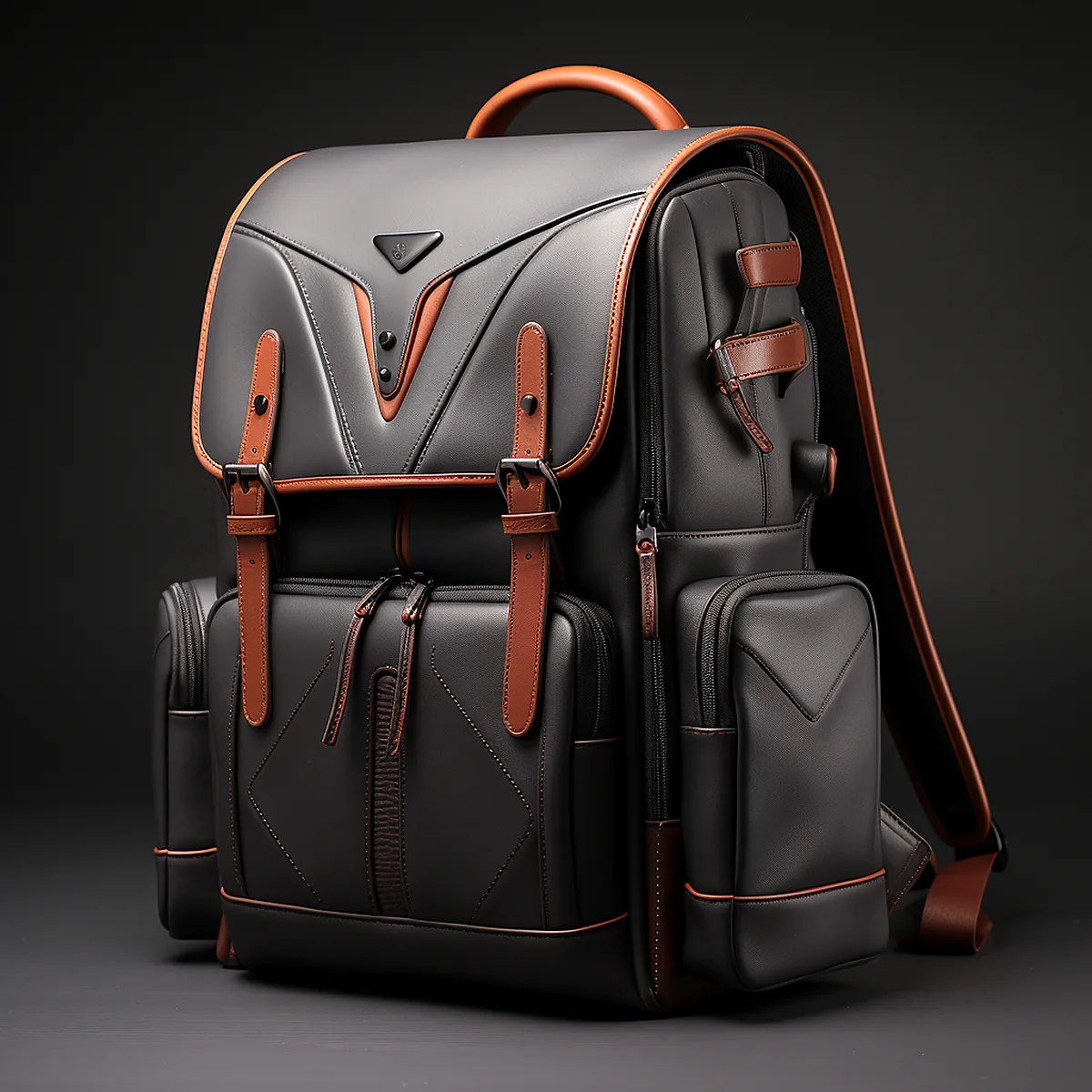
Wholesale and field sales still run on physical samples. A buyer wants to feel the leather, open the zip, check the interior and hold the strap at the length it will be worn. No specification sheet replaces that, which is why every sales organisation in the bag trade ends up commissioning sample sets.
The mistake most brands make is treating the sample set as a miniature range. A rep with one of everything carries weight, pays excess baggage, and spends the meeting apologising for the styles that are not there. A deliberately constructed set does the opposite: it covers the buying decision with a handful of pieces and leaves the rest of the range to the catalogue.
What a Rep Actually Has to Prove
A sales call has to answer four questions, and each needs a physical answer rather than a photograph.
- **Does it look right?** Colour, proportion and finish, seen in the buyer's own light rather than in a studio photograph.
- **Does it feel right?** Leather temper, hardware weight, lining quality, strap comfort on the shoulder.
- **Is it right for my customer?** Size relative to the buyer's price point and their shelf.
- **Can I trust the supply?** Stitching consistency, interior finish and the details that separate a sample from a production unit.
A Set of Six to Eight, Chosen Deliberately
The workable size for a field set is six to eight pieces for a collection of twenty to forty styles. It is enough to show breadth without turning a sales call into a handling exercise.
| Role in the set | Quantity | What it proves |
|---|---|---|
| Hero style, full specification | 1 | The best the range can be; the piece the buyer remembers |
| Best seller or proven shape | 1–2 | That the range is commercially grounded, not just aspirational |
| Entry price point | 1 | That there is an accessible option for a cautious buyer |
| Material story piece | 1 | Full-grain, exotic alternative or a distinctive finish |
| Construction story piece | 1 | Saddle stitching, edge painting or a technical detail worth explaining |
| Size or format variant | 1 | That the shape works across the sizes the buyer will actually order |
| New or directional piece | 1 | Forward-looking; often the reason for the meeting |
If the range is larger, build two sets: a core set that travels everywhere, and a seasonal set that goes only to the buyers most likely to order it.
Programme parameters at a glance
| Parameter | Commitment |
|---|---|
| Minimum order quantity | 500 pieces per style / colourway |
| Sampling lead time | 6–10 working days (12–15 days for complex constructions) |
| Bulk production lead time | 35–50 days after sample approval |
| Inspection standard | AQL 2.5 (ISO 2859-1), single sampling, general level II |
| Incoterms | FOB Xiamen — EXW, CIF and DDP available on request |
| Payment terms | T/T 30% deposit / 70% before shipment; L/C at sight for container loads |
| Verified production floor space | 4,950 m² (SGS-verified) |
| Team | 137 staff across 7 production lines |
| Equipment | 149 machines including computerised saddle-stitch and edge-painting units |
| Monthly capacity | 200,000 pieces |
| Entity | Founded 2014; principal has worked in bag development since 2004 |
Sample Quality: Better Than Production, Not Different
A sales sample must be better finished than a production unit and identical in construction. That is a narrow line, and crossing it in either direction causes problems. A sample that is noticeably rougher than production produces returns and complaints when the order arrives. A sample that is quietly upgraded — a better lining, a heavier hardware, a hand-finished edge — produces a buyer who feels misled.
The practical rule is that the sample may be better made, but may not contain different materials or methods. If the sample has a leather-bound interior seam and production will have a folded one, the buyer must be told before the order, not after.
Mark the sample
A small swing tag noting "sales sample — production specification as per approved PP sample" protects both sides when a buyer later points at a detail that was never intended for bulk.
Cost: Where the Money Actually Goes
Sample sets are expensive in ways that are not obvious from a unit price. The visible cost is the sample itself; the real cost is tooling, materials and labour spread across a tiny quantity.
| Cost element | Typical pattern | How to control it |
|---|---|---|
| Sampling charge per style | Higher than bulk unit cost, often 2–4× | Negotiate a credit against bulk order on the same style |
| Materials | Minimum purchase quantities exceed sample needs | Reuse material across styles; keep a sample material library |
| Tooling | Dies, plates and screens are one-off | Amortise across the range; specify shared hardware where possible |
| Freight and duties | Sample sets move by courier, often internationally | Consolidate shipments; check whether samples can enter duty-free as commercial samples |
| Repair and refurbishment | Samples degrade with handling | Budget for refurbishment after each season |
The sampling credit is the single most useful commercial term to negotiate. Many suppliers will credit sample charges against the first bulk order on that style, which changes the sample set from a cost into a deposit.
Handling, Freight and the Duty Question
A sample set that travels internationally meets customs. Many jurisdictions allow commercial samples of negligible value to enter duty-free, but the definition of negligible value is narrow and varies, and a leather bag in a case rarely qualifies. Under-declaring a sample to save duty is a customs risk that is not worth taking for a few hundred dollars.
The practical alternatives are a carnet or ATA book for goods that will return, a temporary import procedure where one exists, or simply declaring the samples at their commercial value and accepting the duty. Keep the sampling invoices with the shipment; a customs officer asking for the value of a bag will not accept an estimate.
Keeping the Set Sellable
Samples are handled hard. They are opened, filled, carried, dropped on a table and passed around a meeting. A set that looks tired loses the sale it was built for, and refurbishment is far cheaper than replacement.
Digital Complements, Not Substitutes
A well-made video, a 360-degree sequence and a colour-accurate photograph extend the set without replacing it. The useful division of labour is that the physical sample proves look and feel, while digital assets cover the styles not carried, the colour options not sampled, and the interior details that are awkward to show in a meeting.
Colour is the exception worth investing in. A buyer choosing between six colours from photographs will choose badly, and returns follow. Sending a colour card or a small material swatch set alongside the physical samples is cheap and eliminates a whole class of problem.
Building the Set Into the Programme
Sample sets are normally ordered at the same time as the pre-production samples, so that the same materials and tooling are used and the set is genuinely representative. On a 6–10 working day sampling cycle, a set of six to eight pieces is typically ready within two to three weeks of brief, depending on the number of constructions involved.
QUANZHOU JUNYUAN BAGS produces sales sample sets to the approved specification, tags each piece with style, colour and revision, and credits sampling charges against the first bulk order on the same style where the programme supports it. That keeps the set a deposit rather than a sunk cost.
Build a set that closes the meeting
Send the range plan and the markets the reps cover. The programme team will propose a set composition, the sampling cost and the credit available against bulk.
Frequently Asked Questions
How many samples should a sales rep carry?
Six to eight pieces for a collection of twenty to forty styles. Each piece should have a defined role: hero, best seller, entry price point, material story, construction story, size variant and a directional piece.
Should sales samples be better quality than production?
Better finished, but not different in materials or method. A sample that is upgraded relative to bulk creates a buyer who feels misled; a sample that is rougher produces returns. Mark the sample as a sales sample with the production specification referenced.
How much do sample sets cost?
The sampling charge per style is typically two to four times the bulk unit cost because materials minimums, tooling and labour are spread across one unit. Negotiate a credit against the first bulk order on the same style, which is a common and reasonable term.
Can I import samples duty-free?
Some jurisdictions allow commercial samples of negligible value to enter duty-free, but a leather bag rarely qualifies. Options include a carnet or ATA book for returning goods, a temporary import procedure, or declaring at commercial value and accepting the duty. Always keep the sampling invoices with the shipment.
Who pays the freight on samples?
Normally the buyer, and it should be agreed in advance. Consolidating several styles into one shipment is the simplest way to control cost, since courier charges are driven by weight and volume rather than value.
How often should a sample set be refurbished?
At the end of each selling season, or after fifteen to twenty presentations. Any sample with visible corner wear or a marked interior should be retired rather than repaired, because it will undermine the presentation it is meant to support.
Do I need physical samples if I have good photography?
Yes for any wholesale or field sales motion. Photography extends the set to cover styles not carried and colours not sampled, but it cannot answer how the leather feels or how the strap sits on a shoulder.
What is the best way to show colour options without carrying every colourway?
A material swatch set or colour card alongside the physical samples. Buyers choosing between six colours from photographs choose badly, and the returns fall on the brand rather than the photograph.
How long does a sample set take to produce?
Two to three weeks for six to eight pieces, depending on how many constructions are involved, starting from the same 6–10 working day sampling cycle used for pre-production samples.
What happens to sample sets after the season?
They are usually retired to archive, sold as staff samples, or used for training. Archiving one of each style is worth doing — an archived set is the reference for next season's revision and for any later quality dispute.