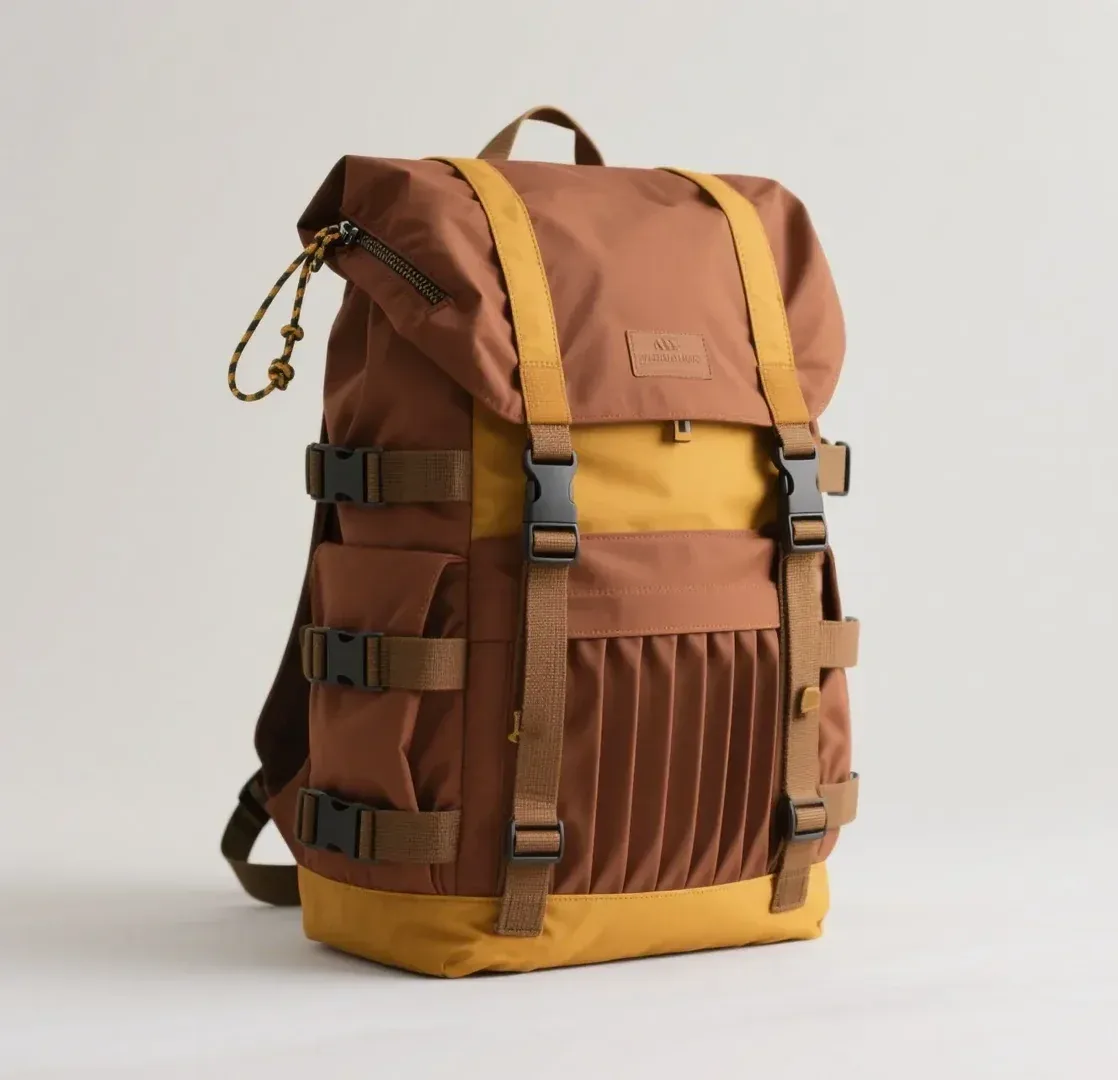
Bespoke bag hardware divides into three functional groups — closures such as zips, locks and magnets; adjustment and connection fittings including buckles, sliders, rings and clasps; and protective elements like feet, corner guards and base plates. Getting them right means specifying base metal, plating thickness and cycle testing rather than choosing finishes from a photograph, because hardware carries more perceived quality per gram than any other component and fails more often than any other component. This guide covers each group, the tooling question between catalogue and bespoke fittings, and the standards that turn finish claims into enforceable requirements.
Why Hardware Carries Disproportionate Weight
A zip costs a small fraction of a bag's total content and determines whether that bag gets used again. This asymmetry explains why hardware deserves more briefing attention than its price suggests: it is the most frequently operated part of the object, the most visible when it fails, and among the first things a customer touches. Three consequences follow, and each can be planned for.
- Reputation concentrates here. A bag that survives a decade with one failed zip is remembered as the zip that failed, not the hide that aged beautifully.
- Failure is expensive to remedy. Replacing a riveted fitting can destroy the panel it sits on, converting a minor fault into a major repair.
- It is the most defensible exclusivity you can buy. A bespoke lock or zip pull requires tooling to copy, unlike a silhouette which can be photographed and approximated.
- Handling quality is judged subconsciously. Weight, temperature and the sound of a closure register before any visual assessment does.
None of that argues for expensive hardware everywhere. It argues for matching specification to duty: a heavy rotating buckle on a load-bearing strap deserves solid metal and tight tolerance, whereas a decorative tag can use lighter material with a matching finish. Uniformity of appearance across the bag matters more than uniform grade beneath it, provided the working components are correctly specified.
Programme parameters at a glance
| Parameter | Commitment |
|---|---|
| Minimum order quantity | 500 pieces per style / colourway |
| Sampling lead time | 6–10 working days (12–15 days for complex constructions) |
| Bulk production lead time | 35–50 days after sample approval |
| Inspection standard | AQL 2.5 (ISO 2859-1), single sampling, general level II |
| Incoterms | FOB Xiamen — EXW, CIF and DDP available on request |
| Payment terms | T/T 30% deposit / 70% before shipment; L/C at sight for container loads |
| Verified production floor space | 4,950 m² (SGS-verified) |
| Team | 137 staff across 7 production lines |
| Equipment | 149 machines including computerised saddle-stitch and edge-painting units |
| Monthly capacity | 200,000 pieces |
| Entity | Founded 2014; principal has worked in bag development since 2004 |
Base Metals and Finishes
Finish describes appearance; base metal determines behaviour. The most common failure in hardware specification is agreeing a beautiful finish without establishing what lies beneath it, since plating thickness and substrate together decide how long that finish survives salt air, hand oils and abrasion. Two specifications can look identical on day one and diverge completely within a season.
| Base metal | Characteristics | Typical application | Cost position |
|---|---|---|---|
| Solid brass | Dense, warm, takes plating well; develops character if unlacquered | Premium locks, feet, buckles, structural fittings | Highest material cost |
| Stainless steel | Strong, corrosion resistant, heavier in feel | Springs, mechanisms, coastal and humid markets | Moderate to high |
| Zinc alloy | Cast to complex shapes economically; weaker under shear | Decorative plates, badges, complex ornamental forms | Lowest; finish dependent on plating quality |
| Steel core, plated | Strong core with applied surface finish | Spring-loaded mechanisms and high-stress components | Moderate |
| Aluminium | Extremely light; softer surface | Travel pieces where mass matters most | Low to moderate |
Finishes are then applied over that substrate. Electroplating deposits metal onto the base; physical vapour deposition produces harder, more abrasion-resistant coatings at higher cost; lacquer protects polished surfaces but chips rather than wears. Common trade names include light gold, dark gold, nickel, brushed nickel, gunmetal, antique brass and rose gold, and none of these names is standardised between suppliers — which is why every finish reference should be confirmed against a retained physical standard rather than a description.
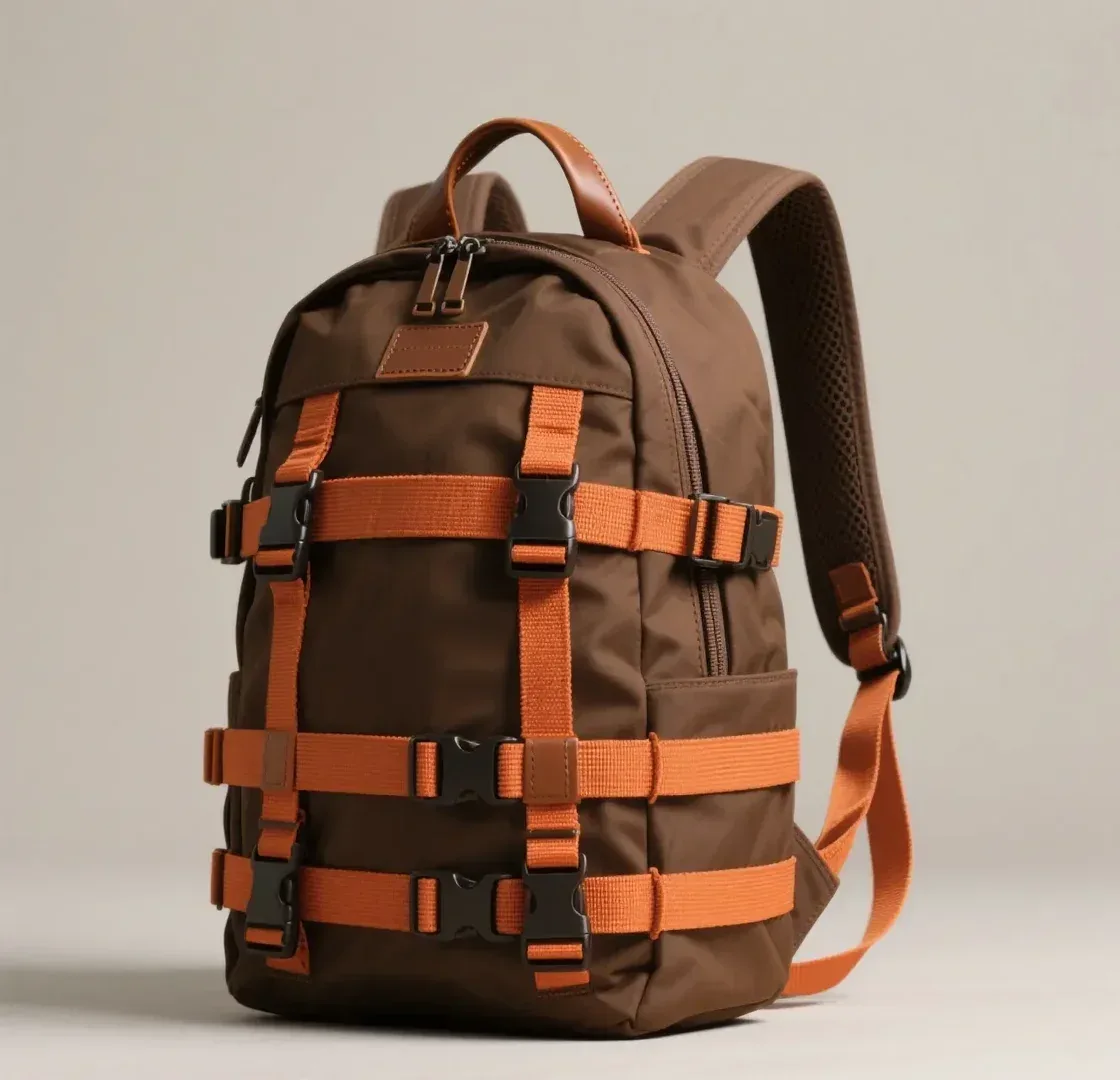
Colour matching across components is the recurring practical problem. Panels may be brass with plating while zips use a different alloy, and side-by-side the difference is visible even when each meets its own specification. Order all visible metal for a style from one coordinated set where possible, or accept a deliberate contrast — a gunmetal zip against brass hardware reads as a choice, whereas near-matched finishes read as an error.
Zips: Anatomy and Specification
Zips fail more often than any other fitting and are the most irritating to replace, which makes them worth specifying properly. Understanding terminology is the first step, since confusion between terms accounts for many mis-specified orders.
| Zip type | Best suited to | Strengths | Cautions |
|---|---|---|---|
| Metal chain | Structured leather, heritage designs, visible closures | Strong, tactile, repairable; individual teeth replaceable in some cases | Heavier; can snag lining; requires precise tape alignment |
| Coil or synthetic | Garment bags, linings, curved runs | Flexible, light, tolerant of curvature | Less prestigious appearance; teeth deform rather than realign |
| Moulded or injected | Sport, outdoor and technical bags | Corrosion resistant, smooth running, quiet | Limited repairability once teeth shear |
| Water-resistant coated | Travel and marine-adjacent programmes | Repels moisture; contemporary appearance | Coating abrades; more expensive than standard types |
| Reverse or concealed | Clean minimalist exteriors | Chain hidden beneath the tape | Less tolerant of misalignment; repairs are more invasive |
Specification should extend beyond the chain to how it meets the bag. Tape must suit the surrounding material's weight, placket geometry must allow the slider to run without binding, and the top stop should sit where the aperture demands rather than wherever the zip was cut. Most zip-related quality complaints trace to installation geometry rather than to the zip itself, which is why cycle-testing the finished assembly matters more than testing the component in isolation.
Locks, Buckles and Closing Devices
Closures define how a bag feels to use and how secure it appears. The choice involves deliberate trade-offs between security, ease, silence and subtlety, and different bag types resolve those tensions differently. A document case prioritises authority and audible confirmation; an evening piece prioritises a clean line and one-handed operation.
| Device | Operation | Security | Typical application |
|---|---|---|---|
| Turn-lock | Rotating cam engages beneath a plate | Moderate to high; audible confirmation | Structured handbags, satchels, heritage cases |
| Push-lock or clasp | Spring-loaded catch releases under thumb pressure | Moderate; quick one-handed use | Top-handle bags, small leather goods |
| Magnetic closure | Magnets engage through the material | Low; easiest and quietest | Flaps and soft unstructured bags |
| Cam buckle and strap fitting | Friction cam grips webbing, adjustable | Variable; load dependent | Straps, backpacks, travel pieces |
| Sliding bolt or bar lock | Bar slides into a receiver | High; mechanical and precise | Attache cases, rigid briefcases |
| Combination or key lock | Mechanical keyed mechanism | Highest available | Executive cases and secure travel items |
Two practical cautions. Magnets can interfere with cards, hotel keys and some medical devices, so their strength and placement deserve thought on everyday bags; where a device must be protected, specify a mechanical alternative. And any lock set into leather needs reinforcement behind it, since concentrated load at a small plate will eventually tear through the panel regardless of how well the fitting itself is made.
Buckles deserve separate mention because they carry dynamic load rather than static weight. A strap buckle is repeatedly adjusted, sometimes under tension, and is operated by someone who is not concentrating on it. Solid metal with a properly seated roller bar is considerably more durable than a hollow cast equivalent, and this is one area where specifying heavier than the design seems to require pays dividends over years.
Feet, Rings and Structural Fittings
Protective and connection hardware is unglamorous and decisive. Feet determine whether a bag stands cleanly or develops a permanently deformed base; D-rings and strap anchors distribute load into panels or concentrate it into a seam; corner guards absorb the abrasion that otherwise destroys visible leather. All three should be specified with the loaded bag in mind rather than the photographed one.
- Feet should be positioned to support the loaded silhouette, not merely trimmed around the empty outline.
- D-rings and strap anchors require backing reinforcement so dynamic load enters the panel rather than the stitch line.
- Corner guards suit structured pieces carried against hard surfaces; they are otherwise unnecessary added weight.
- Rivets should be sized to the total material thickness after skiving, since undersized posts pull through with use.
- Base plates add rigidity to soft structures and should be removable so the lining can be replaced later.
- All internal metal edges must be deburred and covered; an unfinished edge abrades lining and contents silently over months.
The final point deserves emphasis because it is invisible at purchase and certain in consequence. A burr on the reverse of a plate, or a raw edge inside a pocket, wears through lining and anything carried against it. Insisting that all internal surfaces are finished and covered costs almost nothing and removes a category of failure that typically appears only after several months of use.
Catalogue Versus Bespoke Tooling
Hardware either comes from a vetted supplier catalogue or is tooled specifically for your programme. This decision is more consequential than the apparent cost difference suggests, because it determines both your exclusivity position and your repair options for years afterwards. Custom tooling is expensive up front and negligible per unit thereafter.
| Factor | Catalogue fittings | Bespoke tooled fittings |
|---|---|---|
| Up-front cost | None beyond tooling for simple dies | Tooling charge; ownership should transfer |
| Distinctiveness | Shared with other buyers | Exclusive in practice; costly to duplicate |
| Sampling impact | Faster; no tooling lead time | Slower; tooling must precede or run parallel |
| Minimum quantities | Supplier's own minimums apply | Economically sensible at moderate volumes |
| Repair and spares | Generally available from stock | Requires retained stock or retooling later |
| Best used for | Structural components, utility fittings | Logo plates, zip pulls, signature locks |
A hybrid approach usually serves best. Tool only what customers see and remember — the zip pull, the front lock and the logo plate — and borrow the engineering underneath: feet, internal rings, rivets, structural reinforcements. This concentrates cost where perceived value lies and avoids tooling components that nobody will ever attribute to your design. It also keeps spare availability healthier, since catalogue parts can be replaced years later without retooling.
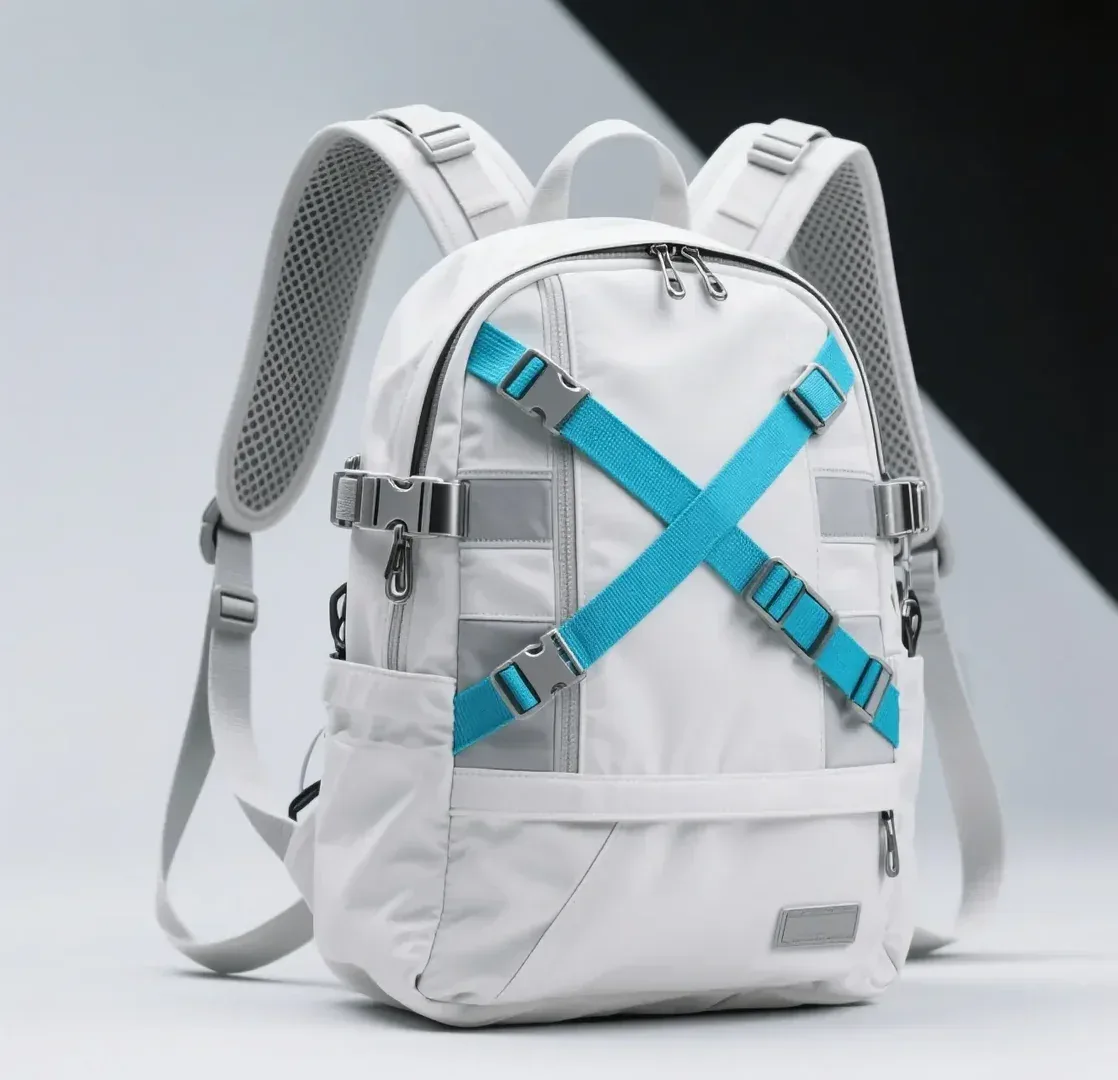
Where bespoke tooling is chosen, order spare stock alongside the first production run. Metal prices, plating batches and supplier relationships all move over a programme's life, and having a small reserve of pulls, plates and locks stored means year-three repairs are straightforward rather than requiring a new tooling charge for a handful of components.
Testing, Plating and Compliance
Finish claims are cheap and unenforceable without a standard attached. Three measurements convert hardware quality from an opinion into a specification, and each is a routine request from any competent supplier: plating thickness, adhesion performance and corrosion resistance. Add a cycle requirement for any component that opens and closes.
| Requirement | Why it matters | How it is expressed |
|---|---|---|
| Plating thickness | Determines how long a finish survives abrasion | A stated minimum measurement in microns |
| Adhesion | Prevents flaking under flex and impact | A standard tape or thermal cycling test |
| Corrosion resistance | Predicts behaviour in humid and coastal markets | A neutral salt spray exposure period |
| Cycle durability | Estimates service life of moving components | A stated number of open-and-close repetitions |
| Restricted substances | Clears goods for the destination market | REACH declaration or CPSIA documentation |
| Nickel release | Relevant where metal contacts skin repeatedly | A specified migration test outcome |
Compliance is determined by destination and by how the article is used. REACH governs restricted substances entering the European Union, CPSIA applies to the United States and includes particular provisions for children's products, and OEKO-TEX certification is frequently requested for textile-adjacent components. Where there is any doubt, request documentation naming the actual fitting reference rather than accepting a facility-wide statement, since facilities frequently use several plating lines with different substance profiles.
Finally, agree how hardware faults are classified before production begins. A hardware defect that prevents function is critical; one that is visible but functional is typically major; one visible only at close inspection is minor. Mapping those categories onto an inspection plan based on ISO 2859-1 at AQL 2.5 under general level II gives both sides arithmetic rather than argument when a shipment is assessed.
Hardware choices are best made with the whole bag in view, since finishes must coordinate with leather colour, lining tone and edge treatment. Our team specifies fittings from coordinated sets and documents each reference in technical packs; worked examples appear across the handbag programmes and the wider product catalogue.
Specify your hardware properly
Send the fittings you need, whether catalogue or tooled. The programme team will return references, finish standards, testing requirements and tooling costs in one document.
Frequently Asked Questions
What hardware should I specify for a bespoke leather bag?
Name the base metal, the finish against a retained physical standard, plating thickness expressed in microns, cycle durability for moving parts and the compliance documentation required. Most disputes in this category arise because a finish was agreed visually and never defined numerically, so two parties can honestly disagree about whether the delivered article matches what was discussed.
Which base metal is best for bag hardware?
Solid brass suits premium structural fittings because it is dense, takes plating well and ages attractively. Stainless steel resists corrosion and suits mechanisms and humid markets. Zinc alloy casts into complex decorative shapes economically but is weaker under shear. Match metal to duty: structural parts deserve solid metal, decorative plates can use cast alloy.
How long does plated hardware last?
It depends on plating thickness, base metal preparation and how the article is treated. Thin plating on a poorly prepared substrate can fail within months; properly specified plating over brass lasts for years of normal use. Ask for a stated thickness and a salt spray exposure period rather than relying on a supplier's verbal assurance about quality.
Should I use custom or catalogue hardware?
Usually both. Tool the pieces customers see and remember — zip pulls, signature locks, logo plates — and use catalogue fittings for everything structural and invisible. Concentrating tooling spend where perceived value lies keeps cost down while preserving exclusivity, and it leaves spares available years later without another tooling charge.
How much does bespoke hardware tooling add?
Tooling is a fixed cost independent of order quantity, so it matters most at low volumes and little at scale. It should be invoiced separately with ownership transferring on payment. Where a signature fitting carries genuine brand value, tooling often pays back across subsequent seasons; where the fitting is utilitarian, the money is better spent elsewhere.
Why do zips fail more often than other fittings?
Because they are operated repeatedly, often under load, and are sensitive to installation geometry. Failure usually originates in the placket rather than the chain: binding from poor alignment, tape too light for the surrounding material, or a stop placed badly. Specify tape, gauge and top stop position, then cycle-test the finished assembly rather than the component alone.
What is the difference between a turn-lock and a magnetic closure?
A turn-lock engages a rotating cam beneath a plate, offering moderate security and audible confirmation. A magnetic closure uses magnets engaging through material, giving quiet one-handed operation and the cleanest exterior line. Magnets interfere with cards and some medical devices, so their strength and placement require thought on everyday bags.
Are hardware finish names standardised between suppliers?
No. Terms such as gunmetal, antique brass and light gold describe different colours at different suppliers. Always confirm against a retained physical standard sealed at specification stage, and order all visible metal for one style as a coordinated set where possible, since two individually correct finishes can clash side by side.
What testing should I request for hardware?
Ask for plating thickness in microns, an adhesion test result, corrosion resistance expressed as a neutral salt spray exposure period, and a cycle requirement for any moving component. Additionally request restricted-substance documentation relevant to your destination market, naming the actual fitting reference rather than accepting a facility-wide statement.
How does hardware affect compliance paperwork?
Metal components fall within restricted-substance frameworks such as REACH for the European Union and CPSIA for the United States, and nickel release may be relevant where metal repeatedly contacts skin. Request declarations naming each fitting reference, since plating lines differ. Textile components such as webbing are usually covered separately under OEKO-TEX certification.
Can hardware be replaced years later?
It can, provided it was designed for access. Fittings secured with screws or accessible rivets can be swapped; fully riveted or concealed components often require destroying the panel. Specify accessibility at the brief stage, order spare pulls and plates with the first run, and ask the maker what can realistically be replaced.
What causes feet to damage a bag's base?
Usually incorrect placement relative to the loaded silhouette, or insufficient internal reinforcement. Feet positioned on an empty outline sit uselessly once the bag carries weight, allowing the base to deform. Specify feet against the loaded shape and pair them with a base board that distributes load rather than concentrating it at four points.
Do heavier fittings always indicate better quality?
Not necessarily, though density is informative. Solid brass and stainless feel heavier than cast zinc and generally perform better under sustained load. However, unnecessary weight harms comfort on travel pieces, so light but strong alternatives such as aluminium sometimes suit better. Judge specification for duty rather than heft alone.
How are hardware defects classified during inspection?
Function-preventing faults such as a zip that will not close are critical; visible faults that remain functional, such as plating blemishes, are usually major; faults visible only at close range are minor. Mapping these categories onto an inspection plan under ISO 2859-1 at AQL 2.5, agreed before bulk, removes argument later.
Does hardware choice affect sampling time?
Yes, mainly through tooling. Catalogue fittings are available immediately, whereas bespoke components must be tooled first, adding lead time unless that work runs parallel with pattern development. Where tooled hardware is planned, instruct it at specification sign-off so the two windows overlap, keeping the standard 6–10 working day round intact.
What should be documented about hardware in the technical pack?
Five things: base metal, finish reference held against a retained physical sample, plating thickness in microns, durability or cycle requirement for moving parts, and compliance declarations naming that reference. Adding a spare-parts line covering pulls, plates and locks ensures repairs stay feasible for years after the programme ships.