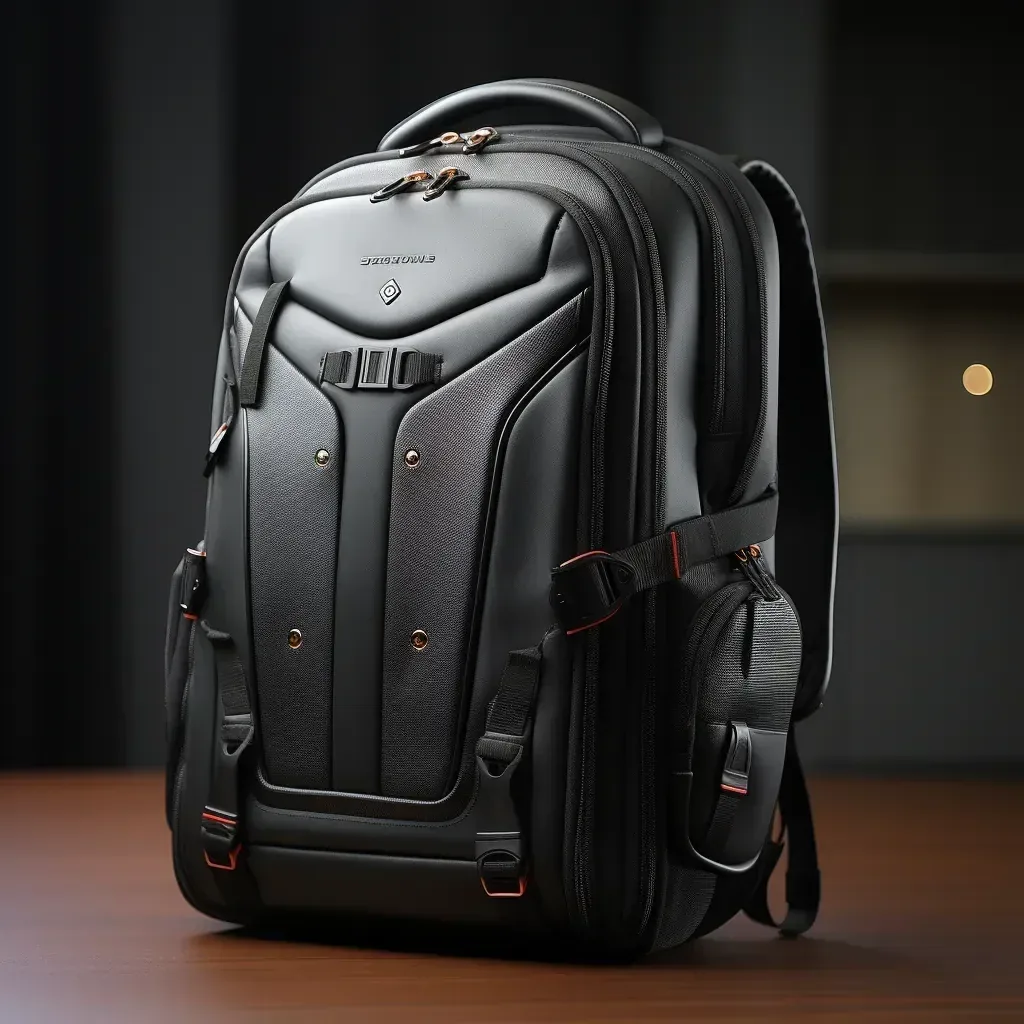
A bespoke crossbody collection succeeds when the strap system is engineered first and the silhouette second, because the category is bought for hands-free convenience and returned for discomfort. A workable range covers three silhouette families — flat and minimal, structured and boxy, and soft and slouched — each sharing one strap architecture so that hardware, webbing and adjustment logic are approved once. Brands that treat the crossbody as a smaller version of a shoulder bag tend to produce styles that look right on a rail and feel wrong on the body.
The commercial logic favours investment here. Crossbody styles are usually the repeat-purchase engine of a range: they sit at an accessible price point, they are given as gifts, and a customer who owns one will often buy a second in another colour. That repeat behaviour is worth protecting, and what protects it is comfort over a long day rather than novelty in a photograph.
Why the Crossbody Carries Volume in a Range
Several properties make this the most reliable category in a bag collection. It uses less material than a tote, so its unit cost is more forgiving; it suits a wider set of outfit contexts; and it works across age groups that other silhouettes divide. Those advantages are also why the category is crowded, which pushes differentiation towards fit and finish.
| Property | Commercial effect | Design consequence |
|---|---|---|
| Low material consumption | Accessible price point | Offcuts from larger styles can be used |
| Hands-free carry | Broad occasion coverage | Strap comfort becomes the main quality signal |
| Compact footprint | Cheap to ship and to store | Higher margin per cubic metre than most styles |
| Gift suitability | Strong in gifting seasons | Packaging matters more than usual |
| Repeat purchase pattern | Customers buy a second colour | Colour range should be planned as a system |
The offcut point is genuinely useful rather than incidental. A crossbody body requires small panels, and the pieces left over from cutting a tote or a weekender are often the right size for them. Programmes that plan the larger styles first and reserve the fallout for small goods improve material yield across the whole collection, which shows up in the unit price of every style rather than in one.
Programme parameters at a glance
| Parameter | Commitment |
|---|---|
| Minimum order quantity | 500 pieces per style / colourway |
| Sampling lead time | 6–10 working days (12–15 days for complex constructions) |
| Bulk production lead time | 35–50 days after sample approval |
| Inspection standard | AQL 2.5 (ISO 2859-1), single sampling, general level II |
| Incoterms | FOB Xiamen — EXW, CIF and DDP available on request |
| Payment terms | T/T 30% deposit / 70% before shipment; L/C at sight for container loads |
| Verified production floor space | 4,950 m² (SGS-verified) |
| Team | 137 staff across 7 production lines |
| Equipment | 149 machines including computerised saddle-stitch and edge-painting units |
| Monthly capacity | 200,000 pieces |
| Entity | Founded 2014; principal has worked in bag development since 2004 |
Three Silhouette Families Worth Covering
A crossbody range does not need many styles; it needs the right three. Each family below answers a different outfit context, and together they cover the market without cannibalising one another.
| Family | Construction character | Best context | Price position |
|---|---|---|---|
| Flat minimal | Single panel body, minimal structure | Evening and light daily use | Entry to accessible |
| Structured boxy | Stiffened panels, defined gusset | Work and city use | Mid tier |
| Soft slouched | Light interlining, collapsing body | Casual and weekend | Accessible to mid |
| Convertible | Detachable strap, dual carry | Travel and multi-use | Premium within the category |
The convertible variant deserves a note of caution. It is attractive commercially because it reads as two products for one price, but it doubles the hardware requirement and introduces a second attachment point that must be engineered properly. Where a brand wants it, the bag should be designed as a convertible from the outset rather than having a strap added to a design that was conceived as a shoulder bag.
Strap Engineering: Where Comfort Is Decided
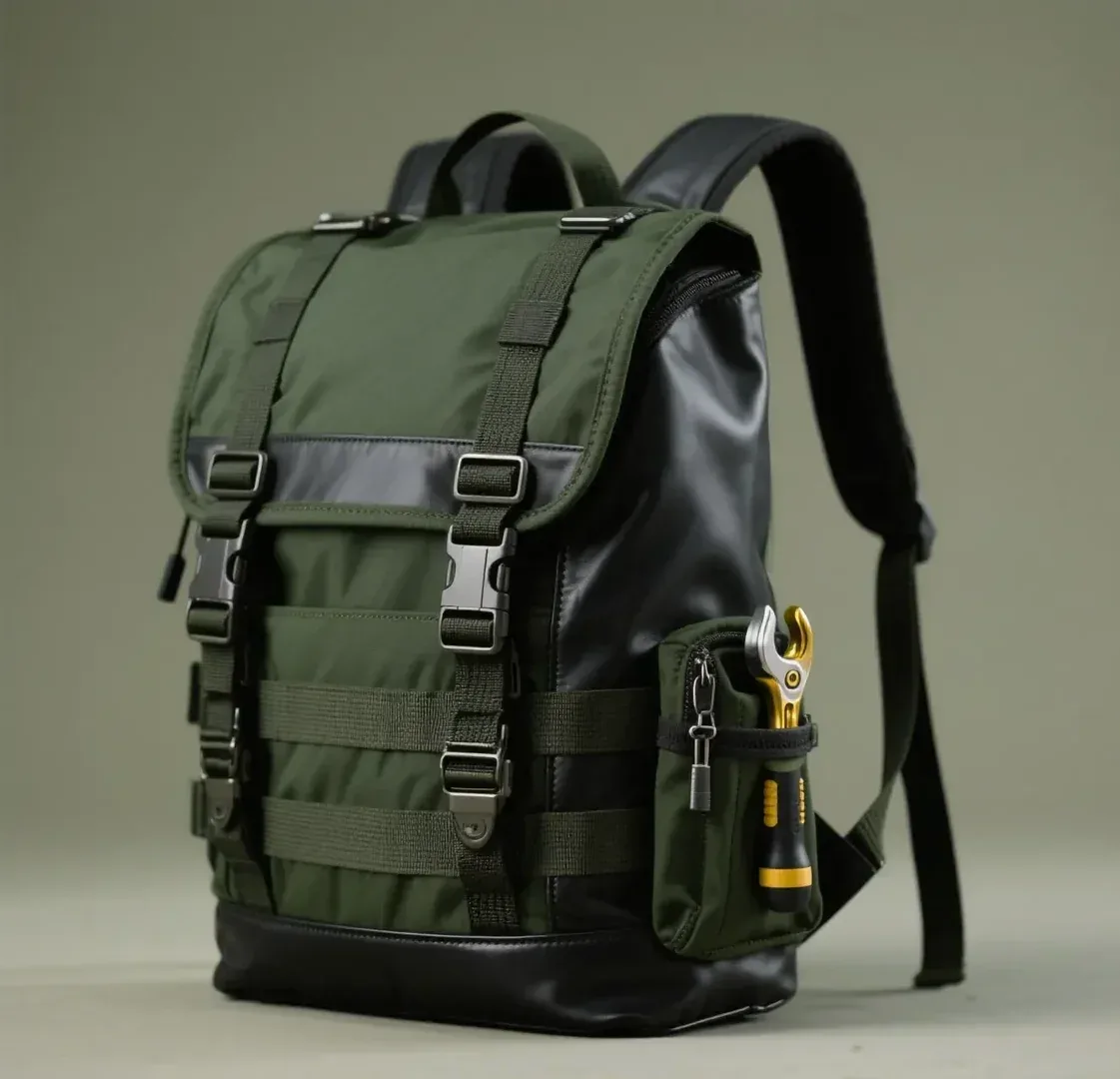
If one component determines whether a crossbody is worn or left in a wardrobe, it is the strap. Width, webbing quality, slide adjustment, and the geometry of the attachment all interact, and they should be specified together rather than chosen from a catalogue of available parts.
Slider creep is the defect worth testing for explicitly. A strap that holds when the bag is empty and slides when it is loaded will generate returns long after inspection has passed, because a standard inspection checks the slider functions but rarely loads the bag and walks with it. A simple pre-production test — load the sample to its intended weight and wear it for an hour — catches most of these problems.
Weight distribution deserves the same treatment as width. A crossbody whose heaviest contents sit away from the body will swing with each step, and the resulting motion is what customers describe as discomfort even when the strap itself is well made. Placing the zipped interior section and any rigid element close to the body panel, and keeping the outermost compartment for light items, is a layout decision that costs nothing and materially changes how the piece wears.
Sizing and Internal Layout
Crossbody sizes are driven by what customers insist on carrying: a phone, a card holder, keys, sunglasses and, increasingly, a large-format phone that determines the minimum internal width. Layout matters more than volume in this category, because a poorly arranged interior makes a nominally large bag unusable.
| Size band | Carries comfortably | Layout priority | Typical role |
|---|---|---|---|
| Micro | Phone, cards, lipstick | One slip pocket, no bulk | Evening and capsule |
| Small | Phone, small purse, keys | Card slots and a key clip | Core volume style |
| Medium | Adds sunglasses and a small notebook | Zipped interior section | Mid tier and work use |
| Large | Tablet or small water bottle | Divided interior, structured | Travel-adjacent |
Interior organisation is the cheapest way to raise perceived value in this category. Card slots, a key clip and a single zipped section cost little in labour and material but change how considered a bag feels. Conversely, adding exterior pockets to a small body tends to work against the silhouette, breaking the clean line that made the piece attractive in the first place.
Hardware Specification for the Category
Because a crossbody is small, its hardware is proportionally more visible than on any larger style. A zip puller or a slider that would pass unnoticed on a weekender becomes a defining detail here, which argues for specifying hardware deliberately rather than accepting whatever the sample is built with.
| Component | Specification concern | Common choice | Risk if left unspecified |
|---|---|---|---|
| Zip | Tape colour and gauge matched to the body | Coil zip with a tone-matched tape | Visible tape line at the opening |
| Puller | Weight and finish consistency | Cast puller with the house plating | Mismatched tone against other fittings |
| Slider and adjuster | Holds under load without creeping | Metal slide, tested loaded | Strap slips in use |
| Dog-hooks | Gate strength and finish | Cast hook in the house finish | Opening under load |
| Rivets and feet | Set cleanly without marking the leather | Matching-tone rivets | Scratched panels and loose fixings |
| Logo plate | Scale appropriate to a small body | Small debossed or plated mark | Oversized branding on a micro bag |
Finish consistency across a small range of components is what separates a considered crossbody from an assembled one. Where a brand requires documentation, REACH declarations for metal components and OEKO-TEX certification for webbing and linings are far easier to compile when one hardware family is used across every silhouette than when each style specifies its own.

Material Choices for a Smaller Format
Small formats change the material equation. Abrasion concentrates on fewer areas, panel sizes are modest, and the customer handles the piece constantly, so surface feel matters more than bulk strength.
- Smooth calf and nappa. The default for structured and semi-structured bodies; takes embossing cleanly and ages predictably.
- Pebble grain. Hides the handling marks that a frequently touched bag accumulates, and is the pragmatic choice for a high-volume style.
- Vegetable-tanned leather. Suits minimal flat bodies where patina development is part of the proposition rather than a risk.
- Coated canvas with leather trim. Reduces cost and weight while keeping a luxury reading at the trim points.
- Microfibre and performance linings. Resist the abrasion that keys and cosmetics cause inside a small bag.
- Recycled or plant-based alternatives. Workable where the brand position requires them, subject to the same abrasion testing.
Whatever the surface, the strap underside deserves separate attention. It is the part in contact with clothing, and a stiff or poorly finished underside will pill a knit within weeks. Specifying a softer material, or a leather-facing on the underside of a webbing strap, costs little and removes one of the more common sources of silent dissatisfaction.
Inspection Points Specific to Crossbody Styles
Standard inspection at AQL 2.5 under ISO 2859-1, single sampling, general level II, covers generic defects well. The category also has failure modes of its own that a generic checklist will not necessarily surface, and these are worth adding to the specification.
| Check | What to look for | Why it matters |
|---|---|---|
| Slider under load | Fit the strap, load the bag, check for creep | The most reported in-use fault |
| Attachment symmetry | Both ends set at the same height and angle | Asymmetry is visible when worn |
| Strap twist | Lay flat; a twisted webbing is obvious in use | Cannot be corrected after assembly |
| Zip run | Puller travels the full length without catching | Small bags are opened constantly |
| Edge finish | Consistent colour and coverage on all edges | Edges are close to the eye on a small body |
| Hardware rattle | Shake gently; loose components should be silent | Audible faults read as cheapness |
Adding those six checks to a pre-production sample review costs an hour and prevents the category of complaint that never appears in inspection statistics because it only emerges after weeks of use. It is the sort of specification work that distinguishes a programme built for repeat purchase from one built for a single season.
Structuring a Crossbody Capsule
A capsule of three silhouettes in two colourways each is a realistic opening commitment for most brands. The sequence below keeps the development work inside a standard sampling window and leaves the bulk run uncomplicated.
- Approve the strap architecture first. One webbing, one slider, one attachment geometry, used by every style in the capsule.
- Develop the structured body next. It is the hardest to get right and its reinforcement logic can be simplified downward.
- Derive the soft and flat bodies from it. Same strap, same hardware, reduced stiffening and fewer panels.
- Fix the hardware family once. One plating and one puller design across the capsule, so approvals are not duplicated.
- Test loaded, not empty. Wear the sample at its intended weight before approving the strap and slider.
- Confirm packing before the run. Small bags ship efficiently, but presentation packaging changes carton volume substantially.
Sampling for standard constructions runs 6–10 working days, with 12–15 for complex builds, and bulk production follows at 35–50 days after approval. Because a crossbody capsule shares its strap and hardware across every style, the whole capsule can usually be sampled inside the same window as a single complex bag, which is the main reason the category is a sensible place for a brand to start.
Colour is where the capsule earns its repeat business. Since a minimum applies per style and per colourway, the pragmatic plan is two core colours across all three silhouettes rather than four colours on one. That gives six runs that share materials and hardware, and it lets the brand learn which silhouette sells before committing to a wider palette in a second season.
The reorder pattern in this category is unusually informative. Because crossbody bags are frequently bought as gifts and frequently bought twice, sell-through data arrives faster than for most styles, and a brand can usually read demand within a single season. The sensible response is to hold the strap and hardware specification steady and vary only colour, which keeps replenishment close to a straightforward repeat run rather than a fresh development.
Freight economics favour the category as well. A compact body ships efficiently, so margin per cubic metre is typically better than for a tote or a weekender, which partly offsets the lower unit price. Shipments leave FOB Xiamen, with EXW, CIF and DDP available on request, and the term chosen determines where responsibility for the onward leg sits. That is worth settling before a launch date is fixed, because the transit element differs materially between the available terms.
Develop your crossbody capsule
Send your silhouette plan, strap preferences and target volumes. The programme team in Quanzhou will specify the strap architecture and build the sampling sequence.
Frequently Asked Questions
How many crossbody styles should a collection have?
Three silhouette families — flat minimal, structured boxy and soft slouched — cover the market without cannibalising. A convertible variant can be added where the brand wants dual carry, but it should be designed as a convertible from the outset rather than having a strap added later. More than four styles in one range tends to split sales rather than grow them.
What makes a crossbody comfortable to wear?
Strap engineering rather than silhouette. Width relative to bag weight, webbing quality, a slider that holds without creeping, and side-set rather than top-set attachment geometry all matter. Attachment angle in particular changes how the body sits against the torso, and side placement is generally the more comfortable option for a loaded bag.
Why do crossbody straps slip during use?
Usually because the slider was tested empty rather than loaded. A slider that holds an empty bag can still creep once the bag carries its intended weight, and standard inspection checks that the slider functions but rarely loads the piece. Testing the sample at full weight and wearing it for an hour catches almost all of these faults.
Should a crossbody strap be leather or webbing?
Many ranges use leather with a webbing core, which combines the appearance of leather with the dimensional stability of webbing. Pure leather looks better and needs a keeper to control the tail; pure webbing adjusts smoothly and resists stretch. The deciding factor is usually whether the strap will be adjusted frequently or set once.
What size crossbody sells best?
The small band — phone, small purse and keys — is generally the volume driver, because it answers the minimum most customers insist on carrying. Medium sizes suit work and city use, and micro sizes perform well in evening and capsule contexts. Large crossbody bodies tend to be a travel-adjacent niche rather than a core seller.
Can offcuts from larger bags be used for crossbody panels?
Yes, and planning for it improves yield across a whole collection. Crossbody bodies need small panels, and the fallout from cutting a tote or a weekender is often the right size. Programmes that cut the larger styles first and reserve the offcuts for small goods see the benefit in the unit price of every style.
How important is interior organisation in a small bag?
Very, and it is the cheapest way to raise perceived value. Card slots, a key clip and one zipped section cost little in material or labour but change how considered a piece feels. Exterior pockets, by contrast, tend to work against a small silhouette by breaking the clean line that made it attractive.
What hardware finish should a crossbody range use?
One plating family across every style. On a small body, hardware is proportionally more visible than on a larger bag, so a puller or slider that would pass unnoticed on a weekender becomes a defining detail. Finish consistency across a small set of components is what separates a considered piece from an assembled one.
How long does a crossbody capsule take to sample?
Standard constructions sample in 6–10 working days, with 12–15 for complex builds, followed by 35–50 days of bulk production after approval. Because a well-planned capsule shares its strap and hardware across every silhouette, the full set can usually be sampled inside the window needed for a single complex bag.
What does AQL 2.5 mean for a crossbody order?
It is the acceptance quality limit applied under ISO 2859-1 using single sampling at general level II, setting how many minor and major defects a batch may contain before rejection. For this category it should be supplemented with six specific checks: slider creep under load, attachment symmetry, strap twist, full zip run, edge finish consistency and hardware rattle.
Should colour or silhouette be expanded first?
Colour, in most cases. Adding a colourway to a proven silhouette reuses the pattern, the tooling and the material approvals, so it behaves closer to a reorder. Adding a silhouette triggers fresh pattern work and a new minimum. Two core colours across three silhouettes is usually a better opening than four colours on one.
Why does the strap underside matter?
It is the surface in contact with clothing. A stiff or poorly finished underside will pill a knit within weeks, which produces silent dissatisfaction rather than a complaint or a return. Specifying a softer material, or a leather facing on the underside of a webbing strap, costs little and removes a common source of regret.
Are plant-based and recycled materials viable for crossbody bags?
They are, subject to the same abrasion testing applied to conventional materials. Small bags are handled constantly, so surface durability matters more than bulk strength. Where a brand position requires an alternative material, the strap and the edges — the two highest-wear areas — should be specified with particular care.
How should a convertible crossbody be engineered?
As a convertible from the beginning. It doubles the hardware requirement and introduces a second attachment point that must carry load properly, so adding a detachable strap to a design conceived as a shoulder bag usually produces a piece that works in one mode and not the other. Both modes need testing loaded.
What packaging suits a crossbody range?
Presentation matters more than usual in this category because crossbody bags are frequently given as gifts. A dust bag and a rigid box read well in gifting seasons but change carton volume substantially, so the packing specification should be agreed before the run rather than after it, and freight planned accordingly.