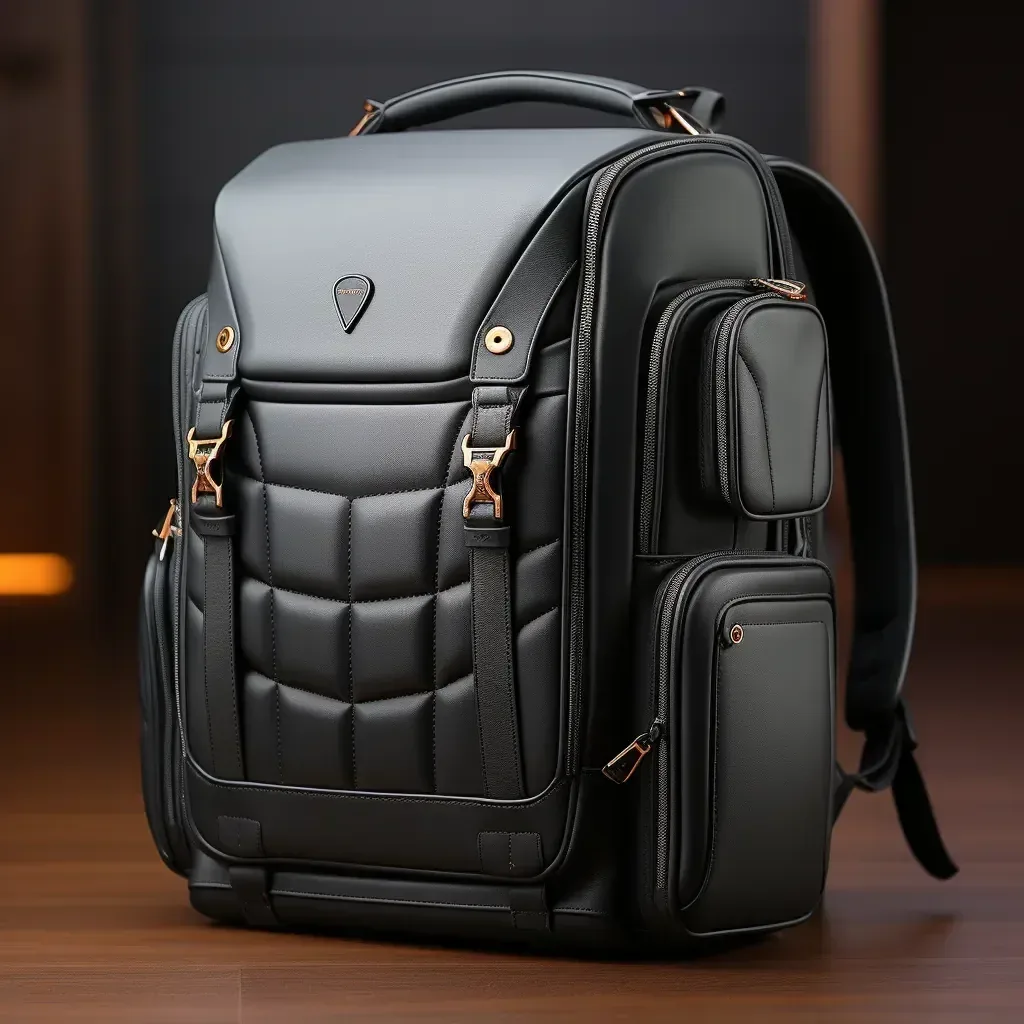
A bespoke satchel collection works when a brand decides deliberately which heritage elements to keep and which to reinterpret, rather than reproducing all of them. The load-bearing parts of the original design — a flap that protects the opening, a gusset that gives the body depth, and a strap that distributes weight across the shoulder — remain worth their cost. Buckles, straps and heavy stiffening are often retained for their appearance long after a modern closure would do the job better, and that is where a reimagined satchel either finds its commercial edge or becomes a costume.
The commercial opportunity is real. Heritage shapes carry an authority that newer silhouettes cannot borrow, and they photograph with a solidity that reads well in a range. The risk is equally real: a satchel built with all its historical apparatus can be heavy, slow to open and expensive to assemble, which is a poor combination for a customer who wants the look rather than the museum piece.
A useful way to frame the decision is to ask what the customer is actually buying. In most contemporary markets it is not the functionality of a nineteenth-century school bag; it is an impression of permanence and seriousness. Once that is understood, the heritage elements can be evaluated as signals rather than as engineering, and several of them turn out to be more cheaply signalled than literally reproduced.
What Actually Defines a Satchel
Designers use the word loosely, so a working definition helps. A satchel is a flap-front bag with a structured body, a distinct gusset that creates depth, and a strap long enough to wear across the body. Everything beyond those three elements is optional, and most of the design decisions in the category concern which optional elements to keep.
| Element | Structural role | Optional today? |
|---|---|---|
| Front flap | Protects the opening and sheds water | Essential to the silhouette |
| Gusset | Creates body depth and volume | Essential, though depth can be reduced |
| Cross-body strap | Distributes weight across the torso | Essential in heritage form |
| Buckle closures | Secure the flap | Optional; often replaced or retained decoratively |
| Stiffened body | Holds the shape when empty | Optional; modern versions soften it |
| Internal divider | Separates documents | Optional and frequently removed |
Treating the last three as decisions rather than defaults is what separates a reimagined satchel from a reproduction. A brand can keep the flap and the gusset, drop the stiffening, replace the buckles with a magnetic catch behind a decorative strap, and still produce a piece that reads unmistakably as a satchel while weighing considerably less and opening in one motion.
Programme parameters at a glance
| Parameter | Commitment |
|---|---|
| Minimum order quantity | 500 pieces per style / colourway |
| Sampling lead time | 6–10 working days (12–15 days for complex constructions) |
| Bulk production lead time | 35–50 days after sample approval |
| Inspection standard | AQL 2.5 (ISO 2859-1), single sampling, general level II |
| Incoterms | FOB Xiamen — EXW, CIF and DDP available on request |
| Payment terms | T/T 30% deposit / 70% before shipment; L/C at sight for container loads |
| Verified production floor space | 4,950 m² (SGS-verified) |
| Team | 137 staff across 7 production lines |
| Equipment | 149 machines including computerised saddle-stitch and edge-painting units |
| Monthly capacity | 200,000 pieces |
| Entity | Founded 2014; principal has worked in bag development since 2004 |
Heritage Elements and What Each One Costs
Every retained historical detail carries a cost in labour, weight or usability. None of that makes it wrong to keep; it makes it a decision that should be made knowingly. The list below is the honest accounting.
The weight question deserves particular attention because it is the one customers complain about. A full heritage specification in heavy leather with brass fittings and a stiffened body produces a bag that is noticeably heavier empty than almost anything else in a contemporary range. Where a brand wants the look without the penalty, the highest-value substitutions are a lighter body leather, alloy rather than brass fittings in the same finish, and a softened interlining.

Four Directions for a Reimagined Satchel
Reinterpretation is not a single move. Brands working in this category tend to take one of four routes, and the routes imply different customers as well as different specifications.
| Direction | What changes | Resulting character | Best for |
|---|---|---|---|
| Reduced | Stiffening and divider removed, body softened | Relaxed, contemporary | Casual and creative markets |
| Refined | Buckles slimmed, edges finely finished, leather lightened | Understated luxury | Premium and professional |
| Minimalised | Buckles removed, magnetic catch behind a clean flap | Modern, quiet | Minimalist house positions |
| Exaggerated | Proportions enlarged or reduced deliberately | Editorial and directional | Capsule and press pieces |
The minimalised route is the one that most often surprises brands by selling well. Removing the buckles while keeping the strap ends visible — so the silhouette still reads as a satchel — produces a bag that opens one-handed, weighs less and costs less to assemble, while retaining almost all of the visual authority of the original.
The exaggerated route deserves a warning. Proportions pushed deliberately — an oversized flap, a miniature body — photograph superbly and sell narrowly. It belongs in a capsule rather than in a core range, and a brand should not plan its satchel volume around it. The reduced and refined routes, by contrast, support repeat business and can carry a range for several seasons.
Material Selection for Heritage Construction
Heritage shapes were designed around materials that behave in particular ways, and substituting a modern alternative without adjusting the pattern is a common source of disappointment. A leather that stretches will sag on a satchel in a way it never would on a smaller body.
| Component | Requirement | Traditional choice | Modern alternative |
|---|---|---|---|
| Body | Dimensional stability | Bridle or vegetable-tanned leather | Firm full-grain with light interlining |
| Gusset | Holds a fold without cracking | Same hide, often heavier | Synthetic-reinforced leather |
| Strap | Resists elongation under load | Heavy bridle leather | Webbing core with a leather face |
| Flap | Lies flat without curling | Board-stiffened leather | Laminated leather panel |
| Lining | Abrasion resistance at the flap edge | Cotton twill or suede | Microfibre |
| Fittings | Finish consistency and weight | Solid brass | Alloy in a matched finish |
Bridle leather remains the reference material for a reason: it is finished with waxes that make it dimensionally stable and give it the bloom that heritage enthusiasts expect. It is also heavier and slower to work than most alternatives. Where a brand wants the appearance without the weight, a firm full-grain with a light interlining can approximate the behaviour, though it will not develop bloom in the same way.

Hardware: Buckles, Straps and Closure Logic
Hardware is where a satchel earns or loses its authenticity, and it is also the largest single variable in the cost of goods. The decision is not simply buckle or no buckle; it is a chain of decisions about how the flap is secured and how the adjustment works.
| Decision | Options | Effect on cost | Effect on usability |
|---|---|---|---|
| Flap security | Buckle, magnetic catch, turn-lock, or none | Buckles highest of all | Magnets fastest to open |
| Strap adjustment | Buckle, slider, or fixed length | Buckle adds leather and labour | Slider is smoothest in use |
| Fitting material | Solid brass, alloy, or plated steel | Brass most expensive and heaviest | Weight, not function |
| Buckle count | Two, one, or decorative only | Halving the count halves that line | One buckle is often sufficient |
| Attachment | Stitched, riveted, or both | Combined methods cost more | Combined is most durable |
A single buckle rather than two is a change most customers never notice and most budgets appreciate. The visual rhythm of the flap is preserved, and the saving in leather, fittings and assembly time is substantial. Where both buckles are kept for appearance, the second can be a decorative strap end with a magnetic catch behind it, which preserves the look entirely at a fraction of the functional cost.
Sizing and Carrying Modes
Satchel sizes ladder more usefully than most heritage shapes, because the format serves both a document-carrying role and a compact everyday role. A collection can cover both with two sizes rather than three.
- Compact. Tablet and essentials. The lightest option and the one that can be softened most successfully.
- Standard. A4 documents and a small laptop. The core commercial size and the one that needs the most structure.
- Large. Folders, layers or a weekend's worth of kit. Approaches a small holdall and requires a reinforced strap.
- Carrying modes. Cross-body is the heritage default; a top handle adds a second mode and a second attachment to engineer.
- Strap width. A large satchel needs a wider strap than a compact one, or the load concentrates uncomfortably.
Adding a top handle is a genuine design decision rather than a small addition. It introduces a second load path and a second attachment point, and a handle fitted to a flap that was not designed to carry it will distort the flap line. Where a handle is wanted, the flap reinforcement should be specified alongside it rather than added afterwards.
Interior layout should be decided against the flap rather than independently. A satchel's opening is partly covered by the flap when the bag is worn, so anything the customer needs frequently should sit above the flap line or in an exterior back pocket. Deep interior compartments under a closed flap are awkward to reach, which is a usability point that only emerges once the piece is carried rather than photographed.
Durability Expectations and Where They Come From
Customers buy a satchel expecting it to last, and that expectation is the category's greatest commercial asset. It is also a specification obligation: the elements that fail are predictable, and each has a known remedy.
| Failure point | Why it fails | Specification remedy |
|---|---|---|
| Strap elongation | Leather stretches under sustained load | Webbing core or a heavier cut |
| Flap curl | Insufficient stiffening in the flap panel | Laminate or interline the flap |
| Buckle hole wear | Repeated adjustment elongates the holes | Reinforce the strap end or use a slider |
| Gusset cracking | Fold repeated at the same line | Heavier leather or a reinforced fold |
| Edge wear at the flap | Highest-contact area on the bag | Bound or rolled edge rather than paint |
| Fitting loosening | Vibration and load over time | Rivet and stitch combined at attachment |
The durability expectation should also be reflected in the inspection criteria. Inspection runs at AQL 2.5 under ISO 2859-1, single sampling, general level II, and for satchels the checks that matter most are strap attachment, flap alignment and edge finish at the flap — the three areas where a defect is both visible and likely to worsen with use.
Freight and packing should be considered alongside durability, because a stiffened body does not collapse for shipping the way a soft bag does. A satchel packed flat occupies its full volume in a carton, so carton sizing and fill need to be specified before the run rather than improvised. Shipments leave FOB Xiamen, with EXW, CIF and DDP available on request.
Developing a Satchel Capsule
A two- or three-size satchel capsule is a substantial development, but sharing decisions across the sizes keeps it proportionate. The sequence below is the one that most reliably lands inside a quarter.
- Decide what to keep. List the heritage elements and mark each as structural, decorative or droppable before any pattern work starts.
- Select the body leather against the structure. A softened body needs a leather with enough stability not to sag on a large panel.
- Fix the hardware family once. One finish across buckles, sliders, rivets and any feet, so approvals are not repeated per size.
- Develop the standard size first. It carries the most structure, and its reinforcement logic can be reduced for the compact.
- Test the strap loaded. Wear the sample at full weight; a satchel is carried further than most styles in a range.
- Approve the edge specification. Bound, rolled or painted at the flap, decided at sample stage rather than left to the sample maker.
Sampling runs 6–10 working days for standard constructions and 12–15 for complex ones, with bulk production at 35–50 days after approval. Because the three sizes share a pattern family, hardware and leather, the capsule usually samples inside the window needed for one complex bag, which is what makes a satchel range a realistic proposition for a brand committing to its first structured collection.
Colour discipline matters here as it does elsewhere. Because a minimum applies per style and per colourway, three sizes in one shared leather is three runs, while three sizes in three colours is nine. Heritage shapes also suit a narrow palette: the tan and dark brown range that the construction was designed around continues to sell more reliably than experimental colours on this silhouette.
Documentation should be raised early where a brand sells into regulated markets. REACH declarations cover the leather and any applied finish, OEKO-TEX certification is commonly requested for linings and webbing, and LWG traceability on the tannery supports any leather provenance claim the brand wishes to make. Compiling those for one shared leather specification is straightforward; compiling them separately per colourway is not.
Develop a satchel capsule
Send your size plan, hardware preferences and heritage elements to keep. The programme team in Quanzhou will build the pattern family and the reinforcement specification.
Frequently Asked Questions
What defines a satchel as opposed to a messenger bag?
In practice, three elements: a flap front that protects the opening, a distinct gusset giving the body depth, and a strap long enough to wear across the body. Messenger bags share the strap and often the flap but tend to have a softer, shallower body. Buckles, stiffening and internal dividers are optional rather than definitional.
Can a satchel be made without buckles?
Yes, and it is one of the most successful reinterpretations. Removing the buckles while keeping the strap ends visible preserves the silhouette while letting the flap open one-handed on a magnetic catch. The bag weighs less, costs less to assemble and reads almost identically at a distance.
Why are heritage satchels so heavy?
Because the traditional specification stacks several heavy elements: a stiffened body, a full leather gusset, heavy bridle leather and solid brass fittings. Each is authentic and each adds weight. The highest-value substitutions are a lighter body leather, alloy fittings in a matched finish and a softened interlining.
What leather suits a satchel best?
Bridle or vegetable-tanned leather, because both are dimensionally stable and hold a large panel without sagging. Bridle has the wax finish that gives the characteristic bloom. A firm full-grain with light interlining can approximate the behaviour at lower weight, though it will not develop bloom the same way.
How many sizes should a satchel capsule include?
Two is usually sufficient: a compact size for tablet and essentials, and a standard size for A4 documents and a small laptop. A large size approaching a holdall can be added where the range has a travel adjacency. Three sizes in one shared leather keeps the commitment to three runs rather than nine.
What fails first on a satchel?
Typically the strap, through elongation under sustained load, followed by flap curl where the panel is insufficiently stiffened. Both are specification issues with known remedies: a webbing core or heavier cut for the strap, and lamination or interlining for the flap. Buckle hole wear follows where the strap is adjusted frequently.
Should a top handle be added to a satchel?
Only where the flap is engineered for it. A handle introduces a second load path and a second attachment point, and one fitted to a flap not designed to carry it will distort the flap line. The flap reinforcement should be specified alongside the handle rather than added afterwards.
How does a satchel differ in inspection from other styles?
The criteria are the same — AQL 2.5 under ISO 2859-1, single sampling, general level II — but the checks that matter differ. Strap attachment, flap alignment and edge finish at the flap are the three areas where a defect is both visible and likely to worsen with use, so they deserve specific attention.
Can a satchel body be softened successfully?
Yes, at the compact size especially. Removing the stiffening and the internal divider produces a relaxed contemporary piece that still reads as a satchel, provided the body leather has enough stability not to sag. Softening a large satchel is riskier, because the unsupported panel has more area to distort.
How long does a satchel capsule take to develop?
Sampling takes 6–10 working days for standard constructions and 12–15 for complex ones, followed by 35–50 days of bulk production after approval. Because the sizes share a pattern family, hardware and leather, a two- or three-size capsule usually samples inside the window required for one complex bag.
Should satchels come in experimental colours?
Cautiously. Heritage shapes sell most reliably in the tan and dark brown range the construction was designed around, and a minimum applies per colourway, so experimental colour carries real commitment. Where a brand wants colour novelty, a single accent size is safer than spreading it across the capsule.
What is the most cost-effective heritage detail to keep?
The flap and the visible strap ends. Together they carry almost all of the silhouette's visual authority at a fraction of the cost of full buckles, a stiffened body and a leather gusset. A decorative buckle with a magnetic catch behind it preserves the look entirely at much lower functional cost.
Do buckle straps wear out?
The holes do. Repeated adjustment elongates them, and eventually the strap no longer holds at the chosen length. The remedy is to reinforce the strap end, to use a slider instead of a buckle for adjustment, or to accept the adjustment as occasional rather than daily.
How should the gusset be specified?
With attention to the fold line. A gusset that is folded repeatedly at the same point will eventually crack, so a heavier leather or a reinforced fold is worth specifying. A single wrap of leather around three sides is the heritage method and consumes more material than a sewn alternative.
Is a satchel suitable for a first structured collection?
It is a reasonable choice, because three sizes can share one pattern family, one hardware specification and one leather. That sharing keeps sampling inside a single window and keeps the commitment to three runs rather than nine, which is what makes a structured capsule achievable for a brand commissioning its first range.