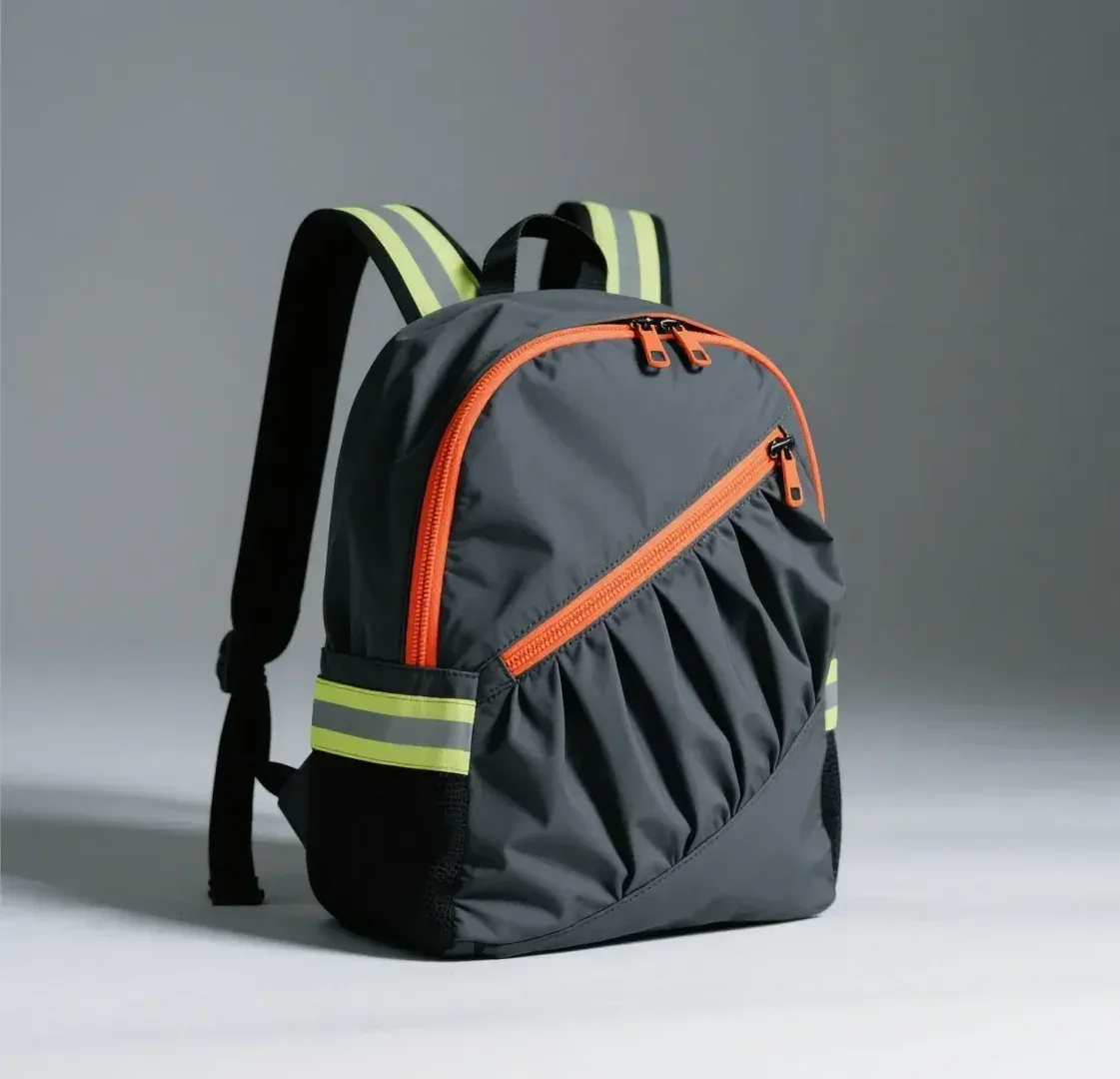
A bespoke weekend bag is a soft travel piece sized for one to three nights away, generally between 25 and 40 litres of usable capacity. The size band is narrow for a reason: below it the piece cannot hold a realistic overnight load, and above it the buyer has effectively specified a holdall and should be paying holdall material costs. Getting that boundary right is the first and most consequential decision in the brief.
Short-trip luggage is also the category where restraint pays best. Every litre added costs material, weight and visual bulk, and every feature added consumes volume that could hold clothing. The pieces that perform longest in service tend to be the ones whose specification decisions were made against a packing list rather than a feature wish list.
This guide covers the sizing calculation, the cabin question, the feature decisions that matter, and the specification sequence we follow on our SGS-verified production floor in Quanzhou, Fujian. Sampling is 6–10 working days, bulk production 35–50 days after approval, and the standard programme minimum is 500 pieces per style or colourway.
Programme parameters at a glance
| Parameter | Commitment |
|---|---|
| Minimum order quantity | 500 pieces per style / colourway |
| Sampling lead time | 6–10 working days (12–15 days for complex constructions) |
| Bulk production lead time | 35–50 days after sample approval |
| Inspection standard | AQL 2.5 (ISO 2859-1), single sampling, general level II |
| Incoterms | FOB Xiamen — EXW, CIF and DDP available on request |
| Payment terms | T/T 30% deposit / 70% before shipment; L/C at sight for container loads |
| Verified production floor space | 4,950 m² (SGS-verified) |
| Team | 137 staff across 7 production lines |
| Equipment | 149 machines including computerised saddle-stitch and edge-painting units |
| Monthly capacity | 200,000 pieces |
| Entity | Founded 2014; principal has worked in bag development since 2004 |
What Short-Trip Travel Actually Demands
A weekend trip is not a scaled-down long trip. The load is different in character: fewer items, more likely to include a device, more likely to be carried through an airport or station rather than checked, and far more likely to be carried by hand for longer than the owner expects. Those characteristics should drive the specification rather than the trip duration alone.
| Demand | Consequence for the bag | Specification response |
|---|---|---|
| Fewer, bulkier items | Volume matters less than aperture width | Wide, stiffened opening rather than extra litres |
| Device carriage | Protection and access both required | Suspended sleeve, positioned for security screening |
| Hand carry over distance | Comfort dominates | Handle core, strap width, balanced centre of gravity |
| Cabin or overhead use | Dimensional discipline | Design to the strictest carrier; tolerance held in production |
| Mixed formal and casual | Crease control | Flat packing with a light compression panel |
There is also a commercial dimension. Weekend bags sit at a price point where buyers are sensitive to value perception, and perceived value in this category comes disproportionately from material and hardware rather than from capacity. A 30-litre bag in good leather with well-chosen fittings outsells a 45-litre bag in mediocre material at the same price, because customers judge what they can see and touch.
Sizing: The Two-Night Calculation
Rather than starting from a litre figure, start from the packing list. A realistic two-night load for one adult — two shirts or tops, one pair of trousers, undergarments, a light layer, a wash bag, chargers and a device — occupies roughly 22 to 28 litres when packed normally. Add footwear carried inside the bag and the figure rises by 4 to 6 litres.
| Trip profile | Contents | Usable capacity | Suggested footprint |
|---|---|---|---|
| One night, business | Shirt, undergarments, wash bag, device | 18–24 litres | 40–44 cm |
| Two nights, mixed | Two tops, trousers, layer, wash bag, device | 25–32 litres | 44–50 cm |
| Two nights with footwear | As above plus shoes | 30–36 litres | 46–52 cm |
| Three nights, soft load | Additional layer and trousers | 34–40 litres | 50–55 cm |
Two conversion factors matter when translating those figures into a pattern. First, usable capacity is typically 70–85% of geometric volume once lining, padding and structure are accounted for. Second, a soft bag bulges when packed, so external dimensions should be set roughly 5% below the maximum permitted by whatever cabin rule applies, if cabin use is intended at all.
Cabin Compliance Without Compromise
Cabin allowances differ by carrier and by fare class, and they change. The only robust approach is to design against the strictest rule in the buyer's target market and verify the finished sample with a physical gauge. Weekend bags have an advantage here: no wheels, no telescopic handle, and soft sides that compress into a sizer when required.
Designers sometimes respond to cabin rules by shrinking the bag until it stops being useful. The better response is to keep the footprint and remove internal bulk: thinner lining, lighter structure, fewer dividers. Capacity recovered by removing interior consumption is worth more than capacity recovered by shrinking the body, because it carries no penalty in appearance.
Feature Priorities: What Earns Its Space
Every feature on a weekend bag costs volume, weight or money, and most features cost two of the three. The discipline is to rank them against the actual trip rather than against what competitors list. The table below reflects how we advise buyers to rank common requests.
| Feature | Value on a weekend bag | Recommendation |
|---|---|---|
| Wide stiffened opening | High — governs ease of packing | Specify; cheapest feature with the largest effect |
| Suspended device sleeve | High — nearly universal requirement | Specify with real device dimensions |
| Detachable shoulder strap | High — distance carry is common | Specify with non-slip pad |
| External quick-access pocket | High — documents and boarding passes | Specify; position for security queues |
| Metal base feet | Medium-high — protects the base | Specify for regular travel use |
| Internal compression straps | Medium — useful on soft loads | Optional; adds a little weight |
| Shoe compartment | Low-medium — costs real volume | Only where the brief demands it |
| Trolley sleeve | Medium — useful in mixed itineraries | Optional; adds back-panel bulk |
| Multiple internal dividers | Low — consumes usable space | Generally avoid on short-trip sizes |
The trolley sleeve deserves a specific note. It is genuinely useful for travellers combining a weekend bag with a rolling case, but it adds a full back panel and therefore weight and bulk. On a piece whose main selling proposition is lightness and softness, that is a poor trade. On a piece positioned for business travel, it is usually worth specifying.
Interior Layout for a Short Trip
Short-trip interiors should be simple. The load is small enough that the user can find things without elaborate organisation, and elaborate organisation is what turns a 32-litre bag into a 26-litre bag. A well-judged interior for this category has three elements and very little else.
- One main cavity with a flat, unobstructed floor so clothing can be folded rather than rolled under pressure.
- One suspended device sleeve sized to the stated device, held clear of the shell wall so external impact is not transmitted.
- Two or three slip pockets for documents, chargers and small items, positioned near the opening rather than at the bottom.
- A single zip pocket for valuables, ideally on the panel that sits against the body when carried.
- Light-coloured lining to improve internal visibility, which customers notice disproportionately in this size band.
Where the brief includes toiletries carried loose, a removable lined pouch is a better answer than a built-in wet compartment. It preserves volume when not needed and can be cleaned or replaced, whereas a fixed compartment permanently consumes space in a bag that has very little to spare.

Carry Comfort on a Light Load
Comfort is often treated as a function of load, but on weekend bags the load is modest and comfort is instead determined by geometry and by the handle and strap interface. Three variables govern it, and all three should be written into the brief rather than left to the sample to reveal.
| Variable | Effect | Practical guidance |
|---|---|---|
| Handle drop | Determines clearance from the leg | Specify in centimetres; confirm on the physical sample |
| Handle core | Determines pressure across the palm | Rolled or padded core; avoid flat folded straps on heavier builds |
| Strap width and padding | Determines shoulder comfort over distance | Wider straps spread load; padding should be firm, not soft |
| Centre of gravity | Determines whether the bag swings | Keep dense contents low and close to the body |
| Attachment spread | Determines whether the shell distorts | Reinforcement panel behind every anchor |
One frequent oversight is the wrap or keeper that holds the two handles together. It is a small component, but it materially improves how the bag feels in the hand and how it photographs, and it prevents the handles from splaying under load. It is among the cheapest additions available and one of the most noticed.
Materials and Finishes for Weekend Use
Weekend bags are handled more and checked less than larger travel pieces, which shifts the material priority towards appearance retention and hand-feel. Abrasion resistance still matters, but the visible surface is the one customers judge, so finishes that conceal or age gracefully carry more weight than in the checked-luggage categories.
| Material | Positioning | Consideration |
|---|---|---|
| Full-grain bovine, 1.4–1.8 mm | Premium; patinates well | Heavier; pair with light lining to control weight |
| Pebble-grain finished leather | Mid to premium travel | Conceals scuffs; good for frequent use |
| Saffiano or pigmented finish | Business positioning | Scratch-resistant; less repairable than full-grain |
| Vegetable-tanned leather | Heritage and artisan positioning | Marks readily; requires customer education |
| Waxed cotton canvas with leather trim | Casual and outdoor | Light, re-waxable, strong value perception |
| High-tenacity nylon | Utility and sports | Lightest and most abrasion-resistant |
Compliance should be settled at material selection. EU-bound programmes require REACH conformity covering chrome VI and azo dyes; US-bound programmes need correct country-of-origin labelling and, where applicable, CPSIA documentation. OEKO-TEX-certified linings and LWG-audited tannery sourcing are the two evidence packages most often requested, and both are straightforward to arrange when specified at sampling.
From Brief to Approved Sample
Weekend bag programmes settle quickly when the brief is quantitative. Buyers who supply a packing list, target external dimensions, a device size, a handle drop figure and a hardware finish direction typically approve within one sampling round. Buyers who supply a moodboard usually need three, because every one of those numbers gets discovered late.
- Supply the packing list rather than a litre target.
- State external dimensions and any cabin rule the piece must satisfy.
- Confirm device dimensions, not a nominal screen size.
- Fix handle drop, strap configuration and hardware finish.
- Rank the feature list, dropping anything that does not serve the stated trip.
- Select outer material and lining as a pair, with compliance markets noted.
- Approve a physical sample, packed and photographed, before releasing bulk.
Bulk runs are released after inspection at AQL 2.5 under ISO 2859-1, single sampling, general level II, with functional checks on zip travel and strap anchorage. Our Quanzhou facility operates seven lines across 4,950 m² with 137 staff and 149 machines, reaching up to 200,000 pieces per month. Standard shipment is FOB Xiamen, with EXW, CIF and DDP available on request, and payment is a 30% deposit with the balance before shipment.

Develop a bespoke weekend bag
Share your packing list, target dimensions and material direction with the programme team at service@junyuanbags.com or on WhatsApp at +86 177 5002 0688. We will return a sizing recommendation and sampling schedule.
Frequently Asked Questions
What size is a weekend bag?
A weekend bag typically carries 25–40 litres of usable capacity, which corresponds to a body around 44–55 cm in length. The precise figure should follow a packing list rather than a category convention: a realistic two-night load of clothing, wash bag and device occupies roughly 22–28 litres. Above about 40 litres the piece is effectively a holdall and should be specified and costed as one.
How many litres do I need for two nights away?
Plan 25–32 litres of usable capacity for two nights with a mixed load of two tops, trousers, a light layer, undergarments, a wash bag and a device. Add 4–6 litres if footwear will be carried inside the bag. Remember that usable capacity runs 70–85% of geometric volume, so a bag marketed at 40 litres may only accept around 30 litres of real contents.
Is a weekend bag cabin compliant?
Most weekend bags are, because they have no wheels or rigid handles and their soft sides compress into a sizer. Compliance depends on the specific carrier, however, and allowances vary by fare class. Design to the strictest rule in your target market, include external pockets in the measurement, and allow roughly 5% headroom for packed bulge rather than designing exactly to the limit.
Should a weekend bag have a laptop compartment?
For most buyers, yes, since devices are near-universal on short trips. The specification detail that matters is suspension: a padded sleeve held clear of the shell wall so an external impact is not transmitted to the device. State actual device dimensions rather than a nominal size, and consider whether the sleeve needs to be removable for airport security screening.
What is the best material for a bespoke weekend bag?
It depends on positioning. Full-grain bovine leather in the 1.4–1.8 mm range gives the strongest premium impression and patinates well. Pebble-grain and pigmented finishes conceal travel scuffs better and suit frequent business use. Waxed cotton canvas with leather trim offers excellent perceived value at a lower weight. Choose on appearance retention, since weekend bags are handled more and checked less than larger luggage.
How many compartments should a weekend bag have?
Fewer than most buyers initially request. A well-judged short-trip interior has one main cavity, one suspended device sleeve, two or three slip pockets near the opening and one zip pocket for valuables. Additional dividers consume volume that clothing needs, and in a 30-litre bag that trade is rarely worth making. If toiletries are carried loose, use a removable pouch instead of a fixed compartment.
Can a weekend bag be used as a personal item on a flight?
Smaller weekend bags can, particularly those at the 18–24 litre end of the range, but personal-item allowances are considerably stricter than cabin bag allowances and are enforced inconsistently. If personal-item use is a requirement, it must be stated in the brief from the outset, because the resulting dimensions produce a noticeably smaller piece than a standard weekend bag.
What handle drop suits a weekend bag?
A drop of 12–16 cm from the top of the handle to the top of the body suits most users, with more allowance if the bag will be carried over a coat. The figure should be specified in centimetres and confirmed on a physical sample, since it is the most felt and most often omitted measurement in the entire specification. A rolled or padded handle core improves comfort under load.
How long does a bespoke weekend bag programme take?
The first sample arrives 6–10 working days after the material and hardware schedule is confirmed, or 12–15 working days where the build is framed or otherwise complex. Bulk then runs 35–50 days from written approval. The risk sits at the front end: confirm hardware finish availability early, because a custom finish is the most frequent reason a weekend bag schedule slips.
What is the minimum order for bespoke weekend bags?
Minimums are quoted at 500 pieces per style and colourway, reflecting the fixed costs of pattern development, die cutting and component purchasing. Small-batch pilots are available for brands testing a format before committing to a full run, and where the design carries through unchanged the pilot shares tooling with the subsequent production order, which protects the economics.
Is a trolley sleeve worth specifying on a weekend bag?
It depends on positioning. A trolley sleeve is genuinely useful for travellers combining a weekend bag with a rolling case, but it adds a full back panel and therefore weight and bulk. On a piece sold on lightness and softness that is a poor trade. On a business-travel piece, where mixed itineraries are the norm, it is usually worth the addition.
How do I keep a weekend bag light without making it flimsy?
Remove interior consumption rather than exterior material. Thinner linings, lighter structure and fewer dividers recover capacity without shrinking the body or weakening the shell. Reinforce selectively at stress points — handle roots, strap anchors, zip ends and the base contact strip — instead of adding weight across the whole panel. That approach preserves strength where load actually concentrates.
What hardware finish should I choose for a weekend bag?
Fix a single finish family early and hold every component to it: nickel, brass, gunmetal or blackened, applied consistently to zips, buckles, feet, rivets and any logo plate. Mixing finishes is the most common reason a bag reads as an assortment rather than a designed piece. Where the programme includes multiple styles, a shared finish language is what makes them read as a collection.
How should a weekend bag be inspected before bulk release?
Follow AQL 2.5 under ISO 2859-1, single sampling, general level II, with critical, major and minor defect classes agreed beforehand and the approved sample present as reference. For weekend bags, add functional checks on zip travel, strap anchorage, device sleeve dimensions, handle drop and base foot alignment, since these are the elements most likely to drift between sample and bulk.
Can a weekend bag be part of a matched travel set?
Yes, and it is one of the most efficient ways to build a travel range. A weekend bag shares leather, thread, lining and hardware finish with a wash bag and a garment cover, so the development cost of a custom material is amortised across the set. Develop the pieces together, because decisions in the largest piece usually cascade into the smaller ones.
How should a leather weekend bag be cared for between trips?
Empty it fully, stuff it loosely with tissue to retain shape, and store it in a breathable dust bag away from direct heat and sunlight. Avoid sealed plastic, which traps moisture. Condition two to three times a year depending on climate, wipe spills promptly, and never hang a loaded bag by its handles for long periods, since that distorts both the handles and the shell.