
Executive leather gifts work when the piece matches how the recipient actually works: a briefcase for someone who carries documents, a wallet for someone who travels light, and a desk set for someone whose workspace is seen by visitors. The three categories differ in visibility, cost and risk, and the correct choice follows the recipient's habits rather than the price of the gift. Construction quality has to hold at arm's length, because executive recipients examine edges, lining and hardware before they form a view.
This is the tier where scrutiny is highest and forgiveness lowest. A conference delegate accepts a gift and moves on; an executive recipient turns it over, opens it, feels the edge and looks at the stitch line. That examination is not hostile, it is habit, and it means the specification has to be defensible in every detail rather than merely attractive in a photograph. It also means the safest selection is rarely the most elaborate one.
The sections below compare the three principal categories, set out the construction standards that survive close inspection, cover branding restraint at this level, and give the budget and timeline structure for an executive tier. The programme team develops these pieces from our production floor in Quanzhou, Fujian, where executive programmes are usually run as retained specifications so that later gifts match the first.
Programme parameters at a glance
| Parameter | Commitment |
|---|---|
| Minimum order quantity | 500 pieces per style / colourway |
| Sampling lead time | 6–10 working days (12–15 days for complex constructions) |
| Bulk production lead time | 35–50 days after sample approval |
| Inspection standard | AQL 2.5 (ISO 2859-1), single sampling, general level II |
| Incoterms | FOB Xiamen — EXW, CIF and DDP available on request |
| Payment terms | T/T 30% deposit / 70% before shipment; L/C at sight for container loads |
| Verified production floor space | 4,950 m² (SGS-verified) |
| Team | 137 staff across 7 production lines |
| Equipment | 149 machines including computerised saddle-stitch and edge-painting units |
| Monthly capacity | 200,000 pieces |
| Entity | Founded 2014; principal has worked in bag development since 2004 |
What an Executive Gift Has to Do
Six requirements apply at this tier, and the first three are the ones most often missed. An executive gift is judged on suitability and restraint before it is judged on quality, and a high-quality piece that does not suit how the recipient works is a failed gift.
| Requirement | Why it matters here | How it is delivered |
|---|---|---|
| Read as considered | The recipient assesses quality immediately | Material and construction specified to a standard |
| Suit how they work | The wrong category goes unused | Selection based on observed habits |
| Carry discreet branding | Executives avoid conspicuous marks | Deboss or small foil at a fixed size |
| Last for years | Judged long after it is given | Full-grain leather, specified hardware |
| Arrive presented | Presentation is part of the object | Rigid box, dust bag, printed card |
| Respect internal policy | Many organisations cap gift value | Check the cap before specifying |
The policy check belongs at the start rather than the end. Many listed companies, public bodies and regulated firms set a limit on what their people may accept, and a gift above that limit has to be declared, declined or returned. Asking the recipient's office, or checking published policy, costs a few minutes and prevents the most awkward outcome in corporate gifting: a generous gift that creates a problem for the person receiving it.
Briefcases: The Principal Tier
A briefcase is the most substantial executive gift and the most exposed. It is large, it is carried in professional settings, and it is compared constantly against whatever the recipient already owns. Choosing the right construction matters more than choosing the most expensive leather.
| Construction | Character | Best for | Consideration |
|---|---|---|---|
| Framed briefcase | Rigid, formal, holds its shape | Legal, finance and board-level recipients | Heavier; needs a structured interior |
| Unframed soft briefcase | Relaxed, lighter in hand | Creative and technology sectors | Slumps when empty |
| Document case or portfolio | Slim and minimal | Recipients who carry a laptop separately | Limited capacity |
| Hybrid business bag | Briefcase with a detachable strap | Recipients who commute on foot or rail | Strap hardware must be specified |
| Attaché style | Formal, heritage | Ceremonial or milestone gifts | Niche; rarely used daily |
Capacity is the deciding factor and it is usually misjudged. A recipient who travels with a separate laptop bag needs a slim document case, not a full briefcase, and one who carries papers, a tablet and a notebook needs interior organisation rather than a single open compartment. Observing what the recipient currently carries is more reliable than asking, because people describe their habits in idealised terms.
Interior organisation is the detail that separates a briefcase that gets used from one that does not. A single open compartment forces documents, chargers and a phone into the same space, and the result is a bag that is searched rather than opened. Specifying pen slots, a padded sleeve, a zipped interior pocket and a key clip takes little extra material and changes how the piece behaves every working day.
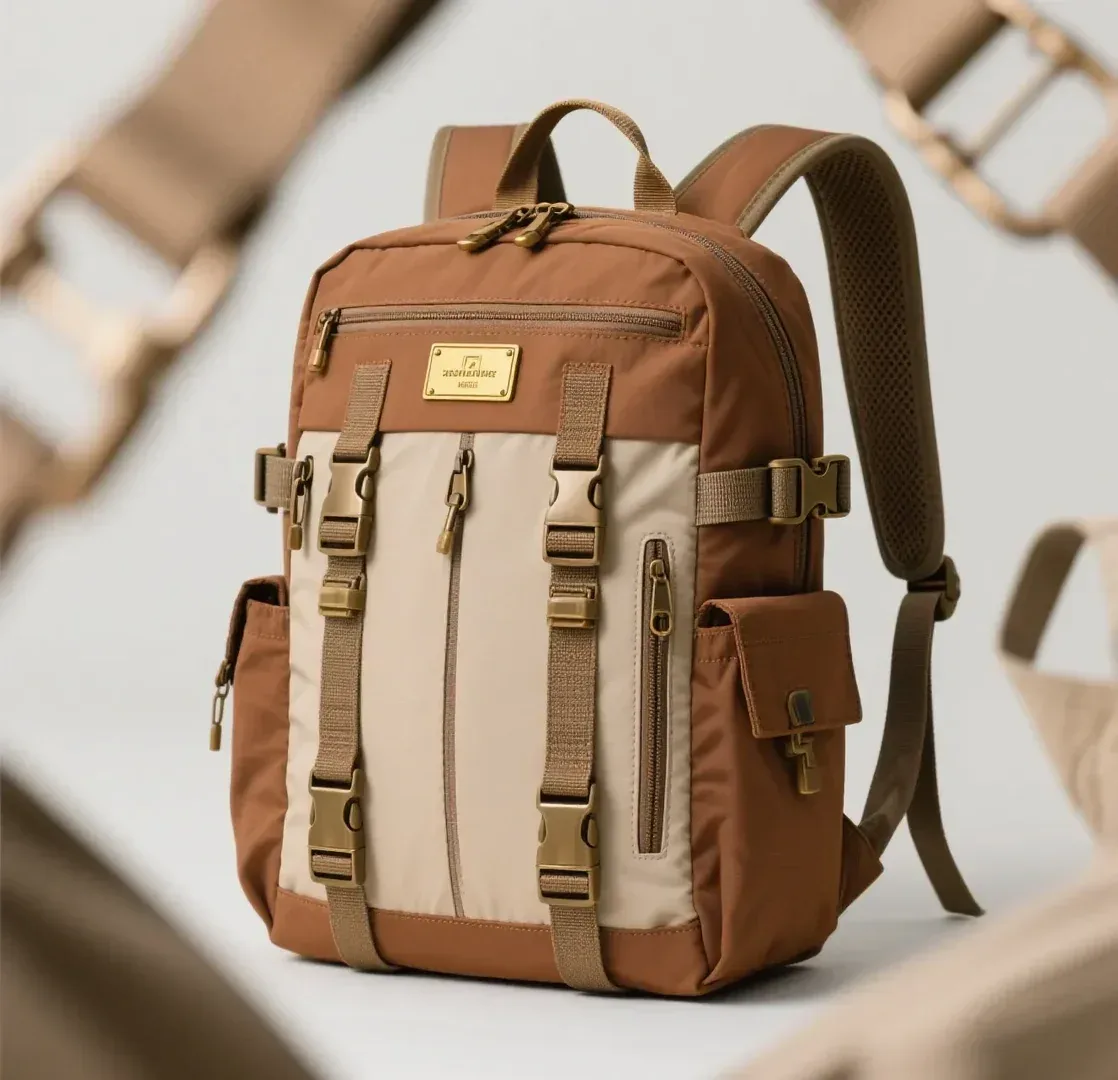
Wallets and Small Leather Goods
Small leather goods are the least risky executive category because they carry no sizing risk and no assumption about how the recipient works. Everyone uses a wallet or a card holder, and the only real variable is how much the recipient carries.
The unexpected option deserves a place in most executive programmes. A wallet is appreciated but rarely recalled, because it disappears into a pocket and into a life. A cable roll, a glasses case or a travel document wallet is encountered less often and therefore remembered longer. Where the purpose is gratitude, choose the wallet; where the purpose is recall, choose the piece the recipient did not know they wanted.
Construction within this category deserves as much attention as it receives in a briefcase, compressed into a much smaller object. Card slots should be cut so that a full set still slides out easily, edges should be finished rather than left raw, and the fold should be skived so the piece lies flat in a pocket. These are the details an executive recipient checks without thinking, and they are what distinguish a small leather good worth giving from one that merely fills a box.
Desk Sets: The Gift That Stays Visible
Desk pieces are the category with the longest working life, because they are seen daily by the recipient and by everyone who enters the room. That visibility is what makes them valuable and what makes them risky: a desk piece has to suit a workspace the giver has probably never seen.
| Piece | Visibility | Practical risk | Note |
|---|---|---|---|
| Desk organiser | High, seen by visitors | Requires clear desk space | Strongest visibility of any category |
| Valet tray | Moderate, hallway or home | Low | Unexpected and well remembered |
| Journal cover | Moderate, in use | Low | Suits recipients who write by hand |
| Desk pad or blotter | High | Requires a large desk | Impressive but office-dependent |
| Pen cup or accessory | Low | Low | Best included as part of a set |
| Full desk set | Very high | Requires a matching workspace | Considerable presentation impact |
A paired set is often the strongest executive option, because it solves the visibility-versus-risk tension. A desk organiser with a matching valet tray, or a journal cover with a pen, gives the recipient something for the office and something for home, and boxed together they read as one considered gift. The material family must match exactly, since a set that differs in shade or grain across pieces looks assembled rather than designed.
Working patterns have shifted the calculation for this category. Where a recipient divides time between an office and a home workspace, a single large desk piece may sit unused for half the week, while a smaller organiser or valet tray travels between the two. Establishing where the recipient actually spends their working hours is worth a direct question, and where the answer is genuinely split, two smaller pieces outperform one impressive one.
Material and Construction Standards for Executive Pieces
Executive recipients notice six things, and they notice them in a predictable order: hand feel, edges, stitch line, hardware, lining and whether the piece holds its shape. Specifying each of them in writing is what separates an executive programme from a general one.
| Element | Standard | Why it is noticed |
|---|---|---|
| Leather | Full-grain or top-grain calfskin | Hand feel is the first assessment |
| Edge finish | Clean edge paint or burnished edges | Edges are examined closely |
| Stitch density | Consistent, even, no skipped stitches | Uneven stitching reads immediately |
| Hardware | Specified metal with a consistent finish | Weight and colour are felt in the hand |
| Lining | Matched to the exterior in quality | The interior is always opened |
| Structure | Holds shape when empty | Slumping reads as inexpensive |
These standards need to be enforceable rather than aspirational. The practical method is a retained approved sample held against bulk production, written tolerances for shade and stitch density, and inspection to AQL 2.5 under ISO 2859-1 using single sampling at general level II. Where a programme includes personalised pieces, those units are checked individually, because a name error is unique to a person rather than distributed across a batch.
Ageing behaviour should be part of the specification rather than a discovery. Vegetable-tanned and full-grain leathers darken and soften with handling, which most recipients value and a few dislike, while pigment-finished and saffiano leathers hold their original appearance far longer. Stating which behaviour to expect on the care card prevents the disappointment of a recipient who assumed a gift was fading when it was, in fact, developing a patina as intended.

Branding and Personalisation at Executive Level
Branding at this tier should be smaller than the brand guidelines ask for and placed where the recipient will see it rather than where everyone else will. The reason is simple: an executive gift that looks promotional will not be carried, and a gift that is not carried delivers nothing.
| Option | Effect | Recommendation |
|---|---|---|
| Blind deboss, small | Understated and permanent | The default at this tier |
| Initials on the lining | Personal without display | Strong for named recipients |
| Metal plate | Substantial and weighty | Suitable on briefcases only |
| Foil mark | Formal and visible | Use at a reduced size |
| Full-colour print | Promotional | Avoid entirely at this level |
| No external mark | Most discreet option | Appropriate where policy requires it |
Initials on the lining are the most effective personalisation available at executive level. They are seen every time the piece is opened, they are invisible to everyone else, and they make the object unmistakably the recipient's without turning it into a display. Where the recipient list is short, as it usually is at this tier, individual checking of every personalised unit is both feasible and necessary.
Budgeting an Executive Tier
Executive budgets differ from general gifting budgets in one important respect: the recipient list is short enough that a higher unit cost is usually acceptable, and the risk is therefore concentrated in the per-piece specification rather than in the total.
| Tier | Typical piece | Where the money goes | Risk |
|---|---|---|---|
| Entry executive | Wallet, card holder or valet tray | Leather quality | Low |
| Mid executive | Journal cover or document case | Leather and hardware | Low to moderate |
| Principal | Structured briefcase | Leather, hardware, construction, lining | Moderate; scrutiny is highest |
| Milestone | Briefcase with a companion piece | Everything, plus presentation | Moderate; presentation matters most |
Within the principal tier, hardware is the element most often under-budgeted. A briefcase carries locks, feet, a handle fitting and often a strap, and specifying those components properly costs more than upgrading the leather. The return is disproportionate, because hardware is what the recipient feels first and what fails first if it is cheap.
Commercial terms follow the standard structure of thirty per cent on order with the balance before shipment, quoted FOB Xiamen and available as EXW, CIF or DDP. Where executive gifts are sent directly to recipients at home or to regional offices, DDP removes the risk of a recipient being asked to settle duty on a gift, which is an outcome that damages the gesture beyond repair.
Timeline and Presentation
Executive programmes are usually smaller than event programmes but take just as long, because the specification is more demanding and personalisation adds a stage. The presentation date is still fixed, and it is usually tied to a milestone, a retirement or a year-end.
| Stage | Weeks before presentation | Critical note |
|---|---|---|
| Brief and selection | 18–22 weeks | Longer for a bespoke briefcase |
| Sampling | 16–18 weeks | Six to ten working days; twelve to fifteen if complex |
| Branding and personalisation proof | 14–16 weeks | Physical proof approved by the giver |
| Bulk production | 8–12 weeks | Thirty-five to fifty days after approval |
| Personalisation and packing | 4–6 weeks | Individual checking for named pieces |
| Delivery | 2–5 weeks | Consolidated, or direct to each recipient |
Presentation deserves a budget line of its own at this tier. A rigid box proportioned to the piece, a dust bag in a material consistent with the gift, and a printed card carrying the giver's message are the minimum, and the card should say what the piece is made of and why it was chosen. That information is what turns an object into something the recipient can talk about, and it costs almost nothing to include.
Retaining the specification afterwards is the step that pays back over years. Executive programmes tend to repeat — for promotions, retirements and client milestones — and a documented specification with a retained pattern and held material standards turns each subsequent gift into a reorder. Consistency across years is itself a signal, and it is far easier to achieve when the first programme was written with repetition in mind.
Develop an executive gift with the programme team
Tell us how the recipient works, the occasion and your budget per piece, and we will return options across briefcases, wallets and desk sets with a construction specification and a schedule to the presentation date. Development is coordinated from our production floor in Quanzhou, Fujian. Write to service@junyuanbags.com or message WhatsApp +86 177 5002 0688.
Frequently Asked Questions
What is the best executive leather gift?
The one that matches how the recipient works. A briefcase suits someone who carries documents, a wallet suits someone who travels light, and a desk set suits someone whose workspace is seen by visitors. Category fit matters more than price, because a well-made piece in the wrong category goes unused.
Should an executive gift be a briefcase or a wallet?
Choose a briefcase when the recipient carries papers, a tablet and a notebook daily, and a wallet when they travel light. Briefcases carry more risk because they are compared against what the recipient already owns. Where the brief is unclear, a small leather good is the safer selection.
What do executive recipients notice first about a leather gift?
Hand feel, then edges, then the stitch line, then hardware, then lining, and finally whether the piece holds its shape when empty. That order is consistent enough to specify against. Writing tolerances for each of the six, and holding an approved sample against bulk, makes the standard enforceable rather than aspirational.
How should an executive leather gift be branded?
Smaller than brand guidelines request. A small blind deboss is the default; foil should be reduced in size; metal plates suit briefcases only; full-colour print should be avoided entirely. Initials on the lining are the most effective personalisation, since they are seen on opening and invisible to everyone else.
Are desk sets a good executive gift?
They offer the longest working life of any category because they are seen daily by the recipient and by visitors. The risk is that they must suit a workspace the giver has never seen. A paired set, such as a desk organiser with a matching valet tray, spreads that risk across office and home.
Do executive recipients have gift value limits?
Frequently. Many listed companies, public bodies and regulated firms cap what staff may accept, and a gift above the cap must be declared, declined or returned. Checking published policy or asking the recipient's office takes minutes and prevents the most awkward outcome in corporate gifting.
What is the minimum order quantity for an executive gift?
The standard minimum is 500 pieces per style and colourway, which executive lists rarely reach. Small-batch pilots are available for limited runs at a higher unit cost, and where a programme is expected to repeat, consolidating several years into one run with staged releases is usually more economical.
How long does an executive gift programme take?
Plan eighteen to twenty-two weeks before the presentation date, longer for a bespoke briefcase. Sampling takes six to ten working days per round, or twelve to fifteen for complex constructions, and bulk production runs thirty-five to fifty days after sample approval.
Why is hardware so important on an executive briefcase?
Because it is what the recipient feels first and what fails first if it is cheap. Locks, feet, handle fittings and strap components cost more than a leather upgrade and return more, since hardware weight and finish are assessed in the hand within seconds of picking the piece up.
How should an executive leather gift be presented?
In a rigid box proportioned to the piece, with a dust bag consistent with the gift and a printed card carrying the giver's message. The card should say what the piece is made of and why it was chosen, which gives the recipient language for it and costs almost nothing to include.
Should executive gifts be shipped directly to recipients?
They can be, and DDP terms are usually the right choice, because a recipient asked to settle duty on a gift is an outcome that damages the gesture beyond repair. Consolidated delivery to one office is cheaper and simpler where recipients sit in the same location.
How do you keep executive gifts consistent across years?
Retain the specification: a documented pattern, held material standards and a recorded branding setup. Later gifts for promotions, retirements and milestones then become reorders rather than new developments, which shortens the calendar, holds cost down and makes consistency across years a visible signal.
What compliance applies to executive leather gifts?
Gifts shipped into the EU fall under REACH restrictions on substances in articles, and US distribution should consider CPSIA. Leather Working Group tannery traceability and OEKO-TEX testing on linings are worth requesting at specification stage, when documentation is straightforward to assemble and before bulk has begun.