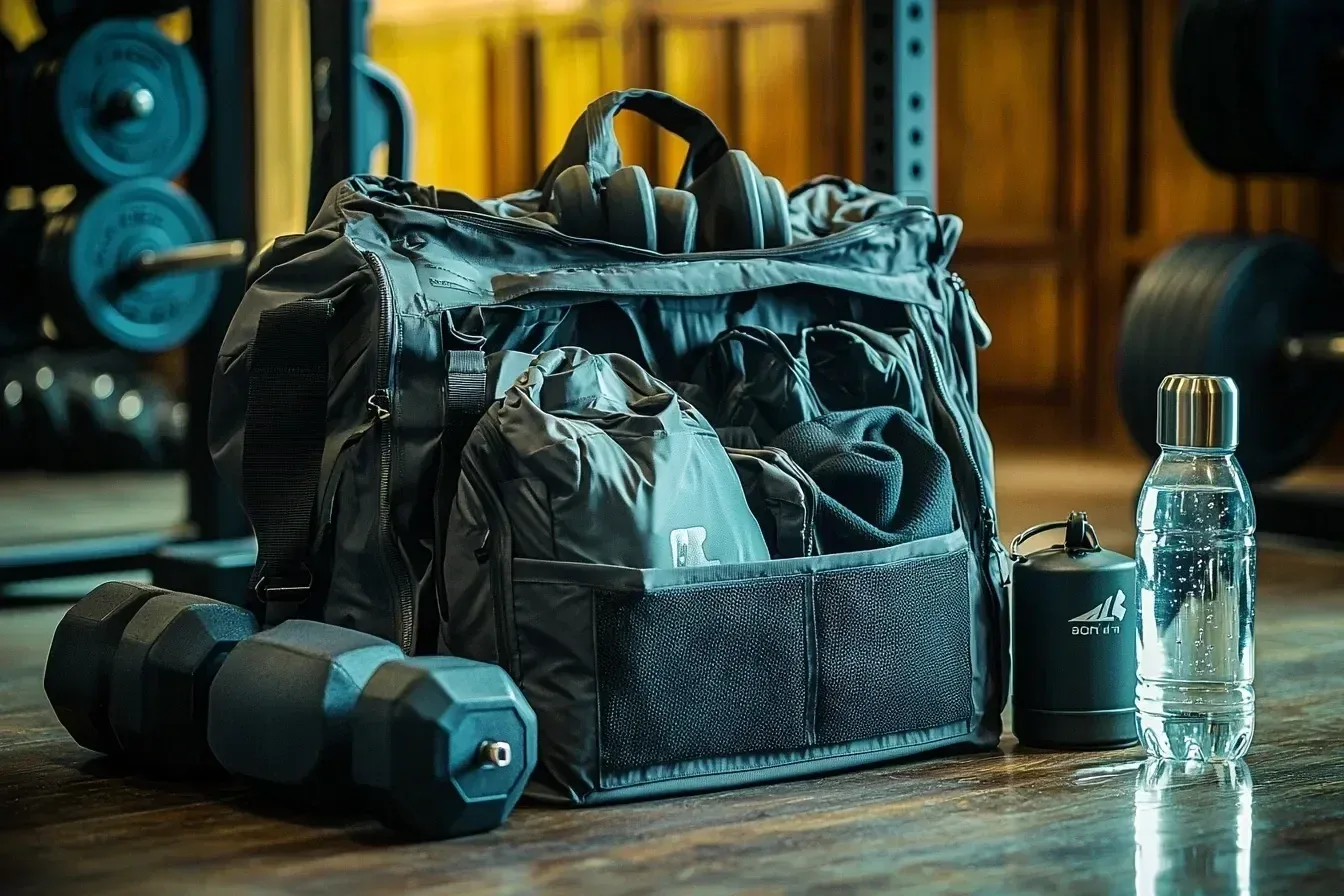
A new leather bag smells because volatile compounds are still leaving the material: residual tanning and finishing chemistry, adhesives used in assembly, and to a lesser extent the lining, foam and packaging. The smell is normal, it is not evidence of poor quality, and it dissipates — most of it clears within two to six weeks of airing and effectively all of it within three months. A persistent sharp, fishy or solvent-like odour is different: it points to a specific chemistry problem worth investigating rather than to normal off-gassing.
Where the Smell Comes From
The smell of a new bag is rarely one thing. It is a mixture of contributions from six sources, and identifying which dominates tells you how long it will last and what to do about it. Leather itself contributes less than most people assume; the construction and the packaging often contribute more.
- Tanning residues: fatliquors, syntans and retanning agents retained in the fibre after drying.
- Finishing coats: solvents and cross-linkers in pigment, lacquer and topcoat layers applied at the tannery.
- Adhesives: contact cement and hot-melt used to position linings, interlinings and reinforcements.
- Lining and interlining: synthetic fabrics, foam and non-woven reinforcements each carry their own volatiles.
- Packaging: a sealed polybag and a closed carton hold whatever the product released; a bag can reabsorb it in transit.
- Storage history: a container that has stood in heat will arrive smelling stronger than the same bag shipped cool.
The last of those is worth emphasising for anyone receiving a shipment. Container heat is a well-known amplifier in the trade: a sealed forty-foot container standing in direct sun reaches temperatures that drive volatiles out of everything inside it, and the odour then settles back into the leather. A bag that smells strong on arrival and improves within days of airing has usually suffered transport conditions rather than a material fault.
How Long It Lasts, and What Changes the Timeline
Off-gassing follows a decay curve rather than a fixed schedule: rapid in the first days, slower thereafter. Several variables shift the curve, and understanding them prevents both unnecessary alarm and unnecessary action.
Programme parameters at a glance
| Parameter | Commitment |
|---|---|
| Minimum order quantity | 500 pieces per style / colourway |
| Sampling lead time | 6–10 working days (12–15 days for complex constructions) |
| Bulk production lead time | 35–50 days after sample approval |
| Inspection standard | AQL 2.5 (ISO 2859-1), single sampling, general level II |
| Incoterms | FOB Xiamen — EXW, CIF and DDP available on request |
| Payment terms | T/T 30% deposit / 70% before shipment; L/C at sight for container loads |
| Verified production floor space | 4,950 m² (SGS-verified) |
| Team | 137 staff across 7 production lines |
| Equipment | 149 machines including computerised saddle-stitch and edge-painting units |
| Monthly capacity | 200,000 pieces |
| Entity | Founded 2014; principal has worked in bag development since 2004 |
| Factor | Effect on odour | Practical implication |
|---|---|---|
| Finish type | Heavy pigment and lacquer off-gas longer than aniline | Aniline and vegetable-tanned leather smell cleanest initially |
| Adhesive load | More cement means a longer, sharper smell | Minimal cement use shortens the timeline |
| Lining material | Synthetic linings and foam contribute strongly | Cotton or microfibre linings smell less |
| Ventilation | Moving air removes volatiles continuously | Airing is the single most effective measure |
| Temperature | Warmth accelerates release, then shortens the tail | A warm, ventilated room helps; a hot sealed one does not |
| Packaging | Sealed polybags trap what the product released | Unpack on arrival and discard the polybag |
| Transit conditions | Container heat amplifies everything | Expect a stronger smell after a hot voyage |
As a working expectation: a lightly finished, cotton-lined bag may be neutral within a fortnight; a heavily pigmented bag with a synthetic lining and foam reinforcement may take six to ten weeks; and a bag that has travelled badly may need a month regardless of how it was built. Anything still noticeably odorous after three months of airing deserves investigation rather than patience.
Is It Harmful? Chemistry, Limits and Testing
A smell is not automatically a hazard, and a hazard does not always have a smell. The two questions are separate, and both are answered by testing rather than by nose. What matters commercially is whether the product meets the chemical limits of the market it is sold into.
- REACH restricts a long list of substances in articles placed on the European market, including certain solvents, plasticisers and dye intermediates.
- CPSIA sets lead and phthalate limits for the United States, and several states add their own substance lists.
- OEKO-TEX standards test finished articles for a defined set of substances and are frequently requested by brands as an umbrella certification.
- Formaldehyde, though more associated with textiles, is restricted in many markets and can appear in some finishes and adhesives.
- Volatile organic compound emissions are measured against laboratory chamber methods when a brand or retailer sets an emissions limit.
| Odour character | Likely source | Seriousness | Response |
|---|---|---|---|
| Rich, leathery, slightly sweet | Fatliquors and natural leather character | None; this is normal | None; many buyers consider it desirable |
| Faint solvent or paint note | Finishing solvents still curing | Low | Air in a ventilated room for one to two weeks |
| Sharp, glue-like | Contact cement not fully cured | Low to moderate | Air longer; check adhesive specification on reorders |
| Fishy or amine note | Certain retanning or finishing agents | Moderate | Air; if persistent, request laboratory screening |
| Strong, chemical, eye-watering | Solvent residue or a contamination event | High | Do not ship; test before release |
| Musty or damp | Mould from moisture in transit or storage | Moderate to high | Treat the mould and the storage environment |
The distinction between the last three rows is the one a buyer needs. Normal off-gassing declines steadily and predictably. A contamination event — a mis-batched finish, adhesive applied before its solvent had flashed off, or a bag stored against a chemical source — does not decline in the same way, and no amount of airing resolves it. If a smell is not measurably better after two weeks of ventilation, treat it as a specification question.
How to Manage It: What Actually Works
Ventilation does almost all of the work. Everything else is secondary, and several popular remedies make matters worse. The sequence below is the one we give to clients, and it is deliberately unexciting.
- Unpack immediately. Remove the polybag, open the carton and let the bag breathe; the packaging often holds more odour than the bag.
- Air in a ventilated room with gentle moving air. A fan in a room with an open window works better than a sealed cupboard.
- Open the bag fully. Unzip every compartment, pull linings out and turn pockets so no enclosed space stays sealed.
- Use gentle warmth, not heat. A room at normal temperature is right; a radiator, a dryer or direct sun will damage the leather.
- Place a sachet of activated charcoal or bicarbonate of soda inside the bag, not on the leather, and leave it for several days.
- Give it time and re-check weekly. Most cases resolve within two to six weeks without any further intervention.
Two refinements help with stubborn cases. First, stuff the bag loosely with unscented tissue so the interior surfaces are held apart rather than pressed together, which increases the area exposed to air. Second, if the lining is removable, take it out and air it separately, since a synthetic lining with foam backing is frequently the largest single contributor and is easy to treat on its own.
What Does Not Work, and What Makes It Worse
The internet is well supplied with odour remedies that damage leather. Most fail because they mask rather than remove, and several leave permanent effects on the finish.
- Perfume, fabric refresher and scented sprays mask the odour briefly and then combine with it, usually making the mixture worse.
- Sealing the bag in a container with scented dryer sheets transfers fragrance into the leather, where it is very difficult to remove.
- Direct sun or a hot car accelerates release but also dries and fades the leather unevenly; the cure costs more than the smell.
- Vinegar and bicarbonate pastes applied directly to leather change the pH of the surface and can strip the finish.
- Freezing does not remove volatiles from leather, and condensation on thawing introduces a moisture problem.
- Ozone devices can oxidise finishes and rubber components; they are not appropriate treatment for leather goods.
One more method deserves mention because it is asked about constantly: steam. Light steam from a handheld garment steamer held at a distance will lift some surface odour and relax minor creasing, but on leather it carries real risk. Steam drives moisture into the fibre, and on a pigmented finish it can dull the sheen permanently. On aniline, suede or vegetable-tanned leather it will mark. Use it only if the bag is going to be conditioned immediately afterwards, and never on a finish you have not tested.
The general rule is simple: if a remedy works by adding a stronger smell or by applying heat, it is not a remedy. Removal requires air movement and time. Masking requires accepting a different problem, usually a permanent one.
Persistent or Bad Odours: Diagnosis
When airing does not resolve the smell, work through the diagnostic sequence below. It isolates the source rather than treating the symptom, which is what makes it worth the effort.
| Step | Action | What a positive result means |
|---|---|---|
| Separate | Air the bag, the dust bag and the carton separately for a day | Identifies whether the packaging is the source |
| Isolate the lining | Pull the lining out and smell it on its own | Confirms or clears the lining and foam as the contributor |
| Check enclosed areas | Smell pockets, under flaps and behind reinforcements | Locates trapped adhesive or solvent pockets |
| Compare against a known unit | Smell an older bag of the same specification | Distinguishes normal character from an anomaly |
| Test the batch | Check several units from the same run | Distinguishes a batch problem from normal variation |
| Escalate | Send a unit for laboratory screening | Produces evidence if a specification change is needed |
The fourth step is underrated. Buyers rarely have a reference bag of the same specification to compare against, so every judgement is made in isolation. Keeping one unit from each production run as a retained sample solves that permanently, and it costs one unit per run.
Managing Odour in a Production Programme
For a brand, odour is a specification issue handled during development rather than a customer service issue handled afterwards. Six measures reduce it at source, and all of them are cheaper than returns.
- Specify low-emission finishes and adhesives from the tannery and the assembly line, and ask for declarations from both.
- Minimise adhesive: cement should position panels, not substitute for stitching, and less cement means less odour.
- Choose linings carefully: cotton, microfibre and certified synthetics off-gas less than foam-backed constructions.
- Build in a curing window before packing, so solvents have flashed off before the bag is sealed into a polybag.
- Use breathable or vented packaging, and avoid sealing a freshly assembled bag in an airtight bag.
- Retain a reference unit from every run, so any odour question can be answered by comparison rather than by opinion.
Two of those deserve emphasis. The curing window is the single most effective production measure and the one most often compressed when a ship date is tight: a bag packed the same day it is assembled will arrive at its strongest, whereas forty-eight hours in a ventilated holding area removes most of it. And breathable packaging costs pennies more while removing a cause of complaints entirely.

Quality Systems and What Inspection Covers
Odour sits at an awkward intersection in most quality systems, because it is subjective in the moment and objective in the laboratory. A sensible position separates the two and states both.
On our production floor in Quanzhou, a sensory comparison against the retained reference unit is part of final inspection, and any unit judged outside the reference is set aside for a second opinion rather than packed. That is a screening measure, not a compliance measure; chemical compliance is established by laboratory testing against REACH, CPSIA and OEKO-TEX requirements as applicable to the destination market.
The commercial case for taking this seriously is straightforward. Odour complaints are among the most damaging in e-commerce, because they arrive in reviews rather than in tickets and they read as a quality judgement rather than as a temporary condition. Coverage in Vogue Business and Business of Fashion has noted how quickly a sensory issue turns into a brand narrative. Airing guidance on the care card, and a specification that reduces off-gassing at source, remove the problem before it reaches a review.
Reduce odour at the specification stage
Send your drawings, target leather and destination market to service@junyuanbags.com or WhatsApp +86 177 5002 0688. The programme team will advise on finish, adhesive and lining specification and return a sampling plan within one working day.
Frequently Asked Questions
Why does my new leather bag smell so strong?
Because volatile compounds are still leaving the materials: tanning and finishing residues from the tannery, adhesives used in assembly, and the lining, foam and packaging. Synthetic linings and foam usually contribute more than the leather itself. The smell is normal, is not a quality defect, and declines steadily once the bag is unpacked and aired in moving air.
How long does the new bag smell last?
Most of it clears within two to six weeks of airing, and effectively all of it within three months. A lightly finished, cotton-lined bag may be neutral within a fortnight, while a heavily pigmented bag with a synthetic lining and foam reinforcement can take six to ten weeks. A bag that travelled in a hot container may need a month regardless of construction.
Is the smell from a new leather bag dangerous?
A smell is not automatically a hazard, and compliance is determined by testing rather than by nose. Products sold into Europe must meet REACH restrictions, those sold into the United States must meet CPSIA limits, and many brands request OEKO-TEX certification as an umbrella. If an odour is genuinely concerning, laboratory screening gives a defensible answer.
What is the fastest way to remove the smell from a leather bag?
Unpack it, discard the polybag, open every compartment and air it in a ventilated room with gentle moving air. A fan in a room with an open window outperforms every product. Stuff the interior loosely with unscented tissue to hold surfaces apart, and air a removable lining separately. Time does the rest.
Can I use bicarbonate of soda on a leather bag?
Inside the bag, in a sachet, yes: it absorbs odour without touching the surface. Never apply bicarbonate, vinegar or any paste directly to leather, because changing the surface pH strips the finish and can leave permanent light patches. Keep the absorbent away from the leather itself and check the bag after several days.
Does putting a leather bag in the freezer remove smells?
No. Freezing does not remove volatile compounds from the fibre structure, and condensation forms on the leather when the bag returns to room temperature, introducing a moisture problem that is worse than the original smell. Ventilation and time are the effective methods; freezing is a persistent internet remedy with no mechanism behind it.
Why does my bag smell fishy?
A fishy or amine note usually indicates particular retanning or finishing agents rather than a fault in the leather itself. It normally fades with airing over several weeks. If it persists beyond a month, request laboratory screening and compare against a retained unit from the same run, since a persistent odour can indicate a batch issue worth correcting.
Should I return a bag that smells strongly?
Only if the smell does not improve after two weeks of proper airing. Normal off-gassing declines steadily and measurably; a contamination event does not. Unpack the bag, air it in moving air and re-check weekly. If it is unchanged after a fortnight, contact the seller with a clear timeline rather than an initial impression.
Does real leather smell different from fake leather?
Yes. Genuine leather has a warm, slightly sweet, characteristic note that most people recognise and many find pleasant. Polyurethane-coated materials tend to smell more chemical and plasticky, and that smell often persists longer because it comes from the coating rather than from a breathable fibre. Neither smell is a reliable quality test on its own.
Can packaging make a new bag smell worse?
Yes, substantially. Sealing a freshly assembled bag in an airtight polybag traps whatever the product released, and the leather reabsorbs it in transit. A hot container amplifies the effect considerably. Breathable or vented packaging and a short curing window before packing remove most of the problem at negligible cost.
How can a brand reduce odour complaints?
Specify low-emission finishes and adhesives, minimise cement use, choose linings that off-gas less than foam-backed constructions, allow a curing window before packing, and use breathable packaging. Retain a reference unit from every run so complaints are answered by comparison. Add airing guidance to the care card so the customer knows what to expect.
When is a bag odour a sign of a real defect?
When it does not decline with airing. Normal off-gassing improves measurably week by week. A persistent, sharp, eye-watering solvent note suggests adhesive applied before the solvent flashed off, a mis-batched finish, or contamination in storage. A musty smell indicates mould. Both need action rather than patience, starting with laboratory screening.
Does vegetable-tanned leather smell less than chrome-tanned leather?
Usually yes. Vegetable tanning uses plant-derived tannins and typically produces a warm, pleasant, slightly sweet smell that many buyers prize. Chrome tanning is faster and gives a softer, more water-resistant leather, but its retanning and finishing chemistry can leave a sharper note that takes longer to clear. Both comply with market chemical limits when sourced from audited tanneries.
Can steam be used to remove odour from a leather bag?
It is risky. Light steam held at a distance lifts some surface odour and relaxes creasing, but it drives moisture into the fibre and can dull a pigmented finish permanently. On aniline, suede or vegetable-tanned leather it will mark. If you do use it, condition the bag immediately afterwards, and never apply it to a finish you have not tested on a hidden area.