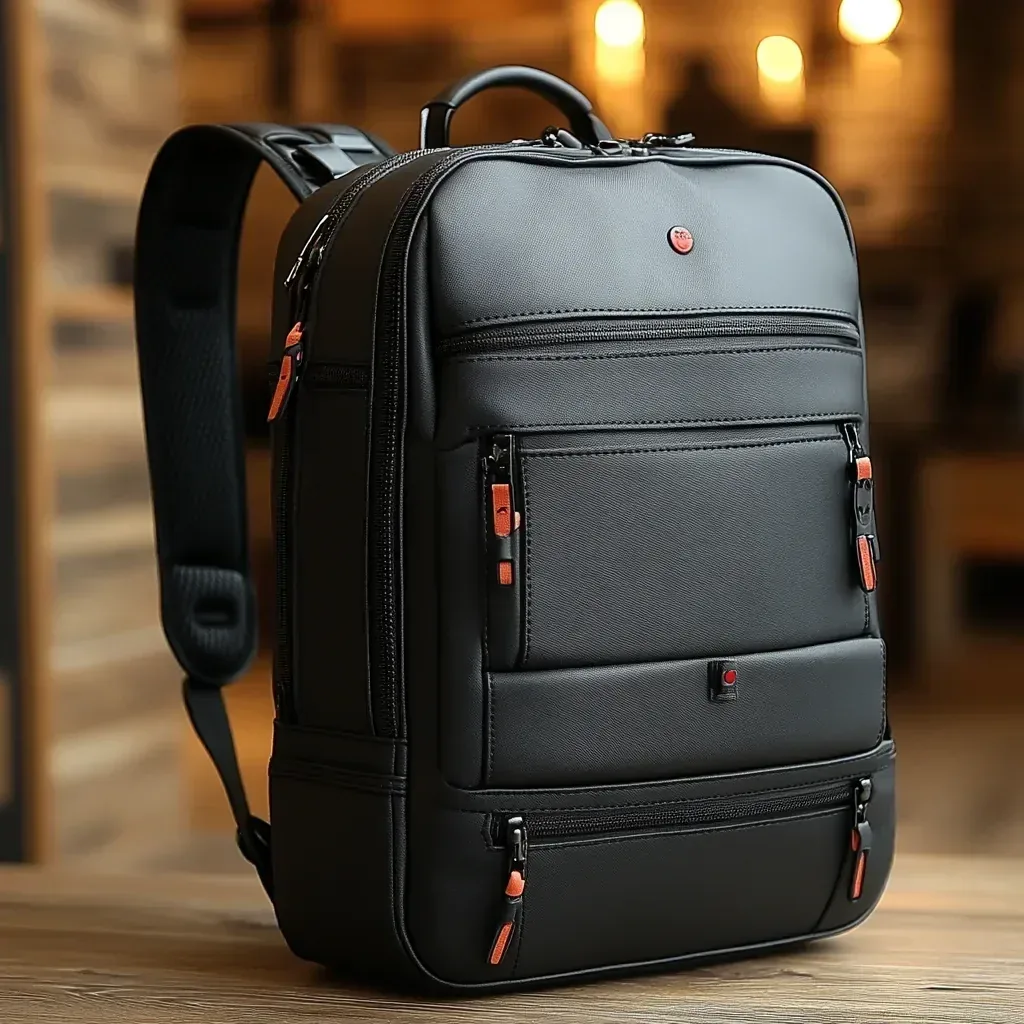

Leather Bag Supply Chain Risk Management: Complete Guide for Importers
Published: August 18, 2025 | Author: Bespoke Bags Team | Reading Time: 14 min
Table of Contents
- 1. Why Supply Chain Risk Management Matters for Leather Bag Importers
- 2. The Six Major Risk Categories in Leather Bag Sourcing
- 3. Risk Assessment Framework: Probability × Impact Matrix
- 4. Mitigation Strategies: Multi-Sourcing, Safety Stock & Beyond
- 5. Digital Tools for Supply Chain Monitoring
- 6. Case Studies: Real-World Supply Chain Disruptions
- 7. Building Long-Term Supply Chain Resilience
- 8. Frequently Asked Questions
Global trade in 2025 is defined by uncertainty. Tariffs shift overnight, shipping routes reroute around geopolitical flashpoints, raw material prices swing wildly, and compliance requirements multiply across jurisdictions. For importers sourcing leather bags, handbags, and luggage from overseas manufacturers, the stakes are particularly high: leather goods represent significant per-unit value, long production lead times, and complex quality expectations that make supply chain disruptions especially costly.
With over 20 years of experience serving international brands as an OEM/ODM manufacturer, Bespoke Bags has navigated every major supply chain disruption of the past two decades—from the 2008 financial crisis and the Suez Canal blockage to pandemic-era factory shutdowns and container shortages. This guide distills that experience into an actionable risk management framework for importers at every scale.
1. Why Supply Chain Risk Management Matters for Leather Bag Importers
Unlike commoditized products such as plastic goods or basic textiles, leather bags occupy a unique position in global supply chains. The raw material—genuine leather—is an agricultural byproduct subject to livestock market dynamics, environmental regulations on tanning processes, and seasonal demand fluctuations. The manufacturing process involves skilled labor across multiple steps (cutting, stitching, finishing, hardware attachment), each introducing potential quality variation. And the end products are often brand-critical items where quality failures directly damage brand reputation.
Industry Data: According to a 2024 survey by the World Bank's Logistics Performance Index, supply chain disruptions cost importers an average of 8–12% of annual procurement value. For leather goods importers, this figure can reach 15–20% due to higher per-unit values and longer recovery timelines when quality issues arise.
The consequences of inadequate risk management are tangible and severe:
- Revenue loss: Stockouts during peak selling seasons (Q4 holiday, back-to-school) can cost millions in missed sales.
- Quality failures: Rejected shipments due to color mismatch, leather defects, or hardware failures trigger costly returns, rework, or disposal.
- Compliance penalties: Products failing to meet REACH, CPSIA, or California Prop 65 standards face customs holds, forced recalls, and fines.
- Brand damage: Public recalls or social media complaints about quality issues can erode years of brand equity in weeks.
2. The Six Major Risk Categories in Leather Bag Sourcing
Effective risk management begins with comprehensive risk identification. For leather bag importers, risks cluster into six primary categories. Understanding each category—and how they interconnect—is the foundation of a resilient sourcing strategy.
2.1 Raw Material Price Volatility
Leather is a commodity with genuine price volatility. Bovine hide prices are influenced by global livestock supply, Brazilian and Australian beef production, automotive industry demand (which competes for the same hides), and environmental regulations that restrict tanning operations in major producing regions. Over the past five years, leather prices have experienced swings of 15–30% within 12-month periods. For importers with fixed retail pricing, this volatility directly compresses margins or forces difficult pricing decisions.
2.2 Currency Exchange Rate Risk
Most leather bag transactions are denominated in USD, while production costs in China are incurred in RMB. Exchange rate fluctuations between these currencies directly impact both the importer's landed cost and the manufacturer's profitability. A 5% RMB appreciation against the dollar can erase the entire margin on a production order if not properly hedged. Longer-term structural shifts—such as China's gradual capital account liberalization—add another layer of complexity.
2.3 Logistics & Transportation Disruptions
The global shipping industry remains vulnerable to multiple disruption vectors: port congestion (Shanghai, Ningbo, and Los Angeles have all experienced multi-week delays), container equipment imbalances, vessel schedule reliability issues, canal restrictions (Panama Canal drought limitations, Red Sea security concerns), and seasonal peak surcharges. For leather bag importers, logistics disruptions are particularly damaging because production timelines are already long (30–60 days), meaning even small shipping delays can cascade into major inventory shortages.
2.4 Quality & Production Risks
Quality issues in leather bag manufacturing can stem from multiple sources: inconsistent leather dye lots, hardware defects (zippers, clasps, buckles), stitching failures under stress, adhesive bonding problems, and packaging damage during transit. Without robust quality control systems, importers risk receiving shipments where a significant percentage of units fail to meet specifications—discovered only after arrival, when options for remediation are limited and expensive.
2.5 Regulatory & Compliance Changes
Chemical regulations governing leather goods are evolving rapidly across major import markets. The EU's REACH regulation continues to add restricted substances, California's Prop 65 list expands regularly, and emerging markets in Southeast Asia and the Middle East are introducing new safety standards. Leather treatment chemicals—particularly chromium VI, formaldehyde, and certain azo dyes—are under increasing regulatory scrutiny. Importers must stay ahead of these changes or face customs rejections, forced recalls, and legal liability.
2.6 Geopolitical & Trade Policy Risks
Tariff escalations, trade sanctions, export controls, and political instability can fundamentally alter the economics of sourcing from a particular country or region. The US-China trade relationship has demonstrated how quickly tariffs can be imposed—creating overnight cost increases of 10–25% on imported goods. Importers who rely on a single country for production face concentrated exposure to these policy risks.

The six major risk categories facing leather bag importers require a systematic, multi-layered mitigation approach
3. Risk Assessment Framework: Probability × Impact Matrix
Once risks are identified, the next step is assessment—determining which risks demand immediate attention and resources. The most widely used framework is the Probability × Impact Matrix, which plots each risk along two dimensions: how likely it is to occur, and how severe the consequences would be.
Assessment Tip: Risk scores are not static. Reassess your risk matrix quarterly—especially before peak ordering seasons (typically Q1 for holiday inventory). A logistics risk that scores "medium" during normal periods can become "critical" during peak season when port congestion intensifies and container availability tightens.
3.1 Risk Tolerance Calibration
Different businesses have different risk tolerances. A startup launching its first leather bag line may accept higher risk in exchange for lower upfront costs. An established brand with wholesale commitments to major retailers has near-zero tolerance for delivery delays. Understanding your own risk tolerance—and communicating it clearly to your manufacturing partners—is essential for aligning expectations and investment levels.
4. Mitigation Strategies: Multi-Sourcing, Safety Stock & Beyond
With risks identified and prioritized, the next step is developing mitigation strategies. The most effective approach combines multiple tactics—no single strategy addresses all risk categories. Here are the most impactful strategies for leather bag importers:
4.1 Multi-Sourcing Strategy
Multi-sourcing—maintaining qualified relationships with two or more manufacturing partners—is the single most impactful risk reduction strategy for leather bag importers. It provides alternative production capacity, competitive pricing pressure, and geographic diversification.
4.2 Safety Stock Management
Maintaining strategic inventory buffers protects against demand spikes and supply disruptions. For leather bags, safety stock decisions must account for SKU complexity (a single style may come in 3–5 colors), seasonal demand patterns, and the long lead times inherent in leather production (typically 30–60 days from order confirmation to shipment).
A practical approach is to maintain 4–8 weeks of safety stock for best-selling SKUs and 2–4 weeks for seasonal or lower-volume items. The carrying cost of leather bag inventory (typically 1.5–2.5% of product value per month) must be weighed against the cost of stockouts, which can include expedited air freight, lost sales, and damaged retailer relationships.
4.3 Forward Contracts & Price Lock Mechanisms
Locking in material costs and exchange rates for defined periods provides budget certainty. For leather, this typically means negotiating fixed-price agreements with your OEM manufacturer for 3–6 month periods, covering key leather types. Some manufacturers offer price-adjustment formulas tied to published leather indices, sharing risk between buyer and supplier.
For currency risk, importers can work with their banks to establish forward exchange contracts, locking in the USD/RMB rate for upcoming payments. While this eliminates upside potential if rates move favorably, it protects against adverse movements that could erode margins.
4.4 Insurance & Financial Protection
Trade credit insurance protects against supplier non-delivery due to insolvency, natural disaster, or political events. Marine cargo insurance covers goods in transit against damage, loss, or theft. Product recall insurance covers the costs of recalling defective products—including notification, retrieval, replacement, and reputational damage. For importers with significant annual procurement volumes, these insurance products provide essential financial backstops.
5. Digital Tools for Supply Chain Monitoring
Modern supply chain risk management is increasingly powered by digital tools that provide real-time visibility and predictive analytics. The right technology stack can transform risk management from a reactive, manual process into a proactive, data-driven discipline.
5.1 Building Your Monitoring Dashboard
The most effective approach integrates data from multiple tools into a single dashboard that provides at-a-glance risk status across all categories. Key metrics to monitor include:
- Leather price index: Track weekly/monthly changes in bovine hide pricing from major tannery regions.
- USD/CNY exchange rate: Monitor daily movements and trigger alerts when rates cross predefined thresholds.
- Port congestion indicators: Track average vessel waiting times at key origin and destination ports.
- Container rate indices: Monitor the Shanghai Containerized Freight Index (SCFI) and route-specific rates.
- Supplier performance scores: Track on-time delivery rates, quality rejection rates, and response times.

Digital monitoring tools provide real-time visibility across all supply chain risk categories
6. Case Studies: Real-World Supply Chain Disruptions
Theory becomes concrete through real-world examples. Here are three case studies that illustrate how different risk categories materialized and how prepared importers responded:
Case Study 1: Red Sea Shipping Crisis (2024)
Risk Category: Logistics Disruption
What Happened: Houthi attacks on commercial vessels in the Red Sea forced major shipping lines to reroute around the Cape of Good Hope, adding 10–15 days to Asia-Europe transit times and pushing container rates up by 200–300%.
Impact on Importers: Importers with single-source logistics strategies faced stockouts of 4–6 weeks. Those with safety stock buffers and diversified shipping arrangements (including rail alternatives via China-Europe rail freight) experienced minimal disruption.
Lesson: Diversifying shipping routes and maintaining strategic safety stock are not optional—they are essential. Our logistics coordination services help importers plan multimodal shipping strategies well before disruptions occur.
Case Study 2: Leather Price Spike (2023)
Risk Category: Raw Material Price Volatility
What Happened: A combination of drought in Australia (reducing cattle supply) and surging automotive leather demand pushed bovine hide prices up 28% over six months.
Impact on Importers: Importers with fixed-price retail commitments and no forward contracts saw margins compress by 12–18%. Those with price-adjustment clauses in their OEM contracts or who had locked in leather prices for Q2–Q3 were largely insulated.
Lesson: Forward pricing agreements with your OEM partner provide critical protection. At Bespoke Bags, we offer 3–6 month price lock options for regular customers, leveraging our purchasing volume across multiple tannery relationships.
Case Study 3: REACH Compliance Update (2024)
Risk Category: Regulatory Compliance
What Happened: The European Chemicals Agency (ECHA) added new restrictions on certain chromium compounds used in leather tanning, effective immediately for new imports.
Impact on Importers: Importers whose tanneries had not transitioned to compliant processes faced customs holds and product rejections at EU borders. Those working with tanneries certified under LWG (Leather Working Group) standards experienced minimal disruption, as their tanneries had already adopted compliant processes.
Lesson: Regulatory compliance is not a one-time checklist—it requires continuous monitoring and supplier engagement. Our quality control team tracks regulatory changes across major markets and ensures our tannery partners maintain up-to-date certifications.
7. Building Long-Term Supply Chain Resilience
Beyond reactive mitigation, the most sophisticated importers invest in structural supply chain resilience—building capabilities that make their sourcing networks inherently more robust. Key strategies include:
7.1 Develop Deep Supplier Relationships
Transactional supplier relationships offer no loyalty during shortages. Importers who invest in long-term partnerships—with regular communication, joint planning sessions, and fair business practices—receive preferential treatment when capacity is tight. Our private label partnerships exemplify this approach: many of our longest-standing clients have worked with us for over a decade, creating mutual commitment that benefits both parties during disruptions.
7.2 Invest in Supplier Development
Helping suppliers improve their own capabilities—through technology adoption, quality system development, or workforce training—creates stronger, more reliable partners. This is particularly relevant for leather bag manufacturing, where skilled craftsmanship directly determines product quality.
7.3 Build Scenario Plans
Develop pre-defined action plans for the most likely disruption scenarios: "If port X closes, we switch to port Y within 48 hours." "If leather prices rise above threshold Z, we activate forward contract option." Having these plans documented and agreed upon before a crisis eliminates decision-making delays when speed matters most.
7.4 Diversify Geographic Exposure
While China remains the world's dominant leather goods manufacturing hub, strategic diversification into neighboring countries—Vietnam, Cambodia, India—for specific product categories can reduce geographic concentration risk. This doesn't mean abandoning China; it means building optionality for the future.
7.5 Leverage Your OEM Partner's Expertise
Experienced OEM manufacturers like Bespoke Bags bring institutional knowledge from serving dozens of international brands across multiple markets. We monitor regulatory changes, track material market trends, maintain relationships across the supply chain, and can advise on risk mitigation strategies based on patterns observed across our client base. Treating your OEM partner as a strategic advisor—not just a production vendor—unlocks significant risk management value.
A Supplier Risk Scorecard You Will Actually Update
Most risk registers are written once, during onboarding, and then quietly abandoned. The reason is usually design: a register with forty line items and a ten-point scale takes half a day to complete, so nobody repeats it. A scorecard that works is short enough to refresh in twenty minutes and specific enough to change a decision.
Score each supplier on six weighted factors, review quarterly, and let the total decide the action: below a threshold nothing changes, between thresholds you add a mitigation, above it you qualify a second source before the next season rather than after a failure.
| Factor | Weight | What a low score looks like | Action triggered |
|---|---|---|---|
| Delivery reliability | 25% | On-time rate below 90% across the last four orders | Escalation to production planning; weekly status call |
| Quality consistency | 20% | More than one AQL 2.5 rejection in the last three inspections | Pre-shipment inspection on every lot, not on sample lots |
| Material traceability | 15% | Tannery or plating source changes without notice | Require declaration per lot before cutting |
| Financial and ownership stability | 15% | Change of ownership, or payment terms demanded upfront | Re-check entity details and banking instructions |
| Concentration exposure | 15% | One supplier above 70% of programme volume | Qualify a second source within two seasons |
| Responsiveness under stress | 10% | Slow or partial answers during a disruption | Agree a communication protocol with named contacts |
The scorecard is only useful if the numbers are real. On-time rate should be measured against the date goods were booked to ship, not the date they left the building, and quality should be counted in rejected lots rather than individual defects.
Planning the Order Calendar Around Known Disruption Windows
Most disruption in this trade is not random. It clusters around a small number of predictable dates: factory shutdowns, port peaks, and the seasonal rush when every brand in the category wants the same vessel. A calendar that acknowledges those windows removes a large share of the risk before any mitigation spending is needed.
| Window | Typical effect | Planning response |
|---|---|---|
| Chinese New Year shutdown | Four to six weeks of effectively lost production and slow recovery | Approve samples before December; do not plan a first delivery in February or March |
| Pre-holiday production rush | Line capacity fully booked, sampling queues lengthen | Book capacity early; accept a longer sampling window rather than a compressed one |
| Summer and autumn shipping peak | Rate rises and space shortages on main lanes | Book space earlier than usual; consider splitting the shipment |
| Regional regulatory or inspection campaigns | Temporary restrictions on certain processes or subcontractors | Keep the compliance file current so verification is quick |
| Year-end retail cut-offs | Any delay becomes a missed season | Build the inland delivery leg into the critical path, not just the vessel |
With sampling at 6-10 working days and bulk production at 35-50 days after approval, the arithmetic is unforgiving around a shutdown: an order approved in the last fortnight before a holiday will restart rather than continue. Shift approval dates, not just delivery dates.
Contract Clauses That Allocate Risk Before It Happens
Insurance and safety stock manage the consequences of disruption. Contract clauses manage the argument afterwards, and they cost nothing at the point they are written. The clauses that matter most in a bag programme are the ones that define what happens when something is late, when something fails, and when a material cannot be sourced as specified.
- Defined delivery trigger. State whether delivery means ex-factory, on-board or arrival, and what evidence confirms it; ambiguity here is the root of most delay disputes.
- Material substitution procedure. Require written approval before any change of leather, lining or hardware source, and make an unapproved substitution a rejectable defect.
- Remedies for a failed inspection. Set out who pays for rework, who pays for re-inspection, and how long the supplier has to correct before the order is cancelled.
- Tooling and pattern ownership. Confirm the brand owns the patterns, dies and any custom hardware tooling, and that they are not used for other customers.
- Price validity period. Fix a quotation validity window tied to material cost, so a raw-material move becomes a negotiation rather than a surprise.
- Confidentiality and design rights. Cover drawings, samples and unreleased product, since most leakage risk in this category happens before launch.
Agree these at the outset of a programme rather than at the first disagreement. Programmes coordinated from our Quanzhou production floor run on T/T terms of 30% deposit and 70% before shipment, FOB Xiamen, with inspection to AQL 2.5 under ISO 2859-1 before the balance is released.
Frequently Asked Questions
What are the biggest supply chain risks when importing leather bags from China?
The most significant risks include raw material price volatility (leather prices can fluctuate 15–30% annually), currency exchange rate shifts (RMB movements directly impact landed costs), logistics disruptions (port congestion, container shortages, and shipping route changes), quality inconsistency across production batches, regulatory compliance changes (REACH, CPSIA, Prop 65), and geopolitical tensions that may trigger tariffs or trade restrictions. A robust risk management framework addresses each of these proactively rather than reactively.
How can importers protect against leather price volatility?
Importers can employ several strategies: forward contracts with suppliers to lock in material costs for 3–6 months, diversifying material sources across multiple tanneries and regions, building safety stock of key leather types during price dips, negotiating price-adjustment clauses in contracts that share risk between buyer and supplier, and working with experienced OEM manufacturers who have established relationships with multiple tanneries and can absorb short-term fluctuations through their purchasing power.
What is multi-sourcing and why is it important for leather bag importers?
Multi-sourcing means maintaining qualified supplier relationships with two or more manufacturing partners rather than relying on a single source. For leather bag importers, this is critical because it provides alternative production capacity when one supplier faces disruptions—whether from factory closures, raw material shortages, labor issues, or regional disruptions. While multi-sourcing requires investment in quality alignment across suppliers, the risk reduction and negotiating leverage it provides typically deliver strong ROI.
How should importers handle quality risks in leather bag manufacturing?
Quality risk management requires a multi-layered approach: establish detailed product specifications and approved samples before production, implement in-line inspections during production (not just final inspection), use AQL (Acceptable Quality Level) sampling standards, require suppliers to maintain formal quality control systems, and conduct pre-shipment inspections. For critical orders, consider hiring third-party inspection services. Building long-term relationships with OEM partners who share your quality standards is the most sustainable long-term strategy.
What digital tools are available for supply chain risk monitoring?
Several categories of digital tools support supply chain risk monitoring: ERP systems (SAP, Oracle) for end-to-end visibility, supply chain mapping platforms (Resilinc, Everstream) for tier-n supplier visibility, commodity price tracking tools for leather and material pricing, shipping intelligence platforms (Flexport, project44) for real-time logistics tracking, and geopolitical risk assessment services (Verisk Maplecroft, Control Risks) for country-level risk scoring. Many logistics service providers now integrate these capabilities into their platforms, giving importers consolidated dashboards for risk monitoring.
Last Updated: August 14, 2026
How much safety stock should a leather bag importer hold?
For a fast-moving style, four to eight weeks of cover is a common starting point; for slow movers, one reorder cycle is enough. Hold safety stock against the styles that drive revenue rather than across the whole range, and remember that leather bags tie up capital for a season, so over-stocking carries its own risk.
What lead time buffer should be built into a China-to-Europe order?
Add two to three weeks on top of the quoted transit time, and more if the delivery lands near a peak shipping season. Production is the predictable part at 35-50 days after sample approval; the variable parts are space booking, customs clearance and the inland leg to your warehouse.
How is currency exposure managed on a T/T programme?
Fix the exchange assumption at quotation stage and agree a price validity period tied to material costs. For larger programmes, forward cover on the deposit and balance payments removes most of the exposure. The riskiest pattern is a long validity quotation with no currency clause at all.
What insurance should a leather bag importer carry?
Marine cargo cover for the transit leg is the baseline, and it should cover the full commercial value rather than the FOB value. Consider product liability cover for your target market and, where a single supplier carries most of your volume, business interruption cover tied to a named supply failure.
Should a brand dual-source the same bag style?
Dual-sourcing works well for high-volume, stable styles with a locked tech pack, and badly for complex new designs where two suppliers will interpret the pattern differently. If you dual-source, duplicate the tooling or accept slight variance, and validate both sources with a full production run rather than a sample.
How are delay and force majeure handled in a manufacturing agreement?
Define delivery precisely, state what qualifies as a genuine force majeure event, and require prompt notice with evidence. Set a remedy for delay that is proportionate, such as a per-week allowance capped at a percentage of order value. Vague force majeure wording tends to be invoked for ordinary capacity problems.
What contingency covers a single-source hardware supplier failing?
Approve an alternative finish and an alternative supplier at sampling stage, before you need them. Keep the approved hardware sample and its specification on file so a substitute can be matched. For custom fittings, hold a small buffer of finished units, because tooling a replacement lock or buckle costs more in time than in money.