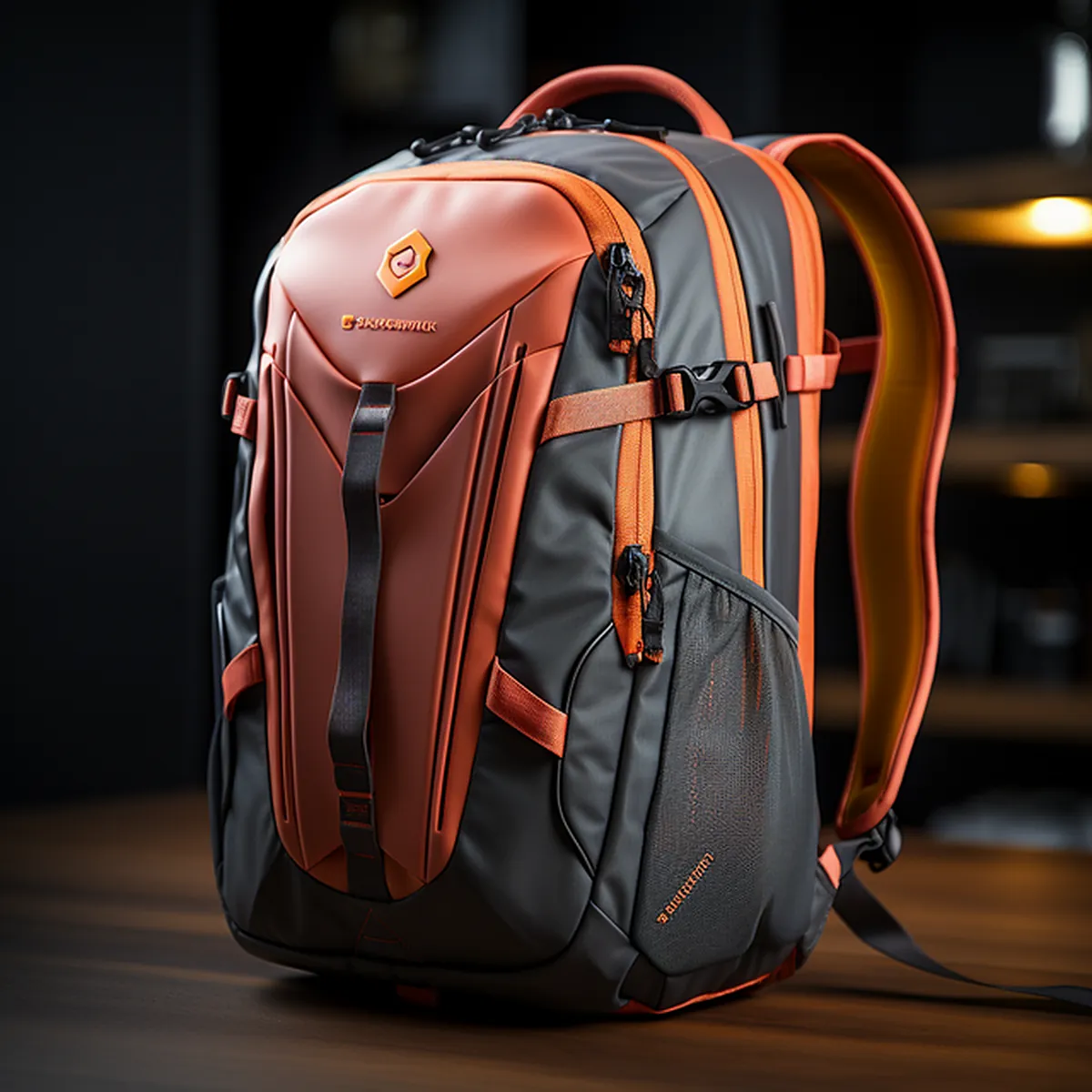
Most bags are soft because soft is cheap. A bag that holds its shape against a load needs something inside it — a moulded EVA shell, a board panel, a wire frame or a combination — and that something costs tooling, weight and assembly time. The question is not whether structure is better but whether the shape is worth the tooling.
There is also a middle path that is often overlooked. A bag can be structured in the base and the gusset and soft elsewhere, or structured in the front panel only. Partial structure frequently delivers most of the visual benefit at a fraction of the cost, provided the pattern is drawn to take advantage of it.
Four Ways to Hold a Shape
Each method has a different cost profile and a different design vocabulary.
| Method | How it works | Tooling | Shape achieved |
|---|---|---|---|
| Moulded EVA shell | EVA foam heat-formed over a male mould | One mould per shape and size | Rounded, three-dimensional, impossible to achieve by cutting |
| Polypropylene or PE board | Die-cut flat panels inserted into pockets | Cutting die only | Crisp flat planes and defined edges |
| Wire or rod frame | Welded wire frame sewn into a channel | Bending jig, low cost | Soft body with a defined opening and rim |
| Laminated foam and board | Foam bonded to board, die-cut to panel | Cutting die only | Semi-rigid panels with some curvature |
| Thermoformed thermoplastic sheet | Sheet heated and vacuum-formed | One mould per shape | Thin, hard shells for luggage and cases |
Moulded EVA and thermoformed sheet are the two methods that require a real mould; the others need only a cutting die, which is an order of magnitude cheaper.
What a Mould Actually Costs
Mould cost scales with size, complexity and the number of sizes. A single cavity aluminium or resin mould for a small EVA shell is a modest one-off; a multi-size set for a family of bags is a different commitment entirely.
| Item | Relative cost | Notes |
|---|---|---|
| EVA forming mould, small shell | Low to moderate | Resin or aluminium; life limited by the forming temperature |
| EVA forming mould, large shell | Moderate | Needs a larger press; warping is a risk on thin walls |
| Thermoforming mould, luggage shell | Moderate to high | Aluminium, with cooling channels for cycle time |
| Cutting die, board panel | Low | Steel rule die; cheap and quick to remake |
| Grading a mould across three sizes | High | Each size needs its own tool, so structure and size range interact commercially |
Grading is the cost trap. A structured bag in three sizes needs three moulds, which is why structured ranges often launch in one or two sizes and extend later.
Programme parameters at a glance
| Parameter | Commitment |
|---|---|
| Minimum order quantity | 500 pieces per style / colourway |
| Sampling lead time | 6–10 working days (12–15 days for complex constructions) |
| Bulk production lead time | 35–50 days after sample approval |
| Inspection standard | AQL 2.5 (ISO 2859-1), single sampling, general level II |
| Incoterms | FOB Xiamen — EXW, CIF and DDP available on request |
| Payment terms | T/T 30% deposit / 70% before shipment; L/C at sight for container loads |
| Verified production floor space | 4,950 m² (SGS-verified) |
| Team | 137 staff across 7 production lines |
| Equipment | 149 machines including computerised saddle-stitch and edge-painting units |
| Monthly capacity | 200,000 pieces |
| Entity | Founded 2014; principal has worked in bag development since 2004 |
Wall Thickness and What It Changes
EVA shell thickness decides stiffness, weight and how well the shell holds a compound curve. Typical bag shells run from 3 mm to 8 mm; below 3 mm the shell deforms under load, above 8 mm it becomes heavy and the bag feels like a case.
Board panels follow the same logic in one dimension. A 1.2 mm polypropylene board gives a crisp front panel; 0.6 mm gives a soft one with a little structure. The choice interacts with the lining: a board that is too thin for the panel size will bow, and a lining bonded to a bowing board will show ripples.
Design Rules for Moulded EVA
Moulded EVA has its own design constraints, and designs that ignore them produce shells that cannot be formed or that fail at the corners.
- **Keep the draw angle.** A vertical wall will drag and thin. Two to three degrees of draft per side is the minimum for a clean release.
- **Round the corners generously.** A tight corner thins the material and creates a stress point; 15 mm minimum radius is a practical floor.
- **Avoid undercuts.** An undercut requires a split mould or a collapsible core, and both increase cost sharply.
- **Watch the wall transition.** A sudden change in wall height creates a thin band where the material stretches most.
- **Allow for shrinkage.** EVA shrinks on cooling; the pattern must be compensated or the finished shell will be undersized.
- **Plan the seam.** The shell is usually wrapped in fabric, and the wrap seam needs a flat or a recess to sit in, otherwise it shows.
Assembly: Structure Changes the Whole Process
A structured bag is not a soft bag with a shell added. The construction sequence changes: the shell is wrapped before assembly, panels are attached to the shell rather than to each other, and the lining is often inserted as a separate bag and stitched at the rim.
This affects sampling and lead time. A structured construction typically needs an extra sampling round because the wrap and rim attachment have to be developed together, and the first shell has to be formed before it can be assessed. Allow for a longer cycle than the 6–10 working day standard, particularly on a first structured style.
Partial Structure: The Underused Option
Full structure is not always the right answer. A bag with a structured base and a soft upper body reads as a designed object without the cost and weight of a full shell, and it is far more forgiving of a load.
The practical configurations worth considering are a board base with soft sides, a moulded base with a soft upper, a structured front panel with a soft back, and a wire-framed opening on an otherwise soft bag. Each delivers a specific visual effect, and each is cheaper than a full shell.
| Configuration | Effect | Relative cost |
|---|---|---|
| Board base, soft body | Bag stands up and keeps its footprint | Low |
| Moulded base, soft upper | Sculpted lower form with a relaxed top | Moderate |
| Structured front panel only | Crisp face in photographs and on shelf | Low |
| Wire-framed opening | Defined mouth, easier packing | Low |
| Full moulded shell with wrap | Complete three-dimensional form | High |
Durability and Failure Points
Structure introduces failure modes that soft bags do not have, and they should be tested deliberately.
- **Shell cracking at the corner** under impact, particularly in cold conditions. Test with a loaded drop at low temperature.
- **Wrap delamination** where the fabric separates from the EVA at a compound curve. Test with flex and humidity.
- **Board bowing** on a large panel. Test by loading the panel and measuring deflection.
- **Rim failure** where the lining attaches to the shell. This is the highest-stress seam on the bag; pull test it.
- **Frame migration** in a wire-framed bag, where the frame works its way out of its channel. Inspect the channel closure and bar-tack the ends.
Where the Programme Fits
QUANZHOU JUNYUAN BAGS develops structured constructions with the shell or frame nominated at the sampling stage, because the pattern, the wrap and the lining attachment all depend on it. Mould tooling is quoted separately, with the size range stated, so that the commercial effect of adding sizes is visible before the range is fixed.
Decide how much structure the shape needs
Send the shape and the size range. The programme team will set out which structure method delivers it, and what the tooling costs across the sizes.
Frequently Asked Questions
What is moulded EVA in a bag?
A foam shell heat-formed over a mould to create a three-dimensional shape. It gives a bag structure, a compound curve and the ability to hold its form under load, in a way that flat board panels cannot.
How much does a mould cost?
It depends on size, material and the number of cavities. A small resin or aluminium EVA forming mould is a modest one-off; a thermoforming mould for a luggage shell, or a graded set across three sizes, is a significantly larger commitment.
What thickness of EVA should a bag shell be?
Three to four millimetres for a soft structure, five to six for a firm one, seven to eight for a near-rigid shell. Above eight millimetres the bag becomes heavy and case-like; below three the shell deforms under load.
What is draw angle and why does it matter?
The taper on a moulded wall that allows the formed part to release from the mould. Two to three degrees per side is a practical minimum. A vertical wall drags, thins the material and produces a poor shell.
Can a soft bag be given structure without a mould?
Yes, using die-cut board panels, laminated foam-board or a wire frame. These need only a cutting die or bending jig, which is far cheaper than a mould, and they deliver a defined shape rather than a compound curve.
Why does structure cost more than soft construction?
Because of tooling, weight, extra assembly steps and a longer development cycle. A structured bag also needs an extra sampling round in most programmes, since the wrap and rim attachment have to be developed together.
Should I structure the whole bag or only part of it?
Partial structure is often the better commercial choice. A board base, a structured front panel or a wire-framed opening delivers most of the visual benefit at a fraction of the cost and weight of a full moulded shell.
How do structured bags fail?
At the corners under impact, at the wrap where it delaminates on a compound curve, at the rim seam where the lining meets the shell, and at the wire frame channel if it is not closed properly. All four are testable.
Can a mould be graded across sizes?
Each size needs its own tool, so grading a mould is expensive. This is why structured ranges often launch in one or two sizes and extend later once volume is proven.
Does moulded EVA work with leather?
Yes, but the leather must be laminated to a backing and skived thin enough to wrap a compound curve without wrinkling. The wrap is usually the hardest part of the development, and it is worth a dedicated sampling round.