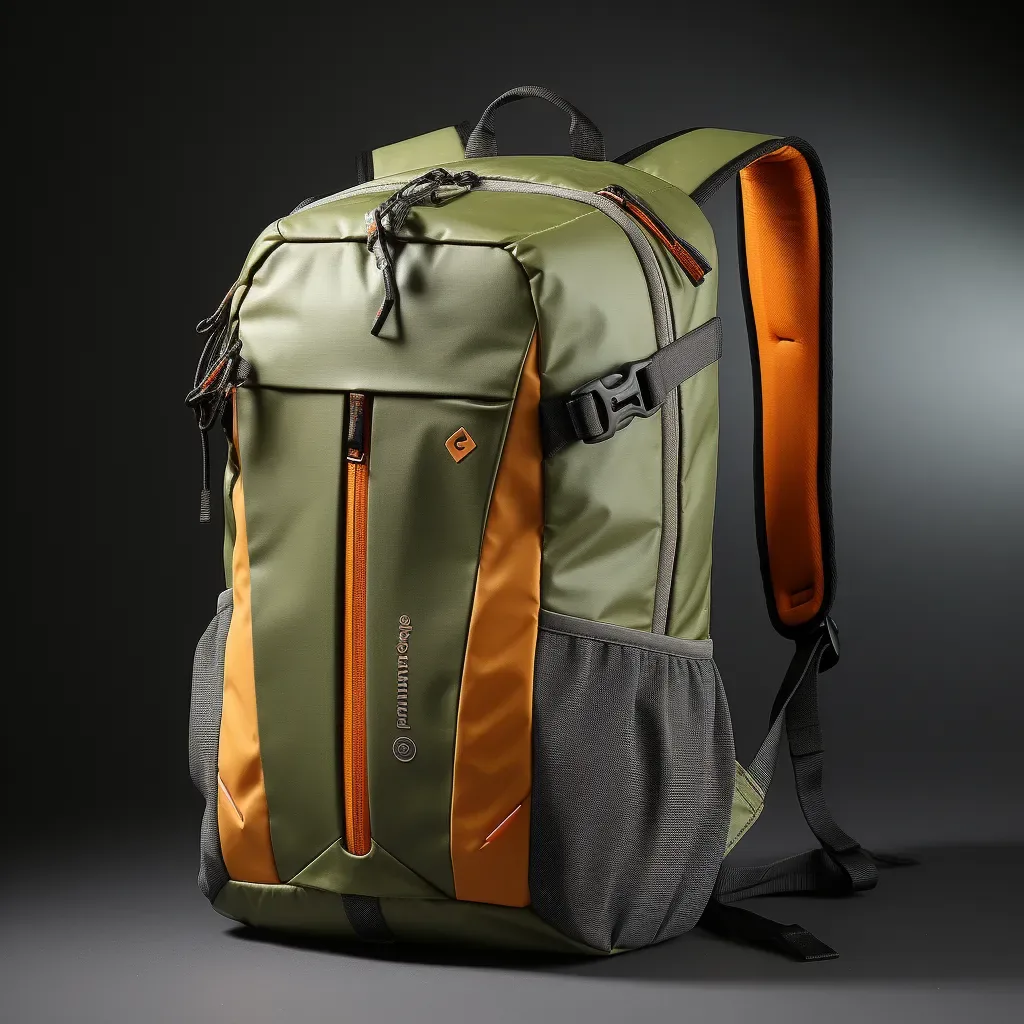
Startups can run credible OEM bag programmes on constrained budgets by starting with a small-batch pilot below the standard 500-piece minimum, choosing ODM designs over ground-up development for the first drop, standardising hardware to avoid tooling charges, and concentrating spend on the one material or detail the customer actually touches. The constraint is rarely the unit price; it is cash timing — the deposit, the tooling, and the gap between paying for inventory and receiving revenue. Sequencing those commitments is what makes a small budget work.
What a Small Budget Actually Buys
The first conversation to have is honest scoping. A first-season budget that must cover sampling, tooling, inventory, freight, duty, photography and packaging will not stretch to a five-style collection in three colourways with custom hardware. It will stretch to one or two styles, executed properly, in a limited colour range. That is not a compromise; it is the discipline that most successful small launches applied from the start.
Programme parameters at a glance
| Parameter | Commitment |
|---|---|
| Minimum order quantity | 500 pieces per style / colourway |
| Sampling lead time | 6–10 working days (12–15 days for complex constructions) |
| Bulk production lead time | 35–50 days after sample approval |
| Inspection standard | AQL 2.5 (ISO 2859-1), single sampling, general level II |
| Incoterms | FOB Xiamen — EXW, CIF and DDP available on request |
| Payment terms | T/T 30% deposit / 70% before shipment; L/C at sight for container loads |
| Verified production floor space | 4,950 m² (SGS-verified) |
| Team | 137 staff across 7 production lines |
| Equipment | 149 machines including computerised saddle-stitch and edge-painting units |
| Monthly capacity | 200,000 pieces |
| Entity | Founded 2014; principal has worked in bag development since 2004 |
The table below sets out how a constrained first-season budget typically allocates across three programme shapes. Figures are indicative proportions rather than absolute amounts, and should be treated as a planning framework rather than a quotation.
| Programme shape | Style and colourway count | Where the budget concentrates | Trade-off accepted |
|---|---|---|---|
| Single hero style, one colourway | 1 style × 1 colourway (500 pcs) | Material quality and hardware finish | Narrow offer; limited shelf presence |
| Two styles, one colourway each | 2 styles × 1 colourway (1,000 pcs) | Breadth of function — e.g. tote plus crossbody | Higher total commitment for the same per-style investment |
| One style, two colourways | 1 style × 2 colourways (1,000 pcs) | Choice within a proven construction | Split inventory risk across colourways |
The pattern worth noticing is that a single style in a single colourway concentrates all available spend into the quality of one object. For a new brand with no track record, that is usually the right shape, because the first drop has to convert strangers into customers on the strength of the product alone.
Pilots: Testing Below the Standard Minimum
The standard minimum is 500 pieces per style per colourway. Below that threshold, fixed costs — line setup, cutting preparation, operator familiarisation — spread across fewer units, so the per-piece figure rises steeply. Small-batch pilots are nonetheless available, and for a startup they often represent the most rational first expenditure.
| Purpose | Recommended quantity | What you learn | What it costs |
|---|---|---|---|
| Validate construction at scale | 100–200 pieces | Whether the design builds consistently off the line | Highest per-piece cost of the programme |
| Photography and press samples | 10–30 pieces | How the product photographs and survives handling | Low absolute outlay, high per-unit cost |
| Market and price testing | 200–400 pieces | Real sell-through and price elasticity data | Recoverable through sales |
| First commercial drop | 500+ pieces | Full economics at standard unit cost | Baseline commercial pricing |
- Treat pilot unit cost as development expenditure, not as a benchmark for the production price.
- Build the pilot from the same materials and hardware you intend to use in bulk, or the learning does not transfer.
- Photograph and measure pilot units so the defect dictionary can be written before bulk begins.
- Keep the pilot design close to the bulk design; a pilot that differs in construction teaches you less than you paid for.
- Confirm the reorder price in writing before you commit to the pilot, so the economics of the next step are known.
ODM as a Budget Strategy
For most first collections, ODM is the more efficient route. An existing design carries a proven pattern, known material consumption, established tooling and a production history that tells you how it behaves at volume. You are buying certainty, and certainty is what a small budget needs most.
| Route | Development cost | Speed to first sample | Degree of exclusivity | Best for |
|---|---|---|---|---|
| ODM — existing design, new branding | Lowest | Fastest | Shared silhouette, distinct identity | First drop, budget-constrained launches |
| ODM — modified design | Low to medium | Fast | Modified proportions or detailing | Brands wanting differentiation without full development |
| OEM — designer's own tech pack | Medium to high | 6–10 working days | Full control of the construction | Brands with in-house technical capability |
| Custom development from scratch | Highest | 12–15 working days or more | Fully original | Brands with volume and a defined design language |
A useful middle path is the modified ODM. Changing a strap length, adding an interior pocket, substituting a lining, or applying a different hardware finish produces a piece that reads as yours while retaining the underlying production confidence of the base design.

Where to Spend and Where to Save
Budget allocation should follow the customer's attention. Money spent on something the customer sees, touches or operates returns more than money spent on something they do not. The table below applies that principle to a typical first handbag programme.
| Element | Recommendation | Reasoning |
|---|---|---|
| Body leather | Spend here | The first thing a customer sees and touches; drives perceived value most directly |
| Hardware finish | Spend here | Visible, operated constantly, and the fastest way a cheap bag reveals itself |
| Edge finishing | Spend here | Cracking or flaking edges are the earliest visible sign of cost-cutting |
| Lining quality | Moderate spend | Visible on opening; perceived but less decisive than the exterior |
| Interior organisation | Save here | Simplify pocket count in the first drop; add complexity once demand is proven |
| Custom tooling | Avoid initially | One-off cost that only amortises over repeated reorders |
| Packaging | Moderate spend | Matters for gifting and unboxing, but is not the product |
The logic is straightforward. A customer decides whether a bag feels expensive within seconds of picking it up, and the inputs to that judgement are the leather, the hardware and the edges. Complexity that is only apparent on the third day of ownership can wait until the second season.
Cash Flow: Deposits, Timing and Working Capital
Most startup programmes fail on timing rather than price. The standard structure is T/T 30% deposit with 70% before shipment, which means capital is committed before sampling finishes and again before goods leave. Add freight, duty and the gap before revenue arrives, and the working capital requirement is considerably larger than the inventory value alone.
- Model the full cash curve before committing, not just the unit price multiplied by quantity.
- Confirm payment timing in the contract so you can plan the balance release against your cash position.
- Consider whether a smaller first drop with a faster reorder beats one large commitment.
- Budget freight as a variable with a contingency, since peak-season rates move.
- Hold a reserve for the unexpected: a failed inspection, a duty reclassification, or a delayed launch.
A First-Year Programme Plan
A sensible first year is sequenced rather than simultaneous. Each step validates something specific and funds the next, which is a fundamentally different approach from committing the whole annual budget to one large opening order. Sequence also protects you from a single early mistake compounding across every style at once.
| Stage | Activity | What it validates | Typical timing |
|---|---|---|---|
| 1. Feasibility | Brief review and costed quotation | Whether the design is buildable at a viable price | 1–2 weeks |
| 2. Sampling | First sample built and reviewed | Pattern, proportion, material and hardware interaction | 6–10 working days |
| 3. Pilot | Small-batch run below standard MOQ | Consistency off the line and real customer response | 2–4 weeks |
| 4. First drop | Standard MOQ production run | Full unit economics at commercial pricing | 35–50 days |
| 5. Reorder | Repeat of the proven construction | Inventory planning and replenishment rhythm | Compressed vs first run |
The reorder is where the economics improve. Pattern, tooling and defect references already exist, so the remaining variables are material procurement and build time. Brands that reach stage five with a complete quality file reorder materially faster than those rebuilding the specification from correspondence.
Mistakes That Burn a Startup's Budget
Certain patterns recur with enough frequency to be worth naming. None of them is a technical failure; each is a decision made early with insufficient information and paid for later.
- Developing five styles when the budget supports two, then under-ordering each and paying pilot pricing on all of them.
- Paying for custom tooling before demand is proven, then discovering the fitting is not what the market wanted.
- Skipping the pilot and going straight to 500 pieces, so the first construction error is discovered at scale.
- Choosing the cheapest quotation without a component-level comparison, and inheriting a downgraded material.
- Leaving compliance and testing to the end of the programme, then paying for expedited testing to release the shipment.
- Changing the specification after approval, which reopens the pattern and the material order together.
- Modelling working capital as inventory value only, and running out of cash before the balance payment is due.

Moving From Pilot to Volume Without Changing Partners
One of the quiet costs of a startup programme is the partner switch. Many brands pilot with one supplier, then move to another for volume in search of a better price, and discover that the specification has to be rebuilt from correspondence. The savings on unit price rarely cover the redevelopment time, the second sampling round, and the quality risk of a new line learning the construction.
| Factor | Staying with the pilot partner | Switching for volume |
|---|---|---|
| Specification | Already built, costed and approved | Rebuilt from documents and a physical sample |
| Sampling | Often reduced to a confirmation piece | Full first-sample cycle repeated |
| Tooling | In place and maintained | New tooling charge on custom items |
| Defect references | Agreed and photographed | Renegotiated from scratch |
| Unit price | Improves with volume on the same line | Lower headline, higher total first-order cost |
| Schedule risk | Low; construction is known | Elevated during the learning curve |
The better approach is to agree the volume pricing curve at pilot stage. Ask what the unit price becomes at 500, 1,000 and 3,000 pieces before you place the pilot order. A partner who can scale with you will answer that question directly; one who cannot will deflect it, which is useful information in itself.
This is particularly true where the pilot used bespoke materials or hardware. If the pilot ran on a stocked leather and catalogue fittings, moving to volume is straightforward. If it ran on a custom dye lot or a new tool, that investment stays with the partner who made it — another reason to settle the volume question early rather than after the fact.
Where we work with early-stage brands, the programme team will usually suggest the staged route: pilot first, then scale what sold. Our production partners in Quanzhou, Fujian, build to your specification across 7 lines and 149 machines, and the entity has been running programmes since 2014 with its principal in the trade since 2004 — which is a long enough view to know that a brand's second order matters more than its first.
Plan a first collection that fits your budget
Tell us your budget range and launch window, and the programme team will propose a staged plan with pilot quantities, tooling strategy and realistic unit economics. Email service@junyuanbags.com or WhatsApp +86 177 5002 0688.
Frequently Asked Questions
Can a startup place an order below 500 pieces?
Yes, through a small-batch pilot. The standard commercial minimum is 500 pieces per style per colourway, below which fixed setup costs push the per-unit figure up sharply. Pilots are treated as development expenditure rather than production, which is the right way to budget them: you are buying information about how the design builds and sells.
Why is the unit price higher for a small pilot run?
Because line setup, cutting preparation, pattern checking and operator familiarisation are largely fixed regardless of quantity. Spread across 150 units they add considerably more per piece than across 500 or 5,000. The pilot tells you whether the construction works before you commit to the volume where those costs amortise properly.
Is ODM cheaper than OEM for a first collection?
Generally yes. An ODM design has a proven pattern, known material consumption and existing tooling, which removes most development cost and shortens sampling. You give up some exclusivity of silhouette, though branding, lining, hardware finish and detailing usually provide sufficient differentiation for a first drop.
How much should a startup budget for sampling?
Enough to cover sampling and any tooling as separate line items, plus one revision round. Sampling runs 6–10 working days, or 12–15 for complex constructions. Budgeting for a revision is prudent on a first programme, because a first sample frequently reveals a proportion or material detail that needs adjustment.
Should I pay for custom hardware tooling on my first order?
Usually not. Custom tooling is a one-off cost that only amortises over repeated reorders, and a first drop has not yet proven demand. Standard hardware from an existing catalogue keeps the upfront commitment lower; custom fittings make more sense once a style has reordered at least once.
What payment terms should a startup expect?
T/T 30% deposit with 70% before shipment is the standard structure. Plan for it carefully, because capital is committed before sampling finishes and again before goods leave. Model the full cash curve including freight, duty and the revenue lag, rather than simply multiplying unit price by quantity.
How do I choose between one style in two colourways and two styles in one?
It depends on what you are testing. Two colourways of one style test colour preference within a proven construction and simplify production. Two different styles test function — for example a tote against a crossbody — and broaden the offer. First drops often favour the two-colourway route for its operational simplicity.
Can I reuse the pattern from a previous supplier?
You can supply it, but verify that it is complete and in a usable format. Patterns from another source sometimes lack grading, tolerances or the construction sequence notes needed to build at scale. A brief review usually establishes quickly whether the pattern can be adopted directly or needs to be redeveloped.
What is the biggest budget risk for a first bag order?
Committing the full budget to a large first run before the construction is proven. If a design fault exists, it is discovered at scale, when correcting it is most expensive. A staged approach — pilot, then scale what sold — limits exposure and usually improves the economics of the second order.
How can I reduce unit cost without lowering quality?
Consolidate colourways, choose stocked materials, standardise hardware across styles, and simplify interior organisation. These reduce setup time, procurement cost and changeovers without touching the leather or hardware the customer perceives. Reviewing tolerances also helps, since unnecessarily tight limits raise rejection rates without improving the product.
Do small brands get the same quality control as large ones?
They should. Inspection protocols, defect dictionaries and inline checks apply per programme rather than per client size, because a defect escapes into the market regardless of who ordered the goods. Ask any partner to state the inspection scope and sampling plan in writing before you commit.
What is the minimum viable first collection?
One well-executed style in one colourway at 500 pieces, or a smaller pilot if you need to validate first. That concentrates your budget in the quality of a single object and gives the market something clear to respond to. Breadth is far easier to add in season two than quality is to recover.
How long should a startup allow for a first programme?
Roughly 110–130 days from initial brief to goods available by sea freight. That covers sampling at 6–10 working days, bulk at 35–50 days after approval, inspection and packing at 2–5 days, plus transit and clearance. First programmes should assume the upper end of the bulk range.
Should I test the market before ordering 500 pieces?
Usually yes, if the design is unproven. A pilot of 100–400 pieces validates both construction consistency at line scale and real customer demand. The per-unit cost is higher, but the information prevents a far more expensive mistake and typically improves the economics of the full run that follows.
What compliance costs should a startup budget for?
Testing and declarations for your destination market — REACH and related requirements for the EU, CPSIA for the US. Budget for them at quotation stage rather than after production. Deferring compliance to the end of a programme typically converts a routine test into an expedited one that holds the shipment.
Should I ask for volume pricing before placing a pilot order?
Yes. Ask what the unit price becomes at 500, 1,000 and 3,000 pieces before committing to the pilot. This tells you whether the partner can scale with you, and it prevents the awkward position of having proven a design with one supplier while needing another for the economics to work.
What is the hidden cost of switching production partners?
Rebuilding the specification. Pattern, tooling, tolerances and defect references all have to be re-established, which means another sampling round, another tooling charge on custom items, and a new line learning the construction. The saving on headline unit price rarely covers those costs on the first volume order.
How do I protect a design I developed with a partner?
With a written agreement covering ownership of the pattern, tooling and any bespoke development, plus a confidentiality clause and clear terms on what happens if the programme pauses. Confirm who holds the tools and whether they can be used for other clients, and address the question before tooling is cut.
What should a startup prepare before contacting a production partner?
A dimensioned tech pack or a clear physical reference, a target quantity, a target retail price, and a destination market. Even a rough specification allows a useful feasibility conversation. Without a target price and market, any quotation is guesswork, because material selection and compliance requirements both depend on them.
Is it realistic to launch with 500 pieces of one style?
Yes, and it is the most common starting point. Five hundred units of a single style in a single colourway concentrates the budget into the quality of one object, meets the standard minimum, and produces meaningful sell-through data. It is almost always a stronger launch position than fifteen hundred units spread across three unproven styles.