
A designer bag is the smarter purchase when resale value, brand recognition and immediate availability matter; a bespoke bag is the smarter purchase when fit, material quality at a given price and long service life matter. The honest test is cost per wear measured over the period you will actually own the piece. A designer bag retains a larger share of its price on the secondary market, while a bespoke bag spends its entire value in use, which is the better return for anyone who intends to carry the bag rather than trade it.
What You Are Actually Comparing
The comparison is often framed as bespoke against designer, which is imprecise. A more accurate framing is specification against reputation. In a designer purchase, a substantial proportion of the price buys the house: the design archive, the retail environment, the marketing and the secondary-market liquidity that follows from all three. In a bespoke purchase, almost the entire price buys materials and labour. Neither is inherently better value. They are different allocations of the same money, and the right allocation depends on which of those two things you want more of.
Programme parameters at a glance
| Parameter | Commitment |
|---|---|
| Minimum order quantity | 500 pieces per style / colourway |
| Sampling lead time | 6–10 working days (12–15 days for complex constructions) |
| Bulk production lead time | 35–50 days after sample approval |
| Inspection standard | AQL 2.5 (ISO 2859-1), single sampling, general level II |
| Incoterms | FOB Xiamen — EXW, CIF and DDP available on request |
| Payment terms | T/T 30% deposit / 70% before shipment; L/C at sight for container loads |
| Verified production floor space | 4,950 m² (SGS-verified) |
| Team | 137 staff across 7 production lines |
| Equipment | 149 machines including computerised saddle-stitch and edge-painting units |
| Monthly capacity | 200,000 pieces |
| Entity | Founded 2014; principal has worked in bag development since 2004 |
| Factor | Designer bag | Bespoke bag |
|---|---|---|
| Price composition | Significant share for brand and retail | Predominantly materials and labour |
| Material quality at price | High, but tiered by house positioning | Directly controlled by the buyer |
| Availability | Immediate, subject to stock | Six to ten days sampling, then production |
| Fit to need | Generic, designed for the widest market | Sized and specified for one user |
| Resale liquidity | Established secondary market | Limited, mostly private resale |
| Repair pathway | House repair service, increasingly restricted | Maker or independent repairer |
| Emotional specificity | Shared with thousands of owners | Singular to the commission |
Cost Per Wear and the Arithmetic of Use
Cost per wear is the only measure that treats both options fairly, because it converts price into a rate rather than a sum. Divide the purchase price by the number of times the piece will realistically be carried over the ownership period. A designer bag bought at a high price and carried a hundred times over five years may still cost more per wear than a bespoke bag bought at half the price and carried three hundred times, because the bespoke piece was sized for a laptop, a particular commute and a particular wardrobe.
The arithmetic also has to account for the tail. A well-constructed bag in full-grain leather can be re-edged, re-stitched and re-lined, extending the ownership period well past the point at which a fashion-cycle purchase feels dated. Extending the denominator is the most powerful lever in the whole calculation, and it is the lever that bespoke construction pulls hardest. Buyers who run this calculation honestly usually find the answer is closer than the price tags suggest.
| Ownership scenario | Designer outcome | Bespoke outcome |
|---|---|---|
| Carried daily for five years | Strong, but high cost per wear at high prices | Best case — specification matched to daily use |
| Carried occasionally for ten years | Retains value but low usage rate | Poor utilisation of a custom specification |
| Resold after two years | Best case — liquidity and brand demand | Weak — little secondary market exists |
| Used hard in travel or work | Wear may reduce resale sharply | Wear becomes patina and is expected |
| Passed on as an heirloom | Depends on the house and the model | Designed for it, with repairability in mind |
Craft and Construction: Where the Difference Shows
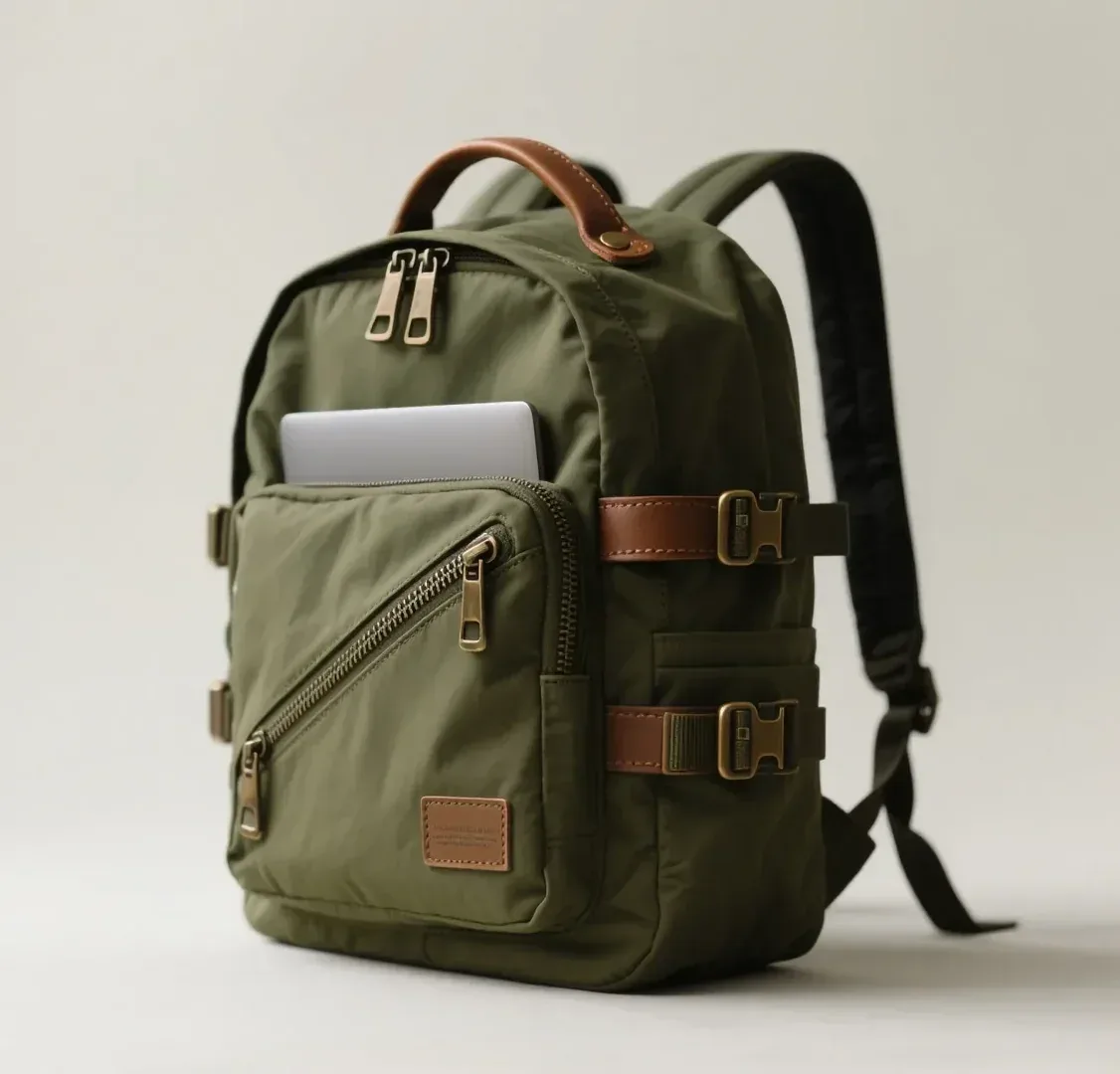
At the top of the market, construction quality converges. A good house and a good bespoke maker both set hardware with rivets as well as stitching, both skive where thickness must be reduced, and both finish edges rather than leaving them raw. The difference appears in the middle of the market. A mid-tier designer bag often carries the same price as a fully bespoke piece while using a corrected-grain leather, a glued edge and a lining chosen for cost. That is the band where bespoke wins decisively, and it is where most purchases are actually made.
| Construction detail | What to look for | Why it predicts longevity |
|---|---|---|
| Edge finish | Multiple thin coats, sanded between, no ridges | Edges are the first point of visible failure |
| Handle attachment | Stitched and riveted, reinforcement under the panel | Handles carry the entire load of the bag |
| Stitch density | Consistent, typically seven to nine per inch | Uneven density indicates uncalibrated machinery |
| Lining | Securely anchored, no loose floating panels | A loose lining abrades the shell from inside |
| Base | Reinforced, with feet or a structured panel | Bases take abrasion every time the bag is set down |
| Hardware | Solid metal, smooth action, consistent plating | Plated zamak of poor quality pits within a year |
There is one more construction point worth stating plainly, because it separates the two routes more than any other: reinforcement. Volume production rewards the minimum reinforcement that survives a warranty period; a commission rewards the reinforcement that survives a decade. A buyer can ask for a doubled panel behind a handle, a full-width base stiffener and a lining anchored at every seam, and those requests cost very little per unit while changing the service life substantially. They are rarely offered as options in a retail environment, because retail is optimised for the first impression rather than the tenth year.
Resale, Reputation and the Label Premium
The strongest argument for the designer purchase is liquidity. Certain houses and certain models have a functioning secondary market with published prices, and a well-kept piece can retain a meaningful share of its retail value. A bespoke bag has almost no secondary market in the conventional sense, because its value is specific to the person who specified it. Anyone who thinks of a bag as a store of value should buy designer. Anyone who thinks of a bag as a tool should at least consider bespoke.
- Designer resale works best for established houses and recognisable, enduring models rather than seasonal shapes.
- Condition drives resale more than age; corner wear and handle darkening reduce offers sharply.
- A bespoke piece resells privately, usually to someone who values the material rather than the maker.
- Limited editions behave differently from core models and should not be assumed to hold value.
- Receipts, dust bags and original packaging materially affect the secondary price of a designer piece.
- Bespoke value is recovered in use, not at sale, which is why the specification matters so much.
Fit for Purpose: When a Designer Bag Wins
There are situations in which the designer purchase is plainly correct, and a good advisor will say so. Where the bag is needed tomorrow, bespoke cannot compete with a shop floor. Where the bag is a gift expected to be recognised, the label carries meaning that a custom piece cannot. Where the buyer intends to resell within a few years, liquidity dominates every other consideration. And where the buyer simply wants a particular design that exists and is good, commissioning an imitation of it is worse than buying the original.
- The piece is needed within days rather than weeks.
- Recognition of the house is part of the point of the gift.
- The buyer intends to resell and wants secondary-market liquidity.
- A specific existing design is wanted and should be bought rather than reproduced.
- The buyer wants to try before committing, which a shop allows and a commission does not.
- The budget sits below the point at which true bespoke construction becomes viable.

When Bespoke Is the Smarter Decision
Bespoke wins on specificity. A photographer who needs a bag that opens silently and holds two bodies; a barrister who needs a case that fits a particular bundle; a frequent flyer who needs a cabin bag that meets a specific airline gauge while looking like luggage rather than equipment — these are requirements the market does not serve well. Where a need is genuinely particular, the premium for custom is small relative to the value of having the requirement actually met.
- The bag must hold or protect something with unusual dimensions.
- The buyer wants a material or finish not offered in the retail market.
- The piece will be used hard enough that repairability matters more than resale.
- A wardrobe or brand palette must be matched exactly rather than approximately.
- The bag is part of a wider set — luggage, gifts or a branded programme.
- The buyer wants a piece that will not be carried by everyone else in the room.
Risk: What Can Go Wrong on Each Side
Both routes carry risk, and the risks are different in kind. A designer purchase risks disappointment in quality relative to price, and loses value if the model falls out of favour. A bespoke commission risks a specification that turns out to be wrong, a maker who cannot execute it, and a timeline that slips. The mitigation on the bespoke side is entirely procedural: a complete brief, physical material approval, a written sample sign-off and inspection against that sample before final payment.
| Risk | Designer purchase | Bespoke commission |
|---|---|---|
| Quality below expectation | Hard to judge before purchase | Visible and correctable at sample stage |
| Timeline | None — immediate | Six to ten days sampling plus production |
| Specification error | Bag does what it does | Bag does what you asked, which may be wrong |
| Value retention | Market-dependent | Weak by design |
| Maker capability | Not applicable | Mitigated by samples and inspection |
| Counterfeit exposure | Real risk in the secondary market | Not applicable |
Buy designer when you want to sell it later. Commission bespoke when you intend to keep it until it falls apart, and then have it repaired.
A Short Framework for Deciding
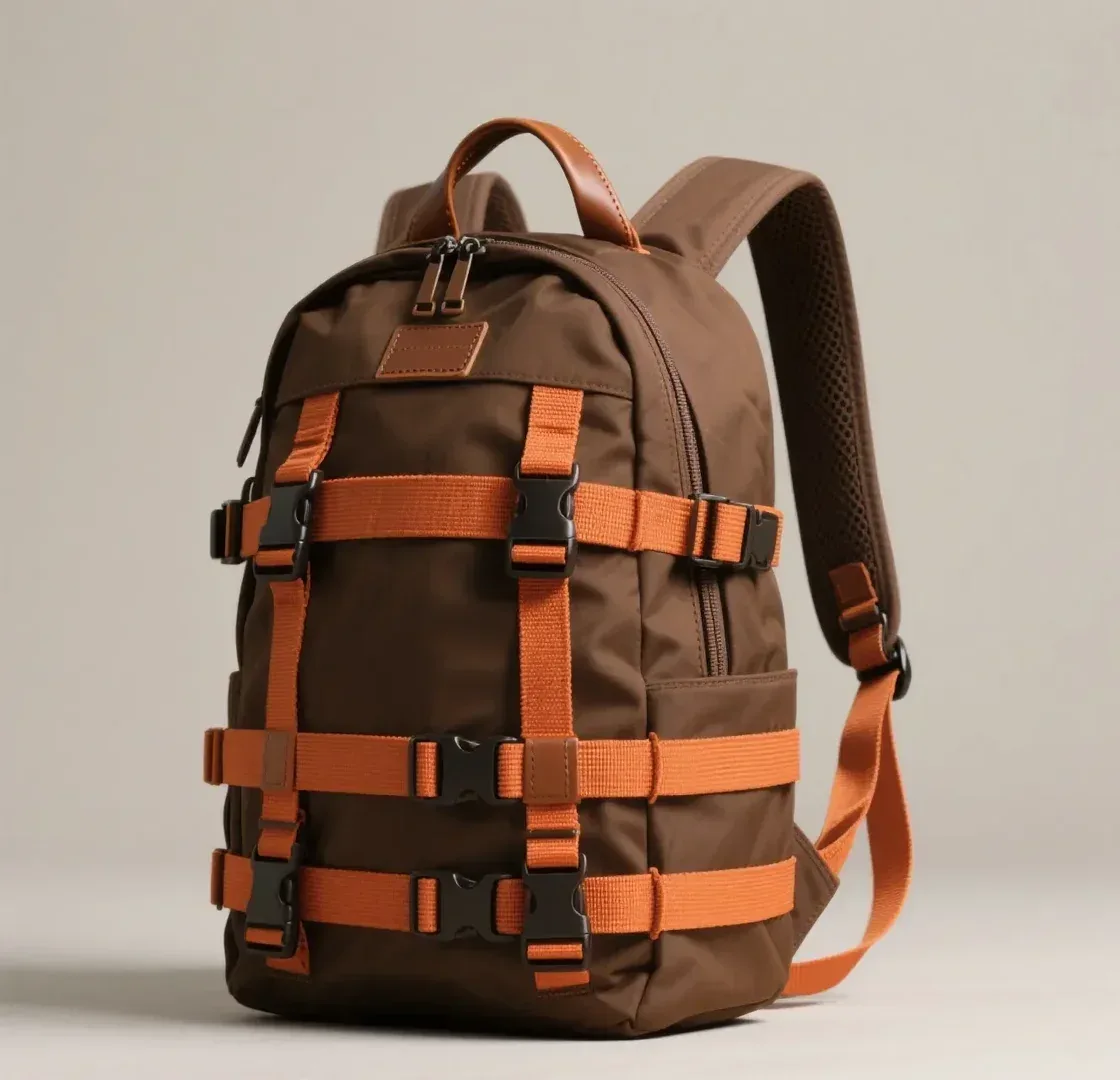
Three questions resolve most decisions. Do you intend to resell within five years? If yes, buy designer. Is there a requirement the market does not meet? If yes, commission. Is the budget above the point where bespoke construction is genuinely viable? If no, buy the best designer or independent piece you can afford rather than a compromised custom one. For buyers who answer no, yes and yes, the bespoke route will almost always produce the better object and the better long-term return.
Where the answer remains unclear, the lowest-risk path is to commission a single piece first and judge the outcome directly. One commission teaches more about specification, materials and maker capability than any amount of reading, and it costs less than the mistake it prevents. Buyers who take this route usually find that their second commission is better specified, faster and more satisfying than their first, which is a reasonable argument for starting small.
- Write down the requirement in dimensional terms before comparing any prices.
- Decide whether resale matters; if it does, the decision is largely made.
- Compare material specifications rather than comparing labels to commissions.
- Commission one piece before committing to a set or a programme.
- Insist on physical material approval before sampling begins.
- Judge the result after six months of use, not on the day it arrives.
Commission a piece and judge for yourself
Describe what the bag has to do, and the programme team will tell you honestly whether bespoke is the right answer. Email service@junyuanbags.com or message us on WhatsApp at +86 177 5002 0688.
Frequently Asked Questions
Is a bespoke bag a better investment than a designer bag?
It depends entirely on how the value is recovered. A designer bag is the better financial investment if you intend to resell, because established houses have functioning secondary markets. A bespoke bag is the better investment if you intend to use it, because the entire price goes into materials and labour and the piece can be repaired rather than replaced. Decide which kind of return you want before comparing prices.
Do bespoke bags hold their value?
They hold use value rather than resale value. A bespoke piece is specified for one person, which is precisely why it works so well for them and why the secondary market is thin. The financial return comes from service life: a well-made leather bag that can be re-edged, re-stitched and re-lined will outlast several fashion-cycle purchases and cost less per wear across that period.
How does cost per wear compare between the two?
Divide the purchase price by the number of times the bag will realistically be carried. A bespoke bag specified for daily use tends to win because it is used more often and for longer, while a designer bag bought for occasional wear can carry a very high cost per wear despite retaining resale value. The measure is usage, and bespoke specification usually drives usage up.
Is bespoke always more expensive than designer?
No. At the top of the designer market, a bespoke commission in equivalent materials is usually cheaper, because the price does not include brand margin and retail overhead. At the lower end, a volume-produced bag will always be cheaper than a custom one, because tooling and sampling costs have to be recovered. The crossover point sits in the mid-market, where bespoke quality is often markedly better for the same money.
When should I buy a designer bag instead of commissioning one?
Buy designer when you need the bag immediately, when recognition of the house matters, when you intend to resell within a few years, or when a specific existing design is what you actually want. Commissioning an approximation of a design that already exists costs more, takes longer and produces a weaker result than simply buying the original.
What quality advantages does a bespoke bag actually have?
Control over material grade, substance, hardware specification and construction method. A buyer can insist on full-grain rather than corrected grain, on a stitched and riveted handle attachment rather than a glued one, and on a multi-coat edge finish. These are the details that determine whether a bag lasts five years or twenty, and they are usually the first things reduced in volume production to hit a price.
Can a bespoke bag be repaired as easily as a designer bag?
Usually more easily. A designer purchase depends on the house repair service, which increasingly declines older pieces or those bought through unofficial channels. A bespoke piece can normally be repaired by the original maker or by any competent leather worker, provided it was constructed with standard hardware sizes and a lining that can be removed without destroying the shell.
How long does a bespoke commission take compared with buying off the shelf?
A retail purchase is immediate. A commission takes six to ten working days for sampling on standard constructions and twelve to fifteen for complex ones, followed by thirty-five to fifty days for production. Material sourcing can extend this where a specified hide is not held in stock. The wait is the price of specification, and it is the main reason the designer route wins when time is short.
What is the biggest risk in commissioning a bespoke bag?
Specifying the wrong thing. The maker will build what you asked for, and if the requirement was not thought through, the result will be well made and wrong. Mitigate this by writing the brief in dimensional terms, approving physical material samples, reviewing the first sample against that brief line by line, and correcting with specific annotated notes rather than general impressions.
Do designer bags use better leather than bespoke makers?
At the very top, both use excellent material. The difference appears in the mid-market, where a recognisable label often carries a corrected-grain leather and a cost-driven lining at a price that would buy full-grain with a proper edge finish from a bespoke maker. The reliable approach is to compare stated specifications — cut, substance, tannage — rather than comparing reputation with specification.
Is a bespoke bag worth it for everyday use?
Everyday use is where bespoke performs best, because the specification can be matched to the routine. Size the interior around what is genuinely carried, choose a closure that works one-handed, specify a reinforced handle attachment and a robust lining. A bag designed around a real daily routine gets used constantly, which is what drives the cost per wear down far enough to justify the commission.
Can I commission a bag that looks like a specific designer model?
You should not, and a reputable maker will decline. Reproducing a protected design creates legal exposure and produces an inferior copy of something available to buy. The productive approach is to identify the attribute you admire — the proportion of the handle, the softness of the corner — and have that effect achieved through original construction rather than imitation.
How do I judge whether a bespoke quote is fair?
Ask for it itemised: leather with substance and grade, hardware with plating standard, lining, labour operations, tooling and packing. Compare that itemisation against retail equivalents at the same stated specification rather than against the headline price of a designer bag. A quote that cannot be itemised is a quote that cannot be judged, and that is the real warning sign.
What should I do if I am undecided between the two routes?
Commission one piece and evaluate it. A single commission costing a fraction of a comparable designer purchase will teach you more about materials, specification and maker capability than any amount of research. Judge the result after six months of actual use rather than on arrival day, and you will have a much better basis for deciding on anything larger.
Does a bespoke bag make a good gift compared with a designer bag?
It depends on the recipient. Where recognition matters, the label carries meaning a custom piece cannot match. Where the recipient values material, fit and privacy, a bespoke piece with discreet personalisation is often the more considered gift. When in doubt, choose bespoke only if you know the recipient's routine well enough to specify it accurately; otherwise the risk of getting the specification wrong falls on them.
Which option is better for a professional who travels constantly?
Bespoke, in most cases. Travel requirements are unusually specific — a cabin gauge that must be met precisely, a compartment for a particular device, a strap that works over a roller handle. Retail luggage is designed for averages and rarely satisfies all of it. Commissioning a piece built around the actual route produces a bag that gets used every trip, which is where the return is realised.