
Men's bespoke leather bags divide cleanly into three formats that cover almost every requirement: a structured briefcase for documents and a laptop, a holdall for overnight and short-trip carry, and a backpack for commuting under load. The specification differs from womenswear in three specific ways — a higher average carried load, a narrower colour and hardware palette, and a stronger expectation that the bag will look correct with tailoring. Getting those three right matters more than any single design gesture.
What Men Actually Carry: Load, Format and Context
The first specification question is not aesthetic. It is what goes in the bag, how much it weighs, and where the bag is seen. A bag designed around the wrong load will fail at the handles regardless of how good the leather is, and a bag designed for the wrong context will not be carried however well it is made.
| Context | Typical contents | Weight carried | Format that works |
|---|---|---|---|
| Daily commute, office | Laptop, charger, documents, wash bag | Moderate | Briefcase or slim backpack |
| Client-facing day | Laptop or tablet, papers, notebook | Light to moderate | Briefcase; a backpack reads too casual |
| Overnight trip | Two days of clothing, wash bag, shoes | Moderate to heavy | Holdall |
| Short-haul flight | Cabin allowance, laptop, documents | Moderate | Cabin-sized holdall or backpack |
| Site or studio work | Tools, samples, tablet, water | Heavy | Backpack with a structured back panel |
| Weekend away | Clothing, wash bag, camera | Moderate to heavy | Holdall with a detachable strap |
Two observations follow from that table. First, weight is consistently higher than in comparable womenswear formats, which is why handle anchoring and strap specification carry more weight in a men's bag than in most other categories. Second, context is unusually strict: a bag that looks wrong with a suit gets left at home, and a bag left at home is a bag that fails commercially.
The Briefcase: Structure, Organisation and Closure
A briefcase is the most demanding of the three formats to specify well, because it has to hold a shape under a moving load while remaining slim enough to look correct under the arm. Three decisions determine whether it succeeds.
Programme parameters at a glance
| Parameter | Commitment |
|---|---|
| Minimum order quantity | 500 pieces per style / colourway |
| Sampling lead time | 6–10 working days (12–15 days for complex constructions) |
| Bulk production lead time | 35–50 days after sample approval |
| Inspection standard | AQL 2.5 (ISO 2859-1), single sampling, general level II |
| Incoterms | FOB Xiamen — EXW, CIF and DDP available on request |
| Payment terms | T/T 30% deposit / 70% before shipment; L/C at sight for container loads |
| Verified production floor space | 4,950 m² (SGS-verified) |
| Team | 137 staff across 7 production lines |
| Equipment | 149 machines including computerised saddle-stitch and edge-painting units |
| Monthly capacity | 200,000 pieces |
| Entity | Founded 2014; principal has worked in bag development since 2004 |
The handle is where briefcases most often go wrong. It must be anchored into the body panel rather than into a facing or the lining, since a briefcase is carried by its handle almost exclusively and the load is considerable. It must also be wide enough not to cut into the hand when the bag is fully loaded; a narrow handle on a heavy bag is uncomfortable within minutes and is remembered as a quality problem.
The closure decision interacts with how the bag is used. A lock or turn-lock is slower to open than a zip and reads more formal, which suits a client-facing bag and irritates anyone passing through airport security twice a week. A covered zip is faster and more secure against rain. A magnetic closure under a flap is the quietest option visually and the weakest under load, since it holds by friction rather than mechanically.
Organisation deserves restraint. The tendency in development is to add pockets until the interior is a grid, at which point nothing fits comfortably and the user reverts to carrying everything in the main compartment. One open section, one zipped section, and slots for pens and cards cover almost every working pattern.
The Holdall: Capacity, Base and Carry
A holdall is the simplest of the three formats and the easiest to specify badly, because its failure modes are all structural. Capacity, base and strap attachment decide whether it lasts a decade or a season.
| Element | Specification that works | Common failure |
|---|---|---|
| Base | Reinforced panel with metal feet; the base carries the entire abrasive load | A soft base that sags and scuffs through |
| Capacity | Sized to the actual trip: overnight, two nights or cabin allowance | Oversized bags that get overpacked and strain the zip |
| Zip | Heavy-duty metal or moulded tooth, set with a leather pull for grip | A light coil zip that separates under load |
| End panels | Structured ends so the bag holds its shape when half full | Collapsing ends that look shapeless in use |
| Strap | Detachable with a padded section, anchored to the body not the lining | Anchors tearing out of the lining |
| Interior | One large compartment plus a zipped pocket; a wipe-clean lining | A fussy interior that is hard to pack |
Capacity should be derived from the trip, not from a desire for volume. A holdall that is too large invites overpacking, and an overpacked holdall stresses the zip, the strap anchors and the handles simultaneously. Industry estimates suggest that the majority of holdall returns involve zip or anchor failure on bags that were simply too big for what the owner was asked to carry.

The Backpack: Load Transfer and Security
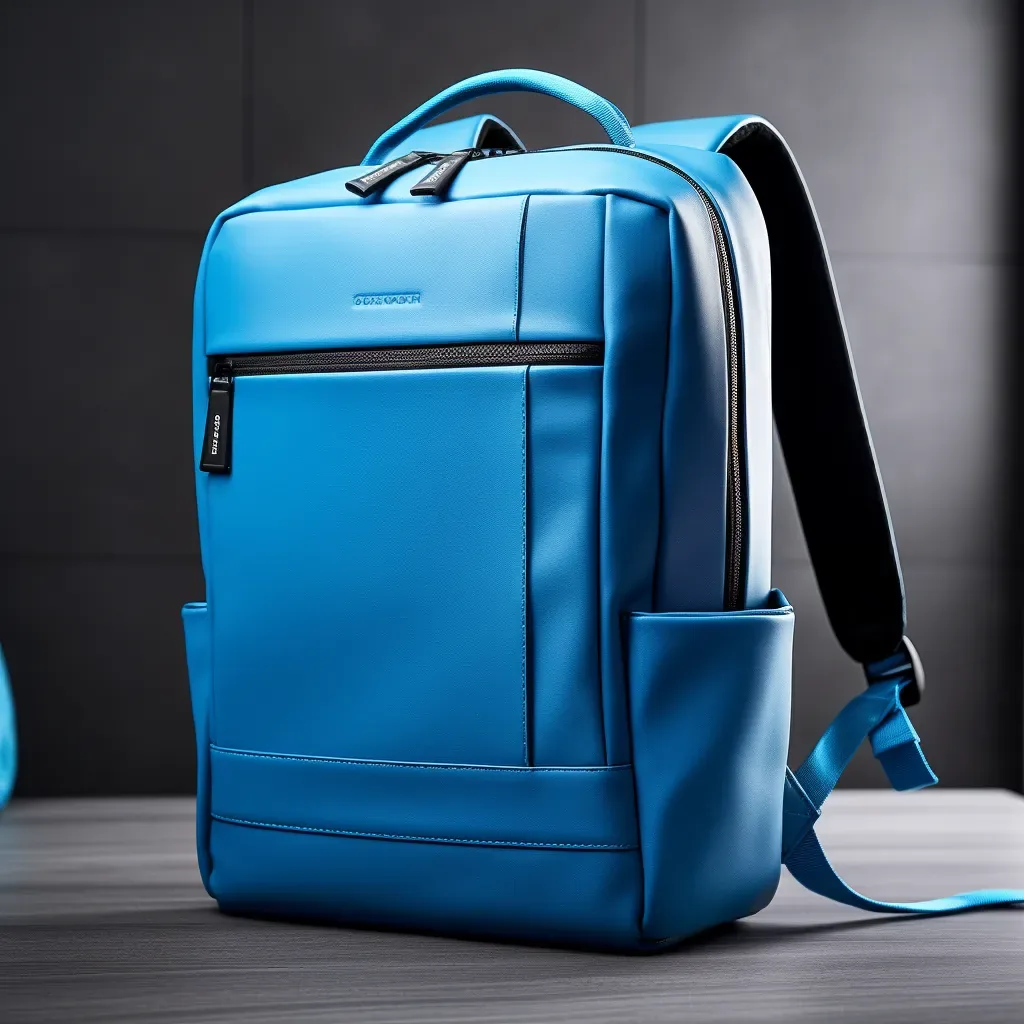
A leather backpack is the hardest of the three to engineer, because leather does not behave like the technical fabrics that the format was developed around. It is heavier, it does not breathe in the same way, and it does not stretch to accommodate a load. Those properties can be managed, but only deliberately.
| Element | Requirement | Why it matters on leather |
|---|---|---|
| Strap width and padding | Wider than on a fabric pack, with a leather-faced pad | Narrow straps cut into a shoulder under a heavy load |
| Back panel | Structured with a padded, breathable contact surface | Leather against a shirt is warm and uncomfortable |
| Top handle | A solid grab handle that carries the bag off the body | A backpack is lifted by its handle constantly |
| Access | A covered zip against the back panel for security | An exposed zip on a commuting bag is a pickpocket target |
| Laptop sleeve | Suspended and padded, positioned close to the back | Protects the device and keeps the centre of gravity forward |
| Weight control | Lighter leathers and minimal internal structure | Leather weight compounds with load on the shoulders |
Weight is the decisive variable. A backpack in a heavy, thick leather can weigh as much as the contents before anything is put in it, and that is felt on the shoulders within minutes. Specifying a slightly lighter substance, using a fabric-backed lining rather than a second leather layer, and keeping internal structure minimal are the three measures that make a leather backpack genuinely wearable.
Leather and Finish Choices for Men's Bags
The leather palette for men's bags is narrower than for womenswear, and within that narrow range the choice is mostly about how the bag should age. Two decisions matter: how much correction the surface has had, and whether the buyer wants patina.
| Leather | Appearance | Ages how | Best format |
|---|---|---|---|
| Full-grain, aniline | Natural, markings visible | Develops a strong, uneven patina | Briefcase; heritage holdalls |
| Full-grain, waxy pull-up | Slightly rustic, lightens on flex | Marks readily and buffs out | Holdall; casual backpack |
| Vegetable-tanned, natural | Pale, firm | Darkens considerably, patinas strongly | Briefcase; a committed choice |
| Semi-aniline | Natural look with some protection | Patina develops slowly | Briefcase and holdall |
| Pigmented, pebble grain | Uniform, textured, forgiving | Holds appearance; scuffs show eventually | Backpack; daily commuting |
| Saffiano | Crisp, cross-hatched, structured | Holds appearance well | Slim briefcase and document case |
| Waxed canvas with leather trim | Heritage, mixed-material | Fabric softens; leather patinas | Holdall and weekend bag |
The patina question should be asked before the leather is chosen, not after the first scratch appears. A buyer who wants a bag to look the same in five years as it did on day one should be specified into a pigmented finish. A buyer who wants the bag to record its use belongs in full-grain. Neither is a better choice; they are different products, and a mismatch produces disappointment that no amount of craft can fix.
Hardware and Colour: The Restraint Principle
Men's bags reward restraint. The most common specification error in the category is over-branding: an oversized logo plate, contrast stitching, or hardware in a finish that draws the eye. Four rules keep a men's bag correct.
- Keep the metal family consistent: gunmetal or palladium on black, antique or natural brass on brown and tan.
- Scale the logo to the bag, and place it where it is found rather than announced — the base of a handle, an interior plate, a small debossed mark.
- Avoid contrast stitching unless it is a deliberate house signature; tone-on-tone thread reads quieter and stays correct with tailoring.
- Limit the palette: black, chocolate, cognac and navy cover most professional requirements and reorder more reliably.
- Let the leather carry the interest. Texture, grain and patina do more for a men's bag than decoration does.
There is a commercial argument for restraint as well. A quietly specified bag has a longer commercial life, because it does not date. That matters in a category where the same customer buys once and carries the bag for a decade, and it matters for a brand, since a restrained design reorders with fewer changes season after season.
Building a Men's Capsule: Three Pieces
Three formats, specified coherently, cover effectively every masculine carry requirement. The value of planning them as a capsule rather than as separate styles is that they share a leather, a metal and a construction language, which reads as a range and buys better.
| Piece | Role | Key specification | Shared elements |
|---|---|---|---|
| Structured briefcase | Working days and client meetings | Padded suspended laptop sleeve, covered closure, reinforced handle anchors | Leather, lining, hardware finish, edge colour |
| Medium holdall | Overnight and short trips | Reinforced base with feet, heavy-duty zip, detachable padded strap | Leather, lining, hardware finish, edge colour |
| Commuter backpack | Travel to work under load | Wide padded straps, structured back panel, rear-facing secure access | Leather, lining, hardware finish, edge colour |
Sharing the specification across the three pieces has a practical payoff beyond appearance. One leather ordered in a single lot, one hardware finish, one lining and one thread colour consolidate purchasing, simplify sampling and reduce the risk of a mismatch between pieces. It also makes reordering straightforward, since the same materials are already qualified and tested.
Development, Fit and Programme Notes
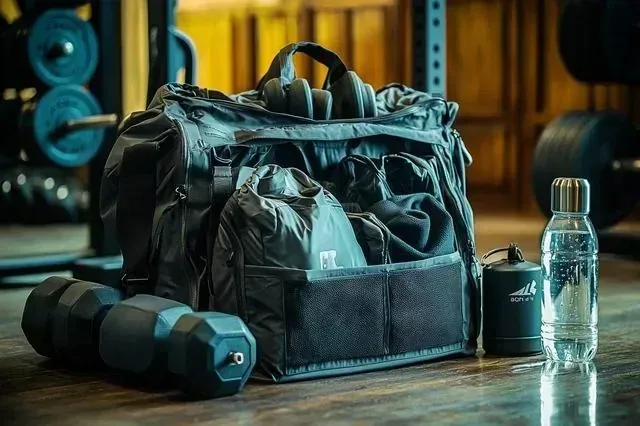
Men's bags benefit from a specific kind of sample testing: load it and carry it. A bag that looks correct on a bench and uncomfortable on a shoulder is a failed sample, and the only way to find out is to use it. The sequence below is the one we run with clients developing a men's range.
- Agree the real contents and weight the bag is designed to carry, and write it into the brief.
- Develop the pattern against that load, checking handle anchoring and strap geometry on the first sample.
- Carry the pre-production sample for two weeks under realistic conditions, including a full day on the shoulder.
- Check the bag against tailoring: under the arm, over a coat sleeve, and set down beside a chair.
- Specify leather, lining, thread and edge colour once, across all three formats, and hold a golden sample of each.
- Confirm compliance for the destination market: REACH and OEKO-TEX for Europe, CPSIA for the United States.
On the production side, the standard programme parameters apply: prototypes are turned round in six to ten working days, or twelve to fifteen where the construction is demanding, and bulk follows thirty-five to fifty days after approval, checked to AQL 2.5 (ISO 2859-1) under single sampling at general level II. On our production floor in Quanzhou those timelines hold when the leather is ordered in parallel with sampling, which is the single most effective thing a buyer can do to protect a launch date.
Market context supports the category. Coverage in Vogue Business and Business of Fashion has tracked sustained growth in men's leather goods, driven less by fashion cycles than by replacement of worn-out pieces, and industry estimates suggest durability and restraint outperform novelty in this segment. A men's bag that is correctly specified, quietly branded and built to last is a product that sells for years rather than seasons.
Develop a men's leather range
Send across your sketches, leather preference and target price by email to service@junyuanbags.com or on WhatsApp at +86 177 5002 0688. The programme team will advise on construction, load specification and materials, then return a sampling plan within one working day.
Frequently Asked Questions
What is the best leather for a men's briefcase?
A full-grain semi-aniline or a pigmented pebble-grain leather, depending on whether the buyer wants patina. Semi-aniline looks natural and develops character slowly; pebble grain holds its appearance and forgives daily use. Avoid very soft leathers on a structured briefcase, since the bag needs enough body to hold its shape under a laptop.
Should a men's bag be a briefcase or a backpack?
It depends on context and load. A briefcase is correct for client-facing days and looks right with tailoring. A backpack distributes a heavy load far better and suits commuting and travel. Many professionals own both. If only one is possible, choose a backpack for load and a briefcase for formality of setting.
How much weight should a leather backpack be designed to carry?
Specify against real contents rather than a generic figure: laptop, charger, documents, water and a light layer. Then choose strap width, padding and leather substance to suit. Leather is heavier than technical fabric, so keeping the shell light and the internal structure minimal is what makes a leather backpack comfortable on the shoulder.
What size holdall is right for an overnight trip?
Size it to the trip rather than to the maximum possible. An overnight bag needs room for a change of clothes, a wash bag and shoes, and no more. A bag that is too large invites overpacking, which stresses the zip, the strap anchors and the handles at the same time and is a common cause of failure.
Is a leather backpack uncomfortable to wear?
It can be, if it is specified like a fabric pack. Leather does not breathe in the same way and does not stretch to accommodate a load. Wide padded straps, a structured back panel with a breathable contact surface, a lighter leather substance and minimal internal structure make a leather backpack comfortable for a normal working day.
Which hardware finish suits men's leather bags?
Gunmetal or palladium on black leather, and antique or natural brass on brown, cognac and tan. Keep one metal family across the range so it reads coherently. Avoid bright gold on men's business bags, which tends to look formal in the wrong way, and scale any logo plate small enough to be found rather than announced.
How do I stop the handles tearing on a leather briefcase?
Specify handles stitched through the body panel and reinforced with a backing patch, never anchored to a facing or the lining. Keep stitch density at six to eight per inch, and make the handle wide enough to be comfortable under full load. Check the anchor points on the pre-production sample by carrying the bag loaded for two weeks.
Do men's leather bags need a laptop compartment?
Almost always. The correct specification is a padded sleeve suspended off the base, so the corner of the device does not rest on the ground when the bag is set down. Position it close to the back on a backpack, and centred in a briefcase. An unsuspended sleeve is the most common cause of damaged laptop corners.
What colour leather is most versatile for men?
Black and chocolate brown cover most professional settings; cognac is more relaxed and works well on holdalls and casual backpacks; navy is an underrated fourth option for business. Limit a range to two or three colours, since a narrow palette reorders more reliably and lets a brand buy leather in a single lot.
Can men's bags be developed as a matching set?
Yes, and it is the most efficient way to build the category. Sharing leather, lining, thread, edge colour and hardware across a briefcase, holdall and backpack consolidates purchasing, simplifies sampling and makes the range read as a collection. It also means materials are qualified and tested once rather than three times.
How long does it take to develop a men's leather bag range?
Allow six to ten working days for prototypes, extending to twelve to fifteen where the construction is demanding, then thirty-five to fifty days for bulk once the sample is approved. Ordering the leather in parallel with sampling protects that schedule, since the hide is usually the longest-lead component. Plan a two-week carry test on the pre-production sample before signing off.
Is a waxed canvas and leather bag better than all leather?
For holdalls and weekend bags, often yes. Canvas is lighter, resists abrasion well and softens with use, while leather trim provides the structure and the patina at the points that matter. For a briefcase that needs to look formal with tailoring, all leather remains the correct choice. Match the material to the setting.
How should a men's leather bag be branded?
Quietly. A small debossed mark, a discreet logo plate at the base of a handle, or an interior embossed label reads better than a large exterior plate. Tone-on-tone stitching keeps the bag correct with tailoring. Restraint also extends commercial life, since an understated design does not date and reorders with fewer changes each season.