The leather goods e-commerce market has exploded in recent years, with global online leather bag sales surpassing $45 billion annually and growing at 12% year-over-year. For brands that manufacture or source leather bags—whether through established factories or emerging labels—the digital marketplace offers unprecedented opportunities to reach customers worldwide without the overhead of physical retail. At Bespoke Bags, we've spent 20+ years helping brands bring their leather bag visions to market, and we've seen which e-commerce strategies separate thriving brands from those struggling to gain traction.
This guide covers platform selection, product listing optimization, pricing strategies, shipping logistics, social proof, and marketing tactics to help you capture more market share. Whether launching your first custom leather collection or scaling an established brand, these strategies will drive sustainable growth.

Optimized e-commerce listings are the foundation of successful online leather bag sales
The Leather Bag E-Commerce Market Landscape
Before diving into tactics, it's essential to understand the competitive landscape. The online leather goods market is characterized by several key dynamics:
- Growing DTC dominance: Direct-to-consumer leather brands now capture 35% of the online market, as consumers seek authentic brand experiences.
- Premium segment growth: The luxury leather segment ($500+) is growing at 15% annually, driven by thorough pre-purchase research behavior.
- Mobile-first shopping: Over 65% of leather bag browsing occurs on mobile devices, though desktop conversion rates remain higher.
- Marketplace competition: Amazon alone hosts over 50,000 leather bag listings, making differentiation through branding and quality essential.
Platform Comparison: Where to Sell Leather Bags Online
Choosing the right e-commerce platform is one of the most consequential decisions a leather bag brand makes. Many successful brands operate across multiple channels simultaneously.
| Platform | Monthly Cost | Transaction Fees | Best For | Traffic Source | Control Level |
|---|---|---|---|---|---|
| Shopify | $39-$399 | 2.9% + $0.30 | DTC brands, all sizes | Self-driven (SEO, ads, social) | High |
| WooCommerce | $15-$75 (hosting) | Payment gateway only | Custom brands, tech-savvy teams | Self-driven | Maximum |
| Amazon | $0-$39.99 | 8-15% referral | Volume sellers, new brand discovery | Built-in (250M+ monthly visitors) | Low |
| Etsy | $0.20/listing | 6.5% transaction | Handmade, artisan, custom leather | Built-in + SEO | Medium |
| eBay | $0-$21.95 | 12.9% + $0.30 | Vintage, discounted, clearance | Built-in search | Low |
Shopify: The DTC Gold Standard
Shopify dominates the leather bag DTC space with professional templates, a rich app ecosystem, and deep analytics. For brands selling luxury handbags or building a premium brand identity, it offers the perfect balance of ease-of-use and customization, with built-in SEO tools, abandoned cart recovery, and multi-channel selling integration.
Amazon: Maximum Reach, Maximum Competition
Amazon's massive audience makes it ideal for volume, but its commodity-focused environment makes it challenging to command premium prices. Brands should focus on the $80-$250 range and use Amazon as a discovery channel that drives customers to their own website for higher-margin items like leather accessories.
Etsy: The Artisan's Marketplace
Etsy's audience specifically seeks handmade and customizable items—making it ideal for brands emphasizing craftsmanship and personalization. Brands offering custom design services or monogramming find natural demand here as a launching pad before expanding to their own site.
WooCommerce: Maximum Control
For brands with technical resources, WooCommerce offers unmatched flexibility—custom checkout flows, loyalty programs, and integration with any third-party tool. The trade-off is higher maintenance responsibility and the need for more technical expertise.
Product Listing Optimization: The Art of the Perfect Listing
Your product listing is your virtual salesperson. For leather bags—where customers invest significant time researching—every element must work together to educate, inspire, and convert.
Product Titles That Drive Clicks
A well-crafted product title serves both SEO and user experience purposes. The optimal formula for leather bag titles:
Formula: [Brand] + [Material] + [Style] + [Key Feature] + [Audience]
Examples: "Artisan Full Grain Leather Tote Bag – Hand-Stitched Shoulder Bag for Women" or "Classic Leather Business Briefcase – Laptop Compatible Briefcase for Men." Include the most important keywords early in the title. For travel luggage and business bags, include size indicators (laptop-compatible, carry-on size) as these are primary search filters.
Product Descriptions That Convert
Balance emotional storytelling with practical specifications using this structure:
- Opening hook: Paint a picture of the bag in use—the feel of premium leather, the confidence of carrying a beautifully crafted piece.
- Material story: Describe the leather type (full-grain, top-grain, vegetable-tanned), origin, and what makes it special.
- Design details: Cover hardware, stitching, interior layout, and closures. Be specific—"YKK brass zippers" communicates quality far better than "quality zippers."
- Dimensions and capacity: List exact measurements with practical context (e.g., "fits a 15-inch laptop and everyday essentials").
Image Strategy for Maximum Conversion
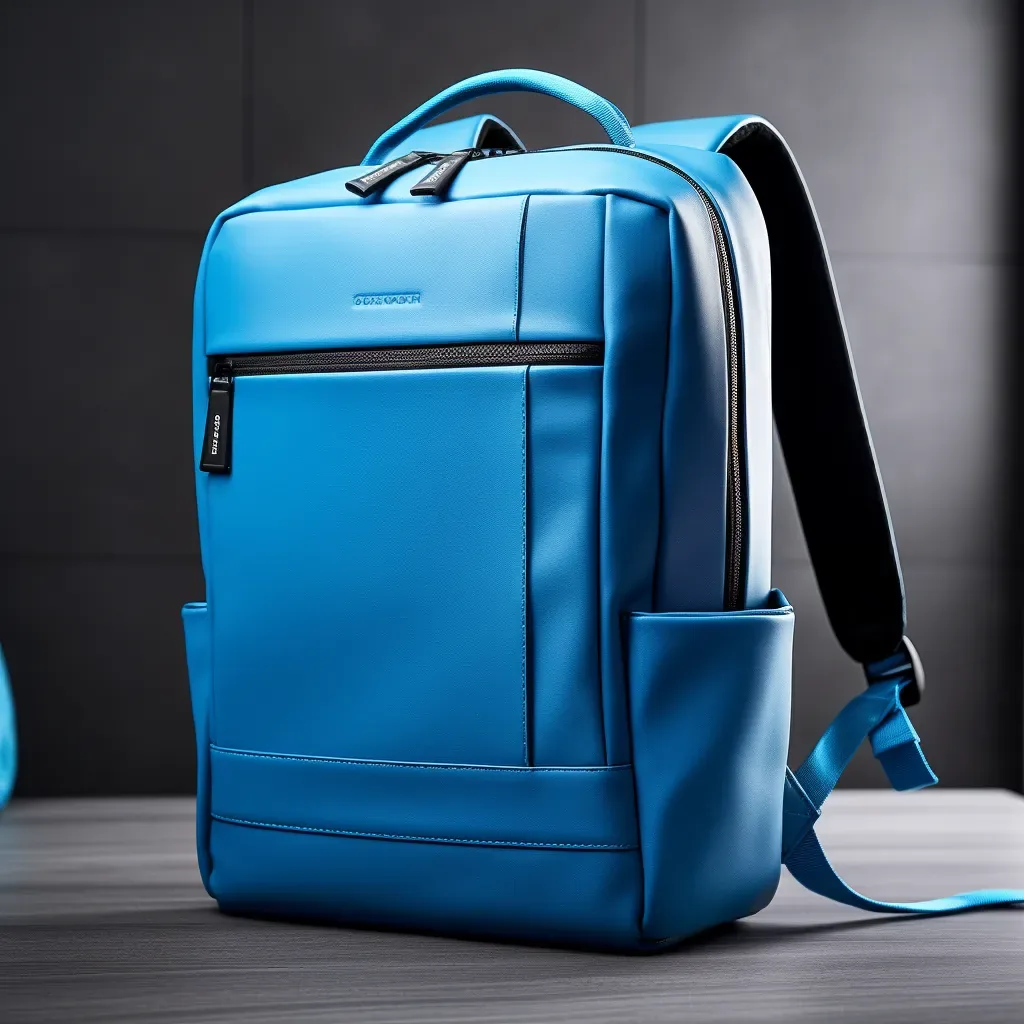
Images are the most important conversion element. Include 6-8 images per product: a white-background hero shot, an angled view showing depth, an open interior revealing pocket layout, a macro detail of leather grain and stitching, a lifestyle/model shot showing scale, a flat lay with accessories, a size comparison with common objects, and an infographic with annotated dimensions and materials.
Every element of your product listing should guide the customer from interest to purchase
Keyword Strategy for Leather Bag Products
Effective keyword research targets multiple categories: product keywords ("leather tote bag," "leather crossbody") for broad visibility; long-tail keywords ("full grain leather tote bag for women") for purchase-ready traffic; attribute keywords ("vegetable tanned leather bag") for specific needs; use-case keywords ("leather work bag for laptop") for solution-seeking shoppers; and comparison keywords ("best leather tote under $300") for decision-making buyers. Prioritize long-tail and use-case keywords for higher conversion rates and lower competition.
Pricing Strategies for Online Leather Bag Sales
Pricing leather bags for e-commerce requires balancing profitability with market expectations. Leather bags carry significant perceived value that can be leveraged through strategic pricing.
Understanding Your Cost Structure
Before setting prices, calculate your complete cost per unit: manufacturing (factory price per unit based on materials and complexity), shipping to warehouse (freight, duties, customs), packaging ($3-$8 per unit for premium boxes with dust bags), platform fees (payment processing and marketplace commissions), fulfillment (storage and shipping), returns buffer (10-15% for leather goods), and marketing allocation (typically 15-25% of revenue for customer acquisition).
Pricing Tiers by Market Position
| Market Position | Price Range | Typical Markup | Target Customer | Key Differentiators |
|---|---|---|---|---|
| Value/Affordable | $50-$150 | 2.5-3x cost | Price-conscious, first leather purchase | Good quality at accessible prices |
| Mid-Range | $150-$400 | 4-5x cost | Quality-focused, brand-aware | Superior materials, design, craftsmanship |
| Premium | $400-$800 | 5-7x cost | Brand-loyal, experience-seeking | Exceptional leather, heritage, storytelling |
| Luxury | $800-$3,000+ | 8-15x cost | Status-driven, collector | Artisan craftsmanship, exclusivity, heritage |
Pro Tip: For brands working with manufacturers offering small-batch manufacturing with MOQs of 500 pieces, your per-unit cost will be higher than large-volume brands. Compensate by emphasizing exclusivity ("limited edition"), craftsmanship, and personalization—features that justify premium pricing and resonate with discerning leather buyers.
Shipping Considerations for Leather Goods
Leather bags require specific shipping considerations to prevent damage and costly returns.
Packaging Best Practices
Stuff bags with acid-free tissue paper to maintain shape, include dust bags for protection, and double-box items over $300. Add silica gel packets for moisture protection, especially in humid climates. The unboxing experience is part of your product—include thank-you cards, care guides, and branded tissue paper to reinforce brand perception.
Shipping Strategy by Market
For domestic shipping on handbags and evening bags in the $200-$500 range, offer free standard shipping (built into pricing) to dramatically increase conversion. For international orders through your wholesale program, clearly communicate delivery timelines and customs information upfront. When shipping leather goods internationally, some countries require documentation specifying leather type and origin—exotic leathers may need CITES permits. Work with your logistics partner—many programme partners like Bespoke Bags offer logistics support—to ensure smooth delivery.
Return Policies and Customer Confidence
A clear return policy is a conversion tool. Customers are more likely to purchase a $400 leather bag when they can return it if unsatisfied.
Designing Your Return Policy
- 30-day returns: The industry standard for premium goods. Some DTC brands offer 60 or 90 days to further reduce purchase anxiety.
- Free return shipping: For products over $200, absorbing return shipping costs significantly boosts conversion.
- Exchange incentive: Offer free exchanges to keep revenue within your brand even when customers want to swap.
- Leather-specific education: Include information about natural leather characteristics to reduce returns based on misunderstood expectations.
Customer Reviews and Social Proof
For leather bags—where customers cannot touch, smell, or feel the product—reviews are extraordinarily influential. Products with 50+ reviews convert 30-50% better, and leather buyers rely heavily on reviews to validate quality claims.
Building a Review Strategy
Send review requests 30-45 days after delivery, offer discounts for photo reviews, and respond professionally to every review. For premium brands, encourage video reviews showcasing leather texture. Use platforms like Trustpilot for verified purchase badges that carry more weight than self-published testimonials.
SEO for Leather Bag Product Pages
Organic search is the most sustainable traffic source. Unlike paid advertising, well-optimized product pages generate consistent traffic for years without ongoing spend.
Technical SEO Essentials
- Product schema markup: Implement structured data to enable rich snippets with price, availability, and ratings.
- Page speed: Use WebP format, lazy loading, and CDN delivery for sub-3-second load times.
- Mobile optimization: Ensure responsive design with touch-friendly image galleries.
- URL structure: Use clean, keyword-rich URLs like
/products/leather-tote-bag-full-grain.html. - Internal linking: Connect related products—backpacks to travel bags, business bags to leather accessories—to distribute authority.
Content Marketing for Leather Brands
Beyond product pages, invest in educational content that captures search traffic at every buying stage: leather education guides ("Full Grain vs. Top Grain"), buying guides ("How to Choose the Right Leather Briefcase"), care and maintenance articles ("How to Condition Your Leather Bag"), and style guides that inspire purchases. This approach is particularly powerful for brands working with established manufacturers like Bespoke Bags who can leverage deep product knowledge into compelling content.
Email Marketing for Leather Bag Brands
Email marketing delivers the highest ROI of any digital channel—$42 per $1 spent. Essential sequences: welcome series introducing your brand, abandoned cart recovery with social proof, post-purchase follow-ups with care instructions, seasonal campaigns for new collections, and VIP loyalty programs with early access to releases.
Influencer Partnerships for Leather Brands
Influencer marketing is particularly effective for leather bags—texture, color, and aging are best communicated through real-world use. Micro-influencers (10K-100K) offer the highest ROI. Focus on creators aligned with your positioning—fashion influencers for handbags, lifestyle influencers for business bags and travel luggage. Offer commission-based partnerships (10-15%) to align incentives and extend your marketing budget.
Conversion Optimization: Turning Visitors into Customers
With the average leather bag e-commerce site converting at 1.5-2.5%, even small improvements generate significant revenue gains:
High-Impact CRO Tactics
- Add video: Product videos increase conversion by 80%. A 15-30 second clip showing multiple angles and the bag in use communicates what static images cannot.
- Implement live chat: Answer pre-purchase questions about size and leather quality in real-time to prevent lost sales.
- Show scarcity: "Only 3 left in this color" creates urgency for limited-edition leather products.
- Offer BNPL: Buy-now-pay-later services (Klarna, Afterpay) make higher-priced leather goods more accessible.
- Display trust signals: Security badges, free returns messaging, and warranty info near the add-to-cart button reduce friction.
- Optimize mobile: Ensure swipe-friendly image galleries and checkout achievable in 3 taps or fewer.
Analytics and Key Metrics to Track
Track these critical metrics to measure and improve your leather bag e-commerce performance:
| Metric | Target Range | What It Tells You | Action Triggers |
|---|---|---|---|
| Conversion Rate | 2.0-4.0% | Overall site effectiveness | Below 1.5% → audit UX and product pages |
| Average Order Value | $200-$500 | Product mix and upsell effectiveness | Below target → improve bundling and recommendations |
| Return Rate | 10-15% | Product accuracy and customer satisfaction | Above 20% → improve descriptions and photography |
| Customer Acquisition Cost | $25-$75 | Marketing efficiency | Above $100 → optimize channels and creative |
| Repeat Purchase Rate | 25-35% | Brand loyalty and product satisfaction | Below 20% → improve post-purchase experience |
| Cart Abandonment Rate | 60-70% | Checkout friction | Above 75% → simplify checkout, add payment options |
Case Studies: DTC Leather Brands That Nailed E-Commerce
Case Study 1: From Workshop to $2M Annual Revenue
A small workshop producing handmade handbags reached $2M in annual revenue within 18 months by targeting long-tail keywords, building a 15,000-subscriber email list, and partnering with 30 micro-influencers. Key insight: leather buyers respond to brands that educate rather than just sell.
Case Study 2: Multi-Channel Dominance
A manufacturer launched on Shopify, Amazon, and Etsy simultaneously—using Amazon for duffel bags and rolling luggage, Etsy for artisan evening bags, and Shopify for their premium custom collection. Their multi-channel approach generated 3x single-channel revenue within two years.
Case Study 3: Content-Driven Growth
A briefcase brand invested $15,000 in 50 blog posts. Within 12 months, organic traffic grew from 2,000 to 45,000 monthly visitors, with their "Full Grain Leather Guide" alone generating 8,000 visits and an estimated $180,000 in attributed revenue.
Your Action Plan: Launching and Optimizing Your Leather Bag E-Commerce Store
- Choose your platform based on brand positioning and budget; start with one and master it.
- Invest in professional photography—the single highest-ROI investment for online leather bags.
- Optimize every listing with compelling titles, detailed descriptions, and structured data.
- Build your email list from day one with welcome incentives for subscribers.
- Implement SEO fundamentals—schema, optimized images, internal linking, and educational content.
- Collect reviews aggressively—social proof is the most powerful conversion tool for leather goods.
- Measure and iterate monthly; the brands that win are those that continuously test and optimize.
Partner with an experienced manufacturer: Great e-commerce starts with great products. Bespoke Bags has developed premium leather bags since 2004 from our SGS-verified production floor in Quanzhou, Fujian, China. With OEM/ODM, private label, and MOQs of 500 pieces through our small-batch program, we help brands create products backed by rigorous quality control.
Quality leather bags ready for e-commerce fulfillment—manufactured with 20+ years of expertise at Bespoke Bags
Inventory Planning When Production Takes 35-50 Days
Online bag brands fail on stock, not on marketing. A store that sells out of its best style in week three has spent its acquisition budget teaching customers to look elsewhere, and with bulk production running 35-50 days after sample approval there is no quick refill. Inventory planning is therefore a production planning exercise before it is a marketing one.
Work backwards from the selling window. Decide the date you want stock live, subtract inbound freight and customs, subtract production, subtract sampling, and the date that remains is the last day you can approve a sample and still make the window.
| Stage in the cycle | Indicative duration | Decision that must be made |
|---|---|---|
| Sample development and approval | 6-10 working days per round; 12-15 with custom hardware | Approve the pre-production sample in writing |
| Bulk production | 35-50 days after approval | Confirm colourway split and quantity per style |
| Inspection and release | Aligned to the AQL 2.5 sample plan | Release the balance payment before shipment |
| Freight and customs clearance | Varies by lane and season | Book space early around peak shipping windows |
| Inbound to fulfilment | One to two weeks domestically | Have photography and listings ready before goods land |
The most common calendaring error is treating the sample approval date as flexible. It is the single date that moves everything after it, so set it as a fixed internal deadline and hold the creative team to it.
Designing the Product Page Around Objections, Not Features
Customers buying a leather bag online cannot touch it, so every unaddressed doubt becomes an abandoned basket. Feature-led copy lists what the product is; objection-led copy answers what the customer is worried about. Structuring the page around the second type of question converts better at the same traffic.
| Customer doubt | Content element that answers it | Where to place it |
|---|---|---|
| Will the leather look like the photo? | Unretouched detail shot at magnification, plus a stated leather type and finish | Second image position, after the hero shot |
| Will it fit what I carry? | Interior shot with real contents and a stated internal dimension | Mid-page, beside the dimension block |
| How heavy is it? | Stated weight in grams with a reference object in shot | In the specification table, not the description prose |
| Will the strap be comfortable? | Worn shot showing strap drop on a stated body height | Lifestyle block lower down the page |
| What if it arrives damaged? | Returns and warranty statement in plain language | Directly under the add-to-cart button |
| Is this genuinely leather? | Material composition stated, with care instructions | Specification table and the care section |
Keep the add-to-cart button visible while the customer reads, and put the reassurance elements near it rather than at the foot of the page. The doubt that stops a sale is usually resolved in the ten seconds before the click, not in the product story above it.
The Few Metrics Worth Watching Weekly
Analytics dashboards have a habit of expanding until nothing in them prompts an action. For a bag business the useful set is small: a handful of figures that each have a decision attached, reviewed on the same day each week.
- Sell-through rate by style: decides what to reorder, and at what quantity, before stock runs out.
- Return rate with reason codes: decides whether the problem is sizing, colour accuracy or expectation, each of which has a different fix.
- Weeks of cover remaining: decides when to place the next production order against a 35-50 day cycle.
- Add-to-cart to purchase rate: isolates checkout and shipping-cost problems from product-page problems.
- Repeat purchase rate: the most reliable signal that the product itself is right.
Review return reasons monthly rather than annually. A run of returns citing colour difference is a photography problem, not a product problem, and it is far cheaper to fix with a corrected colour reference than with a changed specification.
Frequently Asked Questions
Which e-commerce platform is best for selling leather bags online?
The best platform depends on your brand's stage and goals. Shopify is ideal for most DTC leather brands due to its ease of use, professional templates, and strong e-commerce features ($39-$399/month). Amazon offers the largest built-in audience but requires competitive pricing and charges 8-15% referral fees—best for volume sellers. Etsy works well for handmade, artisan, or custom leather bags with lower startup costs. WooCommerce provides maximum customization for brands with technical resources. Many successful leather brands use a multi-channel approach, selling on their own Shopify site while also listing on Amazon for discovery.
How should leather bags be priced for online sales?
Online pricing for leather bags should follow a cost-plus model starting with your total landed cost (manufacturing + shipping + duties + packaging), then applying a markup of 4-8x for DTC brands. Entry-level leather bags typically retail for $80-$200, mid-range pieces for $200-$500, and luxury handbags for $500-$2,000+. Factor in platform fees (8-15% on marketplaces), shipping costs ($8-$25 domestically for leather goods), and returns (budget 10-15% return rate). For wholesale through marketplaces, price at 2-2.5x your wholesale cost. Avoid competing solely on price—leather buyers prioritize quality, craftsmanship, and brand story over rock-bottom pricing.
What shipping considerations are unique to leather bags?
Leather bags require specific shipping considerations: proper protective packaging with dust bags, tissue paper stuffing to maintain shape, and sturdy boxes that prevent crushing. Leather is sensitive to moisture, so include silica gel packets for humid climates. International leather shipments may require compliance with customs declarations specifying the leather type and country of origin. Some countries have restrictions on certain leather types or require CITES documentation for exotic leathers. Insure all shipments, as leather bags are high-value items prone to damage claims. Offer tracked shipping as standard—customers spending $200+ on leather goods expect visibility into their delivery.
How can leather bag brands improve their product page SEO?
Leather bag product page SEO requires optimizing multiple elements: include primary keywords (e.g., 'full grain leather tote bag') in the title tag, URL slug, and first paragraph. Write unique, descriptive product descriptions of 200-400 words that naturally incorporate secondary keywords. Use structured data markup (Product schema) to enable rich snippets with pricing, availability, and reviews. Optimize images with descriptive alt text including product name and key attributes. Build internal links between related products—connecting handbags to matching accessories, for example. Target long-tail keywords like 'handmade leather crossbody bag for women' that have lower competition and higher purchase intent.
What conversion rate should a leather bag e-commerce site aim for?
The average e-commerce conversion rate across all retail is 2.5-3%, but for premium leather goods, expect 1.5-2.5% as the higher price point naturally reduces impulse purchases. Well-optimized leather bag stores with strong brand storytelling, detailed product information, high-quality photography, and social proof typically achieve 2.5-4% conversion rates. Top-performing DTC leather brands with established audiences can reach 4-6%. Focus on improving conversion through better product photography (most impactful single change), adding video content, implementing reviews and ratings, offering free shipping thresholds, and creating urgency through limited-edition collections. Even a 0.5% improvement in conversion can translate to significant revenue growth at leather goods price points.
Explore Our Products & Services:
Luxury Handbags | Business Bags | Travel Luggage | Handbags | Evening Bags | Backpacks | Leather Accessories | Custom Collections | OEM/ODM | Private Label | Custom Design | Quality Control | Small Batch | Wholesale | Logistics
Last Updated: August 14, 2026
How many images should a leather bag product page carry?
Six to eight is a practical target: a clean hero shot, a detail shot at magnification, an interior shot with contents, a scale shot, a worn shot showing strap drop, and a packaging shot. Fewer than five leaves the main doubts unanswered; more than ten rarely adds conversions and slows the page.
Should an online bag brand offer free returns?
Free returns raise conversion but also raise return rate, so the decision is a margin calculation rather than a principle. A common compromise is free returns within a short window with the bag unworn and tags attached. State the policy in one sentence beside the buy button, where it does the conversion work.
How is inventory planned around a 35-50 day production cycle?
Plan backwards from the date stock must be live. Subtract freight, clearance and inbound handling, then 35-50 days of production, then the sampling round. The sample approval date is the one that controls everything downstream, so fix it internally and treat it as immovable.
What return rate is normal for bags sold online?
Return rates vary widely by price point and category, with higher-priced bags generally returned less often than fashion accessories. What matters more than the benchmark is the reason mix. Collect a reason code on every return; a cluster around colour or size points to a listing fix, not a product fix.
How should multiple colourways be presented on one page?
Use one product page with a colourway selector and a separate photograph for each colour, never a recoloured version of one image. State the colour name accurately rather than creatively, and show the hardware tone for each option, since hardware finish is the detail most often mis-sold online.
Is marketplace selling worth it for a premium bag range?
Marketplaces deliver reach and trust quickly but take commission and expose your price transparently. Many premium brands use them for a defined entry price point or a previous season while keeping the current collection on their own site. Treat the marketplace as a channel with its own assortment, not a mirror of the store.
What post-purchase messaging works for leather goods?
Three messages earn their place: dispatch confirmation with tracking, a care guide delivered a week after arrival, and a review request timed after the customer has used the bag rather than on the day it lands. Care content is the most valuable, because it reduces avoidable damage returns.