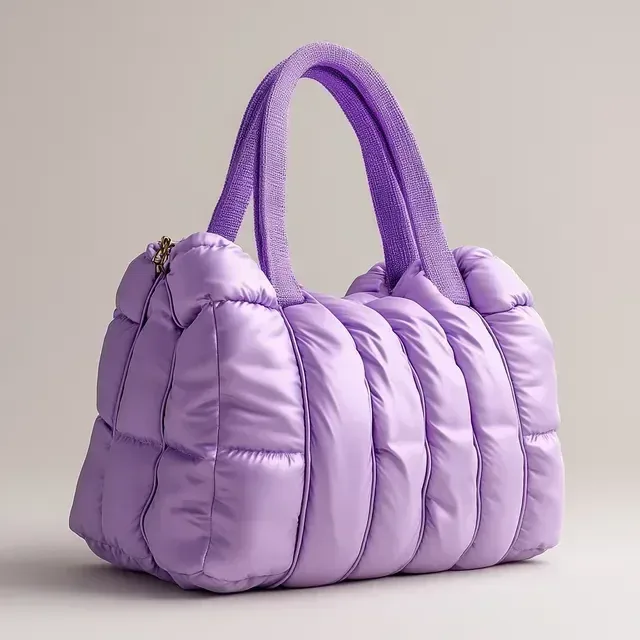
Suede is the flesh side of a hide, buffed to raise a fine nap, and it trades the resilience of a grain surface for colour depth and tactility that smooth leather cannot reproduce. It is not fragile, but it behaves differently: it marks rather than scratches, it mats where it is handled, it stains with water and it responds to brushing rather than to cream. Used on the right panels with a protective treatment specified at the tannery, suede gives a bag genuine sensory appeal and a long life. Used on a base or a handle, it will look tired within a season, and no amount of care will prevent it.
What Suede Is and How It Is Made
A hide has two distinct sides: the grain side, where the hair grew, and the flesh side. Suede is produced from the flesh side, or by splitting a hide and buffing the exposed corium, until a fine nap is raised. Because it has no grain layer, suede is softer and more absorbent than full-grain leather, and it is also less structurally strong at a given substance. Understanding that single fact explains almost all of its behaviour in use, including why it feels so good and why it needs so much more attention.
Quality in suede is judged on the nap rather than on the surface, which is the opposite of how smooth leather is assessed. A good suede has an even, dense, fine nap that moves consistently when brushed and recovers when stroked; a poor one is patchy, coarse, or shows the underlying fibre structure unevenly. Length matters too: a longer nap feels more luxurious but mats faster, while a short nap holds its appearance better and is easier to maintain.
| Material | Which side of the hide | Nap character | Strength | Typical use |
|---|---|---|---|---|
| Suede | Flesh side, or a split | Longer, softer, more open | Moderate; no grain layer | Bodies, accents, linings |
| Nubuck | Grain side, lightly buffed | Very short and fine | Higher; grain layer retained | Uppers, premium bodies, trims |
| Full-grain smooth | Grain side, untouched | None | Highest | Structural panels, handles, bases |
| Waxed or oiled suede | Flesh side, treated | Denser, slightly darker | Moderate, with better water resistance | Country and heritage styles |
Programme parameters at a glance
| Parameter | Commitment |
|---|---|
| Minimum order quantity | 500 pieces per style / colourway |
| Sampling lead time | 6–10 working days (12–15 days for complex constructions) |
| Bulk production lead time | 35–50 days after sample approval |
| Inspection standard | AQL 2.5 (ISO 2859-1), single sampling, general level II |
| Incoterms | FOB Xiamen — EXW, CIF and DDP available on request |
| Payment terms | T/T 30% deposit / 70% before shipment; L/C at sight for container loads |
| Verified production floor space | 4,950 m² (SGS-verified) |
| Team | 137 staff across 7 production lines |
| Equipment | 149 machines including computerised saddle-stitch and edge-painting units |
| Monthly capacity | 200,000 pieces |
| Entity | Founded 2014; principal has worked in bag development since 2004 |
Where Suede Works in a Bag, and Where It Does Not
Suede's limitations are not uniform across a bag; they are concentrated wherever the material is rubbed, handled or set down. That makes it a material best specified panel by panel rather than as a single decision for the whole product. The distinction between a suede bag that ages gracefully and one that looks shabby in six months is usually a decision made at the panel schedule, long before any care regimen comes into play.
| Panel or component | Suede suitability | Why | Better alternative |
|---|---|---|---|
| Body front and back | Good | Low contact; the nap is seen rather than handled | None needed; specify protective treatment |
| Gussets and sides | Good with care | Some contact, but mostly visual | Smooth leather at the fold line |
| Base and corners | Poor | Set down repeatedly; the nap mats and stains | Grain leather or a reinforced corner patch |
| Handles and straps | Poor | Constant handling mats the nap and transfers oils | Grain leather, or a suede-wrapped core |
| Flap undersides | Excellent | Seen on opening; delivers the tactile moment | None needed |
| Linings and pocket bags | Excellent | Protected inside the bag; luxurious feel | A suede split is more economical here |
| Trim and piping | Good | Decorative contrast at low abrasion risk | Bound edges to protect the nap |
- Specify suede where the hand meets it on opening. A suede interior delivers the sensory appeal without exposing the material to weather.
- Keep it off the ground. A base corner in grain leather, or a reinforced patch, is the single most effective durability decision available.
- Combine rather than choose. A suede body with grain leather handles, base and trim is the most durable and, to most eyes, the most attractive combination.
- Watch nap direction at cutting. Panels cut in opposing directions read as different colours; the panel schedule should state the direction.
- Plan the edge treatment. Suede does not take edge paint cleanly; bound, turned or bonded edges protect the nap and look intentional.
The Durability Question, Answered Honestly
Suede is often described as delicate, which is both unfair and not entirely wrong. It is not weak: a good suede from the flesh side of a quality hide will outlast many corrected-grain leathers in structural terms. What it lacks is a protective surface, so everything that happens to it happens visibly. The honest framing is that suede does not fail faster than smooth leather, it records use faster, and some of what it records can be reversed.
| Issue | What happens | Reversible? | Prevention |
|---|---|---|---|
| Matting | Nap flattens where the bag is handled | Partly; brushing lifts it | Grain leather on high-contact areas |
| Water spotting | Absorbed water darkens the nap and dries with a ring | Often; even dampening and brushing | Tannery-applied protective treatment |
| Oil transfer | Hand oils darken handles and edges | Rarely | Keep suede away from handles and strap contact points |
| Pile burnishing | Rubbing polishes the nap to a shiny patch | Rarely | Reduce friction at contact points; use binding |
| Colour transfer | Dye rubs onto light clothing | N/A | Specify a crock rating and test before bulk |
| General soiling | Dull, grey appearance from dust and handling | Yes; brushing and specialist cleaning | Store in a breathable dustbag |
One point deserves emphasis because it is the most common source of disappointment. Water spotting is frequently described as water damage, and it is usually not. Suede absorbs water and dries darker, and the ring that appears is the boundary of the wetted area rather than a stain. Wetting the whole panel evenly and brushing it once dry normally removes it. The genuine failure mode is oil absorption, which is permanent, and which is why the panel schedule matters more than the care kit.
Care, Cleaning and What Can Actually Be Fixed
Suede care is a short list of habits rather than a regimen of products. Brushing is the primary tool and does most of the work; everything else is secondary. The products that are genuinely useful are few, and the products that are actively harmful are common, so the advice below is deliberately conservative.
- Brush regularly, in one direction. A crepe or soft brass brush lifts the nap, removes surface dust and restores the appearance more effectively than any spray.
- Address water evenly. If a panel gets wet, dampen the whole panel lightly rather than letting one area dry alone, then brush when dry.
- Blot, never rub. Rubbing drives a spill into the fibre and mats the nap; blot with an absorbent cloth and let it dry before brushing.
- Use a protective spray before first use. A treatment compatible with the finish slows absorption; test on an inconspicuous area first.
- Store stuffed and away from light. An unstuffed suede bag creases and the nap flattens; prolonged light exposure fades the colour unevenly.
- Escalate to a specialist for oil. Oil marks and deep staining need professional cleaning; home remedies usually make them worse.
| Problem | Home remedy | Professional remedy | Realistic outcome |
|---|---|---|---|
| Surface dust and dulling | Brushing with a crepe cloth or soft brush | Not needed | Full recovery |
| Flattened nap | Brushing, then gentle steam from a distance | Steam and brush | Good, unless the fibre is worn through |
| Water ring | Even dampening and brushing when dry | Specialist cleaning if it persists | Usually successful |
| Oil or grease mark | Absorbent powder left overnight, then brushed | Specialist solvent cleaning | Partial at best; often permanent |
| Ink or dye transfer | Do not attempt at home | Specialist treatment | Uncertain; depends on the dye |
| Worn-through nap | None | Panel replacement | Requires matching material from the lot |
Protective Treatment at Specification Stage
The most effective suede care decision is made before the bag exists. A protective treatment applied at the tannery, or a stipulation that the finished goods are treated before packing, slows water and oil absorption materially without sealing the nap. The trade-off is between protection and hand: heavier treatments protect better but can stiffen the nap and slightly darken the colour, particularly on pale shades.
| Treatment | Protection level | Effect on hand and colour | Best for |
|---|---|---|---|
| None | Lowest | Purest nap; deepest colour | Indoor use, dry climates, archive pieces |
| Light fluorocarbon-free finish | Moderate | Minimal change | General retail bags |
| Heavier protective topcoat | High | Slight stiffening; may darken pale shades | Bags sold in wet climates |
| Waxed or oiled finish | High | Noticeably darker and denser | Country and heritage styles |
| Post-assembly spray | Moderate, variable | Depends on application consistency | Programmes where tannery treatment is unavailable |
- Test the treatment on the actual colour. Pale suedes darken most; a treated swatch tells you what the customer will receive.
- Specify the chemistry. Fluorocarbon-free options are increasingly a procurement requirement rather than a preference; state what is acceptable.
- Confirm crock fastness. Deep or saturated suede shades should be tested for colour transfer before bulk rather than discovered on a customer's coat.
- Include care guidance with the product. A short card explaining brushing and water behaviour prevents most complaints and is cheaper than a returns process.
- Keep spare material from the lot. Suede panels are easier to replace from retained stock than to match later.

Specifying Suede for Production
Suede introduces two production variables that smooth leather does not: nap direction and soiling during assembly. Both are controllable, and both cause visible defects when they are not. A technical pack that addresses them costs a few lines to write and removes the two most common sources of rejection in a suede run.
- State nap direction per panel. Panels cut in opposing directions read as different shades; a direction marker on the pattern removes the risk.
- Name the article and the substance. "Suede" describes a finish, not a material. The tannery article, the substance and whether it is a full suede or a split all belong in the specification.
- Specify the edge treatment. Suede does not hold edge paint well; bound, turned or bonded edges are the standard solutions and should be chosen at design stage.
- Require handling protection in assembly. Clean hands, clean benches and protective covers during hardware setting prevent the soiling that is otherwise discovered at final inspection.
- Seal a reference panel. Nap, colour and protective treatment should all be represented in the retained pre-production sample, since none can be described adequately in words.
| Specification line | Weak wording | Enforceable wording |
|---|---|---|
| Material | "Suede" | "Bovine suede, tannery article X, 1.2–1.4 mm, flesh side" |
| Nap | "Soft suede" | "Short dense nap, direction marked per panel, assessed against sealed reference" |
| Treatment | "Protected" | "Fluorocarbon-free protective finish, water absorption rating tested before bulk" |
| Edges | "Neat edge" | "Bound edge in matching grain leather, 6 mm visible" |
| Colour | "Camel" | "Approved reference under D65, DE tolerance 1.5" |
Testing follows the same frameworks as any leather programme. Restricted-substance screening under REACH is routine for the European Union, CPSIA applies principally to children's products in the United States, and linings and webbing are frequently certified to OEKO-TEX standards. Crock fastness deserves specific mention for suede, because a napped surface contacts clothing differently from a smooth one, and a saturated shade that passes on the shelf can fail in wear.
Suede in a Collection: Positioning and Price
Suede occupies a useful commercial position. It photographs beautifully, it signals softness and tactility at a touch, and it is generally less expensive than a premium full-grain of comparable quality. Against that, it carries higher returns risk and requires customer education. The brands that use it successfully tend to be those that have decided in advance how much of the range it occupies and what they will tell customers about it.
| Positioning | Suede's role | Considerations |
|---|---|---|
| Seasonal accent | One or two styles per season in a suede colourway | Limits returns exposure; refreshes the range visually |
| Signature material | A recognised house material across bodies and linings | Requires consistent protective treatment and strong care guidance |
| Interior signature | Smooth leather outside, suede lining inside | Delivers tactility with almost no durability risk |
| Entry luxury | Suede bodies with grain leather trim | Attractive at the price point; trim protects the wear points |
| Travel and hard use | Generally avoid | Abrasion and weather exposure are the wrong conditions for a napped surface |
Suede rewards specification and punishes optimism. Specified properly — on the right panels, with the nap direction controlled, the edges bound and a protective treatment agreed — it produces bags with a sensory appeal no smooth leather matches, and they last for years. Specified casually, it produces returns. The difference is decided in the technical pack rather than in the care instructions, which is where a serious programme puts its effort. Material and construction choices are settled together during sampling, and the custom design route is where a suede specification is tested against a real build.
Build a suede specification that lasts
Share your silhouette and colour direction. The programme team will advise on panel placement, nap direction, edge treatment and protective finishes, with a sampling window and cost band for each option.
Frequently Asked Questions
Is suede leather durable enough for a handbag?
Yes, provided it is placed correctly. Suede is not structurally weak; a good suede will outlast many corrected-grain leathers. What it lacks is a protective grain surface, so it records use visibly. On body panels, gussets, flaps and linings it performs well for years. On bases, corners, handles and straps it mats, stains and absorbs oils quickly. The panel schedule, not the material, determines the outcome.
What is the difference between suede and nubuck?
Suede comes from the flesh side of the hide, or from a split, and is buffed to raise a relatively long, soft nap. Nubuck comes from the grain side and is lightly buffed to produce a very short, fine nap. Because nubuck retains the grain layer it is stronger and slightly more resistant to marking, but it is still absorbent and needs similar care. Both are napped leathers; they differ in strength, nap length and price.
How do you clean a suede bag at home?
Brush it. A crepe cloth or soft brass brush used regularly in one direction lifts the nap, removes surface dust and restores the appearance more effectively than any product. For a water mark, lightly dampen the whole panel rather than the spot and brush when dry. For oil, blot with an absorbent powder, leave it overnight and brush, then accept that the result may be partial. Avoid water-based cleaners and household sprays.
Can water damage be removed from suede?
Usually, because what looks like damage is often just uneven wetting. Suede absorbs water and dries darker, and the visible ring is the boundary of the wetted area. Dampening the entire panel evenly and brushing it once dry normally removes the mark. Genuine damage comes from oil absorption, which is effectively permanent. If a water mark persists after even treatment, a specialist clean is the next step.
Should a suede bag be treated with a protective spray?
Yes, and preferably at the tannery rather than at home. A protective finish applied during manufacture slows water and oil absorption without sealing the nap, and it is applied consistently. If a post-purchase spray is used, test it on an inconspicuous area first, because some products darken pale shades. Fluorocarbon-free options are increasingly a procurement requirement, so check what has already been applied before adding anything.
Does suede fade in sunlight?
Yes, and unevenly, which is the greater problem. Prolonged exposure to direct light fades most dyes, but on suede the effect is compounded because the nap catches light differently across the panel. Store bags away from windows and direct display lighting, rotate any pieces kept on open shelving, and expect some softening of colour over years. Fading is not a defect but it is worth disclosing in care guidance.
Why do suede handles look worn so quickly?
Because handles receive the two things suede handles worst: constant friction, which mats and burnishes the nap, and hand oils, which the open fibre absorbs permanently. Neither is reversible by brushing. The solution is a specification one — build handles and straps in grain leather, or wrap a leather core with suede only on the visible upper face. Suede belongs on surfaces that are seen rather than gripped.
Can suede be edge painted like smooth leather?
Not well. The napped fibre absorbs edge paint unevenly and the result tends to look rough and to lift with wear. The standard alternatives are a bound edge in matching or contrasting grain leather, a turned edge where the material allows it, or a bonded edge finished with careful sanding. Which is appropriate depends on the substance and the design, and it should be decided at specification rather than at the bench.
Is suede suitable for a bag used in a wet climate?
It can be, with the right specification. A fluorocarbon-free protective finish applied at the tannery, grain leather on the base and corners, covered zips and a lined interior all reduce the risk considerably. Even then, suede is a fair-weather material compared with a waxed or pigmented grain leather, and customers should be told so. For a genuinely wet market, a waxed suede or a smooth leather is the more honest recommendation.
How should nap direction be handled in production?
It should be stated per panel. Suede cut in opposing directions reflects light differently and reads as two different colours on the assembled bag, which is one of the most visible defects in a suede run. The pattern should carry a nap direction marker and the panel schedule should confirm it, so that the cutting table works from the same instruction rather than from convention.
What causes colour transfer from suede onto clothing?
Insufficient dye fixation, known as poor crock fastness. Saturated or dark shades are the usual offenders, and a napped surface contacts fabric differently from a smooth one, so a leather that passes a standard test can still mark clothing in wear. Specify a crock rating, test it on the actual colourway before bulk authorisation, and consider a fixing agent or a lighter shade where the risk cannot be resolved.
Is suede cheaper than full-grain leather?
Often, but not reliably. Suede can be produced from parts of the hide and from splits that would not yield good full-grain, which reduces raw material cost, and it needs less surface correction. Against that, a premium full suede from the flesh side of a high-grade hide, with a protective treatment, can cost as much as a good corrected grain leather. Judge the tannery article and the grade, never the finish name alone.
How long does sampling take for a suede bag?
Budget 6–10 working days per round, or 12–15 where the construction is demanding. If a protective finish or a particular nap is being trialled, add time for it to be applied and settled before the sample is assessed, since both change the appearance. Bulk then takes 35–50 days from approval, plus freight and customs clearance.
Can a worn suede panel be replaced?
Yes, more easily than a smooth leather panel in some respects, because there is no grain or patina to match. The requirement is material from the same dyed lot, which is why retaining spare panels from production is worth the small cost. A cobbler or the original production partner can replace a panel; matching a faded suede to a new one is the harder problem, and may mean replacing a pair of panels for symmetry.